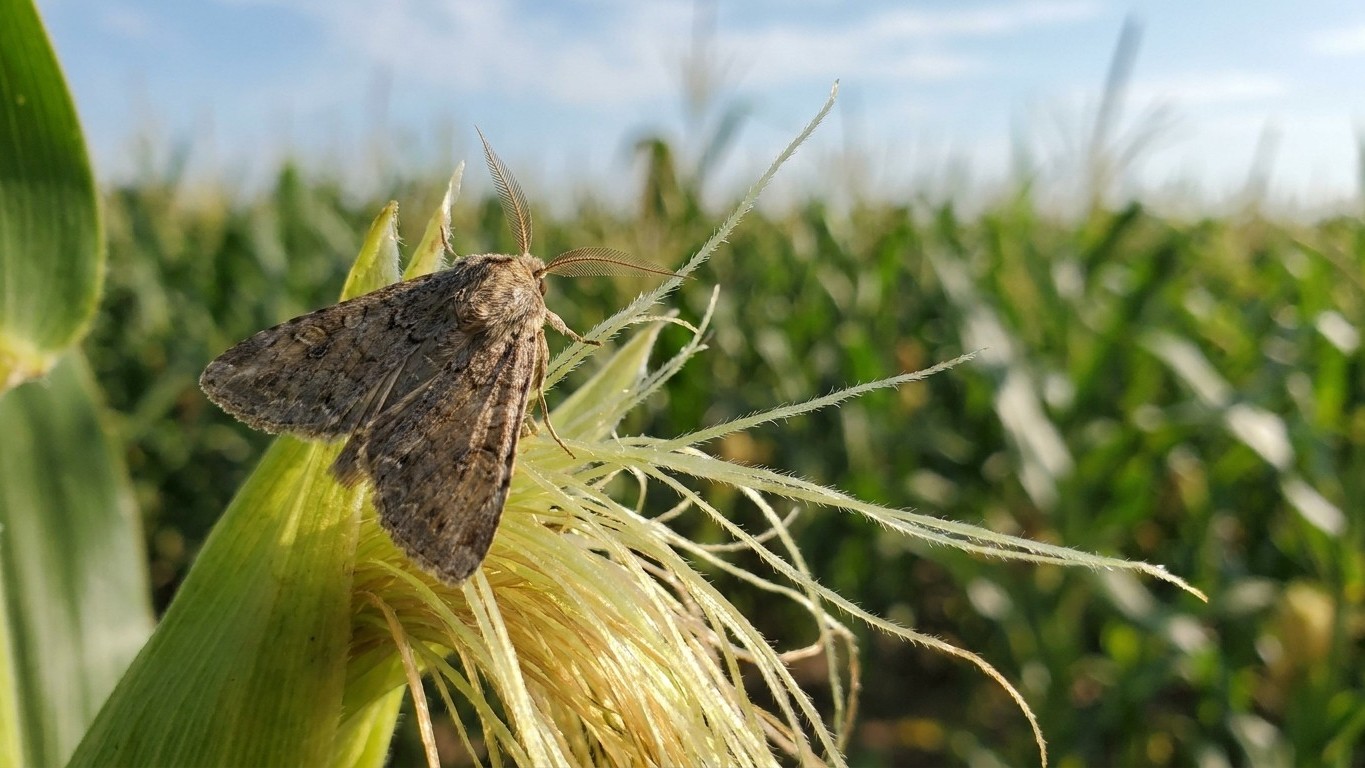

Corn earworm moths arrive in Oklahoma corn and garden plots in waves, starting as early as late April in the southern counties and peaking in August when migrating adults from Texas and Mexico push numbers higher. The real damage window runs from silk emergence through harvest, and the fix depends on whether you’re growing a few rows of sweet corn or managing acreage of field corn. Bt hybrids, timed sprays on fresh silk, and early planting to dodge the worst flights are what actually stop this pest in Oklahoma conditions.
The weeks to watch

Oklahoma sits in a transition zone for this insect. In the Panhandle and northern counties, corn earworm doesn’t reliably survive winter in the soil as a pupa, the cold snaps kill off most of the local population. Further south, especially below Interstate 40, some pupae do overwinter successfully. But the bigger driver of pressure statewide is migration. Moths ride weather fronts up from Texas and northern Mexico every spring, and that’s why growers in Tillman or Jackson County often see earworm activity two to three weeks before folks near Tulsa.
Expect three to four generations per growing season in most of the state. The first flight typically shows up in late April to May, tied to early corn or nearby host crops like tomatoes and sorghum. That generation causes relatively little concern because ears aren’t silking yet. The generation to watch is the one hitting in July and August, when sweet corn planted for a fall harvest starts silking right as moth populations peak from summer migration and local reproduction stacking on top of each other.
Degree-day models used by university extension programs across the Corn Belt generally peg egg-to-adult development at roughly 30 to 40 days depending on temperature, and Oklahoma summers run hot enough that development happens on the faster end of that range. That’s part of why a garden that looked clean in June can have heavy worm damage in ears picked in late August. Three generations can cycle through in a single season if silking corn is available continuously.
Spotting the Damage Before It’s Too Late
The moth itself is easy to miss, it’s a tan to olive-colored insect about three-quarters of an inch long that flies at night. What growers actually notice is the damage, and by the time you see chewed kernels at the tip of the ear, the worm has already been feeding for a week or more.
The telltale sign is frass, a sawdust-like material pushed out of the silk channel or visible at the ear tip once you peel back the husk. Fresh silk turns brown and matted faster than normal on infested ears. Cut into a suspect ear and you’ll typically find one larva per ear, sometimes two, ranging from pale yellow to green or even reddish-brown depending on its diet and age. That color variability trips people up, they expect a uniform “corn worm” look and instead find caterpillars in three different shades on three different ears from the same row.
Corn Earworm vs. Fall Armyworm
Oklahoma growers deal with both pests, often in the same field, and confusing them leads to wasted spray applications. Fall armyworm feeds more aggressively on whorl-stage corn and leaves ragged leaf damage before silking even starts, moving in groups and stripping foliage. Corn earworm is a lone feeder that goes straight for the ear tip and rarely touches leaves. If you’re seeing damage on young plants in June before tasseling, that’s more likely armyworm. If the damage shows up at the ear tip in August, that’s earworm territory.
What Actually Stops Corn Earworm in Oklahoma
Control strategy splits pretty cleanly along two lines: what backyard gardeners can do with a handful of rows, and what commercial field corn or market growers need for acreage. Neither group has a single silver bullet, but combining two or three tactics gets results.
Resistant and Bt Varieties
Sweet corn breeders have made real progress on husk-tightness traits that make it physically harder for newly hatched larvae to reach the kernels. Varieties with long, tight husk extension past the ear tip show measurably less damage in university trials across the Southern Plains, even without any spray applied. For home gardeners in Oklahoma, choosing a variety marketed for husk coverage is one of the cheapest wins available.
On the commercial side, Bt corn hybrids expressing proteins targeted at lepidopteran pests (the insect group that includes corn earworm) have become standard in much of the state’s field corn acreage. These hybrids reduce ear damage substantially compared to non-Bt corn, though they don’t eliminate it entirely, especially in years with heavy moth pressure. Resistance management remains a real concern nationally, which is why the Environmental Protection Agency requires refuge planting alongside Bt corn to slow the development of resistant earworm populations. Growers should follow refuge requirements printed on seed bags rather than skipping them to save space.
Timing the Silk Stage
Because moths need fresh silk to lay eggs on, and eggs hatch within a few days, timing planting so silking happens outside the peak August flight window cuts losses dramatically. Oklahoma gardeners aiming for an early-summer harvest, silking in June rather than August, tend to see far less pressure simply because they miss the worst of the migratory wave. Succession planting every two weeks sounds appealing for a longer harvest, but each new planting that silks during peak flight essentially serves up a fresh buffet. If you’re growing for a single harvest, timing that harvest to avoid late July through August silking is one of the most effective non-chemical tools available.
Mineral Oil and Direct Silk Treatment
A method that’s held up in home garden trials for decades: applying a few drops of mineral oil to the silk channel a few days after silks emerge, once they’ve started to turn brown at the tip and pollination is mostly complete. The oil smothers newly hatched larvae before they can tunnel down to the kernels, without harming pollination if timed correctly. This works at garden scale where you can treat individual ears, and it’s a low-cost option for anyone who doesn’t want to spray insecticide on food they’re about to eat off the cob.
Scouting and Threshold-Based Spraying
For larger plantings, pheromone traps that attract male moths give growers a real-time read on flight activity. A sharp increase in trap catches signals it’s time to start checking silk stage closely and consider treatment. Commercial sweet corn operations in Oklahoma typically follow a spray schedule tied directly to trap counts and silk freshness rather than a fixed calendar, since flight intensity varies year to year depending on how strong the spring migration from the south turns out to be.
Insecticide applications work best when directed at fresh silk before larvae tunnel inward, since once a worm is inside the ear tip, no spray reaches it. That means repeat applications every few days during active silking are often necessary for market-quality sweet corn, which is labor-intensive and one reason many home gardeners lean on husk-resistant varieties and mineral oil instead of a spray regimen.
Field Corn vs. Garden Corn: Different Stakes
It’s worth separating expectations here, because the economic threshold looks completely different depending on what you’re growing. Field corn grown for grain tolerates a surprising amount of ear-tip feeding without meaningful yield loss, since the damage is cosmetic at the kernel level and doesn’t usually affect the bulk of the grain that gets harvested and dried. Oklahoma row-crop growers generally don’t spray field corn for earworm alone unless pressure is unusually severe, because the cost of treatment often exceeds the value protected.
Sweet corn is the opposite story. A single worm at the tip of an ear destined for the table or the farmers market ruins that ear’s sale value even though 90 percent of the kernels are untouched. That’s why market growers invest in tighter spray schedules and husk-resistant varieties, while grain producers largely let this pest run its course and focus pest management dollars elsewhere.
Home gardeners fall somewhere in between. Losing the top inch of a few ears to worm feeding is annoying but not catastrophic if you’re growing for personal use, you just cut off the damaged tip and eat the rest. That reality shapes a lot of the practical advice floating around Oklahoma extension offices: for garden-scale growing, prevention through variety choice and timing usually beats a chemical response.
One detail that surprises a lot of Oklahoma gardeners: corn earworm and cotton bollworm are the exact same species, Helicoverpa zea, just named differently depending on which crop it’s found feeding on. In counties where cotton and corn are both grown in rotation, that shared identity means pest pressure on one crop can be a leading indicator for what’s coming in the other a few weeks later.
Related guides
- Corn earworm in Texas: When It Shows Up and What Stops It
- Corn earworm in New Mexico: When It Shows Up and What Stops It
- Corn earworm in Saskatchewan: When It Shows Up and What Stops It
- Corn earworm in South Carolina: When It Shows Up and What Stops It
- Corn earworm in North Carolina: When It Shows Up and What Stops It
- Corn earworm in Alabama: When It Shows Up and What Stops It