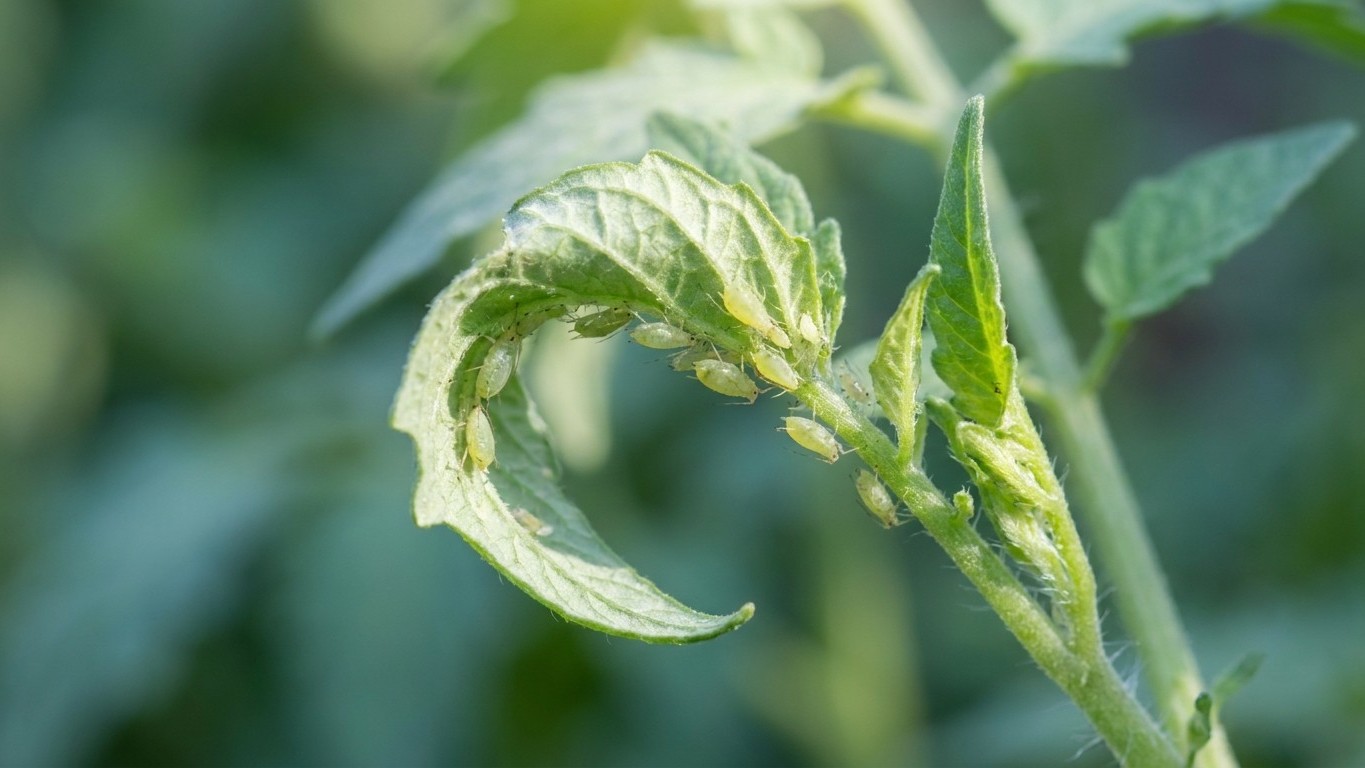

Potato aphid shows up in South Carolina gardens mainly during the cooler stretches of the growing season, spring and again in fall, tapering off during the hottest weeks of summer. Clemson Cooperative Extension doesn’t publish a dedicated calendar for this species, so gardeners have to lean on its known cold-weather preference and watch new growth closely from transplant time onward.
The weeks to watch

Potato aphid favors moderate temperatures, and that single trait does more to predict its arrival than any fixed date on a wall calendar. Clemson’s Home and Garden Information Center publishes seasonal windows for several other tomato and cole crop pests, tomato fruitworm from early May with four to five generations, stink bugs peaking July through early October, leaffooted bug common May through fall, but it does not name a specific window for potato aphid in those same fact sheets. That gap matters: it means there’s no official South Carolina start date to circle on the calendar, only the general biology of the insect itself.
Spring buildup
Populations tend to climb as soon as young tomato, potato, and pepper foliage is tender and temperatures sit in the moderate range rather than the summer swelter. This is typically the first flush a home gardener notices, clustered on new shoots and the undersides of leaves.
Fall resurgence
As summer heat breaks and plants push new growth for a second harvest, potato aphid numbers often climb again. Fall tomatoes and late potato plantings can see a second wave that catches gardeners off guard because they assumed the pest pressure was behind them for the year.
Between those two stretches, hot mid-summer weather generally suppresses the population, though it rarely disappears completely if host plants are still present.
Reading the calendar from your last frost

The date a South Carolina gardener actually plans around is the last spring frost, not a pest emergence date. NOAA’s 1991-2020 Climate Normals put that window at February 28 to March 17 for the reference station used in the state’s coastal region, with the important caveat that peninsular Charleston runs milder than the airport reading, and the Upstate runs several weeks tighter on both ends. Potato aphid doesn’t answer to a page on a calendar; it answers to soil and air warming enough to push tender new growth, so an unusually warm or cold spring shifts everything that follows.
- Start from your local last frost date, using the February 28 to March 17 range as a normal, not a promise, and adjust toward the earlier end if you garden in Charleston or the later end if you’re in the Upstate.
- Expect the first visible feeding damage on transplanted tomato, potato, or pepper seedlings within a few weeks of that frost window, once new leaves have flushed out enough to attract colonizing aphids.
That arithmetic gives a range, never a single day, because the underlying frost data is itself a range. Practically, it means row covers should go on at transplanting and come off once the covered plants begin flowering and need pollinator access, since covers that stay too long will keep both aphids and bees out.
What it attacks, and what the damage looks like

Most gardeners spot the symptom well before they spot the insect. Leaves curl inward and take on a pale, yellowish cast, new growth looks stunted or twisted, and a sticky film called honeydew coats leaves and anything beneath them, sometimes followed by a black sooty mold growing on that residue. On potato plants specifically, heavy feeding can leave shoots looking weak and shrunken even when the roots below seem fine. Only after noticing that curling and stickiness does most people go looking underneath the leaves, where clusters of large, pink or green, soft-bodied aphids give the pest away.
Both nymphs and adults feed the same way, piercing plant tissue and drawing out sap, which means damage builds continuously as long as any life stage is present rather than being tied to one single feeding event. That matters for treatment timing: knocking back an active colony helps regardless of which stage is present, but it has to happen before populations build large enough to stress the plant.
The crops most commonly affected in home gardens include:
- Tomato
- Potato
- Pepper
- Eggplant
- Lettuce and other leafy greens
Ornamentals in the same plant families can host populations too, which is one reason volunteer plants and nearby weeds matter more than gardeners often assume.
How South Carolina sits in this pest’s range

Potato aphid is a widespread species found across most of the United States, and South Carolina is no exception. Being present statewide is different from being uniform statewide, though, because the state’s climate variation changes timing rather than presence. NOAA’s own climate normals data shows that gap plainly: the Charleston area runs on a milder, earlier schedule than the airport station reflects, and the Upstate compresses the frost-free season by several weeks on both ends. A gardener near the coast should expect earlier spring buildup than one gardening in the Piedmont or foothills, simply because tender new growth appears earlier where winters break sooner.
What that means practically is that a South Carolina gardener shouldn’t look for a single statewide pest calendar. The insect is present everywhere host plants grow in the state, but the two windows described above, the spring buildup and the fall resurgence, will land on different actual dates depending on whether the garden sits on the coastal plain or up toward the mountains. Clemson’s published pest fact sheets for tomato, cole crop, and cucurbit insects don’t break potato aphid out by region within the state, so gardeners in different zones are left applying the same general biology to their own local frost and warming pattern.
What actually works against it

Cultural and physical controls do most of the work against potato aphid, and they work best applied early, before a colony has established on the underside of every leaf.
- Clear volunteer potato plants and nearby weeds from the previous season before new transplants go in, since these often carry over the first colonizing aphids into a fresh crop.
- Rotate tomato, potato, pepper, and eggplant beds away from where they grew the prior year, which reduces the chance that overwintering aphids or their eggs are sitting right where new host plants get set out.
- Use row covers from transplanting until flowering, physically blocking winged aphids from landing on young plants during the vulnerable early weeks, then remove covers once pollination needs access.
- Check the undersides of leaves weekly during the spring and fall windows and knock small colonies off with a strong stream of water, which physically dislodges soft-bodied aphids that often can’t climb back up in time to reestablish.
- Avoid heavy nitrogen fertilization, since lush, nitrogen-rich growth is exactly the tender tissue potato aphid prefers to colonize.
- Encourage ladybugs, lacewings, and parasitic wasps by leaving some flowering plants nearby, since these predators and parasitoids can hold populations down once they establish in a garden.
Some gardeners lay aluminum foil or reflective plastic mulch beneath young plants, on the idea that the reflected light disorients incoming aphids before they land. Trial results on that approach are mixed and Clemson’s fact sheets don’t endorse a mechanism for it, so treat it as a low-cost experiment rather than a guaranteed fix. Once aphids have already tunneled feeding damage deep into curled, tightly rolled leaves, covers and sprays of any kind have a much harder time reaching them, which is the practical reason every measure on this list works better started early than applied after damage is already visible.
Common questions
Does potato aphid survive South Carolina winters?
The species can overwinter on volunteer potato plants, certain weeds, and some ornamentals in mild years, particularly near the coast where hard freezes are less consistent, which is part of why clearing garden debris before spring planting matters.
Is potato aphid the same as the green peach aphid gardeners see on other vegetables?
No. Potato aphid is a distinct, generally larger species, often pink or green, and it favors solanaceous crops like tomato, potato, pepper, and eggplant rather than the broader host range some other aphid species attack.
Can potato aphid damage happen without visible honeydew or sooty mold?
Yes, especially early in an infestation. Curling and stunted new growth can appear before honeydew builds up enough to be noticeable, so checking leaf undersides directly is a more reliable early check than looking for the sticky residue alone.