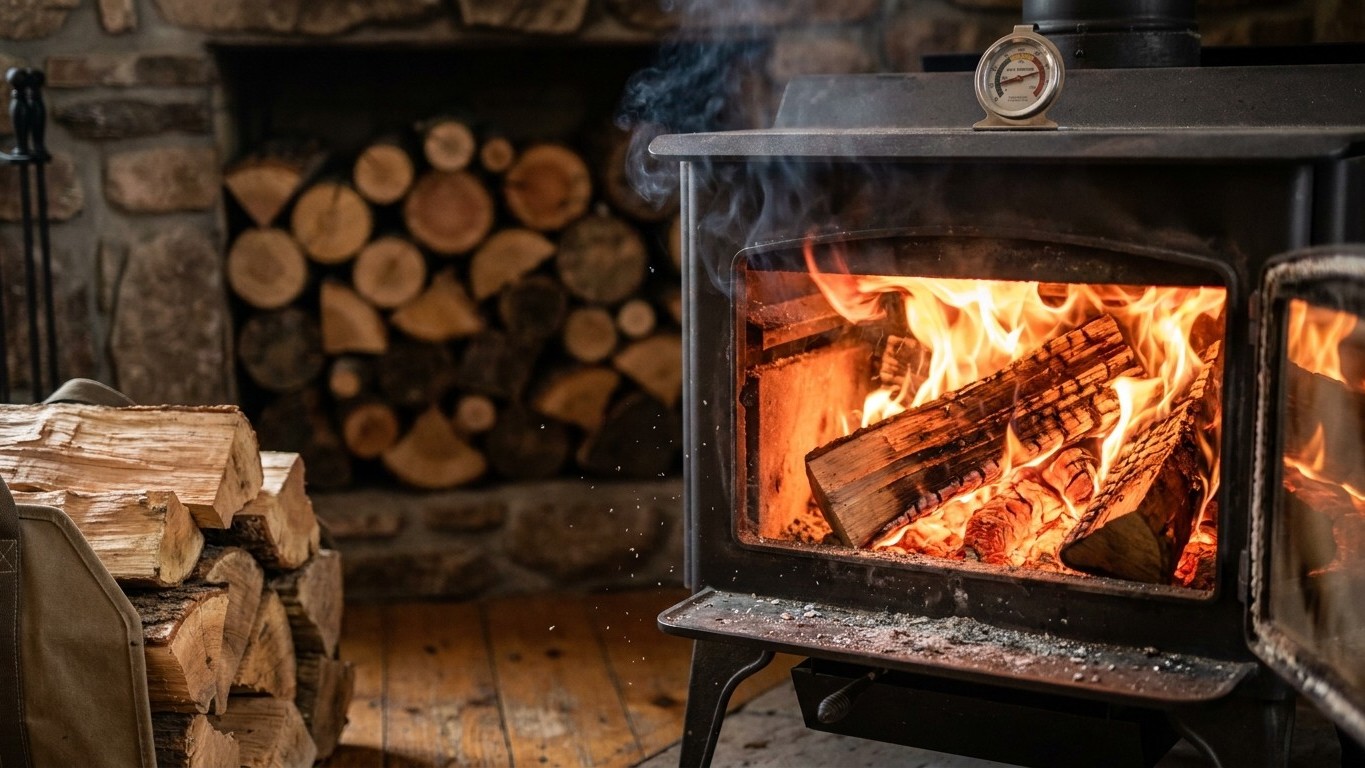

Cottonwood burns fast, throws modest heat, and leaves behind a fine white ash that drifts everywhere if you’re not careful. It’s one of the lowest-density hardwoods you’ll find in a Western or Midwestern woodlot, which means a full cord delivers noticeably less warmth than oak, ash, or locust. That doesn’t make it worthless as firewood. It makes it situational wood, best suited for shoulder-season fires, quick camp burns, or mixing with denser species rather than serving as your only heat source through January.
How Cottonwood Stacks Up on Heat Output

Cottonwood produces roughly 14 to 16 million BTUs per cord when fully seasoned, according to SDSU Extension. Compare that to a cord of shagbark hickory or white oak, which can hit 24 to 29 million BTUs, and you’re looking at nearly half the heat from the same amount of stacked wood. That gap matters if you’re heating a home through a Minnesota or Montana winter, where a wood stove might be running twelve hours a day.
The reason comes down to wood density. Cottonwood weighs around 28 pounds per cubic foot when dry, compared to 45 pounds or more for hickory. Less mass per log means less fuel to burn, so the fire consumes cottonwood quickly and needs frequent reloading. A homeowner relying on cottonwood alone for a wood stove will find themselves feeding the firebox every hour or two overnight, which isn’t practical for most heating setups.
Where cottonwood earns its keep is in outdoor fire pits, chimineas, and quick-start kindling situations. It lights easily, burns hot for a short window, and doesn’t require the patience that denser species demand to get going. Campers and weekend fire-pit users often prefer it precisely because it’s forgiving and fast.
Smoke, Sparks, and Chimney Considerations
Cottonwood has a reputation for smoking more than tighter-grained hardwoods, especially if it hasn’t been seasoned long enough. Green or partially dried cottonwood can run 40% or higher in moisture content, and burning wood above the recommended 20% moisture threshold set by the EPA’s Burn Wise program produces visibly heavier smoke and more creosote buildup in the flue.
Properly seasoned cottonwood, dried a full year or more under cover, burns cleaner than its reputation suggests. The smoke issue is less about the species itself and more about impatience. Cottonwood’s low density means it can look and feel dry on the outside well before the interior moisture has actually dropped, tricking people into burning it too soon.
Sparking is generally mild to moderate with cottonwood, less aggressive than pine or spruce but more than a dense oak. It’s not a wood you’d want popping embers near an open porch or wooden deck without a spark screen, but it’s not in the same alarming category as green softwoods either.
Creosote Risk in Wood Stoves
Because cottonwood burns fast and cooler than hardwoods, flue gases can cool before fully exiting the chimney, encouraging creosote condensation on interior walls. This is a known issue with any low-density, fast-burning wood, not unique to cottonwood, but it’s worth factoring in if you’re running a wood stove as a primary heat source. Regular chimney inspections become more important when burning softer hardwoods like this one.
Seasoning and Storage Requirements
Cottonwood needs at least six to twelve months of seasoning time, split and stacked off the ground with good airflow on all sides. Because the wood is porous and holds water readily, cutting rounds into smaller splits speeds up the drying process significantly compared to leaving large rounds intact.
A moisture meter is the most reliable way to check readiness. Push the probes into a freshly split face (not the exterior, which dries faster and gives a false low reading) and look for 20% or below. Cottonwood that reads dry on the surface but tests 30% or higher inside is common enough that skipping this step leads to smoky, disappointing fires.
Covering the top of the stack while leaving the sides exposed matters more with cottonwood than with denser woods, since its higher porosity means it reabsorbs ambient moisture faster during humid stretches or rain. A tarp or woodshed roof extends seasoned cottonwood’s usable window considerably, especially in regions with wet autumns like the Pacific Northwest.
Where Cottonwood Fits in a Firewood Mix
Cottonwood works best as a supplemental wood rather than a primary heat source. Pairing it with a denser hardwood, oak, maple, or ash where available, lets you use cottonwood to get a fire established quickly, then add denser splits once coals are hot to extend burn time and heat output overnight. This blended approach is common practice among people who have cottonwood available on their own property (it’s a fast-growing tree along riverbanks and floodplains across much of the central and western U.S.) but don’t want to rely on it exclusively.
For outdoor recreational fires, cottonwood is underrated. It’s abundant near waterways, often free for the cutting if you have landowner permission, and its low BTU output is less of a drawback when the goal is ambiance and s’mores rather than heating a living room. Campers in cottonwood country frequently use it as their default choice simply because it’s what’s available and it splits easily even for beginners.
The economics also favor treating cottonwood as a mixer wood. Firewood sold by the cord is typically priced by species density in regions where buyers have options, meaning cottonwood often costs less than oak or hickory. Stretching a wood budget by combining a cheaper, faster-burning cord with a smaller amount of dense hardwood can lower total heating costs without sacrificing too much overall warmth, provided the ratio leans toward the denser wood for actual heating days.
Splitting and Handling Notes
Cottonwood splits easily when dry, one of its few unambiguous advantages. The wood’s soft, straight grain gives way readily to a maul or hydraulic splitter, and it rarely presents the twisted, interlocked grain that makes species like elm frustrating to process. This ease of splitting is part of why it remains popular with people cutting their own supply rather than buying processed cords.
The tradeoff is durability in storage. Cottonwood is more prone to fungal decay and insect activity than denser hardwoods if left stacked too long, particularly in humid climates. Wood that sits unused for more than two to three years, especially in contact with soil or without ventilation, starts to punk out and lose usable heat value faster than oak or hickory would under the same conditions.
One detail that surprises people: cottonwood ash tends to be lighter and more voluminous than ash from denser hardwoods, so a stove burning mostly cottonwood fills its ash pan faster relative to the actual heat produced. It’s a small but real maintenance difference worth knowing before committing a season to this wood as anything more than a supplement.