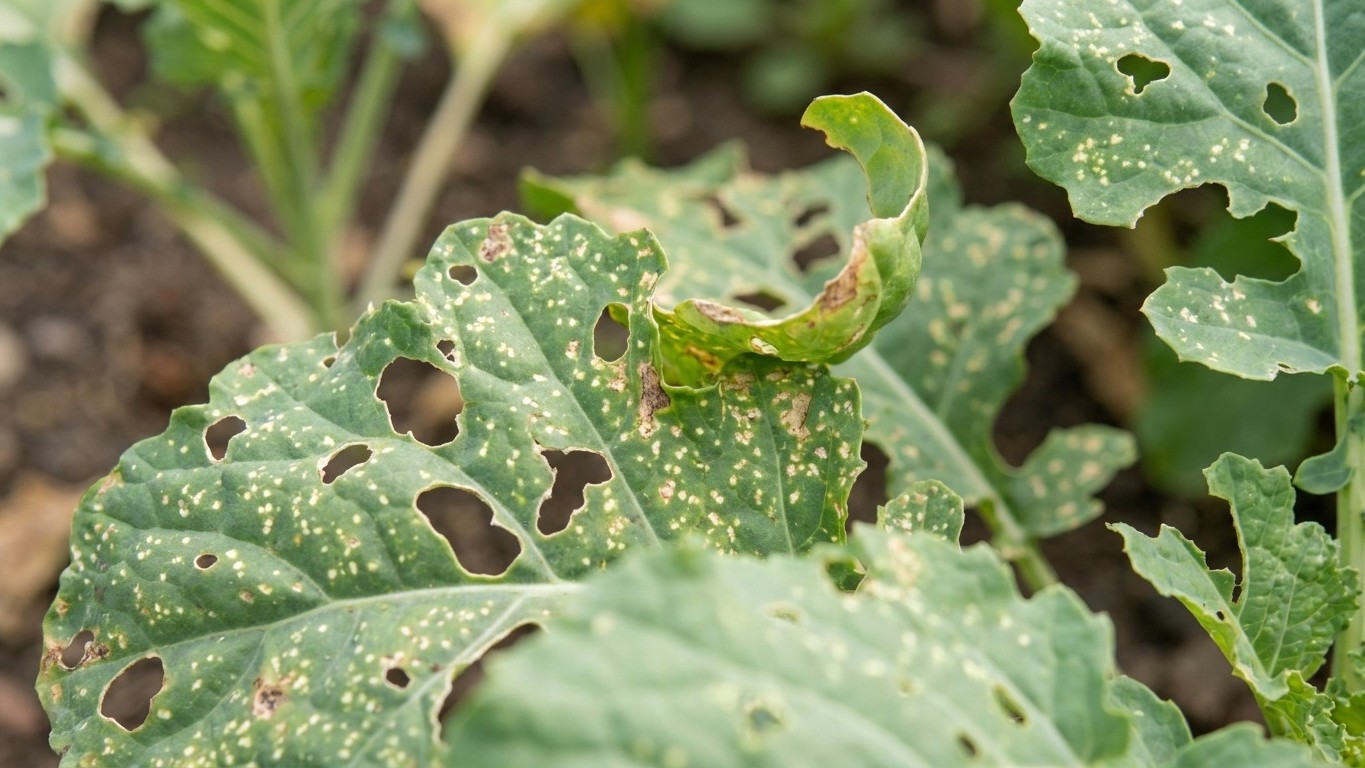

Summer Squash in Washington faces a fairly short list of pests: aphids, western spotted cucumber beetles, slugs, spider mites, cutworms and armyworms, and occasional earwig feeding on seedlings and blossoms. Which one shows up first depends less on the calendar month and more on how cold, wet, and slow the spring has been to warm the soil.
Which pests attack summer squash in Washington

WSU Extension documents fourteen pests across Washington’s home vegetable gardens: aphids, brown marmorated stink bug, cabbage maggot, carrot rust fly, Colorado potato beetle, corn earworm and earwigs, cutworms and armyworms, flea beetles, imported cabbageworm and loopers, onion maggot and onion thrips, slugs, spider mites, western spotted cucumber beetle, and wireworms. That’s the full statewide list for vegetable gardens, not a squash-specific one, and most of those names have nothing to do with a squash plant.
Cabbage maggot, imported cabbageworm and loopers, and flea beetles are brassica feeders; they’ll wreck a bed of kale or cabbage but leave squash leaves alone. Carrot rust fly and onion maggot with onion thrips are tied to the carrot and onion families, entirely different plant chemistry than a cucurbit. Colorado potato beetle wants nightshades, potatoes, tomatoes, and eggplant, and won’t touch a squash leaf. Wireworms live in soil and chew on roots and tubers, mostly a potato and carrot problem, not something that targets a squash stem. Brown marmorated stink bug is more of an orchard and tree-fruit pest here; it can turn up on vegetables opportunistically but isn’t a squash specialist. Corn earworm goes after corn ears specifically, so pair that one aside for squash purposes.
What’s left is the real squash list: aphids, western spotted cucumber beetle, slugs, spider mites, and cutworms and armyworms, with earwigs (the other half of that “corn earworm and earwigs” entry) worth a mention too, since they’ll feed on tender squash seedlings and open blossoms even though corn earworm won’t. That’s five to six pests worth actually watching, not fourteen.
When each one shows up, and what it does first
Western Washington’s last spring frost lands somewhere between February 27 and March 18, but cold, wet soil and low spring light hold squash back well past that date. Most gardeners aren’t transplanting squash until the soil has actually warmed, so the pest calendar really starts at transplant, not at the frost date.
Slugs are the first problem, often within days of setting out transplants, while soil is still damp from spring rain. The first sign is ragged holes in young leaves and a silvery slime trail across the soil surface, usually worse overnight or on overcast mornings.
Cutworms and armyworms follow close behind, typically in the first two to three weeks after transplanting, when stems are still soft. A seedling sheared off clean at the soil line, sometimes toppled overnight with no plant in sight nearby, points to a cutworm curled just under the surface.
Aphids build up as the plants put on real growth, clustering on the undersides of new leaves and along stem tips; the first sign is often a sticky film on leaves below the infested spot rather than the insects themselves. Western spotted cucumber beetles arrive once vines start to run, chewing small round holes in leaves and sometimes scarring young fruit, and they matter beyond the chewing because they can spread bacterial wilt.
Spider mites show up latest and hit hardest during the hottest, driest stretches of the season, which in this region means the handful of days that reach 90°F or higher. Western Washington averages only about 3.0 days a year at or above 90°F, so mite pressure tends to spike in short windows rather than build steadily all summer. Fine yellow stippling on upper leaf surfaces, with faint webbing on the underside in heavier infestations, is the first tell. Earwigs, when they show up, tend to leave irregular chewed edges on both seedling leaves and blossom petals, usually discovered at night with a flashlight.
Telling the damage apart from everything else
Not every ragged leaf or wilted vine is a pest. Squash plants get water-stressed fast in a Washington summer, since the region only sees about 3.0 inches of rain across June, July, and August combined, with July averaging a scant 0.6 inches. A plant that wilts hard in the afternoon heat and perks back up by evening is showing drought stress, not insect feeding, and needs a hose, not a search for bugs.
| What you see | Likely cause | What tells them apart |
|---|---|---|
| Wilting that doesn’t recover overnight | Cucumber beetle-spread bacterial wilt, or root damage | Cut the stem near soil line; a milky, stringy sap when pinched apart suggests bacterial wilt rather than dry soil |
| Yellow leaf edges, older leaves first | Nutrient deficiency, not a pest | Pest feeding shows visible holes, stippling, or insects; deficiency shows even discoloration with no chewing marks |
| Seedling cut off at the base | Cutworm | Check just under the soil surface near the stem for a curled gray-brown larva |
| Fine yellow speckling on leaves | Spider mites, or heat stress | A hand lens or a sheet of white paper tapped under the leaf will show tiny moving specks if it’s mites |
| Holes in leaves overnight | Slugs, earwigs, or cucumber beetles | Slime trails point to slugs; clean round holes point to beetles; ragged edges with no slime point to earwigs |
When the cause isn’t obvious, a sample bagged and taken to the local extension office beats a guess, especially since bacterial wilt symptoms and simple heat stress can look similar for the first day or two.
What actually works here, and what is a waste of time
Timing beats almost everything else on a short Pacific Northwest growing season. A floating row cover set over transplants immediately at planting, then removed once flowers open, keeps cucumber beetles, cutworms, and earwigs off the plant during its most vulnerable weeks without any need to identify which pest is which. The cover has to come off for pollination, since squash relies on bees to set fruit, but by the time flowers open the seedling stage is over and slug and cutworm risk has mostly passed anyway.
For slugs, a barrier or trap set at the base of young plants before damage starts works better than dealing with an established population; once a slug has already chewed through a row of seedlings, cleanup won’t undo the loss. Handpicking cucumber beetles in the cool of early morning, when they’re sluggish, is tedious but genuinely reduces numbers on a small home planting. Deep, less frequent watering keeps plants under less stress heading into the region’s brief hot spells, which matters directly for spider mites, since stressed, dusty plants are far more likely to see mite populations explode.
What doesn’t help: broad-spectrum treatments applied without knowing which pest is actually present. They can wipe out the predatory insects and pollinators a squash planting depends on, and spider mite outbreaks in particular tend to get worse, not better, after a broad treatment removes the mites’ natural predators. This site doesn’t recommend specific products or active ingredients; what’s registered for home garden use in Washington, and legal to apply, is a question for the state’s extension service, not a blog post.
Where to check this for your own county
Everything above comes from WSU Extension, the land-grant extension service for Washington, and it’s documented at the state level, not the garden level. What’s actually present on one property in Skagit County can look nothing like what’s active in a garden east of the Cascades, where the climate shifts from mild and maritime to high desert with a much shorter, hotter season.
The single decisive next step is contacting the county extension office directly, since county-level staff know what’s active locally this season and can look at an actual sample rather than a description. WSU Extension’s directory, reachable through extension.wsu.edu, links out to every county office in the state.
A statewide list tells a gardener what’s possible, not what’s in their own soil this week. Bringing a leaf, a stem cutting, or even a photo to the nearest county office turns a guess into an actual answer.