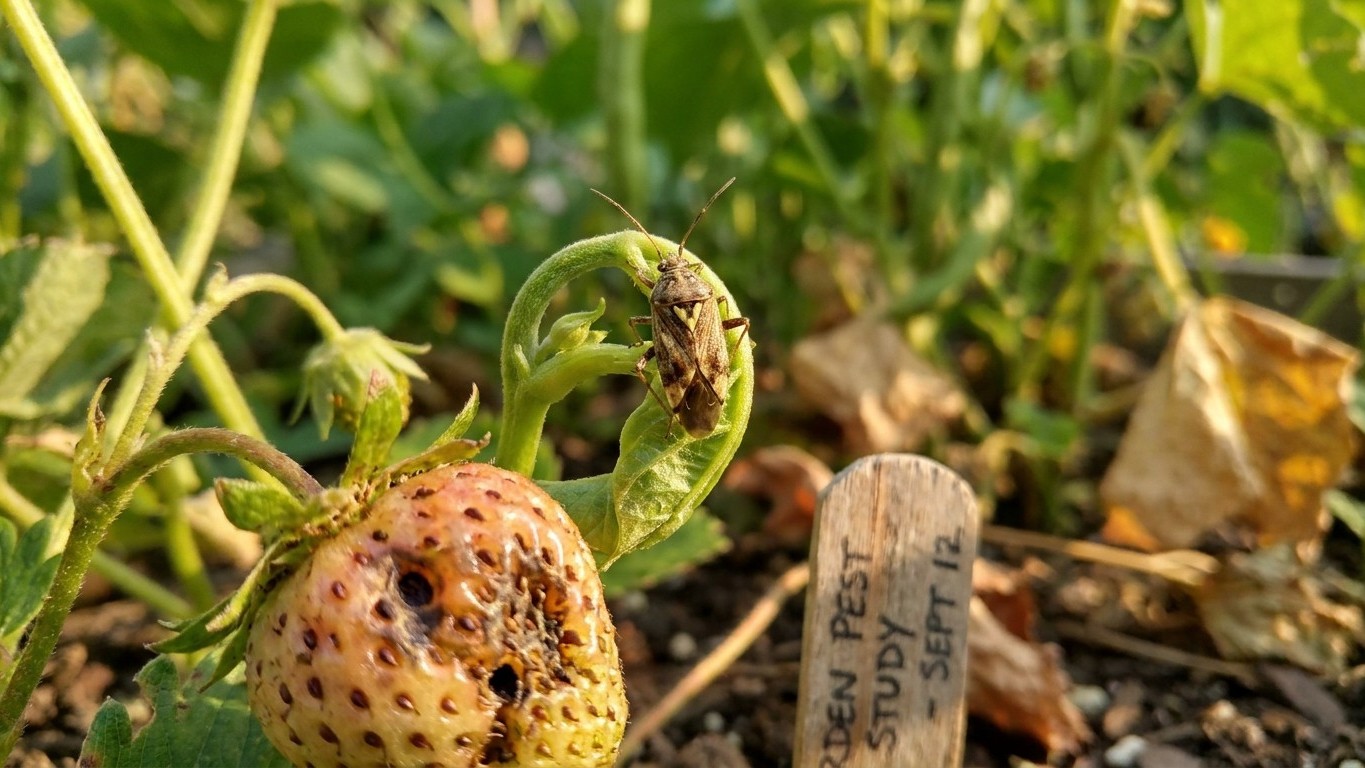

Tarnished plant bugs show up in Virginia gardens as soon as nighttime temperatures climb past the mid-50s, usually in April along the coast and into May inland. They stay active into fall, running through several overlapping generations, which means a single spring treatment rarely finishes the problem. Row covers timed to your last frost date remain the most reliable low-effort defense.
The weeks to watch
Adults become active as soon as daytime warmth pulls them out of winter cover, and Virginia’s local extension offices don’t publish a fixed calendar window specific to Lygus lineolaris the way they do for some fruit pests. What they do confirm, and what national entomology data backs up, is the general pattern: this insect overwinters as an adult in leaf litter, weedy field edges, and garden debris, then becomes active once temperatures hold above roughly 50-55°F for several consecutive days.
Spring emergence
The first wave moves into gardens in early to mid-spring, feeding on whatever tender new growth is available, before most vegetables are even in the ground. This is the wave that damages early strawberries and emerging perennial shoots.
Summer generations
From late spring through summer, tarnished plant bugs cycle through three to five overlapping generations in mid-Atlantic climates. Because generations overlap, you’ll find eggs, nymphs, and adults on the same plant at the same time by midsummer, which is part of why the damage seems to never fully stop.
Fall buildup
Populations often peak in late summer and early fall, feeding on late plantings and ornamentals before adults seek shelter for winter. Gardens with weedy borders left standing into October tend to host the biggest overwintering numbers, setting up next spring’s first wave.
Reading the calendar from your last frost
Virginia Beach’s last spring frost typically falls between March 20 and April 3, based on NOAA’s 1991-2020 climate normals for the NAS Oceana station. That’s the mild end of the state. Gardeners in the Blue Ridge or southwest Virginia should expect their own frost date to run weeks later, which pushes the whole insect timeline back to match.
Tarnished plant bugs answer to soil and air warmth, not to a printed date, so a cold snap after your frost date delays their buildup, and an early warm spell speeds it up. Use your own frost date as the anchor point, then work forward:
- Start from your local last spring frost date, not a statewide average.
- Add roughly two to three weeks of consistent warmth after transplanting before damage typically becomes visible on tender new growth, since the bugs need that stretch of warm days to move in and start feeding heavily.
That means row covers should go on at transplanting and stay on until flowering forces you to remove them for pollinators, whatever week that lands on for your specific location.
What it attacks, and what the damage looks like
Most gardeners notice the damage before they ever spot the insect. New growth on affected plants looks blackened and shriveled at the tip, a symptom sometimes called “blasted” terminals. Strawberries develop lumpy, seedy, misshapen fruit known as catfacing, where the achenes cluster unevenly because feeding disrupted the developing berry. Bean pods and pepper fruit can show pitted or dimpled scars, and leaves sometimes carry small brown stipples where the piercing mouthparts punctured tissue and injected a toxic saliva that kills cells around the feeding site.
Both nymphs and adults cause this damage, feeding externally with piercing-sucking mouthparts rather than boring into stems or roots. That matters for treatment: there’s no internal larval stage hiding inside the plant tissue the way there is with borers, so surface-level controls can still reach the insect at any point in its life cycle.
Crops most commonly affected in Virginia gardens include:
- Strawberries
- Snap beans and other legumes
- Tomatoes and peppers
- Celery and lettuce
- Peaches and other stone fruit
- Ornamentals like asters, dahlias, and chrysanthemums
How Virginia sits in this pest’s range
Tarnished plant bug is one of the most widely distributed insect pests in North America, found across nearly every U.S. state, from California vineyards to New England orchards. Virginia sits comfortably inside that continuous range, not near any edge of it, which means the question here isn’t whether the insect is present but when its populations peak in your particular part of the state.
That’s the real distinction for Virginia gardeners: this is a widespread pest, so the difference between a garden in Virginia Beach and one in the Shenandoah Valley isn’t presence, it’s timing. Coastal gardens see activity start weeks earlier in spring and run weeks later into fall, tracking the same frost-date gap that separates the two regions. Mountain and southwest Virginia gardeners should expect the whole seasonal cycle compressed into a shorter warm-weather window, with generations building more slowly and fall dieback for the insect arriving sooner.
What actually works against it
- Clear garden debris and weedy borders in fall. This removes the leaf litter and dead plant material where adults overwinter, cutting down the population that emerges next spring. It’s free and it works on next year’s numbers, not this year’s.
- Time transplanting around the first warm-weather wave. Getting seedlings established before adults migrate in heavily, or waiting until after the first flush passes, reduces the window of exposure for your most vulnerable young plants.
- Use row covers from transplanting through early growth. Because the insect feeds externally at every stage, a physical barrier works as long as it’s in place before bugs land on the plant. Covers stop working the moment they’re removed for flowering, since adults can migrate in immediately once pollinators need access.
- Hand-pick in early morning. Tarnished plant bugs often drop and play dead when disturbed, so shaking plants over a container of soapy water in cool morning hours catches a good share of the population on small plantings.
- Try reflective mulch on vulnerable crops like strawberries. Many gardeners use silver or reflective plastic mulch around susceptible plants, and some report fewer landings, but trials on how well it actually deters this specific insect are mixed and don’t offer a clear verdict either way.
- Rotate susceptible crops and avoid solid blocks of one host plant in larger garden plots, which limits how easily a buildup on one bed spreads to the next planting.
Once populations are already established and feeding heavily, cultural controls alone often aren’t enough, and that’s the point where a targeted, approved treatment applied at the right nymphal stage becomes the more realistic option, best confirmed with your local extension office for current guidance.
Common questions
Does tarnished plant bug damage strawberries every year in Virginia?
Not with the same severity. Years with a mild, early spring tend to produce heavier catfacing on strawberries because adults become active before the plants have hardened off from transplant stress, giving the bugs a longer feeding window on tender fruit.
Can row covers stay on all season?
No. Flowering crops need pollinator access, so covers have to come off once blossoms open, which is exactly when the insect can move back in. That’s why timing the cover’s removal to your specific bloom date matters more than leaving it on as long as possible.
Is the damage cosmetic or does it kill plants?
Mostly cosmetic on fruiting crops like strawberries and peppers, where the fruit becomes misshapen but the plant survives. On young transplants and tender terminal growth, heavy feeding can stunt or kill new shoots, which matters more for seedlings than for established plants.