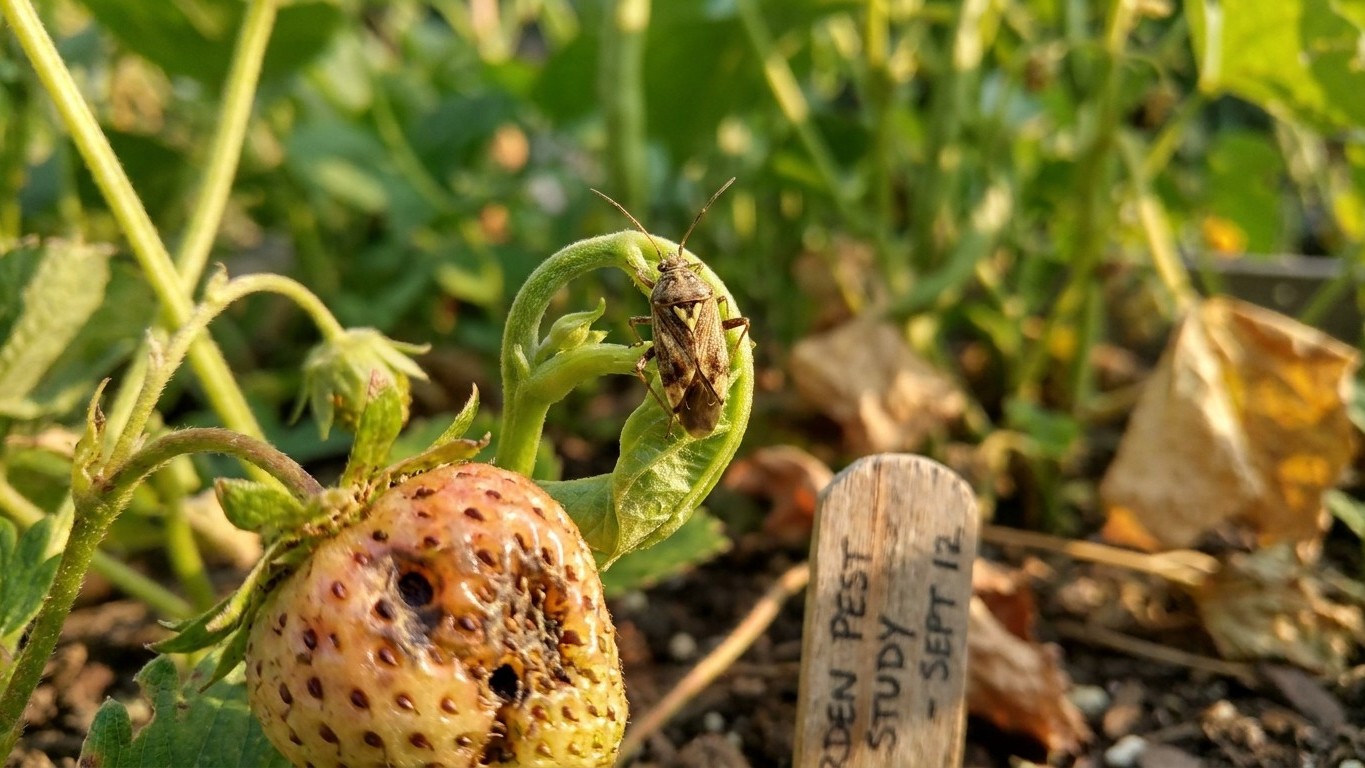

Tarnished plant bugs show up in Wisconsin gardens as soon as overwintering adults wake up in spring, and they stay active clear through September. There’s no single “arrival day” for this insect the way there is for a scheduled pest flight, because it depends on how fast the ground warms after winter, not a fixed date on the calendar.
The weeks to watch
Wisconsin’s own extension guidance runs the general garden-pest season from April through September, but it doesn’t publish a dedicated window for tarnished plant bug the way it does for a few other insects. The University of Wisconsin-Madison Division of Extension’s A2088 bulletin, for instance, notes that most corn pests don’t build up until mid-August and that squash vine borer damage shows up in late July, but it stops short of giving tarnished plant bug its own dated entry. That gap matters: it means a gardener has to lean on the pest’s general biology rather than a local calendar entry.
Spring emergence
Adults overwinter under leaf litter, in garden debris, and along field edges, then become active once the ground and air warm in spring. There’s no fixed date attached to this in the local record, but it lines up with the same stretch of weather that ends the region’s frost risk. Early activity is usually light and easy to miss, mostly scattered adults probing early Transplants and perennial beds.
Summer buildup
Numbers climb through the warm months as new generations overlap, and by mid to late summer, feeding damage on tender new growth becomes much more visible. This is consistent with the broader April-through-September activity window the state extension service applies to garden pests generally, even without a species-specific date attached to it.
Reading the calendar from your last frost
The one date most Wisconsin gardeners already track is the last spring frost, and for this part of the state that falls between April 16 and April 29, based on NOAA’s 1991-2020 climate normals for station USW00014839. Tarnished plant bug doesn’t answer to a printed date, though. It answers to soil and air warmth, so a frost window that arrives on the early side pushes activity earlier, and a late, cold spring holds it back by roughly the same stretch.
- Start from the local frost window: April 16 to April 29. Treat it as a normal range, not a guarantee, since any given year can run earlier or later.
- Count forward from whichever end of that window matches the year’s actual weather. A warm April means bugs and their feeding show up sooner after transplant; a cool, wet spring delays both.
What that means in practice: covers should go on at transplanting, right around the frost window closes, and they need to stay in place longer in a cold spring than in a warm one. There’s no fixed week-count the local extension office attaches to this pest specifically, so the safest approach is watching the plants rather than the clock, especially once nights stop dropping near freezing and tender new growth starts pushing out.
What it attacks, and what the damage looks like
Most gardeners notice the damage before they ever spot the insect responsible for it. New growth on affected plants often looks blackened, twisted, or stunted at the tips, as if something scorched the growing point. Fruit can come in lopsided or pitted with rough, corky patches, a symptom sometimes called cat-facing. Leaves may show pale stippled spots where feeding punctured the surface tissue. Both nymphs and adults cause this kind of damage with piercing-sucking mouthparts that inject saliva while feeding, and nymphs tend to do the most harm because they concentrate on soft, actively growing tissue rather than moving on quickly.
Plants commonly affected in home gardens and small farms include:
- Strawberries, where cat-facing shows up on developing berries
- Beans and other legumes, with damage concentrated on new terminal growth
- Potatoes, where feeding can distort young shoots
- Fruit trees such as apples and peaches, especially on new terminal growth in spring
- Ornamentals like asters and chrysanthemums, where blackened, stunted tips are common
Because damage concentrates on actively growing tips and developing fruit, checking new growth for blackened or deformed tissue is a faster way to confirm this pest than searching for the insect itself, which moves quickly and drops off plants when disturbed.
How Wisconsin sits in this pest’s range
Tarnished plant bug is one of the more widely distributed insect pests in North America, and Wisconsin sits well within that range rather than near an edge of it. For a species this widespread, the real difference between one state and another usually comes down to timing, not whether the insect shows up at all. Wisconsin’s own geography adds a layer to that timing question. Lake Michigan delays the first fall freeze along the shoreline, which stretches the growing season, and the pest’s active window, longer near the lake than it does inland. Southern Wisconsin away from the lake typically sees its first fall freeze in early October, while the northern part of the state usually freezes considerably earlier. That means a garden in Door County can expect a longer stretch of pest activity in a given year than one near Superior, even though both sit in the same state and the same broad range for this insect.
What actually works against it
- Time planting to dodge peak buildup. Since populations tend to build through the season rather than spike on a fixed date, getting sensitive crops like strawberries and beans established and past their most vulnerable growth stage before mid-summer reduces the window of exposure.
- Use row covers at transplant. A physical barrier keeps adults from reaching young plants at all, which is the point in the life cycle where prevention is cheapest. The catch: covers have to come off before flowering on crops that need pollinators, and once removed, they offer no further protection.
- Clear garden debris in fall. Removing old plant material, mulch piles, and weedy edges takes away the overwintering sites adults use to survive winter locally, which can reduce how many bugs are on hand come spring.
- Hand-pick or trap in the morning. The insects move sluggishly in cool morning temperatures, which makes hand-picking into soapy water or using sticky cards more effective early in the day than in the heat of the afternoon.
- Rotate susceptible crops. This helps less with tarnished plant bug than with many other pests, since adults fly readily between plantings, but it still limits how much a resident population can concentrate on one bed year after year.
None of these measures reverse damage that’s already happened. Once a growing tip has blackened or a Strawberry has cat-faced, that tissue stays marked; the goal from that point forward is protecting the next round of new growth, not repairing what’s already been fed on.
Common questions
Does Wisconsin’s extension service list a specific spray date for tarnished plant bug?
No. The state’s home garden pest guidance (A2088) covers general timing for garden insects from April through September but doesn’t publish a dedicated calendar entry for this particular species, unlike it does for a few other common pests.
Can row covers stay on all season to avoid the problem entirely?
Not on crops that need pollination. Flowering crops like strawberries and beans need covers removed once blossoms open, which is exactly when the plant becomes vulnerable again, so covers work best as an early-season tool rather than a full-season fix.
Is the damage worse near Lake Michigan than inland?
The lake doesn’t change whether the pest shows up, but it does stretch the growing season along the shoreline by delaying the first fall freeze, which can mean a longer window of activity there compared to inland or northern parts of the state.