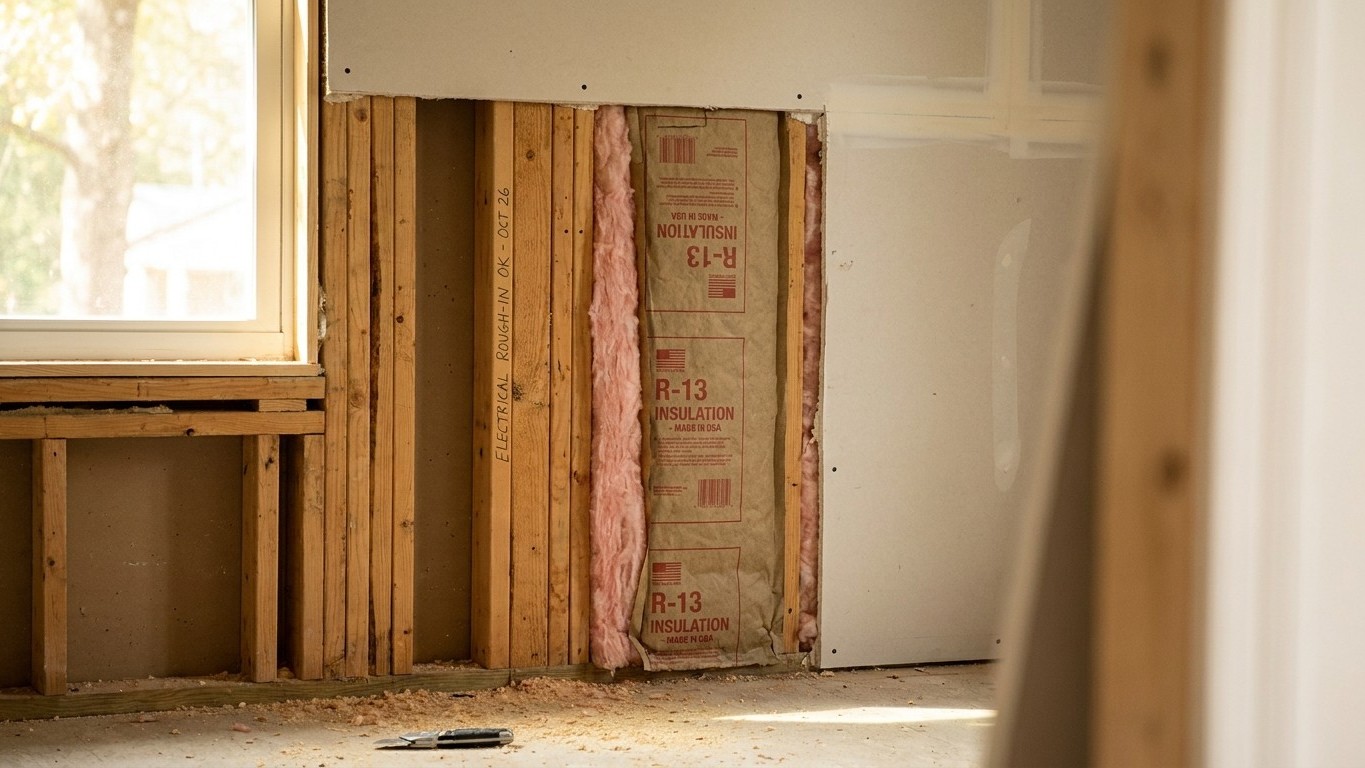

No. Under the 2021 International Residential Code, Section R702.7, Louisiana falls entirely within the climate zones the code exempts from the interior vapor retarder requirement. Every one of the state’s 64 counties sits in either Zone 2A or Zone 3A, and the code’s own exception covers “Climate Zones 1, 2 and 3.” That’s the short version. The longer version explains why the code splits the country this way, and why getting it backwards can cost a homeowner more than a failed inspection.
What the code asks for in Louisiana

The rule itself, from R702.7, reads plainly: a vapor retarder of the class listed in Table R702.7(2) “shall be provided on the interior side of frame walls.” Read alone, that sentence sounds like a universal requirement. It isn’t. The code carries four exceptions, and one of them removes the obligation entirely for warm climates: “A vapor retarder shall not be required in Climate Zones 1, 2 and 3.”
Louisiana’s counties split between two of those exempt zones. Thirty-seven counties sit in Zone 2A, twenty-seven sit in Zone 3A, according to the IECC’s Table R301.1 climate zone assignments by county. That’s a real split, and normally a split like that means two different answers for two different parts of the same state. Not here. Because the code’s exception names Zones 1, 2, and 3 as a group, both of Louisiana’s zones land inside it. A homeowner in Zone 2A near the coast and one in Zone 3A up near the Arkansas line are working under the same exemption, even though they’re technically in different climate zones on paper.
Not required is not the same as forbidden
That word “exempt” trips people up. The code removing an obligation is not the code banning a material. Nothing in R702.7 prohibits a vapor retarder in a Louisiana wall. What the exception does is stop the code from mandating one automatically, which matters because in this climate, mandating the wrong kind can actively cause damage (more on that below). A builder who wants to install one anyway, for a specific reason tied to a specific wall assembly, isn’t breaking any rule. They’re just not required to.
This page can’t tell an individual reader what to put in their own wall. It can tell you what the model code says and what that depends on. The code actually enforced on a given house is whichever edition and amendment the local jurisdiction has adopted, not the model text quoted here. That’s why the next call always has to go to the local building department, not to an article. A wall built with the wrong vapor control doesn’t announce the mistake. It rots quietly behind the drywall, and the owner usually finds out only when the damage has already spread.
Why the answer is the opposite in a warm climate
Here’s the mechanism the exception is actually protecting against. In a cold climate, the moisture problem starts inside the house. Warm, damp indoor air (from showers, cooking, breathing) pushes toward the colder exterior sheathing during winter. A vapor retarder on the interior side of the Insulation stops that indoor moisture before it reaches the cold surface where it would condense. That’s the entire logic behind requiring one in a place like Minnesota or Maine.
Louisiana runs on the opposite physics. The moisture load arrives from outside, not inside. Hot, humid air pushes inward through the wall assembly for most of the year, and air conditioning keeps the interior side of that wall cool. If a builder installs the same kind of impermeable interior vapor retarder that makes sense in a cold zone, that layer becomes the cold surface the incoming moisture hits, from the wrong direction. The U.S. Department of Energy’s Building America program describes the result directly: “If the wall contains a vapor retarder on the interior side of the insulation, the water vapor will condense on this cool, impermeable surface,” and the consequence is “ruined insulation, mold, and structural rot of framing members.”
That’s not a minor footnote. It’s the reason the code writes different rules for different zones in the first place. This isn’t bureaucratic inconsistency. It’s the code following the direction the water is actually traveling, which reverses between a Minneapolis winter and a New Orleans summer.
The three classes, and why the word matters
Part of the confusion around this topic comes from treating “vapor barrier” as one single product. The code doesn’t. It defines three classes by how much moisture they let pass, measured in perms, and the differences between them are the entire point.
| Class | Example materials | Perm rating |
|---|---|---|
| Class I | Sheet polyethylene, nonperforated aluminum foil | 0.1 perm or less |
| Class II | Kraft-faced fiberglass batts, vapor retarder paint | Above 0.1, up to 1.0 perm |
| Class III | Latex or enamel paint | Above 1.0, up to 10.0 perm |
Polyethylene sheeting is what most people picture when they hear “vapor barrier,” but that mental image skips a step. Polyethylene is specifically a Class I retarder, the tightest of the three, and it’s the class the DOE warns against installing on the interior side in a warm-humid climate. The disagreement between a builder in Minnesota and a builder in Louisiana was never about whether to have a vapor retarder at all. It’s about which class belongs on which side of the wall, in which climate.
There’s a detail worth knowing here: ordinary latex paint qualifies as a Class III vapor retarder. Most homeowners already have one on their walls and have no idea. That’s usually the appropriate class for a warm-humid assembly, since it lets the wall breathe rather than sealing one side shut.
One more distinction, since it gets confused constantly: a vapor retarder and an air barrier are not the same thing. A vapor retarder controls water vapor diffusion through a material. An air barrier stops bulk air movement through gaps and cracks. Some products do both jobs at once, but they’re solving different problems, and a wall can need one without needing the other.
Where the rule stops
Beyond the Climate Zone 1-2-3 exemption that covers Louisiana outright, R702.7 lists three other situations where the interior vapor retarder requirement doesn’t apply at all, regardless of zone:
- Basement walls
- The below-grade portion of any wall
- Construction where accumulation, condensation, or freezing of moisture will not damage the materials
The basement exception is the one most homeowners actually run into. A concrete foundation wall sits in constant contact with soil moisture and holds onto it for years, releasing it slowly. That assembly needs to be able to dry toward the interior. Seal an impermeable sheet over the inside face of a basement wall and the moisture already in the concrete has nowhere to go. It gets trapped between the concrete and the retarder, which is exactly the condition that leads to mold and material breakdown. For the fuller mechanics of that specific case, see the basement wall guide on this site.
None of these four exceptions are Louisiana-specific quirks. They’re written into the model code itself, which means a builder in a cold Zone 6 state deals with the basement exception too, even while the above-grade walls in that same house require a Class I or Class II retarder. The exceptions and the general rule sit side by side in the same section, and it’s the combination of zone plus wall location that determines which one applies to a specific assembly.
Who actually decides, in Louisiana
The IRC is a model code. No state or county is legally bound by it until a local jurisdiction formally adopts it, often with amendments specific to that jurisdiction. That gap between the model text and the actual local rule is why this article can explain what the 2021 IRC says nationally but can’t tell a reader in Baton Rouge or Shreveport what their parish inspector will actually check. The only source that can answer that is the local building department, and the specific code edition that department has adopted.
This matters more in Louisiana than in some places because the state carries a genuinely mild winter by national standards. New Orleans averages roughly 1,176 heating degree days a year against roughly 3,206 cooling degree days, based on NOAA’s 1991-2020 climate normals for that station. Degree days measure heating demand accumulated over the year, not a temperature reading, and a figure that low means the winter heating season here is short and light compared to a northern state that might rack up five or six times as many heating degree days for the same 65°F baseline. That’s the physical reason the vapor-drive direction in Louisiana runs opposite to a cold-climate state most of the year, and why the code question carries real weight here rather than being an afterthought.
None of that changes the basic advice. The rule that applies to a specific wall in a specific parish is the one adopted locally, not the model code quoted on this page. A wall assembled with the wrong vapor control doesn’t fail at the inspection. It fails years later, quietly, inside the framing, long after the drywall is up and the builder is gone. The local building department is the only place that question gets answered for an actual house.