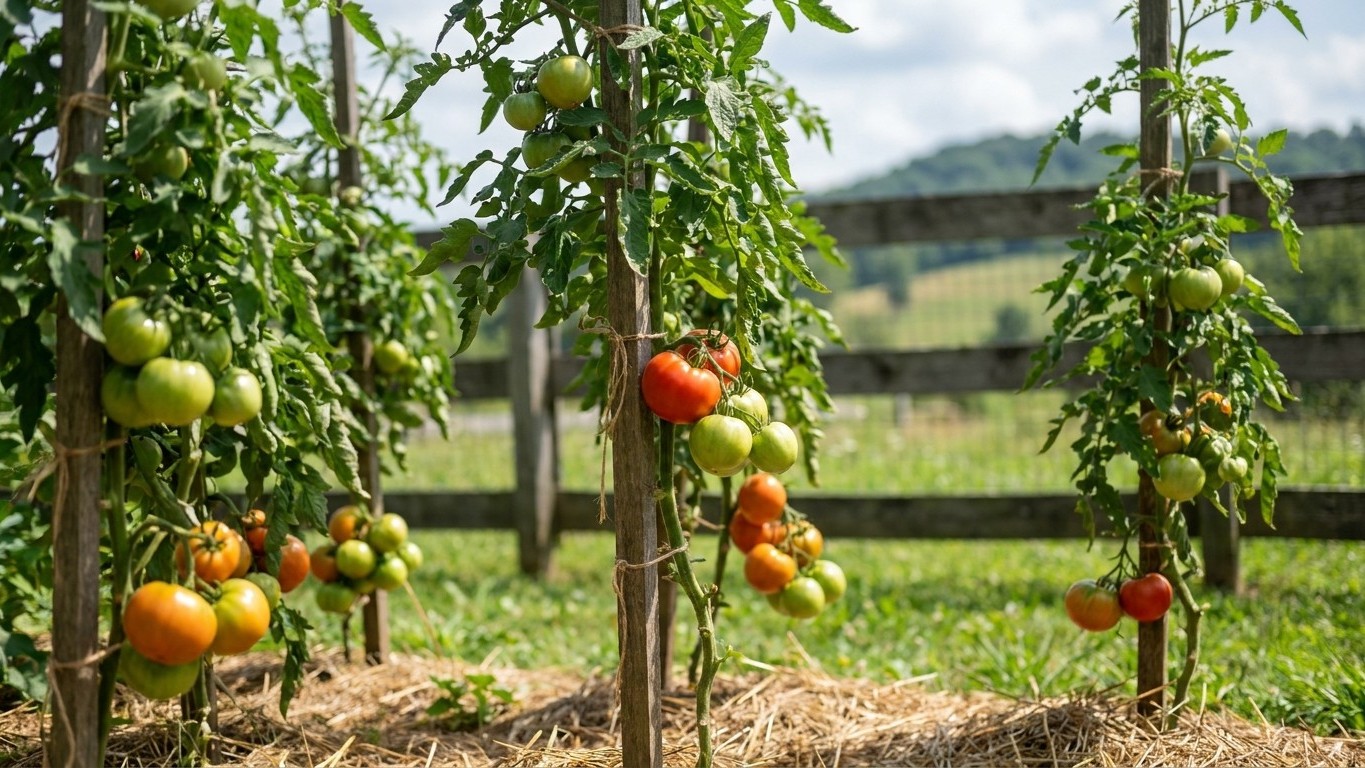

The short answer: most Delaware gardeners start picking ripe tomatoes in mid-to-late July and keep going until the first fall frost forces a final harvest, somewhere between late October and early November depending on where you live. But “ripe” isn’t the only useful picking stage, and knowing when to pull green fruit off the vine matters just as much as knowing when to pick red ones.
When to Pick Tomatoes in Delaware
Color is the first signal, but it’s not the only one. A tomato at “breaker” stage, showing just a blush of pink or yellow at the blossom end, has already stopped taking up sugar from the plant in any meaningful way. Once that color break happens, the fruit will finish ripening whether it’s attached to the vine or sitting on your kitchen counter. That single fact changes how you should think about the whole harvest window, because it means you don’t have to leave every tomato hanging until it’s fully red.
Firmness matters too. A ripe tomato should give slightly under gentle thumb pressure, not feel rock-hard or mushy. Fruit picked too early, still green with no color break at all, will often just sit and shrivel instead of ripening. Fruit left too long on the vine in Delaware’s humid late-summer air is more prone to splitting after a heavy rain, or to rot setting in at the stem scar before you even notice.
Racing the fall frost
The calendar pressure comes in fall. At the Wilmington-area reference station, NOAA’s 30-year climate normals put the first fall freeze (32°F) between October 26 and November 7. That’s a two-week window, not a single date, and it’s measured at an airport station, not your backyard. Gardens in low-lying spots, rural valleys, or areas without the urban heat buffer around Wilmington often see their first frost one to two weeks earlier than that station reports. If you garden in Sussex or western Kent County, or anywhere away from the coast, treat late October as your working deadline rather than early November.
Delaware sits across USDA Hardiness Zones 7a to 8a, a range built entirely on average extreme winter minimum temperatures, not on frost timing. It’s a useful zone number for choosing perennials, but it tells you almost nothing about when your tomato plants will stop producing in fall. What actually stops the ripening clock is temperature, not the zone map: once nighttime lows regularly dip into the 40s and daytime highs stay under 50°F, ripening on the vine slows dramatically or stops. That threshold tends to arrive before the hard frost does, so the practical picking pressure often starts in early-to-mid October, well ahead of any freeze warning.
What to do with the green ones
When a hard frost is forecast, the smart move is a clean sweep rather than picking selectively. Go through the plant and sort what you find into three rough piles: fruit with color break (pink, orange, or yellow blush), full mature green (fruit that’s reached its final size, glossy, and pale green rather than dark and dull), and immature green (small, hard, dark green fruit still attached near the growing tips).
Fruit with any color break should go in the kitchen for near-term eating; it will finish ripening within days at room temperature. Mature green tomatoes are the ones worth saving for a slow indoor ripen, since they’ve completed their growth and just need time and the right conditions. Immature green fruit is a different story: it rarely ripens well, tends to shrivel or rot before turning color, and often works better cooked (fried green tomato slices, relish, chow-chow) than left waiting for a ripeness that may never come.
Telling mature green from immature
The visual test is straightforward but easy to get wrong under pressure. Mature green fruit has a slight waxy sheen and the surface looks smooth and filled out, almost like it’s holding its shape from internal pressure. Cut one open (sacrifice one fruit to check the rest) and you should see gel starting to form around the seeds, a sign the fruit has reached physiological maturity even without any color. Immature fruit, by contrast, looks matte, feels denser and harder, and the interior is mostly solid flesh with underdeveloped seed cavities.
Some gardeners pull the entire plant before a hard freeze, roots and all, and hang it upside down in a garage or shed. The theory is that fruit left attached to the vine ripens slightly better than fruit picked loose, since some nutrient transfer continues for a short time. It’s a reasonable approach if you have the space, but it’s not dramatically better than picking individually and sorting into trays, and it takes up a lot more room for what amounts to a marginal gain.
Ripening indoors, and how long they keep
Mature green and breaker-stage tomatoes ripen best somewhere between 65°F and 75°F, out of direct sunlight. That last part surprises people: a sunny windowsill looks like the obvious spot, but direct sun raises surface temperature unevenly and can cause soft spots or premature rot rather than faster, better ripening. A kitchen counter, a paper-lined box, or a single layer in a cardboard flat all work better than a windowsill.
Spacing matters more than most people expect. Tomatoes touching each other, or piled more than one or two layers deep, ripen unevenly and spread rot fast if one fruit goes soft. Check the batch every day or two, pull out anything with color, and remove anything that’s gone soft or developed a moldy spot before it spreads to its neighbors.
The newspaper-wrap method, and how long fruit lasts
Wrapping individual mature green tomatoes in newspaper or paper towel and setting them in a single layer in a box is a common way to stretch out ripening over weeks rather than days, particularly useful if you’d rather have a trickle of ripe tomatoes through November than a glut all at once. The paper isn’t doing anything magical: it’s mostly limiting airflow slightly, keeping fruit-to-fruit contact minimal, and making it easy to spot problems by unwrapping one at a time.
Once a tomato is fully ripe, it holds up best at room temperature for a few days, eaten sooner rather than later for flavor. Refrigeration slows the softening but also dulls flavor and texture noticeably, something worth knowing before you stash a bowl of ripe fruit in the crisper drawer out of habit. For tomatoes still ripening from green, cold storage is worse than just slow, it can stop the ripening process outright if temperatures drop below roughly 55°F, which is part of why a chilly mudroom or unheated porch isn’t the ripening spot it might seem to be.
What goes wrong here
The most common mistake isn’t a pest or a disease, it’s timing math. Gardeners see the “first fall frost” date, note that it’s early November for the reference station, and assume they have weeks longer than they actually do. Because that window comes from an airport station and inland or low-lying gardens often see frost one to two weeks earlier, a lot of green tomatoes end up damaged by an unexpected cold snap in mid-October, well before the reference date arrives.
Frost-damaged fruit looks fine at first glance but often develops a water-soaked, mushy patch within a day or two, and it won’t ripen properly even if brought inside quickly. Fruit that’s been through a light frost sometimes still ripens if picked immediately and the damaged spot is small, but anything with more than a small blemish is better used right away than saved for storage.
Humidity is the other recurring headache. Delaware’s late-summer air holds enough moisture that fruit sitting too long, whether on the vine or in a storage box, is prone to soft rot and mold, especially where fruit touches other fruit or the container itself. Good airflow around ripening tomatoes, and daily checking rather than a set-it-and-forget-it approach, prevents more losses than any other single habit.
Picking too early out of frost anxiety causes its own problem: fruit pulled while still fully immature green, with no gel forming around the seeds, tends to shrivel rather than ripen, wasting fruit that might have turned red if left another week. The fix isn’t complicated, just uncomfortable to sit with: check the extreme minimum window for your zone, watch your own thermometer rather than relying only on the reference-station date, and pick in stages as color break appears rather than stripping the plant all at once out of caution. For county-specific guidance, Delaware’s Cooperative Extension service is a useful next check.
Common questions
Can a tomato ripen after a light frost touches it?
Sometimes, if the damage is limited to a small spot and the fruit is picked and used within a day or two. Fruit with widespread water-soaked patches usually won’t ripen well and tends to break down in storage instead.
Do tomatoes ripen faster in a paper bag?
A loosely closed paper bag or box slows airflow slightly and can nudge along ripening a bit, but temperature (65°F to 75°F) matters far more than any bag or wrap. It’s a small assist, not the main driver.
Should I pick tomatoes before a heavy rain?
If fruit is already at color break or fully ripe, picking before a heavy rain reduces the risk of splitting from a sudden water uptake. Green fruit still on the vine isn’t at the same immediate risk, since it isn’t taking up water and sugar the same way ripe fruit is.
How many green tomatoes typically ripen indoors versus rot?
No reliable published figure covers this for Delaware conditions specifically, and it varies a lot by variety, storage temperature, and how carefully fruit is sorted and checked. Mature green fruit checked and sorted regularly has noticeably better odds than fruit left untouched in a pile for weeks.