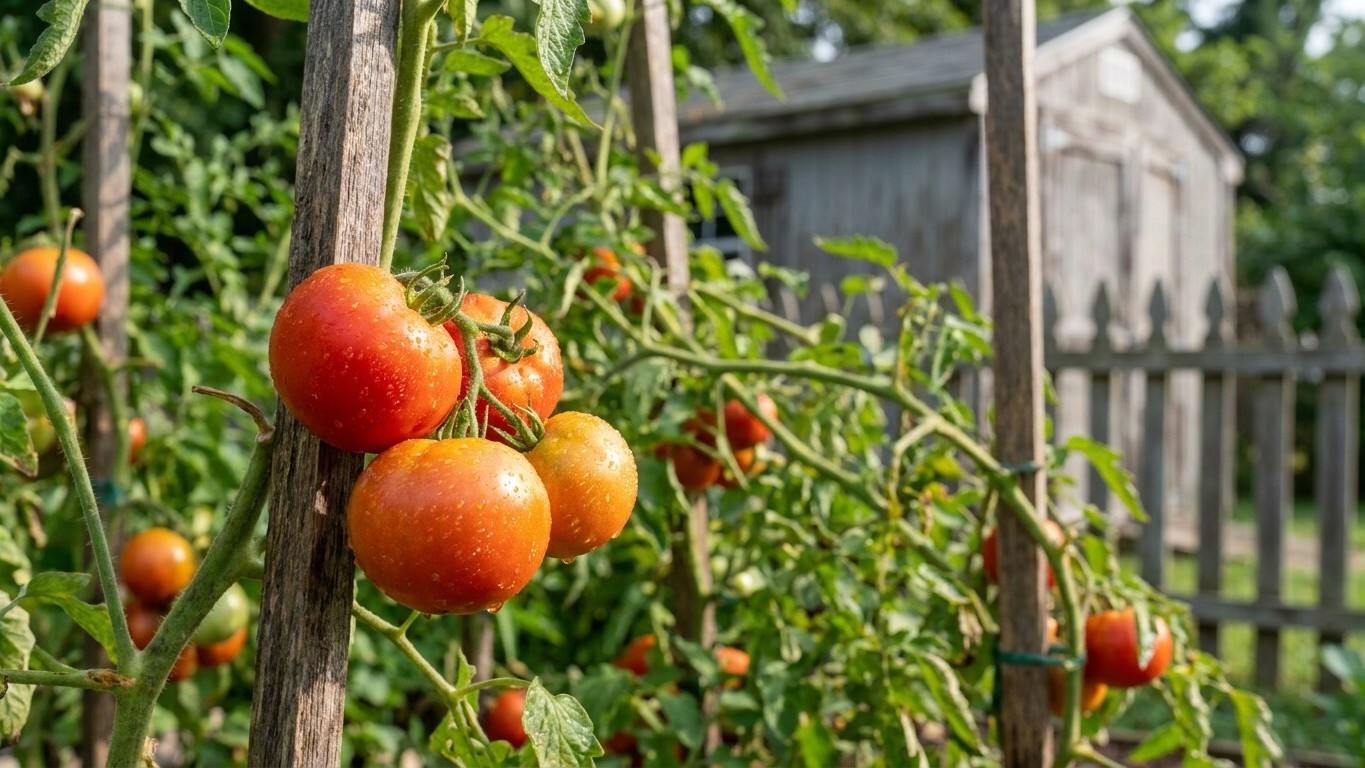

Wilmington’s weather station is what actually decides your planting date here, whether your garden sits there or not. NOAA’s NCEI defines the frost window as the stretch where a 32°F freeze carries a 30 to 70 percent chance of happening, and that April 3 to April 14 range is the sturdiest anchor Delaware growers have — even though it comes from a single point. Sussex County gardens near the coast tend to clear frost earlier than that window suggests, while inland or higher ground in New Castle and Kent counties often runs a week or two behind it.
When to plant Tomatoes in Delaware

The frost window above is measured at the Wilmington weather station, and NOAA’s NCEI defines it as the stretch of the calendar in which a 32°F freeze has roughly a 30 to 70 percent chance of occurring in a given year. That’s the most solid local anchor available, but it comes from one station. Gardens closer to the coast in Sussex County often see their last frost arrive on the early side of that window, while yards well inland or at higher ground in New Castle and Kent counties can run one to two weeks later than the Wilmington figure, since suburban and rural sites typically lag an airport station in spring. If a late frost has caught you before, plant toward the back half of the window rather than the front.
Starting seeds indoors
Tomato seed wants six to eight weeks under cover before it’s ready to go out as a hardened transplant. Count backward from the Wilmington range and the arithmetic runs like this: six weeks before April 3 lands near the third week of February, and eight weeks before April 14 lands closer to mid-February. Put the two ends together and most gardeners working from this reference point end up sowing indoors somewhere between early and late February, with the exact week depending on how many weeks you count and which end of the frost range you’re planning toward. If your site tends to run frosty later than Wilmington’s, push your sowing date a week or so later to match.
Sow seed a quarter inch deep in a seed-starting mix, keep it warm until germination, and move seedlings under strong light the moment they emerge. Leggy, pale stems almost always mean not enough light, not too little water.
Hardening off and transplanting
Before a transplant goes into open ground it needs time outdoors to toughen up. Set trays outside in a sheltered spot for a couple of hours the first day, then add time and sun exposure over the following week or so until the plants can handle a full day outside without wilting. Skip this step and even a plant that survives will sulk for two weeks after transplanting.
Transplant out once you’re past the Wilmington frost window, or later still if your own site runs cooler. Soil that’s still cold sets tomato growth back more than a light frost does, so if the ground feels chilly and wet, it usually pays to wait a few extra days rather than rush the calendar. For county-specific timing and current-season updates, the Delaware guides hub is a good place to check what other growers in your part of the state are doing this season.
Soil and site preparation
Tomatoes want full sun, meaning six to eight hours of direct light a day at minimum. Anything less and you’ll get more vine than fruit. Pick the sunniest, most open spot in the yard, away from the shade line of trees and fences as the season progresses and the sun angle shifts.
Soil that drains well matters more than soil that’s especially rich. Tomatoes planted in heavy, waterlogged ground are far more prone to root disease and blossom end rot than tomatoes in soil that dries out between waterings. If your bed holds standing water after a hard rain, work in compost or aged manure to open up the texture, or build a raised bed four to six inches high so roots stay above the wet layer.
Timing the bed prep
Do the heavy soil work weeks before transplanting, not the day of. Turn in two to three inches of compost in early spring so it has time to break down and integrate before roots arrive. A soil test taken the fall or early spring before planting will tell you whether you need lime or extra phosphorus, and it’s cheap insurance against guessing.
Space indeterminate varieties 24 to 36 inches apart in rows three to four feet apart, and determinate varieties a bit closer at 18 to 24 inches, since they stay more compact. Crowded plants compete for light and airflow, and poor airflow is one of the biggest drivers of foliar disease in a humid Mid-Atlantic summer.
Varieties that suit Delaware
The trait that matters most for this region is disease resistance, not raw speed. Delaware’s growing season is long enough to ripen a full range of tomatoes from early cherry types through long-season paste varieties, so the real question is which diseases you’re likely to fight, not whether you’ll run out of summer.
For a quick harvest and strong resistance packages, Sun Gold (57 days from transplant, indeterminate) resists Tobacco Mosaic Virus and Fusarium wilt race 1, and Sakura (55 days, indeterminate) adds resistance to nematodes, Tomato Mosaic Virus and two races of Fusarium wilt. Both are cherry types built for snacking rather than sauce. Jasper (60 days, indeterminate) carries high resistance to late blight, which is worth having if your garden has struggled with blight in a wet year.
For slicers, Celebrity Plus (78 days, determinate) resists nematodes, gray leaf spot and Tomato Mosaic Virus, and its determinate habit means a more compact plant that doesn’t need heavy staking. Big Beef Plus (72 days, indeterminate) carries the same three resistances on a taller vine. Heirlooms like Brandywine (78 days) and Cherokee Purple (72 days) carry no listed disease resistance at all, so they’re a better fit for a garden with clean soil history and consistent watering than for a spot that’s had wilt or leaf spot problems before.
For sauce and paste, San Marzano II (78 days, indeterminate), Amish Paste (85 days, indeterminate), Granadero (75 days, indeterminate, resists nematodes, Verticillium wilt and Tomato Mosaic Virus) and Tiren (75 days, indeterminate, resists Verticillium wilt, Tomato Mosaic Virus and Fusarium wilt race 1) all fit comfortably inside the season once transplanted from the April window. Amalfi (68 days, determinate) resists nematodes and shows intermediate resistance to both late and early blight, useful where those two diseases have shown up in past seasons. Juliet (60 days, indeterminate) is a grape tomato with intermediate resistance to both blights and a habit of producing in long clusters.
Days-to-maturity figures on the seed packet are counted from the transplant date, not from seed, and they shift by a week or two depending on the weather that season. Counting from the early end of the Wilmington transplant window, a 55 to 60 day variety like Sakura or Jasper should start ripening in late May to mid-June, while a 75 to 85 day variety like Granadero or Amish Paste won’t color up until mid to late June at the earliest, and often into July if the transplant went in on the later side of the frost window.
| Variety | Days to maturity | Habit | Notable resistance |
|---|---|---|---|
| Sakura | 55 | Indeterminate | Nematodes, ToMV, Fusarium 1 & 2 |
| Sun Gold | 57 | Indeterminate | TMV, Fusarium 1 |
| Jasper | 60 | Indeterminate | Late blight (high), early blight |
| Juliet | 60 | Indeterminate | Late & early blight (intermediate) |
| Amalfi | 68 | Determinate | Nematodes, late & early blight |
| Big Beef Plus | 72 | Indeterminate | Nematodes, gray leaf spot, ToMV |
| Granadero | 75 | Indeterminate | Nematodes, Verticillium, ToMV |
| Celebrity Plus | 78 | Determinate | Nematodes, gray leaf spot, ToMV |
| San Marzano II | 78 | Indeterminate | None listed |
| Amish Paste | 85 | Indeterminate | None listed |
What to plant alongside
Basil is the pairing most gardeners try first, mostly because it shares water and sun needs with tomatoes and grows well in the same bed. The idea that it repels tomato hornworms has never held up under controlled testing, but it’s a harmless, useful neighbor that fills space and gets used in the kitchen alongside whatever you pick that week.
Marigolds have a real mechanism behind part of their reputation. French marigold roots release compounds that suppress certain root-knot nematode populations in the soil, but the documented effect comes mostly from growing marigolds as a season-long cover crop in advance, not from tucking a few plants between tomatoes for looks. Borage and other bee-friendly flowers earn their spot by pulling in pollinators and predatory insects, which matters more for squash and peppers than for tomatoes, since tomato flowers self-pollinate, but a bed buzzing with beneficial insects still helps keep aphid and hornworm numbers down.
What to keep apart
- Potatoes share several soil-borne diseases with tomatoes, including late blight, so keep them in separate beds and rotate both away from last year’s spot.
- Corn draws the same moth that lays tomato fruitworm eggs, so planting the two side by side can increase pressure on both crops.
- Fennel releases compounds from its roots that stunt the growth of many garden vegetables, tomatoes included, and belongs in its own bed away from the vegetable garden.
- Brassicas like cabbage and broccoli don’t share disease with tomatoes but do compete hard for the same nitrogen, so give both full-strength feeding if you grow them close together.
Watering, feeding and support
Tomatoes want deep, infrequent watering rather than a light daily sprinkle. A soaking that reaches six inches down encourages roots to grow deep and search for water on their own, while shallow daily watering keeps roots near the surface where they dry out fast in a hot stretch. Water at the base rather than overhead, since wet foliage sitting through a humid night is exactly what fungal disease wants.
A two to three inch layer of mulch, straw or shredded leaves both, keeps soil moisture even and stops the wet-dry swings that cause blossom end rot and fruit cracking. It also keeps soil-borne fungal spores from splashing onto lower leaves during rain, which is one of the more overlooked ways early blight gets started.
Feeding through the season
Work a balanced fertilizer into the bed at transplanting to get roots established, then hold off on repeating a high-nitrogen feed once flowering starts. Too much nitrogen at bloom time pushes leafy growth at the expense of fruit set. Once the first clusters have set fruit, switch to a fertilizer lower in nitrogen and higher in potassium to support the fruit that’s already forming.
Staking, caging and pruning
Indeterminate varieties like Sun Gold, Big Beef Plus and Amish Paste keep growing and producing until frost, and they need a sturdy stake or cage from the start, six feet tall or better, since they’ll outgrow anything smaller. Determinate types like Celebrity Plus and Amalfi stay more compact and set most of their fruit in a shorter window, so a standard tomato cage is usually enough. Pruning suckers, the small shoots that form in the joint between the main stem and a branch, keeps indeterminate plants from turning into a tangle, improves airflow, and directs more energy into fruit rather than foliage. Determinate varieties don’t need suckering, since removing growth points cuts down the very fruit they’re bred to set all at once.
Common problems

Most tomato trouble in a home garden traces back to inconsistent water, not disease, so rule that out first before reaching for a spray.
Physiological problems
Blossom end rot shows up as a flat, sunken, leathery brown patch on the bottom of the fruit while the rest still looks fine. It’s caused by uneven calcium uptake, which almost always traces back to inconsistent watering rather than a true calcium shortage in the soil. Even, deep watering and a steady mulch layer fix it faster than a calcium spray does. Cracking, the concentric rings or splits near the stem end, comes from the same root cause: a dry spell followed by a heavy rain or deep watering swells the fruit faster than the skin can stretch.
Poor fruit set, meaning plenty of flowers but few tomatoes, is common once daytime and nighttime temperatures both run hot for an extended stretch, since tomato pollen becomes less viable in sustained heat. It usually resolves on its own once temperatures moderate later in the season. Gardeners following our guide to growing tomatoes in Florida deal with this same heat-driven fruit set problem far earlier and more often in the year, since their season runs hotter for longer.
Diseases and pests
- Early blight: dark concentric-ringed spots on lower, older leaves first, spreading upward.
- Late blight: greasy, water-soaked patches on leaves and stems that spread fast in cool, wet weather.
- Fusarium and Verticillium wilt: yellowing and wilting that starts on one side of the plant or one branch at a time.
- Tomato hornworms: large green caterpillars, often spotted first by their black droppings under a stripped branch.
- Aphids and whitefly: clusters on the underside of leaves, sticky residue on foliage below them.
- Stink bugs: cause pale, cloudy spots on the fruit surface just under the skin.
Where wilt or blight has been a repeat problem in your soil, the resistance codes on the seed packet are worth checking before you buy. Tiren and Granadero both carry high resistance to Verticillium wilt, and Jasper carries high resistance to late blight specifically, which matters more some years than others depending on how wet the spring runs.
Pests that actually show up in Delaware
Delaware’s Cooperative Extension keeps a running list of insect pests for the home vegetable garden, but only two of them bother tomatoes directly. The rest belong to squash, cucumbers, beans, and cabbage family crops growing nearby, so if you keep a mixed garden, watch for them there instead.
Colorado potato beetle is the one to check for first. It shows up as ragged, chewed holes eaten straight through the leaf, sometimes stripping a branch down to the stem, and you’ll find clusters of bright orange egg masses on the underside of the foliage before the damage gets bad. The University of Delaware Cooperative Extension notes the beetle runs two generations in the region, so a plant that looked clean in June can take a second hit in late July or August once the next brood hatches. Hand-picking the adults and crushing the egg clusters is the single most effective non-chemical control, and it works best if you check plants every few days rather than waiting for visible defoliation.
Tomato and tobacco hornworm is the other tomato-specific pest on the state’s list, and it peaks in the same July-through-August window as the beetle’s second generation. Beyond spotting the caterpillar itself, the fix that actually holds up in a home garden is Bacillus thuringiensis (Bt) sprayed on the foliage while the caterpillars are still small, since hand-picking alone rarely keeps up once a plant hosts more than one or two.
Squash bug, squash beetle, squash vine borer, and both spotted and striped cucumber beetles feed on squash and cucumber vines, not tomato foliage, and squash bugs in particular become active starting in June. Harlequin bug and imported cabbageworm target cabbage, broccoli, and related crops, with harlequin bug capable of two or three generations across a mid-Atlantic season. Mexican bean beetle sticks to snap beans and lima beans, laying eggs continuously through summer even though it only completes one generation. None of these will touch a tomato plant, but a gardener growing all of these crops together needs to know which insect belongs on which plant before reaching for any control. Full non-chemical options for each are laid out on the University of Delaware Cooperative Extension’s pest control fact sheet.
Harvest and end of season
Pick tomatoes once they’ve reached full color for the variety and give slightly to a gentle squeeze. Fruit picked at the breaker stage, showing the first blush of color, will ripen fully indoors at room temperature within a few days and tastes nearly as good as vine-ripened fruit, which is useful once a storm or an early frost forces an early pick.
Store ripe tomatoes on the counter, not in the refrigerator. Cold temperatures break down the compounds responsible for tomato flavor and turn the texture mealy, so refrigerate only fruit that’s already cut or fully ripe and in danger of going soft within a day or two.
As the season winds down
Watch the forecast as fall approaches and pick remaining fruit before the first hard freeze, since a freeze ends the plant’s usefulness immediately no matter what stage the fruit is at. Green tomatoes at the breaker stage or later will still ripen indoors, wrapped individually in newspaper in a cool, dark spot. Fully green, unblushed fruit is more hit or miss and is often better used fried or pickled than left to ripen. Gardeners further north and inland in the Midwest, like those working from our guide to growing tomatoes in Illinois, typically plan around a noticeably shorter frost-free stretch than Delaware’s coastal counties see, so the same end-of-season triage happens earlier there.
Local help
For county-specific frost dates, soil testing and current pest alerts, the University of Delaware Cooperative Extension is the best local source, and it’s free to use. A soil test through the extension service will tell you exactly what your bed needs before you buy a single bag of amendment, which beats guessing every time.
Where to Go Next
Everything above points back to the same fact: Delaware’s frost dates run the show, and the three pages below each pick up a different piece of that. If you haven’t nailed down your actual planting window yet, start with the tomato planting calendar for Delaware, which counts back from Wilmington’s last frost instead of leaning on a generic national rule of thumb.
Once you know your dates, variety choice stops being a guessing game — the page on tomato varieties that ripen in time here explains why a ninety-day beefsteak planted right after last frost can still be sitting green on the vine when October’s freeze rolls into Wilmington, and which varieties actually finish before that happens.
And because pest pressure follows that same frost calendar rather than random chance, the rundown on tomato pests that actually show up in Delaware walks through what hits transplants within weeks of the last spring frost window, so you’re watching for the right insects at the right time instead of every pest in every gardening book.
Common questions
Can I plant tomatoes in Delaware in early April?
Only if your site’s frost history supports it. NOAA’s NCEI 1991-2020 normals put Wilmington’s last spring frost at April 3 to April 14, meaning even that reference point carries real frost risk in early April. Gardens further inland or at higher ground should wait later still.
Why are my tomato leaves curling up?
Leaf curl usually means heat and moisture stress rather than disease, especially if the leaves stay green and the curling is upward and inward. Consistent watering and afternoon shade during a heat spell usually settle it within a week. If the curling comes with yellowing, mottling or stunted new growth, suspect a virus instead and consider a variety like Sakura or Celebrity Plus with built-in Tomato Mosaic Virus resistance next season.
Do I need to prune determinate tomato varieties?
No, and you shouldn’t. Determinate varieties like Celebrity Plus and Amalfi set almost all their fruit within a defined window, and removing suckers cuts off the very growth points that produce it. Save the pruning shears for indeterminate types.
Is it too late to start tomato seeds if I missed the February window?
Buy transplants instead of starting from seed. Garden centers and nurseries sell started tomato plants right around the local transplant window, and a purchased transplant a few weeks along will still produce a full crop this season.
What’s the fastest tomato I can grow if my season feels short?
Sakura, at 55 days from transplant, and Sun Gold, at 57 days, are the quickest options on the list, both indeterminate cherry types that keep producing after that first harvest. Neither variety sacrifices much disease resistance for that speed.