
Tomato Pests in Delaware arrive on a schedule tied to the frost calendar, not to luck. Aphids and flea beetles hit transplants within a couple weeks of the state’s last spring frost window of April 3 to April 14, as measured by NOAA’s 1991-2020 climate normals at the Wilmington station. Stink bugs and fruitworms show up later, once fruit is setting in mid-summer. Check the undersides of new leaves and the first green fruit once a week starting the week you transplant, and you will catch most of these before they cost you a harvest.
What this comes down to in Delaware

Six pests account for nearly every tomato problem reported in home gardens across the state, and they show up in a fairly predictable order once seedlings from growing tomatoes in Delaware go into the ground near Wilmington’s April 3 to April 14 frost window. The early ones feed on foliage and slow young plants down. The later ones go after fruit directly, which is the damage gardeners notice too late to prevent. Knowing which pest arrives when matters more than knowing every pest that exists, because it tells you what to actually look for during each stretch of the season instead of scanning for everything at once.
Aphids

Aphids show up first, often within a week or two of transplanting, clustering on the undersides of young leaves and along tender new growth. They suck sap rather than chew, so leaves curl, yellow and look stunted rather than showing holes. A heavy colony leaves a sticky residue called honeydew, which then grows a black sooty mold. A strong jet of water knocked against the underside of the leaf, repeated every few days, handles light infestations. Insecticidal soap works on anything water alone does not clear.
Flea Beetles

Flea beetles arrive around the same time as aphids, chewing small round holes through leaves so the foliage looks like it was hit with fine buckshot. The adults are tiny and jump the instant you disturb the plant, which is usually how gardeners first notice them. Damage on established plants is mostly cosmetic, but a heavy hit on a young transplant can stall growth for weeks. Floating row cover set over transplants at planting time keeps the adults off until plants are large enough to shrug off the feeding.
Colorado Potato Beetle

Colorado potato beetle moves in as plants bulk up in late spring, and it will defoliate a tomato plant as readily as a potato plant. The adult’s black-striped back is easy to spot against green foliage, and the humpbacked orange larvae are just as visible once you know to look on the leaf undersides where eggs are laid in clusters. Hand-picking both stages into a bucket of soapy water is genuinely effective on a home garden scale, since populations rarely explode the way they can in a potato field.
Tomato Hornworm

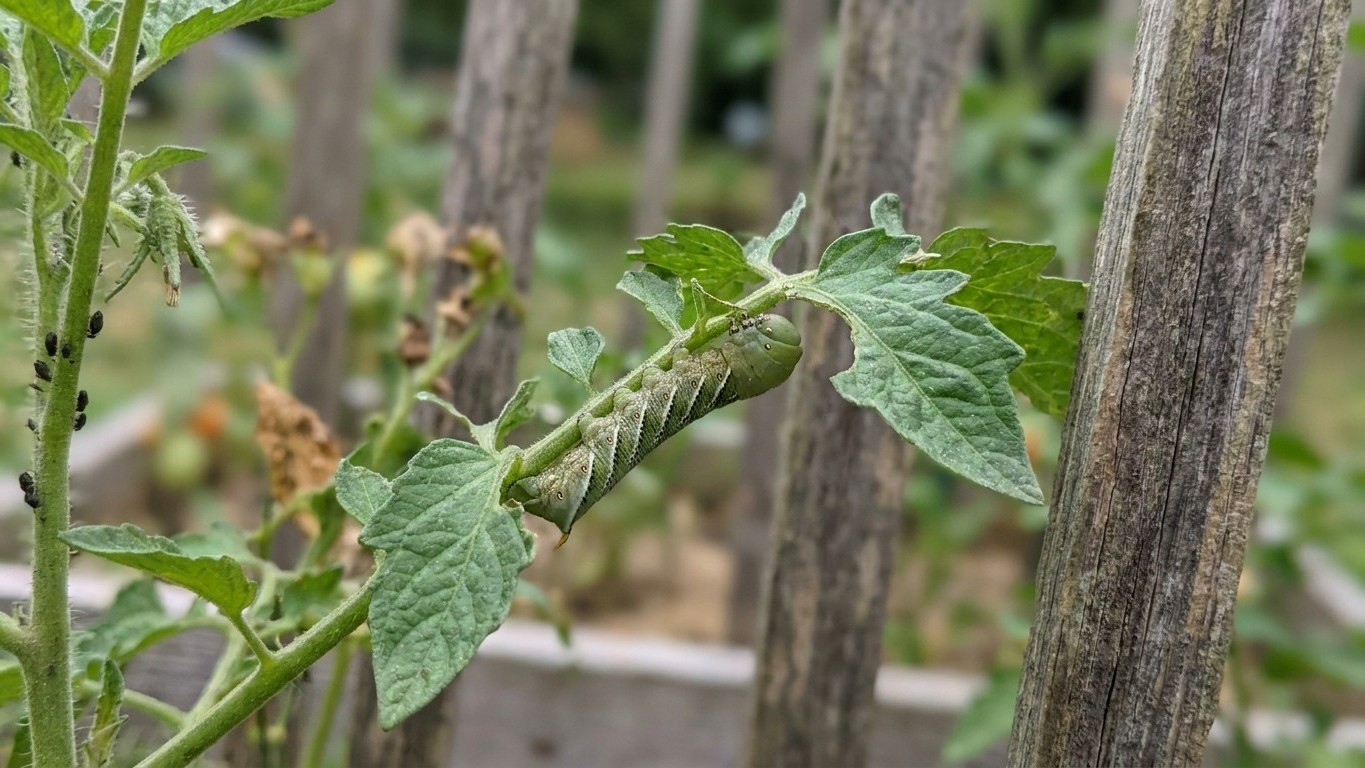
Tomato hornworm shows up in mid-summer and does the most visible damage of any pest on this list, stripping whole branches of leaves in a night or two. The caterpillar’s green body blends in so well that gardeners often spot the black droppings, called frass, on leaves below before they spot the worm itself. Hand-picking works once you find them. If you see one covered in small white cocoons, leave it. Those are parasitic wasp larvae that will kill the hornworm and go on to control the next generation.
Brown Marmorated Stink Bug

Brown marmorated stink bug feeds on ripening and near-ripe fruit through mid and late summer, leaving hard, pale, cloudy patches under the skin where it pierced through to feed. The mottled brown, shield-shaped adults are easiest to catch on fruit early in the morning, when they move less. Netting fruit clusters helps in a small garden, and removing nearby weedy borders where the bugs overwinter reduces how many move into the tomato patch each year.
Tomato Fruitworm

Tomato fruitworm, the same species known as corn earworm on sweet corn, arrives late in the season and bores directly into green and ripening fruit, entering near the stem end. One caterpillar can move from fruit to fruit, ruining several before it pupates. Because the damage is inside the fruit, the only real warning sign is a small entry hole with frass around it. Checking fruit clusters by hand once a week from midsummer on catches the entry hole before the fruit rots from the inside.
Working it out for your own garden
The fastest way to identify a tomato problem in Delaware is to work from where the damage sits on the plant and what time of year it shows up, rather than trying to match a photo of an insect you may never actually see. Chewed leaves early in the season point toward flea beetles or Colorado potato beetle. Curled, yellowing leaves with no visible holes point toward aphids. Stripped branches with black droppings underneath in mid-summer mean hornworm, almost without exception. Damage on the fruit itself, whether a cloudy patch on the skin or a hole near the stem, narrows the list to stink bug or fruitworm depending on how deep the damage goes.
Matching the damage to the pest
| Where you see damage | When it shows up | Likely pest |
|---|---|---|
| Underside of young leaves, curling foliage | Within weeks of transplant | Aphids |
| Small round holes across leaf surface | Within weeks of transplant | Flea beetles |
| Large ragged leaf loss, striped adult beetle | Late spring | Colorado potato beetle |
| Whole branches stripped, black droppings below | Mid-summer | Tomato hornworm |
| Cloudy pale patch under fruit skin | Mid to late summer | Brown marmorated stink bug |
| Hole near stem end, caterpillar inside fruit | Late summer | Tomato fruitworm |
If damage does not match anything in that table, take a photo and a sample of the affected leaf or fruit to your county extension office rather than guessing at a treatment. Spraying the wrong product for the wrong pest wastes a trip to the garden center and can kill off the wasps and lady beetles that would otherwise be doing the work for you.
What changes across the state
Delaware is a small state but it is not one climate, and pest pressure shifts with it. The Wilmington frost figures from NOAA’s 1991-2020 normals apply closest to New Castle County, in the north. Sussex County, at the state’s southern end, runs warmer through the shoulder seasons and typically holds a longer stretch of pest-active weather in fall, which gives late-arriving pests like fruitworm more time to produce a second generation before frost shuts things down. Coastal gardens near the Delaware Bay tend to run more humid, which favors aphid buildup and the fungal problems that follow insect wounds, while inland gardens dry out faster between rains and see somewhat lighter aphid pressure as a result.
Elevation is not much of a factor here since Delaware has almost none of it, but land use around a garden matters more than most gardeners expect. A tomato patch bordering a soybean field or an orchard sees heavier brown marmorated stink bug pressure than one tucked into a suburban yard, since the bugs move between those crops and garden tomatoes as each host becomes attractive. A garden near woods or an unmown field edge tends to draw more Colorado potato beetle and hornworm activity too, simply because those insects overwinter in leaf litter and hedgerows nearby. None of this changes which six pests to expect. It changes how early and how heavily each one shows up in your particular yard.
The mistakes this state punishes

The single most common mistake is spraying a broad-spectrum insecticide the moment any chewed leaf turns up, which kills the lady beetles and parasitic wasps that would otherwise keep aphids and hornworms in check on their own. A garden with no natural predators left standing gets reinfested faster than one left alone, because the pests reproduce faster than their predators can move back in.
The second mistake is ignoring the fruit until harvest and finding fruitworm or stink bug damage all at once in late summer. Checking green fruit by hand once a week from midsummer on catches an entry hole while it is still just one damaged fruit instead of half the plant.
- Skipping a weekly leaf check on new transplants, missing flea beetle and aphid buildup while it is still easy to knock back
- Spraying for hornworm without checking for white wasp cocoons first
- Leaving weedy field edges unmown right next to the tomato patch, which shelters overwintering stink bugs and beetles
- Waiting until harvest to inspect fruit instead of checking weekly once fruit sets
Pairing good scouting with a cultivar bred for disease resistance, covered on Tomato Varieties That Ripen in Time in Delaware, will not stop an insect from feeding, but it does cut down the fungal infections that move in through the wounds insects leave behind. Timing your transplant date correctly also matters more than it seems: setting plants out too early into cold soil, before the window laid out in Tomato Planting Dates in Delaware: Counting Back From Your Frost Window, stresses the plant and makes it a weaker target that recovers more slowly from any pest hit that follows.
Checking this against your county
The frost dates and pest timing here are anchored to the Wilmington weather station, and every county in the state will run a little different from that reference point. Before you commit to a spray schedule or a scouting calendar, check current pest alerts and local recommendations with the University of Delaware Cooperative Extension, which tracks pest activity county by county and updates guidance through the season. Your county office can also confirm which of these six pests is actually active in your area right now, rather than which one is active somewhere in the state.
Common questions
Why are my tomato leaves turning yellow and curling but I don’t see any bugs?
Check the underside of the leaf closely before ruling out aphids, since they cluster tightly on the leaf underside and along new growth and are easy to miss from above. If the undersides are clean, curling can also come from heat stress or uneven watering, which is a separate issue from pest damage.
Do I need to spray every week to keep hornworms off my tomatoes?
No, weekly spraying is not necessary for most home gardens. Hand-picking hornworms once you spot the frass droppings underneath a damaged branch controls them well on a backyard scale, and routine spraying risks killing the parasitic wasps that do a lot of that work for you.
Is the brown marmorated stink bug the same bug that gets into houses in fall?
Yes, it is the same insect. The adults that feed on tomato fruit through summer are the ones that later look for a way indoors as the weather cools, which is why gardeners near wooded lots tend to see both problems in the same year.
Can I just plant a resistant variety and skip dealing with pests?
No, disease resistance bred into a cultivar does not extend to insect pests. A tomato variety resistant to Fusarium wilt or Tobacco Mosaic Virus can still be stripped by hornworms or scarred by stink bugs, so scouting still matters regardless of which variety you plant.