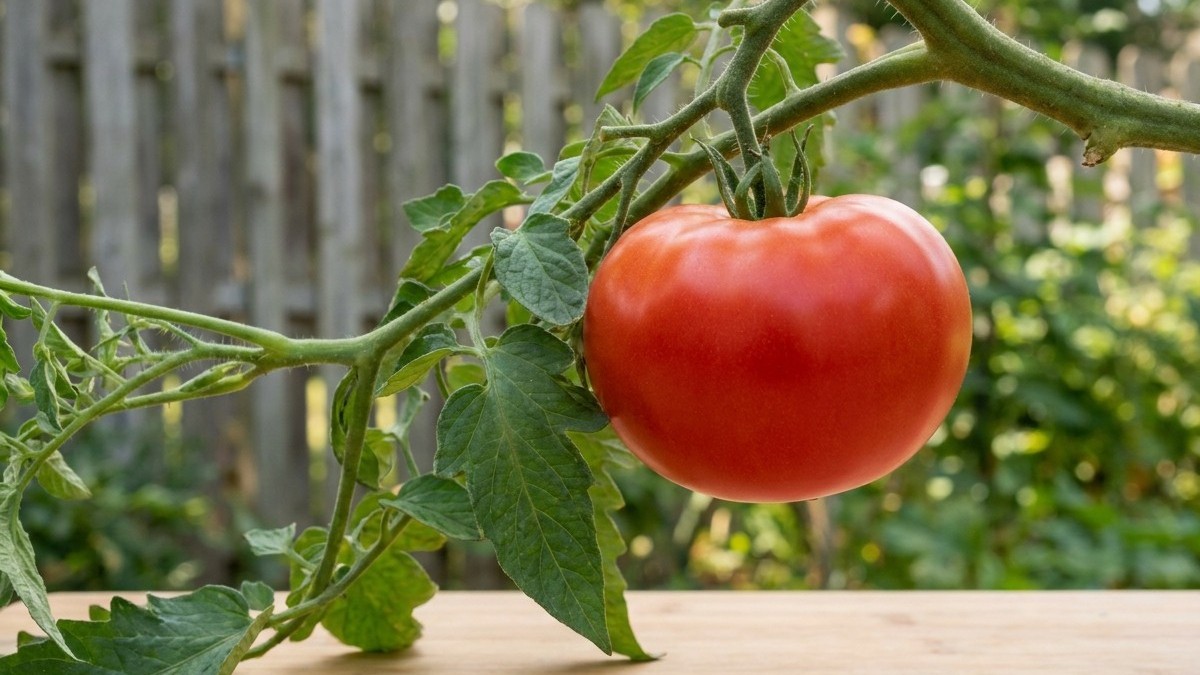

The short answer: pick ripe or nearly-ripe tomatoes as you go all season, but plan a final full sweep of everything left on the vine, ripe or green, before the first fall frost hits. In central Indiana that window runs October 21 to October 30. Wait past that and a hard freeze can turn a whole plant’s worth of fruit to mush overnight.
When to Pick Tomatoes in Indiana
Tomatoes don’t actually need to hang on the vine until they’re red to be worth harvesting. Once a fruit hits what growers call the breaker stage, a faint blush of color starting at the blossom end, it has already reached full size and the internal gel around the seeds has set. From that point on, ripening is driven by ethylene gas the fruit produces itself, not by anything the plant is still feeding it. Picking at breaker stage and finishing the job on a counter gets you tomatoes that taste nearly identical to vine-ripened ones, with less risk of splitting, sunscald, or a raccoon getting there first.
The frost calendar matters more at the back end of the season than the front. Using Indianapolis as the reference point, the first fall freeze typically lands between October 21 and October 30, based on NOAA’s 1991-2020 climate normals. Southern Indiana counties tend to stay frost-free a couple of weeks longer than that, while the northern tier can see their first freeze arrive earlier. If you garden near the Ohio River, don’t treat the Indianapolis window as your deadline; if you’re up near Michigan, don’t assume you have until late October either.
There’s a subtler trigger that shows up before any frost warning: cool nights. Ripening slows sharply once nighttime temperatures drop into the low 50s, and it essentially stalls below 50°F even without a freeze. That means by late September in much of the state, fruit still on the vine is ripening at a crawl regardless of what the ten-day forecast says. A lot of gardeners blame frost for a slow finish to the season when the real cause was three weeks of chilly nights beforehand.
The state’s hardiness range, 5b to 7a under the USDA system, gives a rough sense of how much growing season you’re working with, but it’s built from a single measurement (average extreme minimum winter temperature) and says nothing directly about fall ripening speed. Treat it as background context, not a harvest calendar. The practical move is to start watching the extended forecast in early October and do a full pick of everything showing any color, plus the greens worth saving, once a frost watch appears for your area.
What to do with the green ones
Not every green tomato is created equal, and sorting them correctly before that final harvest determines whether you get a windowsill of ripening fruit or a bowl of things that just rot. Mature green fruit has reached full size, the skin has taken on a lighter, slightly waxy green (sometimes with a whitish cast) rather than a hard dark green, and if you cut one open the seeds are surrounded by a distinct gel. Those are ready to ripen off the vine. Immature green tomatoes, by contrast, are still small or the skin is dark and glossy with seeds that show no surrounding gel when sliced. Those rarely ripen well; they tend to shrivel, stay hard, or break down before turning color.
A quick pressure test helps when color alone is hard to judge. Mature green fruit gives slightly under gentle thumb pressure and has a faint give near the stem end. Immature fruit feels rock hard all the way through. When in doubt, cut one from the same truss open and check the seed gel; if it’s there, the rest of the similarly sized fruit on that plant are probably in the same boat.
Harvesting technique
Handle green tomatoes gently during that last-frost harvest. Bruised or nicked fruit is far more likely to rot before it ripens instead of coloring up. Twist or clip each tomato off at the stem rather than yanking it, and try to leave the small green cap (the calyx) attached if it comes easily. Lay them in a single layer in a box or basket rather than piling them, since weight from fruit stacked on top causes soft spots that turn into rot spots within days.
Immature green tomatoes aren’t wasted, they’re just not ripening candidates. They’re the ones traditionally used for frying, relish, or pickling, where the firm texture and tart flavor are the point rather than a problem. Sorting them out of the ripening batch up front saves you from checking a windowsill full of fruit every couple of days only to find some pieces have gone soft and moldy while others sit rock hard for weeks.
Ripening indoors, and how long they keep
Contrary to a common assumption, tomatoes don’t need light to ripen. What they need is warmth and, ideally, a little concentrated ethylene. A cardboard box or paper bag works better than a sunny windowsill, since a closed container traps the ethylene the fruit gives off and speeds the process along, while a sunny sill just adds heat that can cause uneven softening on one side. Room temperature, somewhere around 65 to 75°F, is the sweet spot. Tucking a ripe apple or banana into the same box adds extra ethylene and can shave a few days off the timeline.
Lay tomatoes in a single layer, stem scars facing up, so any moisture doesn’t pool against the fruit’s shoulder. Check the box every two to three days and pull out anything that’s fully colored, along with anything showing a soft spot or mold. One rotting tomato in a closed box will spread trouble to its neighbors fast, so that regular check matters more than most people expect.
How long it actually takes
Mature green tomatoes ripening at room temperature typically turn fully red over roughly one to three weeks, with the exact pace depending on how warm the room stays and how close to breaker stage each individual fruit already was when picked. Fruit picked very early in the mature green window takes longer than fruit that already had a hint of blush on it.
If you’ve got more green tomatoes than you want ripening at once, cooler storage buys you time without spoiling the batch. Holding mature green fruit at 55 to 60°F slows the ripening clock considerably, letting you stagger a big harvest into smaller ripening batches over several weeks instead of a windowsill traffic jam. What you shouldn’t do is put unripe tomatoes straight into the refrigerator. Temperatures below roughly 50°F cause chilling injury in tomato fruit, leading to mealy texture and dulled flavor even after the color eventually turns. Refrigeration is fine, even useful, once a tomato is fully ripe and you need to hold it a few extra days before eating it. It’s the wrong move for anything still green.
What goes wrong here
The single biggest miss is timing the last harvest off the calendar date alone instead of the actual forecast. The October 21 to October 30 window for Indianapolis is a normal range built from thirty years of data, not a guarantee, and there’s still roughly a 10% chance of a freeze landing outside that window on the early side. A gardener who circles October 25 on the calendar and ignores a frost warning on October 12 can lose an entire plant’s worth of fruit in one cold night.
- Picking immature green fruit and expecting it to ripen, then blaming the method when it just shrivels instead.
- Stacking harvested tomatoes deep in a bucket, where the weight bruises the bottom layer and rot spreads upward through the pile.
- Refrigerating green or partly ripe tomatoes to “save them,” which halts the ripening process and leaves the fruit mealy even after it eventually colors.
- Assuming the whole state shares one frost date, then getting caught out because a location two counties away doesn’t behave like the Indianapolis reference point.
There’s also a habit of blaming a sudden frost for a poor late-season harvest when the real drag was several weeks of nights in the low 50s beforehand, quietly slowing ripening before any freeze ever showed up in the forecast. Watching nighttime lows through September gives a better early warning than watching for a frost advisory alone. For county-specific guidance and updated seasonal outlooks, Purdue’s extension service (extension.purdue.edu) is the standing resource for Indiana growers working through exactly this kind of end-of-season call.
Common questions
Can I pick tomatoes before the first frost in Indiana?
Yes, and for most of the season that’s the normal approach. Tomatoes at breaker stage or beyond ripen off the vine with results close to vine-ripened fruit. The full sweep of everything left, ripe or green, only becomes urgent as the first fall frost window approaches, October 21 to October 30 around Indianapolis, earlier or later depending on where you are in the state.
Do green tomatoes need sunlight to ripen indoors?
No. Ripening is driven by warmth and the ethylene gas the fruit produces, not light. A closed box or paper bag at room temperature works better than a sunny windowsill, which can add uneven heat rather than help.
How long do mature green tomatoes take to ripen indoors?
Roughly one to three weeks at room temperature, depending on how warm the space is and how far along each fruit already was when picked. Cooler storage around 55 to 60°F slows that timeline down, which helps if you’re trying to spread out a large harvest.
What’s the difference between southern and northern Indiana harvest timing?
Southern counties typically stay frost-free longer into the fall than the Indianapolis reference date, sometimes by two weeks or more, while northern counties tend to see their first freeze earlier. The published frost window applies to Indianapolis specifically, so adjust your own final-harvest timing based on your region rather than treating it as a statewide deadline.