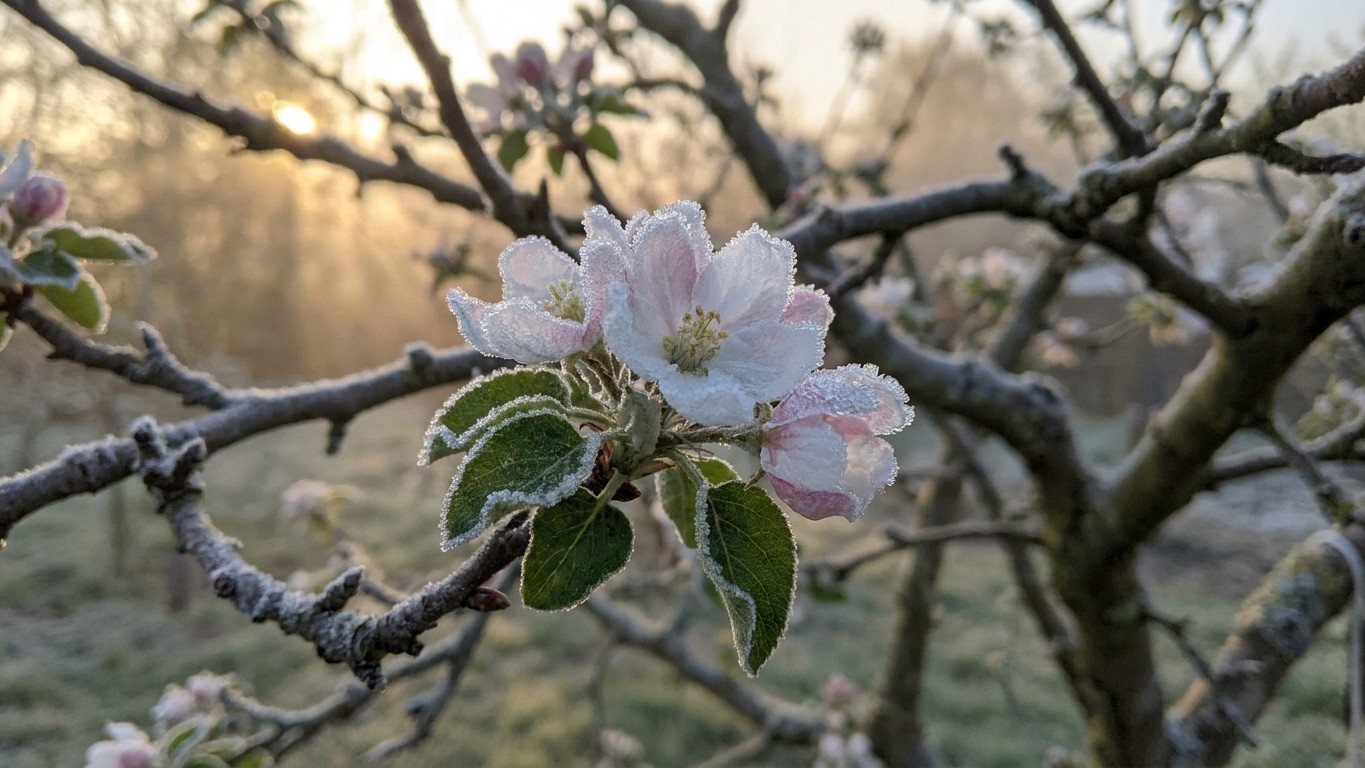

Apples in Maine are ready to pick from mid-August through late October, depending on variety, with fresh eating varieties coming off first and the hard, tannic keepers waiting until the last weeks before the first fall frost. Storage life splits just as widely: some varieties turn mealy within a couple of weeks at room temperature, while dense, high-acid types can hold for months in a cold, humid space. The right pick date and the right storage spot are two separate decisions, and both hinge on which apple you’re growing.
When apples are ready to pick in Maine
Calendar dates are a rough guide at best. What actually tells you an apple is ready is the fruit itself: background skin color shifting from green to yellow or cream, seeds turning brown instead of white, and the fruit separating from the spur with a gentle upward twist rather than a tug. Cut one open. If the flesh around the core is still starchy and hard, it needs more time on the tree.
Those visual cues track a season length that Maine’s own frost dates define. At the reference station in Portland, the last spring freeze at 32°F falls between April 22 and May 1, and the first fall freeze arrives between October 9 and October 21, both figures from NOAA’s 1991-2020 Climate Normals. That’s the frame the whole growing season sits inside: bloom happens shortly after the spring date, and harvest for the latest varieties has to wrap up before the fall one, or close to it.
Early, mid, and late varieties
Within that frame, Maine growers typically see three waves. Early varieties bred for quick ripening are usually off the tree in August, well ahead of any frost risk. Midseason varieties follow through September. The latest, storage-oriented varieties hang on into October, sometimes picked within a week or two of that first fall freeze window, which is part of why they’re bred to be so cold-tolerant on the tree in the first place.
Portland is the mild edge of the state. Inland and northern Maine, the Aroostook County potato country, the western mountains around Rangeley, the interior stretches away from tidal water, run measurably colder on both ends of the season. Spring frost risk lingers longer there and fall frost arrives sooner, which compresses the whole harvest calendar and pushes growers toward earlier-ripening varieties simply so the fruit finishes before the cold does. Nothing published for this article breaks those inland dates out station by station, so if you’re gardening away from the coast, treat the Portland range as an outer boundary and expect your own pick dates to run later in spring and earlier in fall than what a coastal grower sees. The University of Maine Cooperative Extension is the resource to check for county-level guidance if you want something more local than a statewide range.
Which ones keep, and which must be eaten
Two different filters decide whether an apple tree does well in Maine at all, and they’re often confused. Winter hardiness is about survival: can the wood and buds tolerate the cold without dying back. Winter chill is about flowering: has the tree banked enough accumulated cold hours to break dormancy properly and bloom on schedule. Maine passes the chill test easily. The coldest month at the Portland reference station runs a mean daily minimum of 15.6°F, and that’s the coastal, mild end of the state. Winters here are long and genuinely cold, which means chill accumulation is never the limiting factor the way it can be in a warmer, shorter-winter climate.
That matters because of a trade-off that trips up gardeners moving here from milder places. A low-chill variety breaks dormancy on relatively little accumulated cold, which means it flowers early. Early flowering is exactly what exposes blossoms to a late spring frost, and Maine’s last freeze window (April 22 to May 1 at the coast, later inland) is late enough that an early bloomer can get caught. Since chill is abundant here, there’s no upside to planting a low-chill variety to begin with. The better move is to stick with standard high-chill Northeastern varieties that bloom after most of the frost risk has passed, particularly if you’re planting away from the coast where that risk window runs longer.
Fresh-eating versus long-keeping
Storage life comes down to skin structure, acidity, and how much starch converts to sugar before harvest. Softer-fleshed, thinner-skinned varieties are best treated as a short-season crop for fresh eating, sauce, or immediate baking. Firmer, higher-acid, thicker-skinned varieties are the ones worth setting aside in a cold space, since their chemistry slows the ripening process considerably once they’re chilled.
| Harvest timing | Typical use | Storage character |
|---|---|---|
| Early (August) | Fresh eating, sauce | Short keeper, best used within days to a couple weeks |
| Midseason (September) | Fresh eating, baking, some storage | Moderate keeper with proper cold storage |
| Late (into October) | Long-term storage, cider, baking | Long keeper, holds for months in cold, humid conditions |
Storing them through a Maine winter
The goal of storage is slowing the fruit’s own respiration without freezing it. That means a spot that stays cold, ideally close to freezing but not below it, with high humidity so the fruit doesn’t shrivel. A root cellar, an unheated basement corner, an insulated breezeway, or even a garage that never gets truly frigid can all work, provided the temperature doesn’t swing.
Maine’s climate actually does some of this work for free during the shoulder seasons. Once the first fall frost has passed at a given location, outdoor unheated spaces settle into a range that’s close to ideal for weeks at a stretch. The catch is that same cold climate turns against you in deep winter. With the coldest month’s mean daily minimum sitting at 15.6°F even at the mild coastal reference point, any storage space without real insulation can drop well below freezing on a hard night, and a frozen apple turns soft and mealy the moment it thaws. Insulation, a layer of straw, or moving fruit to a spot buffered by the house itself all guard against that.
Handling once fruit is in storage
Sort before you store. Set aside anything bruised, punctured, or already showing a soft spot, since one damaged apple can spread rot through a whole bin. Store fruit in a single layer where possible, or in perforated bags that hold humidity without trapping condensation. Check the stash every couple of weeks through winter and pull anything that’s started to go, because rot spreads fast in a sealed, humid space. For guidance specific to your county, including which local pest and storage issues extension agents are actually seeing, the UMaine Cooperative Extension publishes seasonal updates.
What goes wrong here
The most common failure isn’t the cold, it’s timing around it. A late spring frost after an unusually warm stretch can catch blossoms on trees that broke dormancy early, killing that year’s crop even though the tree itself survives fine. This is more of a risk inland, where the last frost date runs later than Portland’s April 22 to May 1 window and a warm early spell can fool a tree into blooming before the real risk has passed.
Humidity is Maine’s other pressure point. A climate wet enough to keep chill accumulation reliable and orchards green also favors fungal disease on the leaves and fruit, and favors rot once apples are picked and stored without enough air movement. Neither of those specific disease pressures has county-by-county figures published for this article, so if you’re seeing recurring scab, blotching, or storage rot on a particular variety, that’s a question for the UMaine Extension rather than a guess based on statewide averages.
The other recurring problem is storage temperature drift. Fruit set aside in a garage or unheated porch without checking on it through the coldest weeks can freeze solid on a night when the outdoor temperature drops well past that 15.6°F coastal average, especially inland where nights run colder still. Frozen-then-thawed apples aren’t dangerous to eat, but the texture is gone, and there’s no bringing it back. Checking the storage space itself, not just the fruit inside it, during a hard cold snap is worth the five minutes it takes.
Common questions
Can apples be grown in the coldest parts of Maine?
Yes. Standard cold-hardy apple varieties tolerate winters far colder than Portland’s 15.6°F coldest-month average with no trouble. The limiting factor inland isn’t survival, it’s the shorter, later-starting growing season, which favors early and midseason varieties over the longest-keeping late types.
Do apple trees in Maine get enough winter chill to flower properly?
Yes, easily. Maine’s long, cold winters provide ample chill accumulation for standard Northeastern varieties, so there’s no need to reach for low-chill types, which would only bring the added risk of blooming too early into the spring frost window.
How long do stored apples actually last?
It depends entirely on the variety. Softer, early-season apples are best eaten within a couple of weeks. Firmer, high-acid, late-harvest varieties can hold for months in a cold, humid space kept near freezing without dipping below it.
What’s the biggest storage mistake people make?
Storing apples somewhere that isn’t temperature-stable. A space that swings between too warm and hard-freezing does more damage than a space that’s simply cool and steady, since either extreme, softening rot on one end or texture-ruining freezing on the other, cuts storage life short.