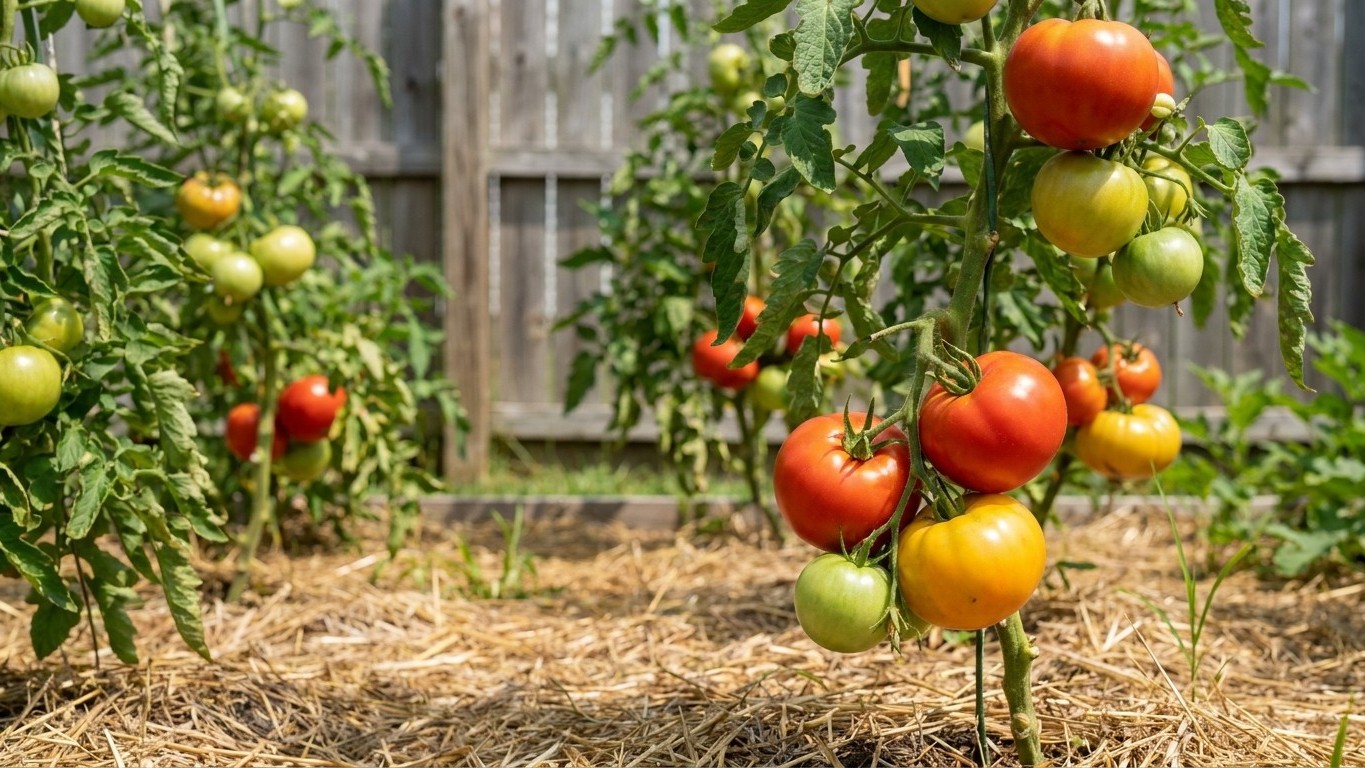

Pick every tomato still on the plant before Missouri’s first fall frost, whether it’s blushing red or hard and green. That freeze typically lands between October 18 and October 29 near Kansas City, with the southern half of the state usually staying frost-free longer. A tomato caught by a hard freeze turns to mush within hours. One pulled green while there’s still time has weeks of work ahead of it on a kitchen counter.
When to pick tomatoes in Missouri
The October 18 to October 29 window comes from the weather station at Kansas City International Airport, sitting well north of the city itself in more open, exposed country. That geography matters for timing decisions. NOAA’s climate data shows the downtown gauge runs about five days earlier than MCI in spring, and while the equivalent fall gap isn’t published for that station, the same open-country effect at MCI likely pushes the in-town threshold a bit later. Head south toward the Bootheel or the Ozark foothills and the first freeze routinely holds off well past the MCI dates, sometimes by weeks rather than days.
That’s the practical takeaway for anyone deciding when to strip the vines: don’t treat a single calendar date as gospel. Watch your local forecast once you’re inside that window, and move on any night a hard freeze warning goes up, regardless of what a chart says.
Frost windows at a glance
| Season | Frost window (Kansas City / MCI reference station) | Note |
|---|---|---|
| Last spring frost | April 6 to April 20 | Downtown runs roughly five days earlier; southern Missouri milder still |
| First fall frost | October 18 to October 29 | Same station bias applies; exact downtown offset not published |
The USDA hardiness zone map puts Missouri anywhere from zone 5b up to 7b, depending on where in the state you’re standing. That number is worth understanding, not applying here. It’s built on one measurement only, the average annual extreme minimum winter temperature, which tells you whether a perennial shrub or a fruit tree survives the coldest nights of a typical winter. It says nothing about when your tomato vines will meet a killing frost in October. For that, the NOAA frost-date data above is the right tool, and it’s the one that should drive your last-harvest decision, not the zone number printed on a seed packet.
As that fall window approaches, walk the rows and pick anything that’s reached mature green stage: full size for the variety, pale green to whitish at the blossom end, with a slight give when squeezed. Fruit that’s still small, hard, and dark green rarely ripens into anything worth eating. Everything else comes off the vine, ready or not.
What to do with the green ones
Not every green tomato deserves the same treatment. Sort them the moment they come off the vine, because that ten-minute triage decides how much of your harvest actually turns into food later.
Mature green fruit, the kind that’s full size with a pale, glossy skin and a faint blush starting at the blossom end, is worth saving. These will keep ripening off the vine because the sugars and enzymes that drive color change were already underway before the frost forced your hand. Small, hard, dark green fruit is a different story. Those tomatoes were pulled too early in their own development, and most will shrivel, rot, or simply sit green in a bowl for weeks without changing. Use them the way cooks in Missouri kitchens have for generations: sliced and floured for frying, or packed into relish and pickles, rather than counted on for fresh eating later.
Handle each fruit gently coming off the vine. A twist at the stem, or a clean snip if the stem is stubborn, beats yanking, which tears the skin and opens a door for rot. Skip the sink at this stage. Washing before storage adds moisture that soft, thin-skinned green tomatoes don’t need, and that moisture is exactly what mold and bacterial soft rot look for.
Sort by size and color as you go, setting the palest, most advanced fruit in one group and the harder, deep green tomatoes in another. That grouping matters later, because the paler batch will ripen faster and needs checking more often, while the harder green group can sit undisturbed longer before anything happens. Mixing them together just means you’re constantly hunting through a box for the ones that are actually ready, while ignoring the ones quietly going soft underneath.
If the frost warning gave you any lead time at all, that’s worth using. A day spent picking selectively, mature green fruit first, leaving the smallest tomatoes for last, produces a much better haul than a rushed strip of the entire plant in the dark the night before a freeze.
Ripening indoors, and how long they keep
Green tomatoes ripen through the same ethylene-driven process that happens on the vine, just slower and without direct sun. That’s actually good news: sunlight isn’t what turns a tomato red, warmth and ethylene gas are, and both are easy to manage indoors.
A paper bag does the job simply. Tuck one or two tomatoes in with a ripe banana or apple, which release extra ethylene, fold the top loosely so some air still gets in, and set it somewhere at normal room temperature. For a bigger harvest, a shallow cardboard box lined with newspaper works better than one crowded bag. Lay the tomatoes in a single layer, not stacked, so a soft spot on one fruit doesn’t spread to its neighbors. Check the box every day or two, pulling out anything that’s ripened, and pulling out anything that’s starting to rot before it takes the rest down with it.
Temperature matters more than most people expect. A sunny windowsill feels like the obvious spot, but the heat swings there are often too extreme, cooking one side of the fruit while the other stays cool, which leads to soft, uneven ripening rather than a clean color change. A stable spot out of direct sun, at ordinary indoor room temperature, ripens more evenly. The other end of the temperature scale causes its own problem: tomatoes held below roughly 50°F, whether in an unheated garage or a refrigerator, suffer chilling injury. The ripening process stalls, the interior texture turns mealy, and flavor never fully develops even if the skin eventually reddens.
How long a batch keeps depends heavily on how mature each tomato was when it came off the vine. Fruit that already showed a blush at picking moves through the rest of ripening fairly quickly. Fully hard, deep green tomatoes take much longer and don’t all ripen at the same pace, which is exactly why checking the box regularly, rather than sealing it up and forgetting it, saves more of the harvest. Once a tomato is fully red and ripe, moving it to the refrigerator does slow further spoilage, but it also flattens flavor, so most kitchens are better off eating ripened tomatoes within a few days at room temperature rather than storing them cold for the long haul.
What goes wrong here
The most common failure is timing, not technique. Waiting for a clear freeze warning before picking sounds cautious, but a hard freeze can drop temperatures fast enough overnight that fruit still on the vine takes damage before anyone’s outside to grab it. Frost-damaged tomatoes develop a water-soaked look on the skin, then collapse into a mushy, discolored mess within a day, even if they were pulled and brought inside right afterward. Once that damage starts, no amount of careful ripening technique reverses it.
Refrigeration trips up a lot of otherwise careful gardeners. Tucking a box of green or half-ripe tomatoes into the fridge to slow things down feels like it should work the way it does for other produce. Instead, it stalls the ripening chemistry, leaves the interior mealy, and mutes flavor permanently, even after the tomato is moved back to room temperature and finishes turning red.
Overcrowding is the other repeat offender. Piling tomatoes several layers deep in a box, or leaving them touching in a bag for weeks without checking, means one rotting fruit spreads spores and moisture to everything around it. A single soft, moldy tomato left at the bottom of a box can take down a dozen good ones before anyone notices, simply because nobody looked.
For growing-season questions that fall outside this window, harvest timing, variety choice, or pest pressure earlier in the year, University of Missouri Extension maintains region-specific guidance built for the state’s different growing zones.
Common questions
Can I pick tomatoes early to beat a frost, even if they’re not fully mature green?
Yes, but expect mixed results. Fruit that’s reached full size with a pale, glossy skin has the best odds of ripening indoors. Small, hard, dark green tomatoes usually won’t turn red no matter how long you wait, and are better used fried, pickled, or in green relish.
Does a light frost kill a tomato plant outright?
The frost windows here mark typical freeze dates for the Kansas City area, but conditions vary block to block depending on elevation, tree cover, and how close you are to pavement or a building that holds heat. Watching your local forecast once you’re inside the October window matters more than any single date on a chart.
Should I wash green tomatoes before storing them to ripen?
No. Skip washing until you’re ready to use them. Extra moisture on the skin during storage encourages rot and mold, which spreads quickly in a crowded box.
Why did my ripening tomatoes turn mealy instead of firm and red?
That’s usually chilling injury from cold storage, either an unheated garage or a refrigerator, where temperatures dropped below roughly 50°F. Ripen tomatoes at normal indoor room temperature instead, out of direct sun, and hold off on refrigeration until after they’re fully ripe.