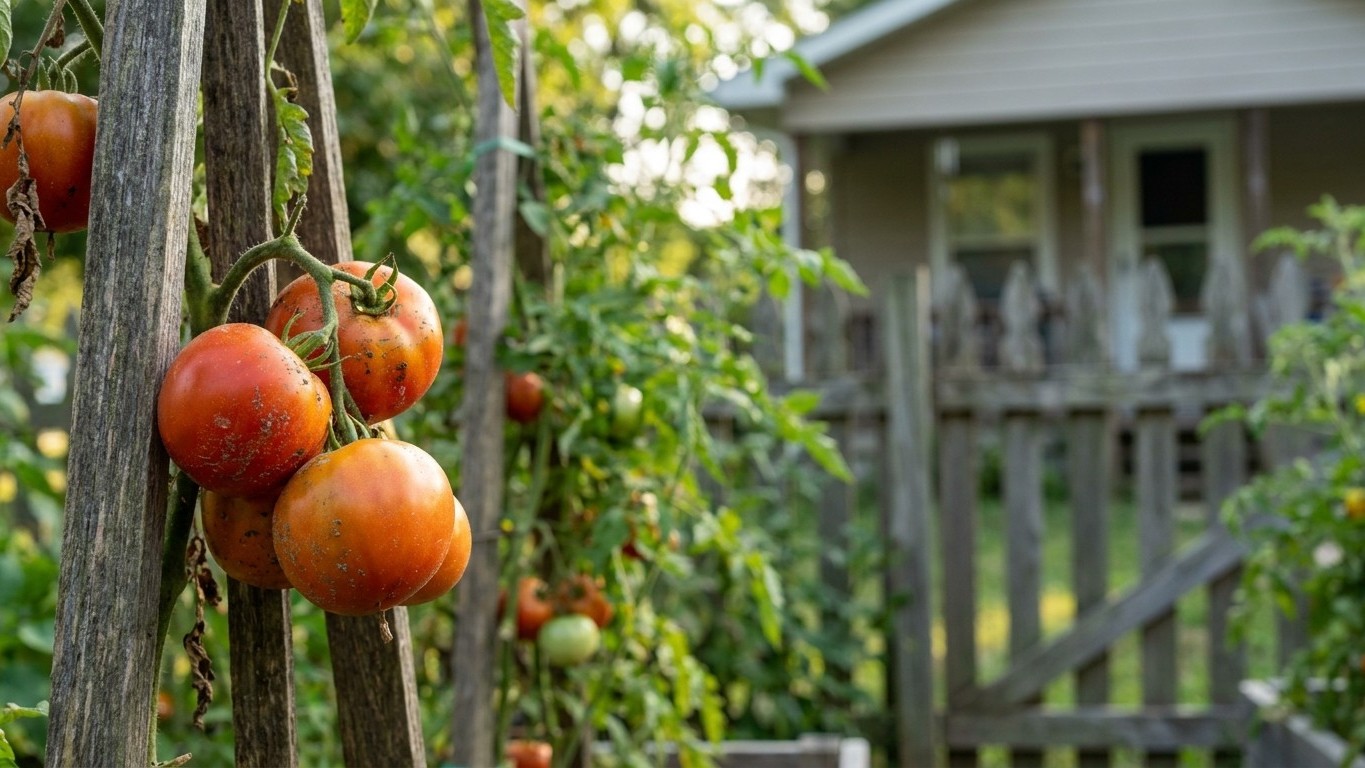

April 6 to April 20 — that’s the window when Kansas City’s last spring freeze usually clears, and it’s the number every tomato planting decision in Missouri actually hangs on, since tomatoes will not forgive a frost. Downtown beats that window by about five days, southern Missouri warms earlier still, and ground near the Iowa or Nebraska line lags well behind it. Count backward six to eight weeks from whichever date fits your spot, and that’s your seed-starting day.
When to plant Tomatoes in Missouri

Tomatoes are among the most frost-sensitive vegetables in the home garden, so the whole planting calendar hangs on one number: the date of the last spring freeze. NOAA’s 1991-2020 climate normals put that date at Kansas City somewhere between April 6 and April 20, based on the 30 to 70 percent freeze-probability band at the weather station nearest the city. That’s a real range, not a single day, and the station itself sits north of downtown Kansas City. Downtown tends to clear its last freeze about five days earlier, and southern Missouri, from Springfield down through the Bootheel, warms earlier still. Northern Missouri and the higher ground along the state’s edges run later than the Kansas City window, and gardeners near the Iowa or Nebraska line may find their timing closer to what we lay out in our Nebraska tomato planting guide than to the figures here.
Counting back from the frost date
Tomato seed needs six to eight weeks of indoor growing before it’s ready to go into the ground. Counted back from the April 6-20 window at Kansas City, that lands seed-starting somewhere in early February to early March, depending on where in that spread your own county’s last frost falls. Push the whole calendar a week or two later if you’re near the state’s northern edge, and a week or two earlier if you’re close to the Arkansas border.
Sow two or three seeds per cell in a seed-starting mix, under grow lights or in a bright south window, and thin to the strongest seedling once true leaves appear. Bottom heat from a seedling mat speeds germination, which can otherwise take a week or more in a cool room.
Hardening off and transplanting
Seedlings raised indoors need a hardening-off period before they go into the garden. Set them outside in a sheltered, shaded spot for an hour or two the first day, then add sun and wind exposure gradually over a week to ten days. Skip this step and a seedling that looked perfectly healthy on the porch can scorch or snap within a day of going into the ground.
Transplant only after the local frost window has closed, and don’t rely on the calendar date alone. Cold, wet soil slows tomato roots even when the air feels warm enough, so many gardeners near Kansas City wait a few extra days past the window’s end for the ground itself to warm before setting plants out. If a late cold snap is forecast right after transplanting, a bucket, a row cover, or an overturned pot placed over each plant overnight is cheap insurance against losing the whole planting.
Soil and site preparation
Tomatoes want full sun, at least six to eight hours of direct light a day, and enough space around each plant for air to move. Cramped, shaded plantings are the biggest reason home gardeners fight foliar disease all summer, since wet leaves that don’t dry out by midmorning stay wet long enough for fungal spores to take hold.
Good drainage matters as much as sun. Tomato roots rot quickly in soil that stays soggy, so if water pools in your bed after a normal rain, raised beds or mounded rows solve the problem better than any amendment will. Work compost or well-rotted manure into the bed several weeks before transplanting, not on planting day, so it has time to break down instead of competing with young roots for nitrogen. A soil test taken the fall or early spring before planting tells you whether you need lime for pH or extra phosphorus for root development.
Space plants generously. Indeterminate varieties that keep growing and producing all season need at least 24 to 36 inches between plants in rows spaced three to four feet apart, while determinate bush types can go slightly tighter. Crowded plants shade each other’s lower leaves, trap humidity, and make it harder to spot early blight or hornworms before they spread.
Bed prep for the weeks before planting
- Clear the bed of last year’s tomato or pepper debris, which can carry over blight spores
- Work in two to three inches of finished compost across the planting area
- Set stakes or cages in place before transplanting, not after, so roots aren’t disturbed later
- Lay drip line or soaker hose along the row while the bed is still bare and easy to reach
- Hold off on mulch until the soil has warmed, since mulch put down too early slows warming
Varieties that suit Missouri
Two traits matter more than any other when picking a tomato for a Missouri garden: how it handles the state’s humid, disease-heavy summers, and how many days it needs to ripen once the transplant window opens. Disease resistance codes on the seed packet, the letters for Verticillium, Fusarium, nematodes, and various viruses, tell you which soil-borne problems a variety was bred to shrug off, and in ground that’s grown tomatoes for years that resistance is worth more than a slightly bigger fruit. Days to maturity, counted from the transplant date rather than from seed, tells you roughly when to expect the first ripe fruit once you know your local frost window. Catalogue figures are averages from the breeder’s trial fields and can run a week or two either direction depending on the season, so treat them as a planning guide rather than a promise.
Sun Gold

Sun Gold is a 57-day indeterminate cherry tomato bred with high resistance to Tobacco Mosaic Virus and Fusarium Wilt race 1. Set transplants out inside the Kansas City area’s April 6-20 frost window and 57 days lands the first ripe fruit in early to mid-June, among the earliest tomatoes of the season. It keeps producing on a tall vine into fall and needs sturdy staking to hold the weight.
Sakura

Sakura is a 55-day indeterminate cherry tomato, the fastest on this list, with high resistance to Fusarium Wilt races 1 and 2 and Tomato Mosaic Virus, plus intermediate nematode resistance. Counted from the same April frost window, fruit ripens from late May to mid-June. That resistance package makes it a solid pick for a bed that’s grown tomatoes in the same spot for several years running.
Juliet

Juliet is a 60-day indeterminate grape tomato with intermediate resistance to both early and late blight, ripening in roughly the same early-to-mid-June window as Sun Gold once you run the arithmetic on the Kansas City frost dates. Its small, crack-resistant fruit holds well on the vine, which matters in a summer with sudden rain after a dry spell.
Celebrity Plus

Celebrity Plus is a 78-day determinate slicer with intermediate nematode resistance and high resistance to Gray Leaf Spot and Tomato Mosaic Virus. Determinate varieties set most of their fruit in a shorter window and finish earlier in the plant’s life, suiting a gardener who wants one heavy harvest for canning rather than a slow trickle all summer. Expect first ripe fruit from late June to early July from the Kansas City transplant window.
Big Beef Plus

Big Beef Plus is a 72-day indeterminate beefsteak with intermediate nematode resistance and high resistance to Gray Leaf Spot and Tomato Mosaic Virus, ripening from mid-June to early July on the same schedule. It’s a dependable slicing tomato for anyone who wants large fruit without giving up disease resistance.
Amalfi

Amalfi is a 68-day determinate paste tomato with intermediate resistance to nematodes, late blight and early blight, a useful combination in a wet year. It ripens from mid to late June and its compact, determinate habit makes it a good fit for a smaller bed or a large container.
Cherokee Purple
Cherokee Purple is a 72-day indeterminate heirloom with no listed disease resistance, the tradeoff many gardeners accept for its flavor and color. Ripening in roughly the same mid-June to early July range as Big Beef Plus, it’s worth growing alongside a resistant variety rather than as your only tomato, so a wilt outbreak in one plant doesn’t take out the whole harvest.
Brandywine
Brandywine is a 78-day indeterminate heirloom, another variety with no bred-in disease resistance, ripening late June to early July from the same window. Its potato-leaf foliage and heavy, irregular fruit make it easy to pick out in a mixed planting, but its long season and lack of resistance mean it rewards attentive watering and early disease scouting more than the hybrids on this list.
Amish Paste
Amish Paste is an 85-day indeterminate paste tomato, the longest season named here, ripening from late June to mid-July once you count forward from the same frost window. Because it needs the longest run of warm weather, it’s the variety most worth starting on the early edge of the seed-starting range rather than the late edge.
| Variety | Days to maturity | Habit | Key resistance |
|---|---|---|---|
| Sun Gold | 57 | Indeterminate | Tobacco Mosaic Virus, Fusarium race 1 |
| Sakura | 55 | Indeterminate | Fusarium races 1, 2; Tomato Mosaic Virus; nematodes (int.) |
| Juliet | 60 | Indeterminate | Early and late blight (int.) |
| Celebrity Plus | 78 | Determinate | Gray leaf spot, Tomato Mosaic Virus, nematodes (int.) |
| Big Beef Plus | 72 | Indeterminate | Gray leaf spot, Tomato Mosaic Virus, nematodes (int.) |
| Amalfi | 68 | Determinate | Late and early blight, nematodes (int.) |
| Cherokee Purple | 72 | Indeterminate | None listed |
| Brandywine | 78 | Indeterminate | None listed |
| Amish Paste | 85 | Indeterminate | None listed |
What to plant alongside
Basil is the classic tomato companion, and while the folklore claim that it improves tomato flavor has no real evidence behind it, it does draw pollinators and its dense growth shades the soil around tomato roots, helping hold moisture. Borage and other flowering herbs planted at the bed edge bring in bees and other pollinators that improve fruit set on hot days when tomato flowers are reluctant to self-pollinate.
Marigolds earn their space for a real, tested reason: certain marigold varieties suppress root-knot nematodes in the surrounding soil, which matters directly for any variety on this list without nematode resistance, like Cherokee Purple or Brandywine. Nasturtiums work as a trap crop, pulling aphids onto themselves and away from tomato foliage.
Keep tomatoes away from potatoes, eggplant, and peppers in your rotation plan, not necessarily in the same bed this year but across seasons. All four are nightshades that host the same soil-borne blights and wilts, so planting them in the same ground year after year lets those pathogens build up. Corn draws in the corn earworm, the same insect as the tomato fruitworm, so a corn patch next to tomatoes can raise pressure from that pest. Fennel is worth planting far from the vegetable garden altogether, since it releases compounds that can stunt nearby plants, tomatoes included.
Cucumbers and tomatoes are often grown side by side out of habit rather than any real benefit. They don’t harm each other directly, but they compete hard for the same water and nutrients if planted too close, so give each its own generous spacing rather than treating them as natural partners.
Watering, feeding and support
Tomatoes want deep, consistent water rather than frequent light sprinkling. Aim for about one to two inches of water a week, delivered at the base of the plant with a soaker hose or drip line rather than overhead, since wet foliage overnight is what invites early and late blight in the first place. Water deeply enough to soak six inches down, which encourages roots to grow deep and makes the plant more resilient during a dry stretch, rather than watering shallowly every day and training roots to stay near the surface.
Mulch and feeding
A three-inch layer of straw, shredded leaves, or grass clippings laid down once the soil has warmed holds moisture, keeps fungal spores from splashing up onto lower leaves during rain, and cuts down on weeding. Feed at planting with a balanced fertilizer worked into the hole, then again once the first fruit sets, favoring a formula lower in nitrogen and higher in phosphorus and potassium at that stage. Too much nitrogen once fruiting starts pushes lush green growth at the expense of flowers and fruit, a common reason for a plant that looks great and produces little.
Staking, caging and pruning
Indeterminate varieties, which is most of the list above, keep growing and setting fruit until frost and need a stake, cage, or trellis strong enough to hold a heavy, sprawling plant through a summer storm. A basic wire cage suits smaller varieties like Sun Gold, but taller cultivars like Amish Paste or Brandywine do better staked and tied as they grow, with suckers, the shoots that form where a branch meets the main stem, pinched out to keep the plant to one or two leaders. Determinate varieties such as Celebrity Plus or Amalfi need little to no pruning, since they set a defined number of fruiting branches and stop, and heavy suckering can actually reduce their total yield.
Common problems

Most tomato trouble in a home garden falls into a short list of repeat offenders, and reading the symptom correctly saves a season of guessing.
Blossom end rot
A flat, sunken, leathery brown-to-black patch on the bottom of an otherwise healthy fruit is blossom end rot, caused by a calcium shortage at the fruit itself, usually triggered by inconsistent watering rather than a true soil calcium deficiency. Even, deep watering fixes most cases faster than any calcium spray, since calcium moves through the plant with water and an irregular supply interrupts delivery to the fruit long before it shows up as a soil test problem.
Fruit cracking
Concentric rings or radial splits running out from the stem end usually follow a heavy rain right after a dry spell, when the fruit takes up water faster than the skin can stretch. Mulching to even out soil moisture and picking fruit as it starts to ripen, rather than waiting for dead-ripe, both cut down on cracking.
Early blight
Small brown spots ringed like a target, surrounded by yellowing leaf tissue and starting on the lowest, oldest leaves before working upward, point to early blight, a fungal disease that overwinters in soil and plant debris. Mulching to stop soil splash, spacing plants for airflow, and removing infected lower leaves as soon as you spot them all slow its spread. Amalfi and Juliet, both bred with intermediate early blight resistance, hold up better than an unresistant heirloom like Brandywine in a wet year.
Fusarium and verticillium wilt
A plant that wilts on one side, or wilts starting with the lower leaves while the rest still looks fine, has one of the soil-borne wilts. Slice through the lower stem and brown discoloration inside the tissue confirms it. There’s no cure once a plant is infected, which is exactly why the resistance codes on varieties like Sun Gold and Sakura matter: those letters mean the plant was bred to resist the specific wilt races common in garden soil.
Poor fruit set in high heat
Plenty of flowers that dry up and drop instead of forming fruit is a heat problem, not a disease. Tomato pollen doesn’t set well once daytime and nighttime temperatures both run high for an extended stretch, and there’s little to do but wait for a cooler spell, keep the plant otherwise healthy, and skip a heavy nitrogen feeding that pushes foliage instead of fruit during the slump.
Tomato hornworms
A thick, green caterpillar several inches long, with white diagonal stripes and a horn on its tail end, stripping leaves overnight is a tomato hornworm, and its camouflage makes it easy to miss until the damage is done. Hand-picking works fine on a small planting, and a hornworm covered in small white cocoons is best left alone, since those cocoons mean a parasitic wasp has already gone to work on it.
Missouri’s humid summers put real pressure on foliar disease, and that pressure only builds farther south, closer to what gardeners deal with in the Missouri Bootheel and in the conditions covered in our Mississippi tomato guide, where the same blights tend to arrive earlier and stay later in the season.
Pests that actually show up in Missouri
Missouri’s tracked garden pest list runs to ten species, but only a handful actually bother tomatoes. Squash vine borer, squash bug, striped and spotted cucumber beetles, bagworms and hunting billbug are all on the state’s radar too, but they go after squash, cucumbers, melons and evergreen shrubs, not tomato plants. A gardener growing squash alongside tomatoes needs to watch for those separately.
Japanese beetle is the one you’ll see first: skeletonized leaves, chewed down to a lace of veins, usually starting on upper foliage in full sun. The University of Missouri Extension’s IPM program notes that in mid-Missouri the adults emerge mid to late June, peak around the second week of July, and taper off by early August. Handpicking into a jar of soapy water in the morning, when beetles are sluggish, controls light infestations without hurting pollinators. For heavier pressure, an insecticide labeled for Japanese beetle on vegetables works, but time it to that peak window rather than spraying all summer.
Tomato hornworm and tobacco hornworm both strip whole branches of leaves overnight and leave behind dark green-black droppings on the leaves below, which is often the first thing a gardener notices before spotting the caterpillar itself. Look for the pellets before you look for the worm. MU IPM’s seasonal notes point to two generations over the summer, so a plant that gets stripped clean in June can see a second wave in late summer. Handpicking works fine on a home scale. If you see a hornworm covered in small white rice-like cocoons, leave it alone. Those are parasitic wasp larvae already killing it for you.
Spider mites show up as a fine stippling or bronzing on leaves, often with faint webbing on the undersides, and MU Extension’s IPM calendar flags them as a hot, dry-weather problem. A hard spray of water on the underside of leaves every few days knocks populations down fast and is usually enough before reaching for a miticide.
Brown marmorated stink bug causes cloudy, discolored patches under the skin of ripening fruit where it has fed. It’s harder to control once established, so removing the pierced fruit and checking plants regularly through midsummer catches it early.
Harvest and end of season
Pick tomatoes once they’ve reached full color and give slightly to a gentle squeeze, rather than waiting for them to soften on the vine, since a fully vine-ripened tomato is more prone to cracking and to attracting pests overnight. Color, not size, is the real signal, since a given variety stops growing well before it starts to ripen.
A tomato showing color but not yet fully ripe will finish ripening indoors at room temperature out of direct sun, and there’s no real advantage to leaving it on the vine those last day or two beyond convenience. Never refrigerate a tomato meant for fresh eating. Cold temperatures below about 55°F break down the enzymes responsible for flavor and turn the texture mealy, a change that doesn’t reverse once the fruit warms back up.
As the season winds down and nights turn cold, watch the forecast rather than the calendar for the first fall freeze, since the same variability that spreads out the spring frost date applies in reverse come autumn. Once a hard freeze is close, pull any green fruit worth saving rather than letting the plant take the hit. Wrap individual green tomatoes in newspaper and store them in a single layer in a cool, dark spot, checking weekly, and they’ll ripen gradually over the following weeks, stretching the harvest well past the first freeze.
At season’s end, pull spent plants rather than tilling them into the soil, especially if you saw any blight or wilt symptoms during the season, since tomato foliage and stems can carry those spores and pathogens through winter in garden debris. Clean stakes and cages with a diluted bleach solution before storing them, which cuts down on disease carrying over into next year’s planting in the same spot.
Local help
The frost dates and figures here come from the weather station nearest Kansas City, and your own county can run a week or more earlier or later. Missouri Extension maintains county offices that offer local planting calendars and affordable soil testing, both worth using before you commit a season’s worth of seedlings to a single date. Start at extension.missouri.edu to find the office nearest you, and browse our other Missouri guides for crops that share this same spring frost calendar.
Where to Go From Here
Everything above comes down to timing, and that timing plays out differently depending on which part of the tomato season you’re planning for. If you’re still working out when to actually get plants in the ground, counting back from your frost window walks through why Kansas City’s ten-day spread of possible last-freeze dates makes a single seed-packet number nearly useless on its own. Once your dates are set, the next question is whether the variety you’ve picked can finish before the season runs out — tomato varieties that ripen in time looks at exactly this, including the kind of Cherokee Purple gamble that ends in a green tomato when a wet May pushes planting back three weeks. And once your plants are in and growing, keep an eye out for trouble on schedule: which pests actually show up here tracks Missouri’s tomato pests against the frost calendar itself, since so much of when they arrive depends on how early or late that last spring freeze falls in a given year. Read them together and you’ve got the whole season mapped out, from seed to harvest.
Common questions
Can I plant tomatoes in Missouri in March?
Only under cover, and even then it’s risky. NOAA’s 1991-2020 normals put the last freeze at Kansas City between April 6 and 20, so a tomato transplanted in March without protection is likely to hit a freeze before it gets established. Starting seed indoors in March is fine, but hold the actual transplanting until the local frost window has passed.
Why are my tomato leaves curling up?
Leaf curl usually points to one of three things: heat and moisture stress, herbicide drift from a lawn treatment or a neighbor’s spraying, or a virus carried in by whiteflies or aphids. Physiological curl from heat and uneven watering is the most common and isn’t fatal, while herbicide drift shows up as twisted, distorted new growth, and a viral infection tends to bring stunted, discolored leaves rather than curling alone.
Do I need more than one tomato plant for pollination?
No. Tomato flowers are self-fertile and don’t need a second plant or an outside pollinator to set fruit, though wind or a gentle shake of the cluster helps release pollen, and bees improve set rates on hot days when flowers are reluctant to self-pollinate. Grow more than one plant for a longer harvest window or backup against disease, not for pollination.
Can I grow tomatoes in a container in Missouri?
Yes, and it’s a solid option for a patio or a spot without decent garden soil. Choose a determinate or compact variety, use a container of at least five gallons for a full-size plant, and expect to water more often than an in-ground planting, since containers dry out fast, sometimes daily during a hot stretch.
What’s the difference between determinate and indeterminate tomatoes?
Determinate varieties, like Celebrity Plus or Amalfi, grow to a set size, set most of their fruit within a few weeks, and then taper off, which suits canning or a single big harvest. Indeterminate varieties, like Sun Gold, Big Beef Plus, or Brandywine, keep growing and setting new fruit until frost kills the plant, suiting a gardener who wants a steady trickle of tomatoes all summer rather than one big flush.