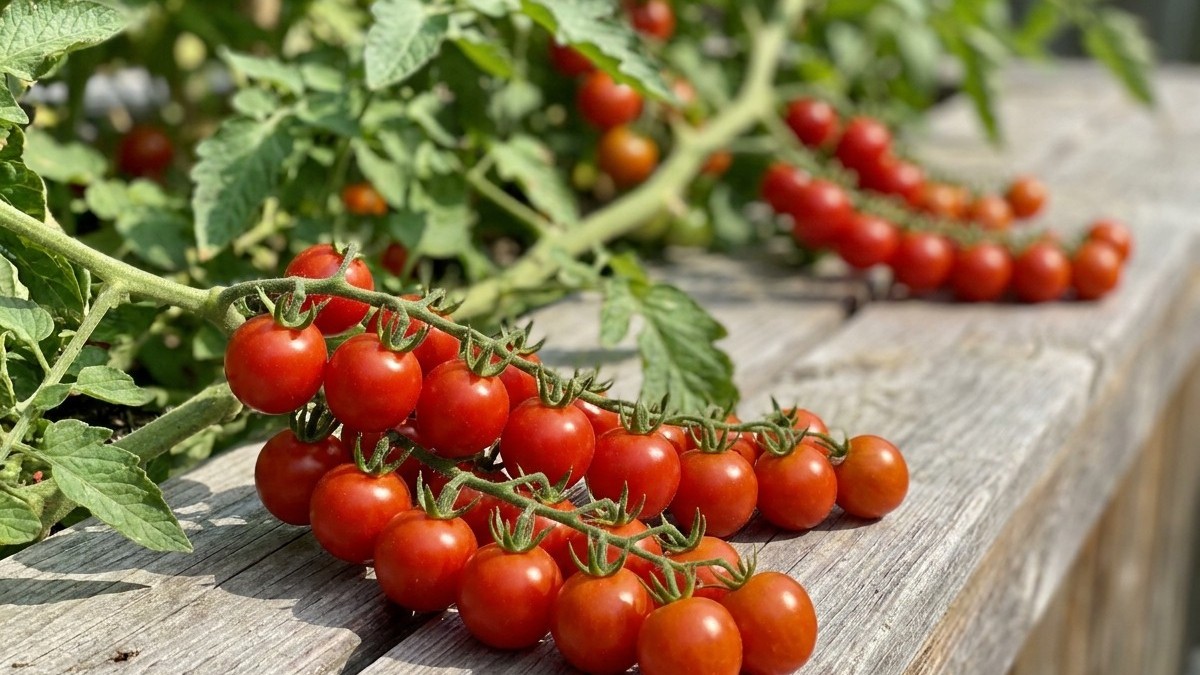

Pick tomatoes in the Northwest Territories before the first fall frost hits, and don’t wait for full color. Given the mean first frost date of September 18 at Yellowknife A, and a growing season that runs cold on both ends, most gardeners here strip the vines of everything, ripe or not, once nights start dropping hard. What happens after picking matters as much as the picking date itself.
When to pick tomatoes in Northwest Territories
The number that matters most is September 18, the mean first fall frost date recorded at the Yellowknife A station under Environment and Climate Change Canada’s 1981-2010 Climate Normals. But a mean is not a promise. In one year out of two, frost at that station arrives later than September 18, and in the other half it comes earlier. Treat the date as the middle of a window, not a line on the calendar you can plan around with confidence.
That window also only describes Yellowknife itself. The Northwest Territories spans a vast stretch of boreal forest, tundra, and river valleys, and a single weather station can’t stand in for all of it. Communities farther north or at higher elevation typically see frost arrive earlier than the Yellowknife normal, sometimes by weeks. If you garden outside the immediate Yellowknife area, lean toward picking earlier rather than later.
Stack that fall date against the mean last spring frost, also May 25 at the same station, and the frost-free stretch runs roughly 116 days. Compare that to tomato varieties that often need 60 to 85 days just to reach first ripe fruit after transplant, and there’s not much margin for a plant that also has to recover from transplant shock, deal with cool soil, and push through short, chilly early-summer nights before it even starts flowering.
The hardiness zone context
Yellowknife sits in Canadian hardiness zone 1b, according to Natural Resources Canada’s Plant Hardiness Zone data. That’s the Canadian system, built from seven climate variables, not the single-variable USDA system used across the border. The two scales don’t convert cleanly, so don’t try to map 1b onto a USDA zone number. What it does confirm is that this is about as short and cold a growing environment as North American tomato growers face, which is exactly why the picking decision here leans toward acting early rather than waiting for perfect ripeness on the vine.
In practice, that means watching the forecast more closely than watching the tomatoes. Once nighttime lows start trending toward the danger zone in the days surrounding that mid-September mean, it’s time to bring in the harvest, whatever stage it’s at.
What to do with the green ones
With a frost-free season this tight, a full harvest of vine-ripened red tomatoes is the exception, not the rule. Most Northwest Territories gardeners end up with a mixed haul: some fruit at breaker stage (just starting to show color), a lot of mature green fruit, and some tomatoes that never got past marble size before the cold moved in.
Sort what you pick before deciding what to do with it. Mature green tomatoes, the kind with a pale, slightly glossy skin and a fully formed shape, are the ones worth trying to ripen indoors. Immature green tomatoes, small and hard with no color break at all, rarely ripen well and are better used right away rather than stored.
- Fully green, glossy skin, full size: good candidate for indoor ripening
- Green with a faint blush or breaker line: will usually finish ripening fastest
- Small, hard, dull green: best cooked green rather than stored for ripening
For that last group, cooking green is a real strategy, not a consolation prize. Fried green tomatoes, green tomato salsa, chutney, and pickled green tomato relish are all traditional ways to use fruit that was never going to turn red before the season ended. This is worth planning for ahead of the frost, since a sudden cold snap can leave you with a full basket of green tomatoes and not much time to figure out what to do with them.
Some gardeners pull the entire plant before a hard frost rather than picking fruit one by one. The whole plant, roots and all, gets hung upside down in a garage, shed, or basement. The theory is that the plant’s remaining sugars keep feeding the fruit for a while longer, though results vary a lot depending on how much green growth the plant still has and how warm the storage space is. It’s a low-cost thing to try with a plant you were about to pull anyway, but don’t count on it to rescue a large harvest.
Ripening indoors, and how long they keep
Indoor ripening works because tomatoes are climacteric fruit, meaning they keep producing the ripening gas ethylene after being picked. Room temperature, somewhere in the 65 to 75 degree Fahrenheit range, speeds that process along. Cold basements slow it down considerably, which can be useful if you want to spread ripening out over several weeks instead of having everything turn at once.
Methods that work
A single layer of green tomatoes in a cardboard box, not touching each other, ripens steadily and lets you check for rot easily. Adding a ripe banana or apple to the box boosts the ethylene level and speeds things along, since both fruits give off a fair amount of it as they ripen themselves. Paper bags do a similar job for smaller batches, trapping the gas around just a few tomatoes at a time.
What doesn’t work well: stacking tomatoes several layers deep, storing them in a sealed plastic bag with no airflow, or leaving them on a sunny windowsill. Direct sun doesn’t ripen tomatoes any faster once they’re off the vine, it just heats them unevenly and speeds up spoilage in the fruit closest to the glass.
How long they last
Check the box or bag every few days. Fruit at breaker stage often turns fully red within a week at room temperature. Fully green mature fruit can take two to four weeks, and results are uneven, some tomatoes in the same batch will ripen fast while others stall or start to soften without ever coloring up. Pull out anything showing soft spots, wrinkling, or mold right away, since one spoiling tomato in a box can speed up decay in the ones around it.
Once ripe, indoor-ripened tomatoes don’t keep as long as vine-ripened ones picked at the same stage. Plan to use them within a few days of turning red, or move them to the refrigerator briefly if you need to buy a little more time, though cold storage does dull the flavor and texture compared to fruit used right away.
What goes wrong here
The most common mistake in a season this short is waiting too long to pick, gambling on a few more days of color and losing the whole plant to an early cold snap instead. Because the September 18 mean frost date is just a midpoint, a grower who treats it as a safe deadline can get caught out in a year when frost lands a week or two earlier than that average.
Cold soil is another factor that doesn’t get enough attention. Tomato roots slow down noticeably once soil temperatures drop, and in much of the territory, soil stays cool even during the warmest weeks of summer. That sluggish root activity is part of why fruit takes so long to size up and color, on top of the short frost-free window itself.
Fall light matters too. As days shorten heading into September, lower light levels slow ripening on the vine even before temperatures become the limiting factor. A tomato that looked close to breaker stage in August can sit at the same stage for what feels like a long stretch in early September, simply because it’s getting less sun to work with.
Storage mistakes show up after harvest as often as growing mistakes show up before it. Tomatoes left in an unheated porch or garage once nighttime temperatures dip near freezing will suffer chilling injury, a mealy, tasteless texture that doesn’t reverse even if the fruit warms back up. Move harvested tomatoes into a heated space well before overnight lows get that low, not after.
For growing conditions specific to your community, soil advice, and season-extension techniques suited to the territory’s climate, the Government of the Northwest Territories‘ agriculture services page is a useful starting point.
Common questions
Should I pick tomatoes before the September frost date or wait as long as possible?
Lean toward picking early. September 18 is a 30-year mean from the Yellowknife A station, not a guaranteed safe date, and frost arrives earlier than that in roughly half of all years. Watching the short-term forecast is more useful than watching the calendar.
Do green tomatoes from the Northwest Territories ripen as well as ones from warmer regions?
Mature green tomatoes with a full shape and glossy skin generally ripen reasonably well indoors regardless of where they were grown. Small, immature green fruit is less likely to color up properly and is usually better used in cooked green tomato dishes.
Does hardiness zone 1b tell me anything about my own yard?
It tells you the zone for Yellowknife specifically, based on the Canadian system’s seven climate variables, not a nationwide average or a USDA-equivalent number. Conditions in other communities across the territory can differ meaningfully from that reference point.
How long can I keep tomatoes ripening indoors before they go bad?
Green mature fruit can take two to four weeks to fully ripen at room temperature, with results varying tomato to tomato. Once ripe, use them within a few days for the best texture and flavor, since indoor-ripened fruit doesn’t hold as long as vine-ripened tomatoes.