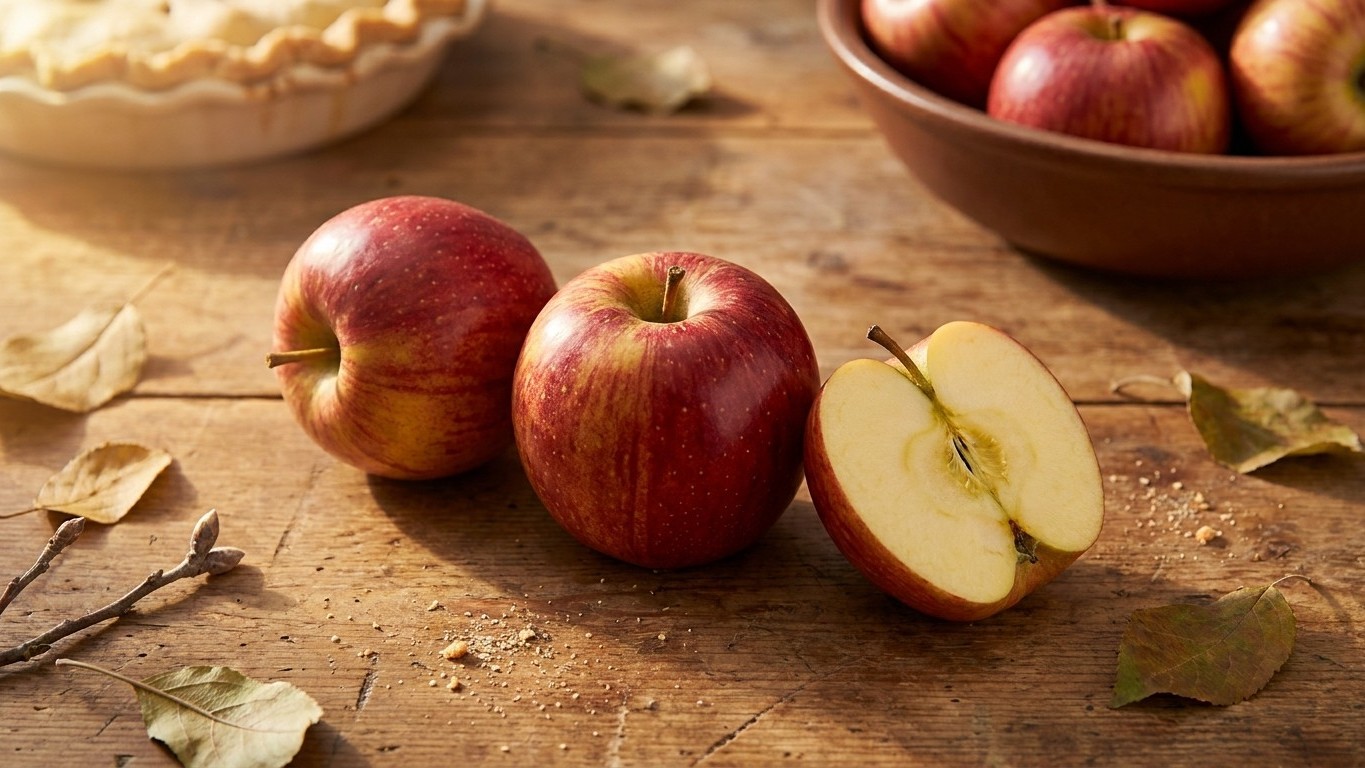

Apples in Saskatchewan are typically picked from mid-August through mid-September, timed to finish before the average first fall frost on September 18 at Saskatoon. Most varieties grown here ripen too early in a short season to become true long-term keepers. Expect weeks of good eating quality rather than months of cold storage, unless you’re holding one of the later, denser-fleshed prairie cultivars in a proper cold room.
When apples are ready to pick in Saskatchewan
Forget the calendar. The tree tells you when fruit is ready through its stage: background skin color shifting from green to yellow or cream, seeds turning brown instead of white, and the apple releasing from the spur with a gentle twist rather than a tug. Those signs matter more here than anywhere south of the border, because the window to act on them is tight.
Reading the fruit, not the calendar
The frost-free period at the Saskatoon SRC reference station runs, on average, from May 18 to September 18, a span of about 123 days. That’s the mean, not a guarantee. Environment and Climate Change Canada’s 1981-2010 normals put both dates as midpoints: in one year out of two, the last spring frost falls later than May 18, and in one year out of two, the first fall frost arrives later than September 18. Some years give growers extra days at the back end of the season. Others don’t. Because the safe window is already short, growers here tend to pick as soon as fruit shows ripe characteristics rather than waiting for a bit more size or color, the way an orchard in a milder province might.
Regional differences within the province
Saskatoon’s normals are a reference point, not a province-wide rule. The southern grain belt around Regina and Swift Current runs close to Saskatoon’s timing. Move north into the parkland and boreal fringe, or up in elevation, and both the last spring frost and the first fall frost shift, generally pushing the safe harvest window earlier in fall and later in spring, which shortens the season further. A gardener in Prince Albert or further north should treat mid-August as the realistic start of harvest for early varieties, not mid-September.
The province’s agriculture ministry keeps a portal of orchard and farm resources for producers working through these regional differences; it’s worth a look before locking in a harvest plan for a specific district, since no single date works for the whole territory. See the Saskatchewan agribusiness resources for that.
Which ones keep, and which must be eaten
Keeping quality is built on the tree, not in the cellar. An apple that finishes its ripening slowly, with plenty of warm days after bloom to build sugar and dense flesh, stores far longer than one rushed to maturity by a short season. That’s the core problem for Saskatchewan growers: with roughly 123 frost-free days on average, there simply isn’t the stretch of warm weeks that produces classic long-keeper apples in milder climates.
What keeps
Later-ripening, hardy selections bred for the prairies, picked at full maturity and moved straight into a properly cold, humid space, can generally hold for a couple of months without much loss of texture. The key word is generally: exact storage life varies by cultivar, by how the fruit was handled at picking, and by how consistent the storage temperature stays through winter. No published Saskatchewan source breaks this down variety by variety with specific week counts, so treat any number you see for a named cultivar as an estimate, not a guarantee.
What doesn’t
Early-season apples, and that includes most of what ripens by late August here, are bred and grown for fresh eating, not for the cold room. Their flesh softens and their flavor fades within a few weeks even under good conditions. Bruised fruit, or anything picked after a light frost has already touched it, should be used first. Frost-touched apples aren’t necessarily unsafe, but they break down fast once brought indoors, and mixing them with sound fruit in storage speeds up spoilage across the whole batch.
Storing them through a Saskatchewan winter
Saskatchewan’s winters remove one option that works in gentler climates: leaving apples in an unheated shed or garage and calling it a cold room. The mean daily minimum of the coldest month at Saskatoon sits at -20.7°C (for readers used to Fahrenheit, that’s roughly -5°F). An outbuilding tracking anywhere near that average will freeze fruit solid, and a frozen-then-thawed apple turns mealy and mushy almost immediately. That rules out casual outdoor storage for most of the winter here, not just on the coldest nights.
Where to put them
A basement cold room, root cellar, or an insulated, unheated but frost-protected space that stays consistently between roughly 0°C and 4°C works best for anyone holding more than a small basket. Wrapping or box-lining the fruit helps buffer small temperature swings, and keeping humidity up (a damp towel or a container of water nearby) slows the shriveling that dry basement air causes. For smaller quantities, a household refrigerator’s crisper drawer does the same job at a smaller scale.
How cold is too cold
The target range sits just above freezing, not well below it. That’s the balance point: a cold room that swings toward the Saskatchewan winter average of -20.7°C will freeze the fruit outright, while a space that stays too close to indoor room temperature accelerates ripening and shortens storage life dramatically. Checking stored apples every couple of weeks and pulling any that are softening or leaking keeps one bad apple from taking down the rest of the batch, an old warning that holds up because the ethylene gas ripening fruit gives off does spread through a closed container.
What goes wrong here
The most common failure isn’t cold, it’s timing. Because the first fall frost date of September 18 is a mean, not a fixed line, a hard frost can arrive earlier than that in roughly half of all years, catching later-ripening fruit still on the tree. Growers who wait for a bit more size, the way they might in a longer-season territory, sometimes lose the crop to an early cold snap instead.
On the spring side, the trade-off that matters in milder Canadian and American growing regions, where low-chill varieties flower early and risk a late frost, doesn’t really apply in Saskatchewan. Winters here are long and cold enough that chill accumulation is never the limiting factor; hardy prairie apple varieties get far more cold than they need to break dormancy properly. The actual spring risk is a warm early spell pushing bloom ahead of the mean last-frost date of May 18, in a year where frost then arrives on schedule or later, catching open blossoms. That kills the season’s fruit set even on a tree that survives the winter without damage, which is why hardiness and bloom timing need to be watched as two separate risks, not one.
Storage failures tend to trace back to inconsistent temperature: a cold room near an exterior wall that dips toward that -20.7°C winter average on the coldest nights, or a space that warms too much whenever the furnace kicks in nearby. Either extreme shortens storage life well below what the same fruit would achieve in a stable space.
Common questions
Can I go by the calendar month instead of the frost dates?
Not reliably. The mean first fall frost at Saskatoon is September 18, but that date shifts year to year and moves earlier the farther north or higher in elevation you garden. Watching fruit stage (background color, seed color, ease of release) matters more than the date on the wall.
Do Saskatchewan-grown apples last as long in storage as apples from milder regions?
Generally not. A short frost-free season of around 123 days limits how much ripening time fruit gets on the tree, and that ripening time is what builds the dense flesh long keepers need. Expect weeks of good quality from most varieties here, with only select later cultivars holding a couple of months in proper cold storage.
Is winter chill ever a problem for apple trees in Saskatchewan?
No, the opposite is true. Winters are long and cold enough that hardy varieties accumulate far more chill than required. The real cold-related risk is winter survival itself, tied to the region’s mean coldest-month minimum of -20.7°C, and spring frost timing after bloom, not insufficient chill.
Where can I find region-specific growing guidance for Saskatchewan?
The province maintains agriculture and agribusiness resources aimed at producers and growers working through these local conditions, available through Saskatchewan’s agribusiness resources page. No single provincial source breaks storage life down variety by variety, so local extension offices or experienced regional growers remain the best check for anything specific to your district.
Related guides
- The Best Apple Varieties for South Carolina
- The South Carolina Apple Calendar, Stage by Stage
- The Best Melons to Grow in Saskatchewan
- Forcing Spring Bulbs Indoors in Saskatchewan
- Growing Parsnips in Saskatchewan
- The Saskatchewan Apple Calendar, Stage by Stage
- The Best Apple Varieties for Saskatchewan