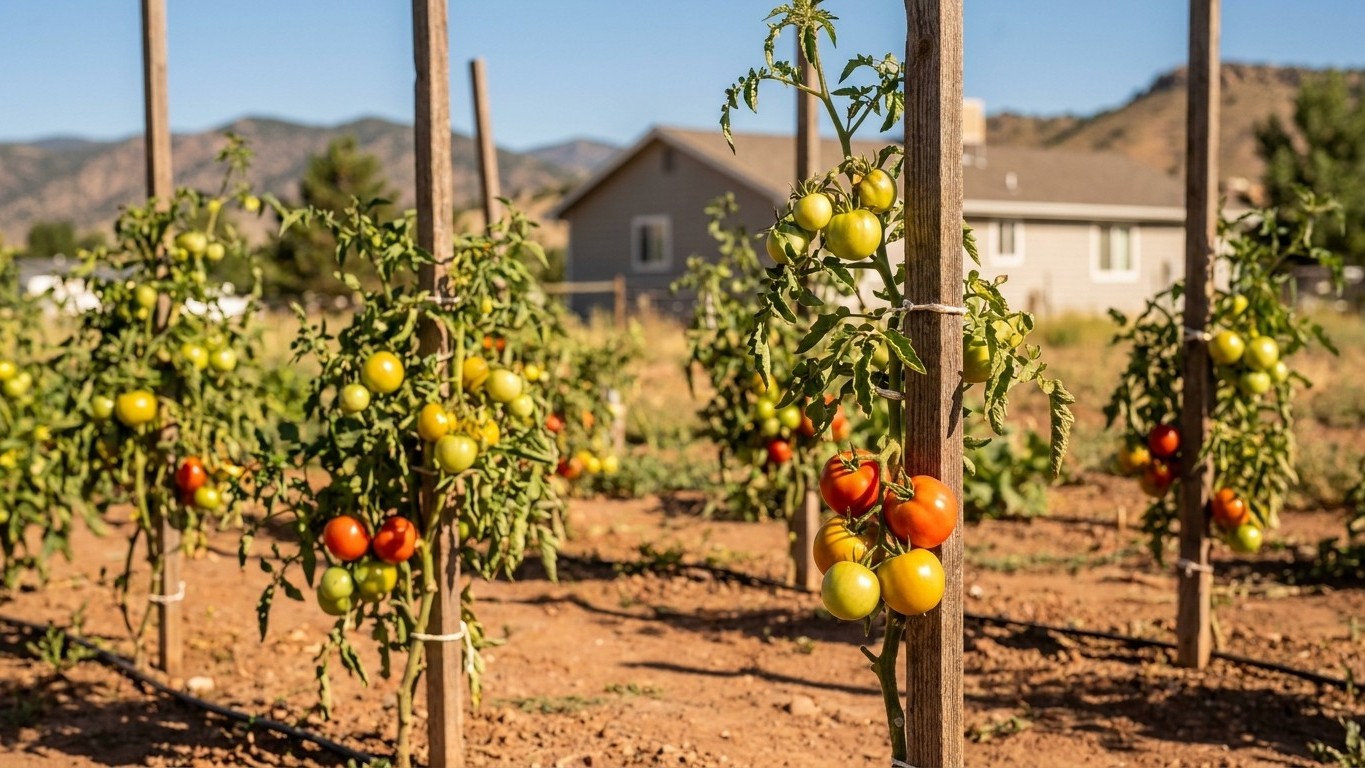

The short answer: pull every tomato off the vine before the first fall frost arrives, whether it’s ripe or still green, because a hard freeze ruins fruit that’s already showing color and stops immature fruit from ever ripening at all. In the Virginia Beach area, that frost typically lands between November 10 and November 24. Inland and mountain gardens run weeks earlier. Everything else, sorting what’s worth saving, ripening it indoors, is a matter of temperature and timing, not luck.
When to pick tomatoes in Virginia
Tomato harvest isn’t really governed by a calendar date. It’s governed by two thresholds: the temperature at which ripening slows on the vine, and the temperature at which frost kills the plant outright. Fruit ripening stalls once nighttime temperatures dip below roughly 50°F, and the plant itself is finished once a freeze hits. That’s why the practical harvest deadline in Virginia isn’t “sometime in fall,” it’s the first fall frost window for your specific location.
For the coastal reference station at NAS Oceana in Virginia Beach, NOAA’s 1991-2020 Climate Normals put that first fall freeze between November 10 and November 24. That’s a real range, not a single date, because frost timing shifts year to year even at one station. And Virginia Beach sits at the mild end of the state’s climate spread. The Blue Ridge and southwest Virginia see their first freeze weeks earlier, sometimes well before Halloween, while the coastal plain can still be picking into mid-November most years.
Why the whole state doesn’t share one date
Virginia spans USDA hardiness zones 5a through 8b, a range built entirely around one number: the average annual extreme minimum temperature. That’s a cold-tolerance measure for perennial plants, not a frost calendar, but it’s a useful shorthand for how differently the state behaves. A garden in the mountains and a garden near the ocean are effectively gardening in different climates, even though they’re both “Virginia” on a map. If you garden away from the coast, don’t borrow the Oceana frost window and assume it applies to you. Check your own county’s typical first freeze through your local Virginia Cooperative Extension office before you plan a harvest date around it.
In practice, that means watching the forecast starting in early October if you’re inland, and starting in late October to early November if you’re near the coast. Once a frost advisory shows up for your area, that’s harvest day for everything left on the vine, ripe, breaker-stage, or green. There’s no upside to leaving fruit out for one more warm afternoon if a freeze is forecast that night. A single hard freeze turns fruit translucent and mushy within hours, and there’s no salvaging it after that point.
What to Do With the green ones
Not every green tomato is the same tomato. Some are fully mature, just not yet colored, and those will ripen fine indoors. Others are still small and immature, and no amount of indoor coddling turns those into decent fruit. The difference is worth sorting for before frost hits, because it changes what you do with each one.
A mature green tomato has reached full size for its variety, the skin has turned from dull to slightly glossy, and the blossom end has a faint whitish or pinkish cast rather than staying hard and green all over. Cut one open and you’ll see the seeds have gelled inside their cavities rather than sitting in a watery, undeveloped mass. Those tomatoes will ripen off the vine, given the right conditions. Small, hard, dark-green fruit with no size behind it, on the other hand, is best used green (think fried green tomatoes or relish) rather than stored and hoped for.
Picking ahead of the freeze
Once a frost is forecast for your area, the harvest isn’t selective anymore. Strip the plant. Pick anything with size and shape, sort it once it’s inside, and don’t leave marginal fruit “for one more day” hoping it colors up on the vine, because a freeze doesn’t negotiate. Handle each tomato by the shoulders rather than squeezing the body, since bruised fruit rots faster than it ripens once it’s off the plant.
Whole plants can also be pulled and hung upside down in a garage or shed if a hard freeze is imminent and there’s simply too much fruit to pick individually in one evening. That buys a few extra days of ripening time for fruit still attached to the vine, though it’s a stopgap, not a long-term storage method. For general guidance on end-of-season handling specific to Virginia growing conditions, Virginia Cooperative Extension (ext.vt.edu) is the resource to check, since recommendations can vary by region within the state.
Ripening indoors, and how long they keep
Mature green and breaker-stage tomatoes (those just starting to show a blush of color) ripen indoors through the same process that finishes them on the vine: the fruit produces ethylene gas as it matures, and that gas triggers the color and softness changes we call ripening. Warmth speeds the process along; cold slows or stops it.
The practical range for ripening tomatoes indoors is roughly 65°F to 75°F. Spread the fruit in a single layer, stem-side down, out of direct sunlight, on a counter, table, or shallow box. Direct sun doesn’t speed ripening, it just adds heat that can cause soft spots and uneven color. Check the fruit every day or two and pull anything showing rot or soft decay immediately, since one spoiling tomato can speed spoilage in the ones around it.
Speeding it up, or slowing it down
Closing tomatoes inside a paper bag, or a cardboard box with the lid loosely on, traps the ethylene the fruit produces and speeds ripening compared to leaving them fully exposed on an open counter. Adding a ripe banana or apple to that bag adds more ethylene to the mix and speeds things further, since both fruits are heavy ethylene producers. This works well for a handful of tomatoes on the counter, but it’s not a technique to scale up for a full end-of-season haul, since crowded, bagged fruit is harder to check for rot.
Refrigeration does the opposite: it stalls ripening almost entirely, and chilling temperatures below about 55°F cause tomatoes to lose flavor and develop a mealy texture that doesn’t reverse once the fruit warms back up. That makes the refrigerator useful only for fruit that’s already fully ripe and needs to hold a few extra days, never for green or breaker-stage tomatoes still working toward ripeness.
Timing varies by how far along the fruit was at picking. Breaker-stage tomatoes, already showing color, generally ripen fully within a week to ten days at room temperature. Mature green fruit takes longer and less predictably, sometimes several weeks, and a portion of any large green harvest will simply rot before it colors rather than ripening on schedule. That’s normal attrition, not a sign anything was done wrong.
What goes wrong here
The most common mistake is simple: waiting too long on the vine, hoping for one more warm stretch, and losing the whole crop to a single overnight freeze. Ripening on the vine already slows once nights drop below 50°F, so those last warm-looking days in October or early November are producing less ripening than they appear to. There’s no upside to the wait once temperatures start running that low consistently.
The second mistake is treating small, immature green fruit the same as mature green fruit. Immature tomatoes, still hard, still small for their variety, with pale undeveloped seeds inside, mostly just shrivel or rot in storage rather than ripening. Sorting before storing saves counter space and prevents a few bad tomatoes from spreading rot to the good ones sitting next to them.
Refrigerating unripe fruit is another frequent misstep. It feels like the obvious way to “preserve” tomatoes longer, but chilling temperatures halt the ripening process and permanently damage texture and flavor in fruit that hasn’t finished maturing. Once that chilling injury sets in, warming the tomato back up doesn’t undo it.
Bagging too many tomatoes together, especially in a sealed container rather than a loosely closed bag or box, is the last common problem. Trapped moisture combined with trapped ethylene speeds rot as much as it speeds ripening, particularly if one tomato in the batch already had a soft spot or a crack when it went in. Checking the batch daily and pulling anything questionable is a small habit that saves a much bigger loss later in the process.
Common questions
Can a tomato ripen after a light frost has already touched it?
Fruit that was only lightly touched, with no visible water-soaked or mushy patches, can sometimes still ripen indoors, but check it closely first. A tomato with soft, translucent, or collapsed areas is already breaking down internally and won’t recover regardless of how it’s stored afterward.
Does the harvest date differ much between coastal Virginia and the mountains?
Yes, by weeks in either direction. The coastal reference station used here (NAS Oceana, near Virginia Beach) sees its first fall freeze between November 10 and November 24. The Blue Ridge and southwest Virginia see theirs considerably earlier, and gardeners in those regions should check local frost data through Virginia Cooperative Extension rather than using the coastal window.
Is it better to pick tomatoes at breaker stage rather than waiting for full ripeness?
For flavor, vine-ripened is generally preferred when the season allows it. But once frost risk enters the picture, breaker-stage fruit (already showing a blush of color) ripens faster and more reliably indoors than fully mature green fruit does, so picking a bit earlier ahead of a forecast freeze is a reasonable trade-off.
How long do ripened tomatoes actually last once they’ve colored up indoors?
That depends heavily on how they’re stored afterward and isn’t something published data can pin to a single figure here, since it varies with the fruit’s condition at ripening and the storage temperature used. As a general rule, room-temperature storage keeps ripe fruit usable for a matter of days rather than weeks, and refrigeration extends that only slightly, at the cost of flavor and texture.