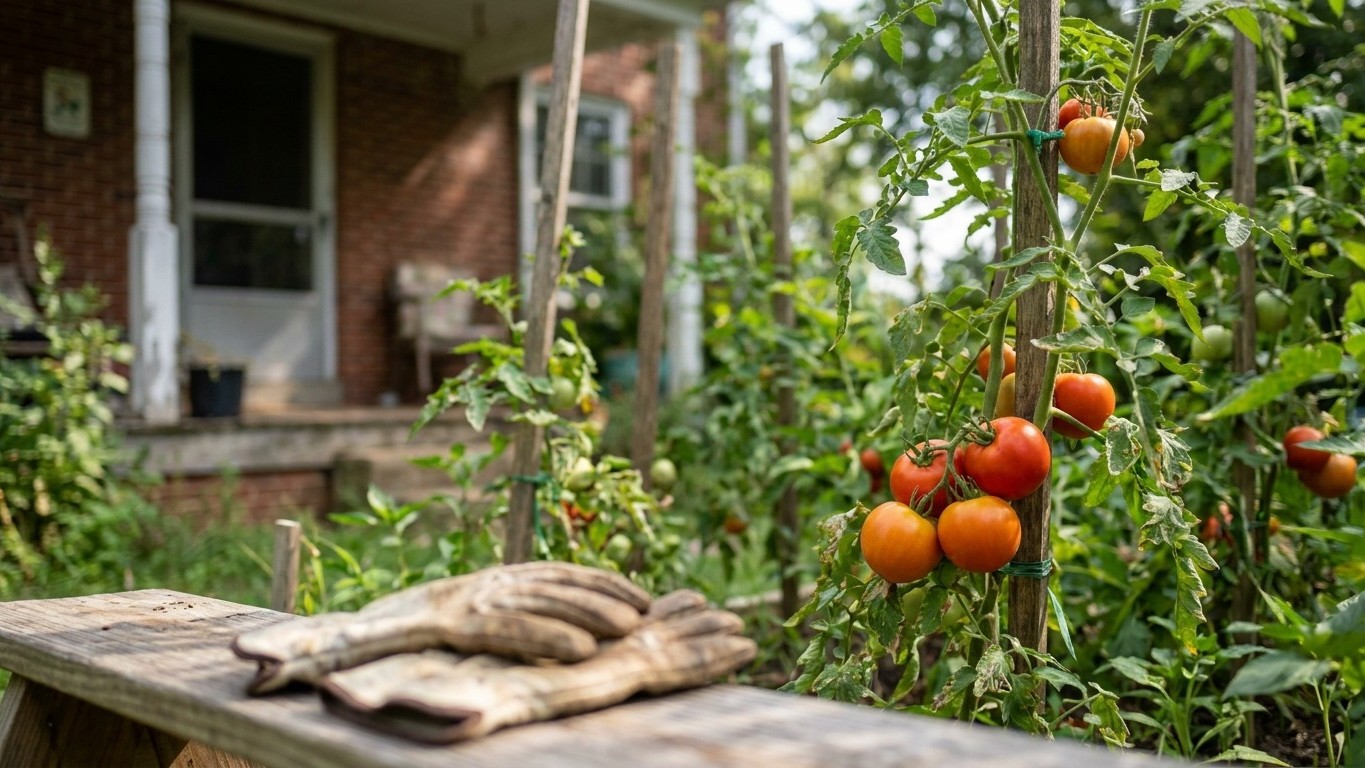

Virginia’s tomato season opens once the last spring freeze has passed, and for Virginia Beach that means the window NOAA’s NCEI 1991-2020 Climate Normals put at March 20 to April 3. Transplant into that window or a little after it, once the soil itself has warmed rather than the moment the calendar allows. Gardeners farther inland or at higher elevation should expect spring to arrive weeks later than this coastal reference point.
When to plant Tomatoes in Virginia

March 20 to April 3 — that’s the transplant window Virginia Beach gardeners circle on the calendar, and it’s the number most “Virginia tomato dates” charts hand you. But that date belongs to the coast alone. Drive inland to the Piedmont, or up into the Blue Ridge and the southwest corner, and spring arrives weeks later, closer to the mountain counties of West Virginia than to the beach. Your county’s frost date, not this one, decides when your transplants go in.
That figure describes the coastal plain only. Inland Virginia, the Piedmont, and especially the Blue Ridge and southwest corner of the state run measurably later in spring, sometimes by several weeks, which puts them on a calendar closer to the mountain counties of neighboring West Virginia than to Virginia Beach. If you garden away from the coast, use the Virginia Beach window as a reference point only, not as your planting date, and check your own county’s timing before you commit transplants to the ground.
Counting back to a seed-starting date
Tomato seedlings need six to eight weeks under lights indoors before they’re ready to go into the garden. Counting back from a Virginia Beach transplant window of March 20 to April 3 lands seed-starting somewhere between late January and mid-February, depending on which end of that six-to-eight-week range you use and which end of the frost window you’re aiming for. Gardeners transplanting later inland should slide this whole calculation back by the same number of weeks their local frost date runs behind the coast.
Once seedlings are up, give them the brightest light source you have. A sunny windowsill alone usually isn’t enough and produces tall, thin, weak stems. Pot seedlings up once if they outgrow their starting cells before your transplant window arrives, burying the stem a little deeper each time, since tomatoes root readily along a buried stem.
Harden plants off before they go in the ground. Spend the week before transplanting moving seedlings outside for a few hours at a time, starting in shade and working up to a full day of sun and wind exposure. Skipping this step is the fastest way to lose a whole tray of seedlings to sunscald or wind stress in a single afternoon. Transplant in the evening or on an overcast day if you can, water in well, and hold off on any fertilizer for the first week or so while roots settle.
Soil and site preparation
Tomatoes want six to eight hours of direct sun a day at minimum, and less than that shows up later as leggy plants and slow, watery-tasting fruit. Pick the sunniest, most open spot in the yard before you worry about anything else, and keep it away from the shade line cast by fences or mature trees as the season moves through summer.
Soil texture matters almost as much as sun. Tomatoes want a loose, well-drained loam and sulk in heavy clay that stays wet after rain, a common condition across much of Virginia’s Piedmont. Work several inches of finished compost into the bed weeks ahead of planting, not the day of, so it has time to integrate into the root zone rather than sitting as a separate layer. If a spot holds standing water for more than a few hours after a heavy rain, build a raised bed or mounded row instead of fighting the native drainage.
A soil test taken the fall or early spring before planting tells you where your pH and nutrient levels actually sit, rather than guessing. Tomatoes prefer a slightly acidic to neutral soil, and a test will flag whether you need lime or a specific nutrient correction before you plant, which is far cheaper to fix in bare soil than after the plants are in. Space indeterminate varieties 24 to 36 inches apart and determinate types a bit tighter, 18 to 24 inches, with rows far enough apart to let air move through the foliage once plants fill in. Crowded plants stay wet longer after rain and dew, which is exactly the condition that lets fungal disease take hold.
Varieties that suit Virginia
Virginia’s frost-free season on the coast is long enough that days to maturity is rarely the limiting factor it would be for a grower piecing together a short-season lineup in a state like South Dakota, where the frost window closes early and every week counts (see our South Dakota tomato guide for how growers there compensate). Here, disease pressure from Virginia’s humid summers matters more than squeezing in a fast harvest, and it’s worth choosing varieties for their resistance codes as much as their flavor.
Reading the resistance letters
Catalog listings for resistance to nematodes, verticillium wilt, fusarium wilt, tobacco mosaic virus and the blights are bred-in traits, the same in every state, and printed on the seed packet or tag. A resistant variety doesn’t mean immune, but it does mean the plant can often keep producing through pressure that would stall or kill a susceptible one. Days-to-maturity figures on the packet are counted from transplant, not from seed, and typically run a week or two off in either direction depending on the season’s heat and light.
| Variety | Days from transplant | Type | Notable resistance | Best for |
|---|---|---|---|---|
| Sun Gold | 57 | Indeterminate | Tobacco Mosaic Virus, Fusarium Wilt 1 | Early, sweet cherry tomatoes |
| Sakura | 55 | Indeterminate | Nematodes, Tomato Mosaic Virus, Fusarium Wilt 1 & 2 | Fast, crack-resistant cherries |
| Jasper | 60 | Indeterminate | Late Blight (High), Early Blight | Cherry tomatoes in a wet summer |
| Celebrity Plus | 78 | Determinate | Nematodes, Gray Leaf Spot, Tomato Mosaic Virus | All-purpose slicer, compact plant |
| Big Beef Plus | 72 | Indeterminate | Nematodes, Gray Leaf Spot, Tomato Mosaic Virus | Large slicers for sandwiches |
| Amalfi | 68 | Determinate | Nematodes, Late Blight, Early Blight (all Intermediate) | Sauce tomatoes in a blight-prone year |
| Granadero | 75 | Indeterminate | Nematodes, Verticillium Wilt, Tomato Mosaic Virus | Paste tomatoes for canning |
| Cherokee Purple | 72 | Indeterminate | None listed | Flavor first, needs a clean disease season |
Heirlooms like Cherokee Purple and Brandywine carry no bred-in resistance at all, which is fine in a dry year and a gamble in a wet one. If you want the heirloom flavor without giving up the whole crop to blight, plant one or two heirloom plants alongside a resistant workhorse like Celebrity Plus or Big Beef Plus, so a bad disease year doesn’t wipe out everything at once. Paste growers weighing a long-season heirloom like Amish Paste against a resistant hybrid like Granadero or Tiren should factor in that the resistant varieties are far more likely to still be standing in late August after a summer of humidity.
What to plant alongside
Basil is the pairing most gardeners reach for first, and while the folklore claims it repels pests and improves tomato flavor, the pest-repellent effect has never held up well under controlled testing. What basil does reliably do is stay low and compact enough not to compete for light, share watering needs closely enough to make one drip line work for both, and give you a reason to harvest both crops on the same walk through the garden. Marigolds have better evidence behind them: certain types suppress root-knot nematodes in the soil when grown as a dense planting over a season, though scattering a few plants around the border does far less than an actual cover crop of them would.
Borage and other open, nectar-rich flowers draw in the bees and hoverflies that both pollinate tomato blossoms and prey on aphids, and they’re worth tucking in at the end of a tomato row for that reason alone. Alliums, onions and garlic planted between tomato plants take up little space and share none of the tomato’s major disease or pest issues, which makes them a low-risk filler rather than a proven booster.
Keep tomatoes well away from potatoes and corn. Potatoes share the same fungal blights and can carry them in the soil from one season to the next, so planting them side by side just gives disease a shorter distance to travel. Corn earworm and tomato fruitworm are the same insect species, so a corn patch next to tomatoes gives that pest an easy hop from one crop to the other right as tomatoes are setting fruit. Brassicas like cabbage and broccoli aren’t dangerous neighbors, but they draw on the same heavy nitrogen supply at the same point in the season, so they compete more than they help. Skip fennel entirely. It’s one of the few plants with a genuinely documented allelopathic effect, releasing compounds that measurably stunt tomato growth nearby.
Watering, feeding and support
Consistent moisture matters more than total volume. Most tomato plants do well on roughly an inch of water a week from rain or irrigation combined, applied deeply and infrequently rather than a light sprinkle every day, since shallow watering trains roots to stay near the surface where they dry out fast in July heat. A two to three inch layer of mulch, straw or shredded leaves both, holds that moisture in and keeps soil-borne fungal spores from splashing up onto the lower leaves every time it rains.
Feeding through the season
Work a balanced fertilizer into the soil at planting time, then hold off on more nitrogen until the first fruit sets. Tomatoes fed heavily with nitrogen early on put their energy into lush foliage instead of flowers, a plant that looks great and produces almost nothing. Once fruit is sizing up, a side-dress of a fertilizer lower in nitrogen and higher in potassium supports the fruit load without pushing more leaf growth. Blossom end rot often traces back to inconsistent watering rather than a true calcium shortage in the soil, so an even watering rhythm does more for it than a calcium supplement usually does.
Stake or cage every plant, decided by type. Indeterminate varieties, which keep growing and setting fruit until frost, need a sturdy stake, a tall cage, or a trellis system tied up through the season, since an unsupported indeterminate plant collapses under its own weight by midsummer. Determinate varieties, which grow to a set size and ripen most of their fruit in a shorter window, get by with a smaller cage. Pruning suckers, the shoots that emerge in the joint between the main stem and a leaf branch, on indeterminate varieties keeps the plant to one or two main stems and improves air movement, though it isn’t strictly necessary and costs you some total yield in exchange for larger individual fruit.
Common problems

Most tomato trouble in Virginia gardens comes down to a handful of repeat offenders, and reading the symptom correctly saves a lot of wasted spraying.
Blossom end rot

The fruit develops a sunken, leathery dark patch on its bottom end while the rest of the plant looks fine. This is a watering problem more often than a calcium deficiency. Uneven watering, a dry week followed by a soaking, interrupts the plant’s ability to move calcium into fast-growing fruit even when there’s plenty of calcium in the soil. Even, consistent watering and a solid mulch layer fix most cases within a few fruit cycles.
Cracking

Rings or splits open up around the stem end of a ripening fruit, usually right after a heavy rain following a dry spell. The fruit swells faster than the skin can stretch. Mulching to even out soil moisture and picking fruit as soon as it colors up, rather than leaving it on the vine to fully ripen, both cut down on cracked fruit.
Wilts and poor fruit set
A plant that yellows from the bottom up and wilts even when the soil is moist is showing classic fusarium or verticillium wilt symptoms, both soilborne fungi that clog the plant’s water-conducting tissue. There’s no cure once a plant is infected. Removing it and choosing a resistant variety, such as Sun Gold, Sakura or Big Beef Plus, for that bed next season is the only real fix. Poor fruit set with plenty of flowers but no fruit usually points to extended heat stress during flowering, which causes pollen to go sterile, or to a lack of the movement bees and wind provide to shake pollen loose. Gently shaking flower clusters by hand every few days can help if pollinator activity is light.
Insect pests
A handful of pests show up on Virginia tomato plants every season:
- Tomato hornworm: a thick green caterpillar several inches long with white diagonal stripes and a curved horn on its rear end, capable of stripping a branch of leaves overnight.
- Brown marmorated stink bug: a shield-shaped, mottled brown insect established across much of Virginia, which pierces fruit and leaves pale, dimpled spots under the skin.
- Aphids: small soft-bodied insects clustered on new growth and the undersides of leaves, sucking sap and excreting a sticky residue.
- Whiteflies: tiny white flying insects that scatter in a cloud when a leaf is disturbed, also feeding on sap.
Handpicking hornworms works well on a small planting, and a strong jet of water knocks aphids and whiteflies back without reaching for a spray. Reserve any insecticide for a genuine outbreak, since broad-spectrum products kill off the parasitic wasps and predatory insects that otherwise keep hornworm and aphid numbers in check on their own.
Pests that actually show up in Virginia
Virginia Cooperative Extension’s guide to insects commonly found on vegetables in Virginia, compiled by entomologist Tom Kuhar at Virginia Tech’s Eastern Shore AREC, lists more than a dozen pests across the vegetable garden. Most of that list, Mexican bean beetle, harlequin bug, squash bug and squash vine borer, striped and spotted cucumber beetles, corn earworm, European corn borer, and the whole cabbage family crew of imported cabbageworm, cabbage looper, diamondback moth and cross-striped cabbageworm, targets beans, squash, corn and brassicas. If you grow those alongside your tomatoes, watch for them there. On tomatoes themselves, four or five of the named pests do the real damage.
Tomato and tobacco hornworms are the big one. You’ll see stripped stems and black droppings on the leaves below before you ever spot the caterpillar itself, usually from midsummer on. Hand-picking works if you check plants every couple of days, and Bacillus thuringiensis (Bt) knocks back a bad infestation without touching bees.
Colorado potato beetle chews ragged holes straight through leaves, working from the top of the plant down, and shows up early once the weather warms. Handpicking adults and the orange egg clusters on the undersides of leaves keeps small patches under control.
Stink bugs, brown marmorated stink bug in particular, along with tarnished plant bug, leave hard, pale blotches or cloudy spots under the skin of ripening fruit rather than obvious holes. Both feed through the whole season but do the most damage as fruit sizes up in mid to late summer. Keeping the area around the bed free of tall weeds, where they overwinter and breed, cuts pressure more than any spray timed after damage appears.
Flea beetles show up on young transplants as a scatter of tiny round holes, almost a shot-hole pattern, across the leaves within the first few weeks after planting. Established plants usually outgrow the damage, but a floating row cover over transplants stops the early hits that can stunt a young plant for good.
Aphids cluster on new growth and the undersides of leaves, curling them and leaving a sticky residue behind. A strong jet of water knocks most colonies down before they build to a level worth treating with anything stronger.
Harvest and end of season
Pick tomatoes once they’ve colored fully and give slightly to a gentle squeeze, rather than waiting for them to soften on the vine, since fully vine-ripened fruit bruises easily and doesn’t keep. Fruit that’s still showing color but not fully ripe will finish ripening indoors at room temperature over a few days, out of direct sun, and keeps its flavor better that way than fruit picked green and forced.
As fall approaches
Virginia’s first fall frost timing varies enough across the state’s coastal, Piedmont and mountain regions that a single date would be misleading. Watch your local forecast once nights start cooling in earnest, and check your Virginia guides hub or your county extension office for local fall frost expectations rather than relying on a statewide estimate.
When a frost warning does arrive, pick every fruit showing any color at all, since green tomatoes left on a frost-killed vine won’t ripen further. Fully mature green fruit, firm and pale rather than dark green and hard, will still ripen indoors over the following weeks if kept at room temperature out of direct sunlight, wrapped individually in newspaper if you have a large batch to get through. Pull spent plants and clear fallen fruit and foliage from the bed once the season ends, since leaving diseased plant material in place over winter gives fungal spores a head start on next year’s crop.
Local help
County-level frost dates, soil test results and current pest alerts all vary across Virginia in ways a single statewide article can’t capture. Virginia Cooperative Extension, run through Virginia Tech and Virginia State University, is the free local resource to check before you finalize a planting date or diagnose a disease you’re not sure about. Find your local office through the Virginia Cooperative Extension website.
Where to Go From Here
Everything above comes down to timing and threats, so the three companion pages fill in the details this hub only sketches. If you want the actual dates to work backward from, counting back from your frost window lays out how Virginia’s transplant window opens once the last spring freeze has passed, using NOAA’s 1991-2020 normals for the Virginia Beach area. Once you know when you’re planting, the question becomes what to plant, and tomato varieties that ripen in time covers which ones can actually mature between that same March 20-April 3 freeze and the first fall freeze in November. And because a healthy planting calendar and the right variety still won’t save you from insects, the pests that actually show up here walks through the same six culprits Virginia gardens see every year, in the order they tend to arrive. Read those three together and you’ve got the whole picture: when to plant, what to plant, and what to watch for once it’s in the ground.
Common questions
Can I plant tomatoes before the last frost date if I cover them?
Row cover or a cloche can buy a few degrees of protection against a light frost, but tomatoes are killed outright by a hard freeze regardless of cover, and cold soil alone stalls their growth even without frost damage. It’s usually better to wait for the window to close than to gamble on cover working through a genuine freeze.
Why are my tomato leaves curling up?
Leaf curl has several causes, and most of them aren’t serious. Heat and moisture stress cause the leaves to curl upward as a defense, and the plant usually recovers once conditions ease. Curling paired with yellowing, stunted new growth or a mottled pattern is more concerning and can point to a viral infection, which has no cure beyond removing the plant.
Do I really need to prune suckers?
No, it’s optional. Pruning suckers on indeterminate varieties concentrates the plant’s energy into fewer, larger fruit and improves airflow, which helps in a humid Virginia summer, but an unpruned plant still produces a full crop, just with more, smaller fruit spread across a bushier plant.
What’s the difference between determinate and indeterminate for someone just starting out?
Determinate varieties, like Celebrity Plus or Amalfi, grow to a fixed size and ripen most of their crop over a few weeks, which suits canning or a smaller garden with limited stake height. Indeterminate varieties, like Sun Gold or Big Beef Plus, keep growing and producing until frost, giving a steady trickle of fruit all season but needing taller, sturdier support.
My tomato plant has tons of flowers but no fruit, what’s wrong?
This is usually poor fruit set rather than a plant problem. Extended heat during flowering can make pollen sterile, and low pollinator or wind activity leaves flowers unfertilized even when pollen is fine. Flowers that drop without setting fruit during the hottest stretch of summer typically resume setting normally once temperatures ease.