
Virginia’s tomato patches see the same six pests come through in roughly the same order every year, running from transplant near the last-frost window of March 20 to April 3 that NOAA’s 1991-2020 climate normals put on Virginia Beach, through to fruit set well before the first fall frost of November 10 to November 24 at that same station. Which ones you actually meet depends on when you set plants out and how the weather behaved that week. Walk your rows every few days from transplant onward and check the undersides of leaves and the soil line at the base of each stem, since that is where the earliest damage shows first.
What this comes down to in Virginia

The pest calendar in Virginia starts at the soil line and moves upward as the season warms. Newly set transplants are vulnerable to soil-dwelling pests for only a couple of weeks, then the pressure shifts to foliage feeders, and by midsummer it moves to the fruit itself. Timing your scouting to match this progression catches almost everything before it does real damage. None of these pests are unique to Virginia, but all six are common enough here that a home gardener growing tomatoes in Virginia should expect to meet at least two or three of them in a normal season.
Cutworms
Cutworms are the first pest most transplants meet, usually within days of going into the ground. The larvae sever young stems right at the soil line overnight, so you find a healthy-looking transplant lying flattened next to an intact root ball in the morning. A cardboard collar pushed an inch into the soil around each stem stops them cold, and it costs nothing but a few cereal boxes.
Flea Beetles
Flea beetles show up on young foliage almost as soon as it unfurls, before the plant has built up much size. The damage looks like the leaf was hit with fine buckshot, dozens of tiny round holes scattered across the surface. Seedlings can outgrow light feeding on their own; heavier infestations respond to row cover kept on until bloom, since the cover has to come off eventually for pollination.
Colorado Potato Beetle
This one arrives as the plants are sizing up in late spring, and it will strip a stand of foliage fast if the larvae go unchecked. Watch for clusters of orange egg masses on the underside of leaves; hand-picking both eggs and the humpbacked red larvae before they spread is the single most effective control a home gardener has.
Aphids
Aphids build up through late spring and into summer, especially on soft new growth at the top of the plant. Leaves curl and yellow, and a sticky residue collects on the foliage below the colony. A strong jet of water knocks most colonies down, and that alone is often enough since aphids have plenty of natural predators once you stop spraying broad-spectrum insecticides that kill those predators too.
Tomato Hornworm
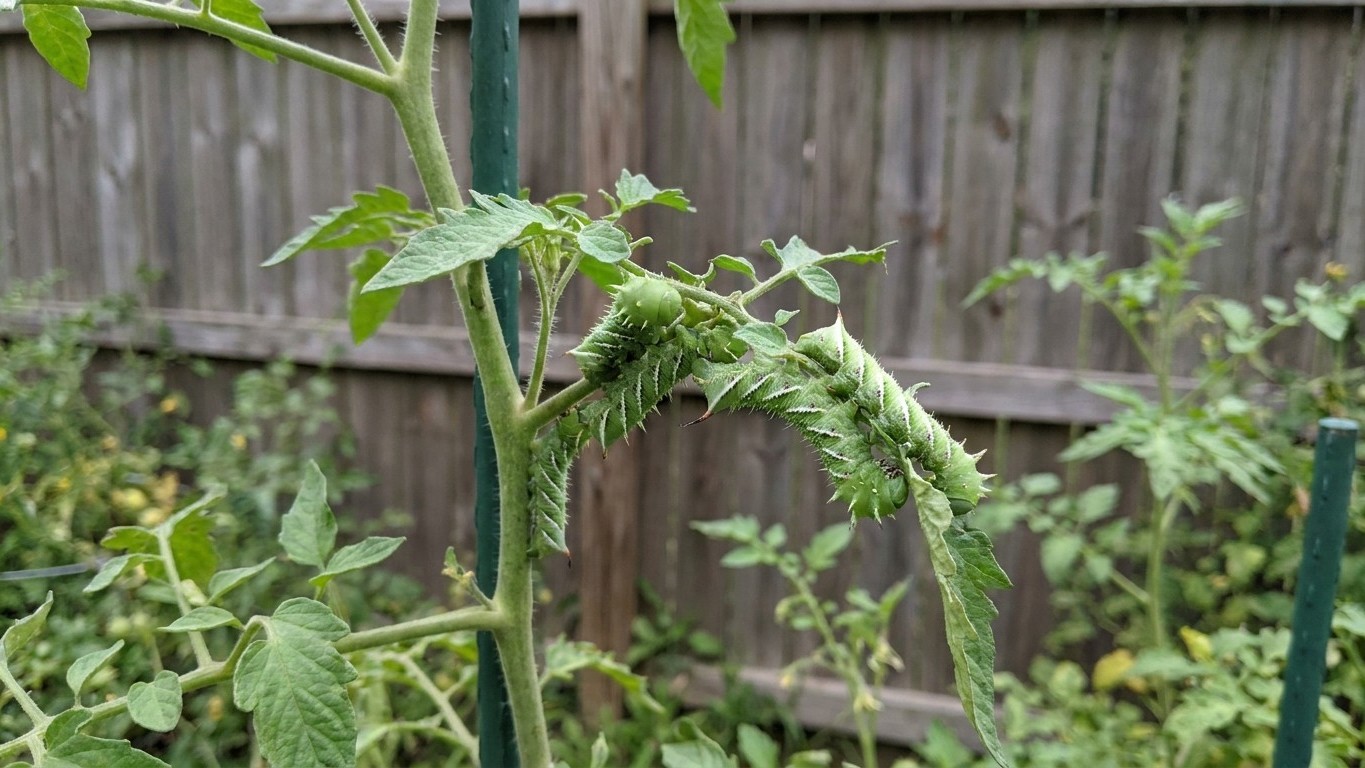
Hornworms feed through the heat of midsummer and can strip a branch of leaves in a single night despite their size, because their green color blends so well with tomato foliage that they are easier to find by the black droppings underneath the plant than by looking for the caterpillar itself. Hand-picking works, and if you find one covered in small white cocoons, leave it alone: those are parasitic wasp cocoons already doing your pest control for you.
Brown Marmorated Stink Bug
This is a late-season pest, feeding on fruit as it ripens from midsummer into fall. Feeding leaves cloudy, discolored patches under the skin that show up when you slice the fruit, even though the outside can look nearly normal. Netting ripening fruit clusters and picking tomatoes slightly early to finish indoors reduces losses more reliably than most sprays, since the adults are mobile and quick to return.
Working it out for your own garden
Matching a symptom to the right pest is mostly a matter of timing plus damage pattern, in that order. Ask when in the season you’re seeing the problem first, since that narrows the list before you even look closely at the damage itself.
| Pest | When it shows up | Telltale sign |
|---|---|---|
| Cutworms | First 1-2 weeks after transplant | Stem severed at soil line, plant toppled |
| Flea beetles | Seedling stage, early season | Small round shot-holes across leaves |
| Colorado potato beetle | Late spring into early summer | Orange egg clusters, skeletonized leaves |
| Aphids | Late spring through summer | Curled new growth, sticky residue |
| Tomato hornworm | Midsummer | Stripped branches, dark droppings below |
| Brown marmorated stink bug | Midsummer into fall | Cloudy discolored patches inside ripe fruit |
If you transplanted right at the edge of the frost window described in Tomato Planting Dates in Virginia: Counting Back From Your Frost Window, cold-stressed seedlings are also slower to recover from any pest damage, which makes early cutworm and flea beetle scouting worth the extra few minutes in those first two weeks. A plant that’s already struggling from cold soil shows pest damage faster and recovers from it slower than one transplanted into warm ground, so the two problems compound each other rather than staying separate.
What changes across the state
The frost figures above come from NOAA’s station at NAS Oceana near Virginia Beach, and that’s the mild end of the state. The Blue Ridge and southwest Virginia see a later spring thaw and an earlier fall freeze than the coast, which compresses the whole growing season and, with it, the number of generations a pest like aphids or stink bugs can push through before frost shuts things down. A shorter season generally means lighter late-season pressure from fruit-feeding pests, simply because there’s less warm stretch left for populations to build.
Elevation matters more than distance in Virginia’s western counties, where a few hundred feet of gain can shift bloom and fruit set by a week or more compared to a valley floor nearby. The USDA’s hardiness zone map puts the state anywhere from zone 5a in the highest mountain counties to 8b along the coast, and that same spread affects how early in spring soil warms enough for cutworm and flea beetle activity to start. Treat the Virginia Beach figures as one data point on a long north-south, coast-to-mountain gradient, not as a number that applies evenly from Virginia Beach to Abingdon.
Humidity plays a role too. The muggier stretches of the Piedmont and Tidewater tend to favor aphid buildup and fungal issues that follow pest damage, while the drier upland areas see relatively more flea beetle pressure on young transplants. None of this changes which pests are present, just how heavy the pressure runs in a given year and how early it starts.
The mistakes this state punishes

The costliest error is transplanting into soil that’s still cold after a warm early spell, since that stretch of stress is exactly when cutworms and flea beetles do the most damage to a plant that has no reserves to spare. A second is reaching for a broad-spectrum insecticide at the first sign of aphids, which wipes out the ladybugs and lacewings that would have handled the colony on their own within a week or two. A third is choosing fruit varieties with a long days-to-maturity figure without checking them against the fall frost window, which stretches the exposure to late-season stink bug feeding right through the weeks when fruit is most vulnerable; the page on Tomato Varieties That Ripen in Time in Virginia works through that arithmetic in full.
- Don’t transplant on the first warm week; wait until the soil itself has caught up, not just the air.
- Don’t spray at the first aphid sighting; give predators a week before reaching for anything stronger.
- Don’t leave ripening fruit unprotected once stink bugs are active; net or pick slightly early instead.
The common thread is patience at both ends of the season. Rushing the spring transplant and rushing to spray both tend to create more problems than they solve here.
Checking this against your county
Every figure in this piece is anchored to one coastal station, and pest pressure shifts with the same geography that shifts frost dates. Before you decide a pest isn’t a problem in your yard, or that it’s not worth watching for, call your county office of Virginia Cooperative Extension and ask what’s been reported locally that season. A state-wide pest list tells you what to watch for, not what’s guaranteed to show up on your particular property in a particular year. If you’re still working out your setup from the ground up, the general guide to growing tomatoes in Virginia is the place to start before narrowing in on pest specifics.
Common questions
Do I need to spray something as soon as I see one hornworm?
No. One or two hornworms rarely justify a spray; hand-picking them off is faster and doesn’t harm the pollinators working your blossoms. Save any spray decision for an infestation heavy enough that hand-picking can’t keep up, and check the caterpillar first for white cocoons, since those mean a parasitic wasp has already found it.
What’s eating my tomato leaves and leaving tiny holes everywhere?
That shot-hole pattern on young leaves is the classic sign of flea beetles, not hornworms or aphids. Established plants usually outgrow light flea beetle feeding on their own once the leaves toughen up.
Are stink bugs actually dangerous to my tomato harvest or just annoying?
They’re a real problem, not just a nuisance, because their feeding damages the fruit itself from the inside, leaving cloudy pithy patches you won’t see until you cut into it. That’s different from a leaf-feeding pest where the plant just looks a little rough but the fruit is fine.
Will planting marigolds or basil nearby keep these pests away?
Companion planting can offer some modest benefit for a few pests, but it isn’t a substitute for scouting and physical controls like collars, row cover, or hand-picking. Treat interplanting as a nice extra, not the main plan.