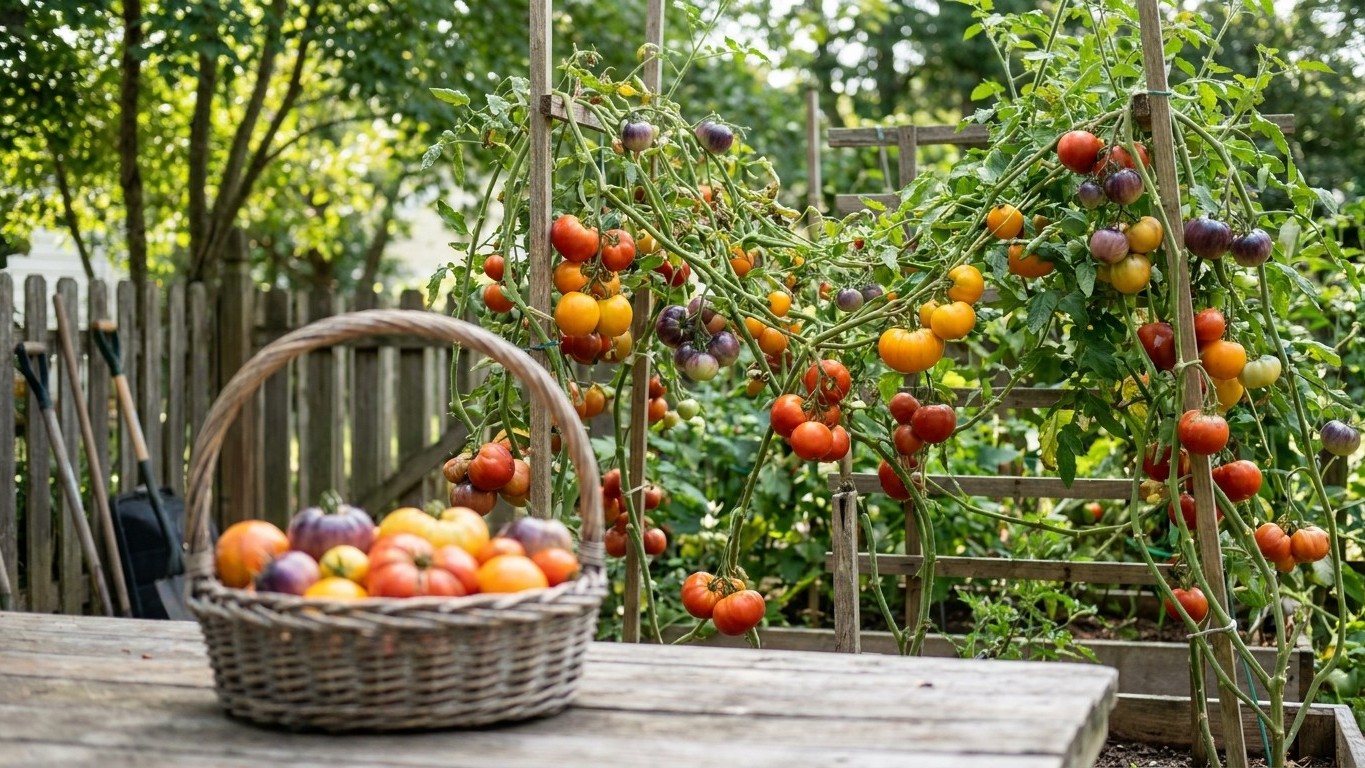

Most tomato varieties Ripen in Time in Virginia, because NOAA’s 1991-2020 climate normals for the Virginia Beach area put the last spring freeze between March 20 and April 3, and the first fall freeze not until November 10 to November 24. That leaves well over seven frost-free months for fruit to set and color up. The one that fails to ripen is almost always a long-season heirloom planted where the local season runs shorter than the coast, so check the cultivar’s days to maturity against your own frost window before you buy the packet.
What this comes down to in Virginia

Yes — nearly every tomato you’d want to grow has enough time to ripen in your yard before frost gets it. Virginia Beach’s own weather record shows the last spring freeze clearing out by early April and the first fall freeze holding off until mid-to-late November, which hands you well over seven months of open growing season. The only real risk is a very long-season heirloom planted somewhere colder than the coast, so before you buy the packet, check its “days to maturity” against your own last-frost date and count forward from there.
Here are six real cultivars ordered from the shortest season to the longest, so you can see roughly where the line falls for your own garden.
Early Girl

Listed at around 50 days to maturity, ‘Early Girl‘ is the fastest slicer on this list and one of the most widely sold tomato transplants in the country. The indeterminate vine keeps setting new fruit through summer once it starts, which makes it a safe first tomato of the year almost anywhere in Virginia.
Mountain Magic

‘Mountain Magic‘ runs about 66 to 70 days to maturity and produces small, crack-resistant cocktail tomatoes by the handful. Bred with resistance to late blight, it holds up better than most in the wet, humid stretches of a Virginia summer, and its short season means it finishes well before any regional frost date comes into play.
Celebrity

‘Celebrity‘ matures in roughly 70 days and carries the VFFNTA disease-resistance package, covering verticillium wilt, two races of fusarium wilt, nematodes, tobacco mosaic virus and alternaria stem canker. The determinate bush stays compact enough for a cage rather than a full stake-and-tie system, which suits a smaller raised bed.
Better Boy

At about 75 days, ‘Better Boy‘ is a classic indeterminate slicer with VFN resistance, meaning verticillium wilt, fusarium wilt and nematodes. It keeps climbing and fruiting past its first harvest, so it needs a tall stake or cage, and its mid-length season still finishes comfortably inside most of Virginia’s frost-free window.
Cherokee Purple

This heirloom needs about 80 to 85 days and carries none of the bred-in disease resistance the hybrids above do, which means it leans harder on good airflow and mulch to avoid soil-borne trouble in a humid summer. The reward is a dense, dusky-fleshed beefsteak with a flavor most gardeners grow it for despite the extra work.
Brandywine

‘Brandywine‘ is the longest-season tomato on this list, typically listed between 80 and 100 days depending on the strain and the seed house. It is the variety most likely to test the edges of a shorter local season, and it is the one worth running the arithmetic on before you commit a whole row to it.
| Variety | Days to maturity (from transplant) | Growth habit | Best use |
|---|---|---|---|
| Early Girl | ~50 | Indeterminate | Early slicer |
| Mountain Magic | ~66-70 | Indeterminate | Cocktail/salad |
| Celebrity | ~70 | Determinate | All-purpose slicer |
| Better Boy | ~75 | Indeterminate | Slicer |
| Cherokee Purple | ~80-85 | Indeterminate | Heirloom beefsteak |
| Brandywine | ~80-100 | Indeterminate | Heirloom beefsteak |
Working it out for your own garden
Once you’ve handled the basics of growing tomatoes in Virginia, the method for checking a variety against your season is simple arithmetic done twice, once from each end of the frost window. Start with the transplant date range NOAA’s normals allow at Virginia Beach, March 20 to April 3, and add the cultivar’s days to maturity to both ends. Whatever comes out is a range too, never a single date, because you started with one.
A short-season example that clears easily
Take ‘Early Girl’ at roughly 50 days. Add that to March 20 and you land in early May. Add it to April 3 and you land in late May. Either way, first ripe fruit shows up in early to late May, which leaves from roughly late spring all the way to NOAA’s first fall freeze window of November 10 to November 24 for the vine to keep producing. That is months of cushion at the coast.
A long-season example that only just clears, or doesn’t
Now run the same math on ‘Brandywine’ at 80 to 100 days. Added to the March 20 to April 3 transplant window, first ripe fruit lands somewhere in early June to mid-July at Virginia Beach, still leaving three to four months before that area’s first fall freeze. At the coast, the arithmetic clears with room to spare. The same variety planted on the same calendar date in the Blue Ridge or southwest Virginia is a different story, because both ends of the frost window shift against you there. That is where a long-season heirloom can genuinely run out of season, not at the coast.
What changes across the state
Virginia is not one climate, and the USDA’s 2023 hardiness map reflects that by spreading the state across zones 5a to 8b. Virginia Beach, on the mild coastal end, is where NOAA’s frost figures in this article come from. Move inland and uphill toward the Blue Ridge and the far southwest, and both ends of the frost window shift: last frost arrives weeks later in spring, and first frost arrives weeks earlier in fall, squeezing the frost-free season from both directions at once.
Elevation does most of that work. Cold air is denser and settles into valleys and low spots, so a garden in a mountain hollow can run a noticeably shorter season than one on a nearby ridge at the same latitude. Distance from the Chesapeake Bay and the Atlantic matters too. Large bodies of water moderate temperature swings, which is part of why the coastal plain gets the earliest spring and the latest fall of anywhere in the state. Northern Virginia, being both farther inland and at higher average elevation than Tidewater, generally sits on the cooler side of that spread, while the south-central and southeastern counties track closer to the Virginia Beach numbers.
None of this changes which cultivars exist or what their catalogue days to maturity are. It changes how much room you have to work with before you hit the first fall freeze, which is exactly why the same ‘Brandywine’ that clears easily at the coast is the variety most likely to get caught out somewhere else in the state.
The mistakes this state punishes

The most common mistake is transplanting into cold soil after a warm early spring. A run of 70-degree days in March can feel like the season has arrived, but NOAA’s frost window for Virginia Beach still runs to April 3 on the late end, and other parts of the state run later still. Tomato roots stall in cold soil even if the plant survives, and a stalled start eats into the cushion you were counting on for a longer-season variety.
The second is picking a cultivar for its flavor or its size without checking its days to maturity against the local season at all. ‘Brandywine’ and ‘Cherokee Purple’ are both worth growing, but they are the wrong first choice for a garden at higher elevation with a shorter frost-free window, where a 70-day ‘Celebrity’ or a 66-day ‘Mountain Magic’ is the safer bet.
A short list of fixes covers most of it:
- Check soil temperature, not just air temperature, before transplanting.
- Match days to maturity to your own frost window, not the coast’s.
- Keep at least one short-season cultivar in the mix as insurance in a cool year.
- Watch transplants for early pest damage rather than blaming the variety, since the Tomato Pests in Virginia: Which Ones Actually Show Up Here guide covers what shows up first each season.
Checking this against your county
The Virginia Beach figures in this article are a starting point, not an instruction for your own property. Virginia Cooperative Extension, reachable through its statewide directory, keeps county-level offices that can confirm how your local frost window and elevation differ from the coastal normals used here. For the full logic behind picking a transplant date from that window, see Tomato Planting Dates in Virginia: Counting Back From Your Frost Window, and check with your county office before betting a full row on a variety at the long-season end of the scale.
Common questions
Can I grow a 100-day heirloom tomato in Virginia?
In most of the state, yes, because NOAA’s frost normals for the Virginia Beach area allow well over seven frost-free months. In higher-elevation counties with a shorter season, a 100-day cultivar like ‘Brandywine’ has much less margin, so pair it with a shorter-season variety as backup.
What’s the earliest-ripening tomato for Virginia?
Of the cultivars named above, ‘Early Girl’ at roughly 50 days to maturity ripens fastest. Other extra-early cultivars exist on the market too, and the same arithmetic against your own frost window applies to any of them.
Does the days-to-maturity number include the time the plant spends as a seedling?
No. Catalogue days to maturity for tomatoes are counted from the transplant date, not from when you sowed the seed indoors. Mixing up the two dates is an easy way to think you have more season left than you actually do.
Why didn’t my long-season tomato ripen before frost?
A few things cause this: a late or cold-stalled transplant, an unusually cool summer that slowed fruit set, heavy nitrogen fertilizer that pushed leaf growth over flowering, or simply gardening in a part of the state where the frost-free season runs shorter than the coastal figures in this article. Check your county’s typical frost dates before assuming the variety itself was the problem.