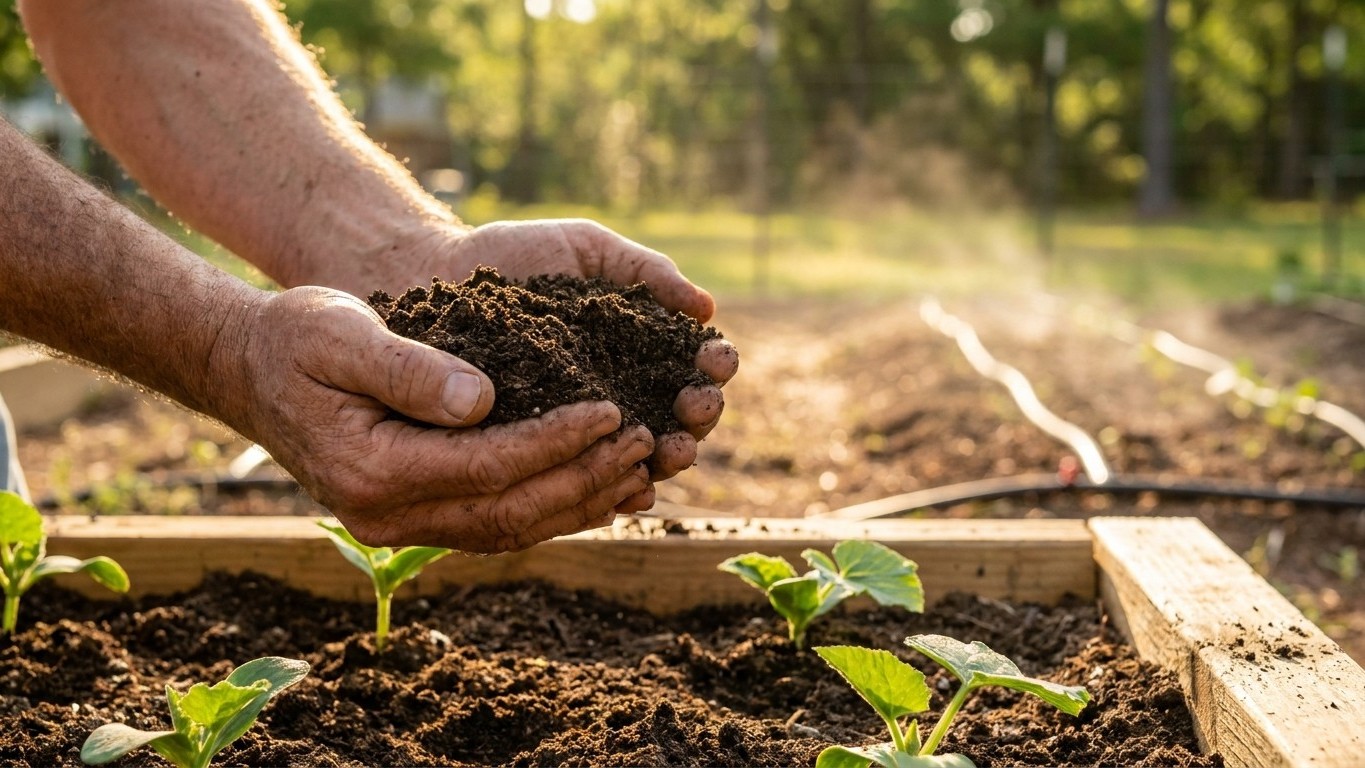

Growing Summer Squash in Nunavut means gardening against one of the shortest, coolest growing seasons on the continent. With a Canadian hardiness rating of zone 0a and a frost-free window that averages roughly 86 days at the territory’s reference station, outdoor squash succeeds only when the grower shifts part of the season indoors, under cover, or behind a windbreak. It can be done, but only with structures that trap heat and only with the earliest types available.
When the soil is warm enough in Nunavut
A frost date tells you when the air stops threatening to kill a seedling. It does not tell you when the soil is warm enough for a squash seed to sprout or for a transplant’s roots to start working instead of sulking. At Rankin Inlet A, Environment and Climate Change Canada’s 1981-2010 Canadian Climate Normals put the average last spring frost at June 19. That date is a mean, not a promise: in roughly half of the years on record, frost has shown up later than June 19. Planting a squash bed the week that average date passes is a coin flip, not a plan.
Soil is the slower half of the equation. Cucurbit seed rots in cold, wet ground long before it germinates, and even a transplant set into soil that’s merely frost-free rather than genuinely warm will sit stalled for a week or two while the roots wait for heat they aren’t getting. In a territory sitting in Canadian hardiness zone 0a, according to Natural Resources Canada’s Plant Hardiness Site, that lag matters more than almost anywhere else growing this crop, because there are so few warm weeks to spare. The Canadian zone system rates seven climate variables at once and does not translate to a USDA number, so treat 0a as a description of how severe the local climate is, not as a line on the same scale used for warmer regions elsewhere.
Given that, most Nunavut growers don’t wait on bare soil at all. They warm it artificially, then plant into the warmed patch rather than the surrounding ground. Common approaches include:
- Black plastic mulch laid over the bed for one to two weeks before planting, to pull ambient heat into the soil
- Raised beds, which drain faster and warm several degrees ahead of ground-level soil
- Cold frames or low tunnels that hold daytime heat and buffer the bed from wind
- Seed started indoors three to four weeks ahead, then hardened off and transplanted once the covered soil reads warm to the touch, not merely once the calendar clears June 19
None of that erases the frost risk. It just means the grower is working against soil temperature and wind chill as much as against the thermometer’s freezing line, and treating June 19 as the earliest reasonable guess rather than the safe date.
How long the season lasts here
Subtract the two dates the station actually reports and the frost-free window comes to about 86 days: from the average last spring frost on June 19 to the average first fall frost on September 13, both drawn from the same Rankin Inlet A normals. That’s under three months, and both ends of it are averages rather than guarantees, so the safe planning window is narrower still once a grower builds in a margin on each side.
Eighty-six days changes what’s realistic more than it changes what’s possible. In a longer season, a gardener can direct-sow a first squash planting, harvest through summer, then set out a second round for a fall crop, the kind of staggered planting covered in this site’s succession sowing guide. Here, that second window barely exists. Squash sown from seed after the ground has finally warmed, sometime after June 19 with its coin-flip odds, has to reach flowering and fruit set before the average first fall frost arrives less than three months later. There usually isn’t a slot left over for a second sowing behind it.
That scarcity is exactly why so many Nunavut growers lean on transplants instead of direct seed, even though squash dislikes having its roots disturbed. Direct-sown squash loses two to three weeks of the frost-free window just waiting for soil warmth and germination. A transplant started indoors moves that waiting period off the calendar entirely, so the plant is already established by the time it goes into the ground. The tradeoff is real: transplanting risks setting the plant back through root shock at exactly the moment the short season can least afford a stall. Handled carefully, with the rootball kept intact and the seedling hardened off gradually rather than moved straight from a warm windowsill to open wind, that tradeoff tips in the transplant’s favor here. In a territory with 86 days to work with, losing three of them to germination is a luxury few gardens can spare.
Heat and water in Nunavut
Summer squash usually struggles for the opposite reason it struggles here. Farther south, the plant sets fruit poorly once temperatures climb into the high 90s, because pollen loses viability in extreme heat and the leaves lose water faster than a shallow root system can replace it. None of that applies at Rankin Inlet. The station’s 1981-2010 normals record 0.0 days a year reaching 90 F. Squash grown in Nunavut never faces heat stress, and it never faces the drought pressure that heat usually drags along with it.
What it faces instead is cold and damp. Flowers can abort from chilly nights just as readily as from scorching days, and pollinator activity drops when air temperatures stay low, which slows fruit set on a different schedule than a heat problem would. Rainfall through the season doesn’t help the case for dry, breezy conditions either. Summer totals come to about 5.0 inches across June, July and August, out of 12.2 inches for the year, and the pattern gets wetter as the season goes on rather than drier:
| Month | Average rainfall |
|---|---|
| June | 1.05 in. |
| July | 1.65 in. |
| August | 2.26 in. |
An August that’s the wettest month of summer, paired with air that never reaches the 90s, means foliage dries slowly after every rain. Squash leaves are large and low to the ground, and slow-drying leaves under cool, humid air are close to a textbook setup for powdery and downy mildew, doubly so inside a cold frame or low tunnel that traps humidity along with heat. Watering overhead in the evening compounds it; watering at the base, spacing plants for airflow, and venting covered structures at midday cut the risk down. Because evaporation demand is so low without any heat load, the bigger practical risk with a rain gauge in hand isn’t drought at all. It’s a raised bed holding water too long after a wet stretch, especially if the mix underneath drains poorly.
Which summer squash suit Nunavut
Reasoned from this territory’s own numbers rather than from habit, three qualities matter more than any other when choosing what to grow. An 86-day window with a soft, average-based start date favors the earliest-maturing types available, since there’s no slack for a slow one to catch up. A climate with zero days above 90 F removes any reason to chase heat-tolerant types bred for southern summers; that trait buys nothing here. And a cool, increasingly wet summer makes disease resistance, specifically resistance to powdery and downy mildew, the first practical filter rather than an afterthought, given how slowly wet foliage dries under low light and mild air.
Compact, bush-habit types tend to suit this combination better than sprawling vine types, mainly because they fit inside the cold frames and low tunnels that make the soil-warming strategy from earlier in this page possible in the first place, and because a tighter footprint is easier to keep ventilated against mildew than a rambling vine spilling across open, damp ground.
This page won’t name a specific variety, and that’s a deliberate choice rather than an oversight. Seed performance at zone 0a depends on trial data specific to short, cool-summer climates, and the only trials that mean anything for a Nunavut garden are the ones run in comparable conditions, not a general recommendation written for a milder zone. For that, the right next stop is Agriculture and Agri-Food Canada, which can point toward regional trial results and extension guidance suited to short-season growing at this latitude. A variety that thrives in a 150-day season two provinces south tells a Nunavut gardener nothing useful, and repeating its name here would be worse than saying nothing at all.