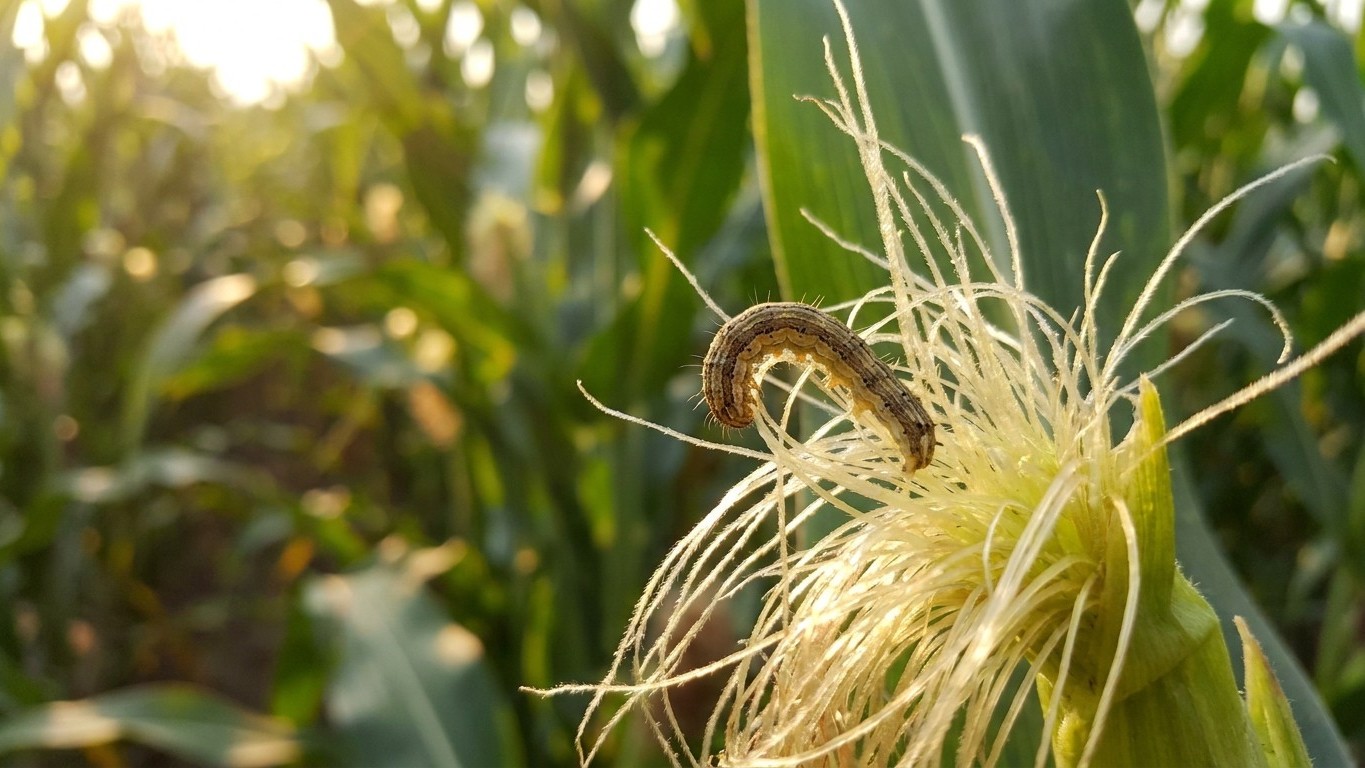

University of Idaho Extension documents eleven garden pests statewide, but only four of them actually feed on corn: wireworms and cutworms attack it first, right at planting, while aphids and grasshoppers move in as the season heats up. The rest of the list belongs to other crops entirely. Idaho’s short, cool-to-hot growing window, bracketed by a last frost in spring and a first frost in fall, decides when each one shows up.
Which pests attack corn in Idaho
University of Idaho Extension documents eleven pests for home gardens across the state: Aphids, Carrot rust fly, Colorado potato beetle, Cutworms, Grasshoppers, Imported cabbageworm, Onion maggot, Pea leaf weevil, Squash bug, Tomato hornworm, and Wireworms. That’s the full list, and it’s not long, which tells you something on its own: corn isn’t the crop with the most documented pressure in this state.
Most of that list has nothing to do with a corn patch. Carrot rust fly larvae tunnel into carrot and parsnip roots, not corn stalks. Colorado potato beetle is a nightshade specialist, it wants potato, tomato, and eggplant foliage. Imported cabbageworm feeds exclusively on brassicas, cabbage, broccoli, kale, and won’t touch a corn leaf. Onion maggot larvae live in onion and garlic bulbs underground. Pea leaf weevil chews notches into pea and legume leaves. Squash bug is a cucurbit pest, found on squash, pumpkin, and cucumber vines. Tomato hornworm strips nightshade foliage, tomato and pepper mostly, and it’s not built to bother a corn stand. Seeing any of these on a corn plant would be worth a second look, because they’re not the ones University of Idaho Extension ties to this crop.
That leaves four species that do belong on a corn page. Wireworms are soil-dwelling larvae that chew into seeds and roots before a stand even establishes. Cutworms work at the soil line, severing young stems close to the ground. Aphids cluster on leaves and developing tassels once plants have real foliage to feed on. Grasshoppers are generalist feeders, they’ll chew ragged holes in corn leaves alongside almost anything else green in the yard. The decisive fact here is timing, not species count: two of these four attack before a seedling has much size to it, and two attack later, once the plant has leaf area and reproductive structures worth feeding on. That split matters more for scouting than the raw number of pests on the list.
When each one shows up, and what it does first
Corn pest activity in Idaho tracks the frost-free window, not a calendar month. The last spring freeze here runs April 23 to April 30 in Boise’s low valley, with the broader window extending to May 7 depending on elevation and site, and the first fall freeze arrives October 7 to October 21. Everywhere higher and colder than that reference station gets a shorter version of the same season, so the sequence below shifts earlier and compresses the closer a garden sits to higher ground.
Wireworms and cutworms are the early-season problem, active from the moment seed goes into the ground. Corn seed doesn’t germinate reliably until soil temperature holds above 60°F, and that threshold, not the frost date, is what growers should watch before planting. Wireworms attack underground, chewing into the seed itself or the emerging root, and the first sign a gardener sees is a gap in the row, seeds that simply never came up. Cutworms work just above or at the soil surface, and the giveaway is a seedling that was standing yesterday and is now lying flat, severed cleanly near the base. Neither pest leaves much evidence beyond the missing or downed plant, which is part of why they’re often blamed on bad seed instead.
Aphids and grasshoppers show up later, once plants have enough leaf tissue and structure to be worth colonizing. Aphids tend to cluster on the undersides of leaves and around developing tassels, and the first visible clue is often a sticky residue (honeydew) on leaves below the infestation, sometimes followed by a black sooty mold growing on that residue. Grasshoppers are more visible and less subtle: ragged, irregular chewing along leaf edges, worse during hot, dry stretches when their populations build. With 47.5 days a year averaging 90°F or hotter at the reference station, Idaho’s summer heat load gives grasshoppers plenty of stretches to build numbers, and pressure from both aphids and grasshoppers tends to track those hot spells rather than a fixed date on the calendar.
Telling the damage apart from everything else
A lot of what looks like insect damage on corn isn’t. Missing stands, ragged leaves, and stunted growth all have look-alike causes that have nothing to do with the four pests above, and calling it wrong means treating the wrong problem.
Missing seedlings after planting can come from wireworms or cutworms, but they can just as easily come from seed planted before soil reached that 60°F threshold, from seed rot in soil that stayed too wet, or from a hard crust that never let the seedling push through. Wireworm and cutworm damage shows physical evidence, a chewed seed or a severed stem, where cold or crusted soil leaves the seed itself intact but ungerminated.
Ragged or chewed leaves can be grasshoppers, but drought stress produces a similar rolled, tattered look without any insect present at all, and mechanical damage from wind or hail leaves torn edges that mimic chewing. The tell is the pattern: insect feeding tends to be irregular and concentrated on certain plants or rows, while weather damage tends to hit a whole planting evenly.
Sticky residue and stunted new growth can point to aphids, but nutrient deficiency (particularly nitrogen, which shows up as pale, yellowing lower leaves) produces stunted, unhealthy-looking corn with no sticky film and no visible insects at all.
| Symptom | Possible pest cause | What rules it in or out |
|---|---|---|
| Seeds never come up | Wireworms, cutworms | Dig near the row; look for chewed seed or a severed stem versus intact, ungerminated seed |
| Seedling toppled at the base | Cutworms | Clean cut near soil line versus a plant that simply wilted from dry soil |
| Ragged, torn leaves | Grasshoppers | Irregular, patchy damage across a few plants versus even, uniform stress across the whole bed |
| Sticky film, curled new leaves | Aphids | Visible clusters on leaf undersides versus pale, evenly yellowing leaves with no insects present |
None of this replaces an in-person look. A local extension office can confirm what a photo or a written description can’t.
What actually works here, and what is a waste of time
Timing beats treatment in a season this short. Waiting until soil is reliably above 60°F before planting does more to prevent wireworm and cutworm losses than anything applied after the fact, because both pests do their damage at germination and early emergence, a window that closes once stems toughen up. A physical collar around individual seedlings, pushed a couple inches into the soil and standing a couple inches above it, is a low-effort barrier against cutworms specifically, and it works because it blocks the pest at the one stage where it’s vulnerable, not because it kills anything.
Fewer bare-soil days between planting and stand establishment also cuts wireworm losses. Wireworms are drawn to decomposing organic matter in cool, damp soil, so planting into ground that’s been recently amended with fresh, undecomposed material, right at that cool early-season window, tends to concentrate the risk. Letting soil warm and amendments break down before seeding removes some of that attraction.
For aphids and grasshoppers later in the season, a strong, evenly watered stand tolerates far more feeding pressure without real yield loss than a stressed one does. Grasshopper numbers build hardest in hot, dry conditions, and there’s not much a home gardener can do about a regional grasshopper year beyond keeping plants healthy and watered through the stretches that push past 90°F.
What’s a waste of time: guessing at a treatment based on a symptom alone, or applying something broadly across a corn patch without confirming which of the four pests is actually present. This site doesn’t name products, rates, or active ingredients, because what’s legally labeled for use on corn in Idaho is a question only the state’s extension service and product labeling can answer, and that answer changes over time. Spraying first and identifying later almost always means treating the wrong problem, at the wrong pest stage, for no benefit.
Where to check this for your own county
University of Idaho Extension is the source for everything above, and it’s also the right first call for a pest that doesn’t match anything described here. A statewide list documents what’s been found somewhere in Idaho, not what’s present in any one garden, and pest pressure inside the state varies a lot between a low valley like Boise and higher, colder ground elsewhere, where the frost-free window is shorter and pest timing shifts earlier or compresses altogether.
Every Idaho county has a University of Idaho Extension office, and that local office is the right next step for anything that doesn’t fit cleanly into the four pests and four symptoms covered here, or for confirming what’s legally available to use against a confirmed pest in that specific county. A photo, a description of the damage pattern, and a rough planting date are usually enough for someone there to narrow it down fast.
The next useful move isn’t reading another list. It’s checking soil temperature before planting, watching the stand for the first two weeks after emergence, and keeping the county extension office’s number on hand for whatever doesn’t match a description found online.
Common questions
Do all four pests show up in every Idaho garden?
No. University of Idaho Extension documents these species across the state, but presence in any one garden depends on soil, history, and elevation. A local extension office can speak to what’s actually been reported in a given county.
Can corn be planted before the last frost to get ahead of pests?
Planting early doesn’t outrun wireworms or cutworms, and it can hurt more than it helps. Corn seed needs soil above 60°F to germinate reliably, a threshold that comes well after the last frost date, and seed sitting in cold, wet soil is more vulnerable to rot and pest damage, not less.
Does one bad aphid season mean the whole crop is lost?
Not usually. Healthy, well-watered corn tolerates real aphid pressure without major yield loss. The bigger risk is a plant already stressed by heat or drought getting hit at the same time.
Is it worth spraying grasshoppers preventively before they show up?
Treating before a pest is confirmed present wastes effort and doesn’t address the conditions, mainly hot, dry stretches, that drive grasshopper numbers up in the first place. Confirming the pest first is the better use of time.