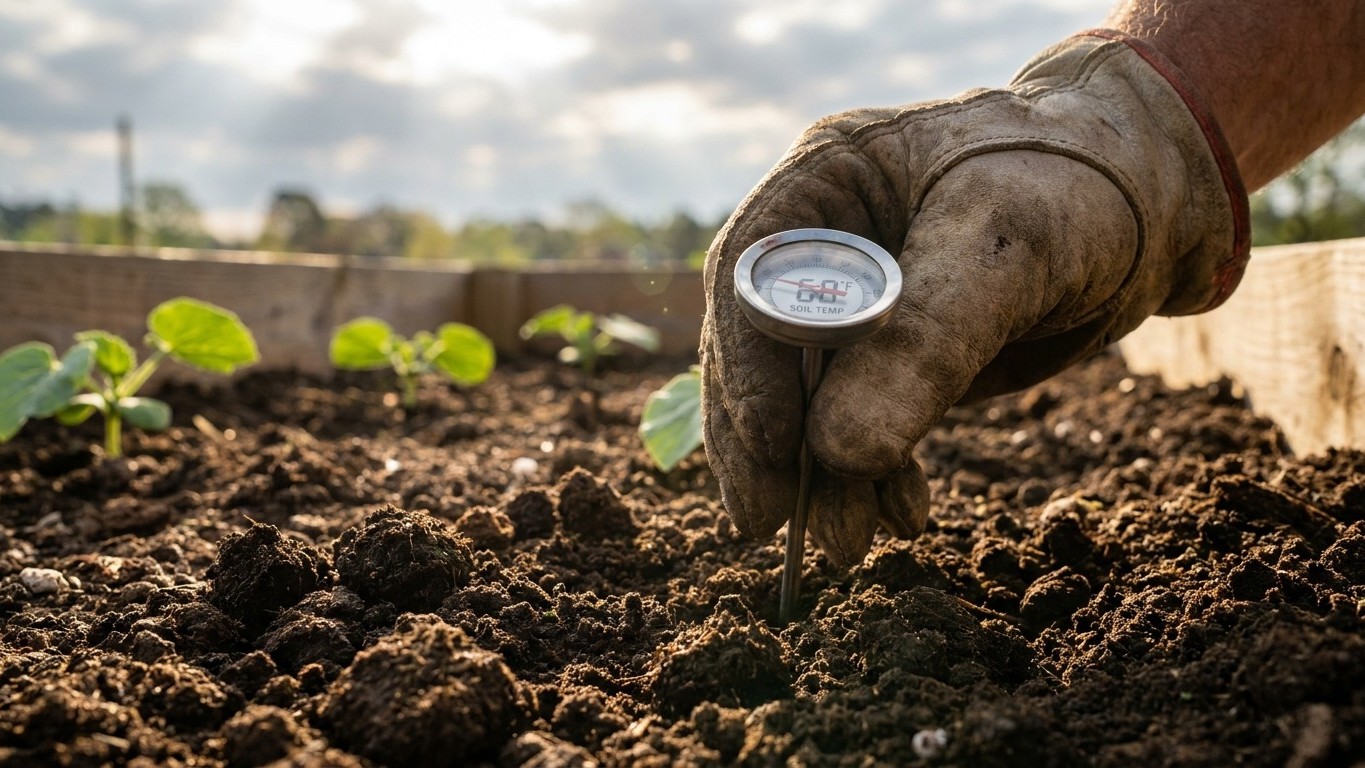

Rhode Island gardeners can start melons outdoors once soil temperatures hold near 65°F, which usually falls in late May here, well after the frost window closes. The state sits in USDA zone 6a-7b, with a roughly 200-day frost-free stretch and a cool, humid summer that rewards early types, black plastic mulch, and disease resistance over sheer heat.
When the soil is warm enough in Rhode Island

The question every melon grower asks in spring isn’t really “when’s the last frost.” It’s “when can I trust the ground.” At the reference station used for Rhode Island’s climate normals (NOAA NCEI, station USW00014765), the last spring frost falls somewhere between April 7 and April 17, based on the 1991-2020 normals period. That’s a 30 to 70 percent freeze probability band, not a fixed calendar date, and it’s a probability, not a promise. Half the years in that record still saw a frost after the window closed.
Frost dates matter, but they’re a proxy for something else: soil warmth. Melon seed germinates poorly below 60°F and barely at all below 50°F, and the plant sulks in cold soil even if the air feels mild. Soil lags behind air temperature by two to three weeks in spring, so the point at which frost risk fades in mid-to-late April is not the point at which the ground is ready for melon roots. Most seasons, that soil-ready window opens in mid-to-late May in Rhode Island, sometimes into early June on heavier ground or in low-lying spots that hold cold air.
That gap is where technique earns its keep. Black plastic mulch laid two to three weeks before planting can raise soil temperature several degrees at the depth that matters for melon roots. Row covers over young transplants trap daytime heat and buffer the occasional cool night without waiting on the calendar. Raised beds and south-facing slopes warm faster than flat, shaded ground for the same reason a driveway dries faster than a lawn after rain.
One more caution belongs here. The frost dates above come from an airport weather station, and airport stations sit in open, paved terrain that warms and cools faster than a shaded suburban yard or a rural valley. Gardens away from that station typically see the last spring frost arrive later and the first fall frost arrive earlier, sometimes by one to two weeks, more at elevation. A gardener in a low frost pocket in northern Rhode Island should treat these dates as optimistic, not guaranteed, and watch their own soil thermometer rather than the calendar.
How long the season lasts here
Stack the two ends of the frost record and Rhode Island’s frost-free window runs from a last spring frost of April 7-17 to a first fall frost of October 24-November 3, both from the same NOAA NCEI 1991-2020 normals. Depending on which edge of each range you use, that’s somewhere between about 190 and 210 days of frost-free growing, centering close to 200 days. That’s a genuinely long window by New England standards, and it’s longer than what many gardeners assume when they hear “Rhode Island.”
A 200-day season sounds like room for a second sowing, and for fast crops it often is. Melons complicate that math. Even the earliest types need most of that window between transplant and harvest once you account for the slow start in cool spring soil described above and the need for a warm final stretch to finish the fruit properly. In practice, most Rhode Island growers get one melon planting in per bed, not two, and the real decision isn’t whether to sow again in July, it’s whether to start seed indoors or direct-sow.
That decision matters more here than in a longer-season state. Direct-sown melon seed waits on soil warmth described earlier, which can eat two to three weeks of the growing window before the plant even breaks ground. A transplant started indoors four weeks ahead and moved out once nights hold above 55°F effectively borrows those weeks back, though melons resent root disturbance and want to go into the ground before they get root-bound in a small cell. Anyone weighing succession plantings for other crops, or wondering whether Rhode Island’s window supports a second round of anything, should check the site’s succession sowing guide for how to sequence plantings against a frost-free stretch this length.
Heat and water in Rhode Island

Melons ripen on accumulated warmth, not on the calendar, and this is where Rhode Island’s numbers tell an honest, slightly discouraging story for anyone dreaming of a Southern-style melon patch. The reference station at Providence records an average of just 9.4 days a year at or above 90°F. That’s a modest heat load. Compare it to a true melon belt, where 90°F days run into the dozens or more, and it’s clear Rhode Island’s climate asks the grower to make up in technique what the sky doesn’t provide in heat.
That’s the honest framing for this territory: it is not a hot, dry climate where irrigation decides fruit size and the final two weeks decide sugar content. It’s a cooler, damp one, and the risks run the other direction. Summer rainfall here averages about 10.3 inches across June, July and August, out of 47.5 inches for the year, with July the driest month at 2.91 inches, June at 3.81, and August at 3.59. That’s enough moisture, paired with a modest heat load, to invite the problems that plague melons more than drought does in this region: powdery mildew, slower fruit ripening, and fungal disease pressure that builds in humid, still air.
Two things decide how that rainfall actually plays out on a given plot, and neither is in the rain gauge alone. Soil type is the first: the same rain moves through sandy ground within a day but sits in clay for a week, so even a summer with average rainfall can leave a sandy Rhode Island garden needing supplemental water every couple of days. Heat is the second: on the rare days above 90°F, evaporation spikes and a single thunderstorm mostly runs off rather than soaking in. These are 1991-2020 normals for one reference station, not a forecast and not a promise for any particular yard; a rain gauge on the actual plot, tracked over a season, is what settles the watering question for that specific garden.
Which melons suit Rhode Island
Given a modest heat load and a damp, mildew-friendly summer, the type of melon matters more here than the exact sowing date. Earlier-maturing types make sense in a state that averages fewer than ten days above 90°F a year, because they ask for less total accumulated warmth before the fruit finishes. Types bred or selected for disease resistance, particularly against powdery and downy mildew, are worth prioritizing over types chosen purely for size or sweetness, since Rhode Island’s summer humidity creates exactly the conditions those diseases favor.
Airflow does real work here too. Melon vines sprawl and hold humidity at the leaf and root level unless they’re given room, and trellising or wide spacing lets air move through the foliage instead of sitting damp overnight. Raised beds and black plastic mulch, already useful for the soil-warming problem discussed earlier, also help by keeping fruit off wet soil, which cuts down on rot in a rainy stretch.
What this page won’t do is hand over a variety name. Naming a specific cultivar without knowing which ones have actually been trialled in Rhode Island’s soils and summers would be a guess dressed up as advice, and it’s the kind of error a gardener spots the first time the fruit fails to ripen. The types actually tested for disease resistance and days to maturity in this climate change from year to year as breeding programs and university trials update their recommendations. The University of Rhode Island Cooperative Extension publishes exactly that list, tied to trials run in this state’s own conditions, and it’s the only source worth treating as a recommendation rather than a guess.