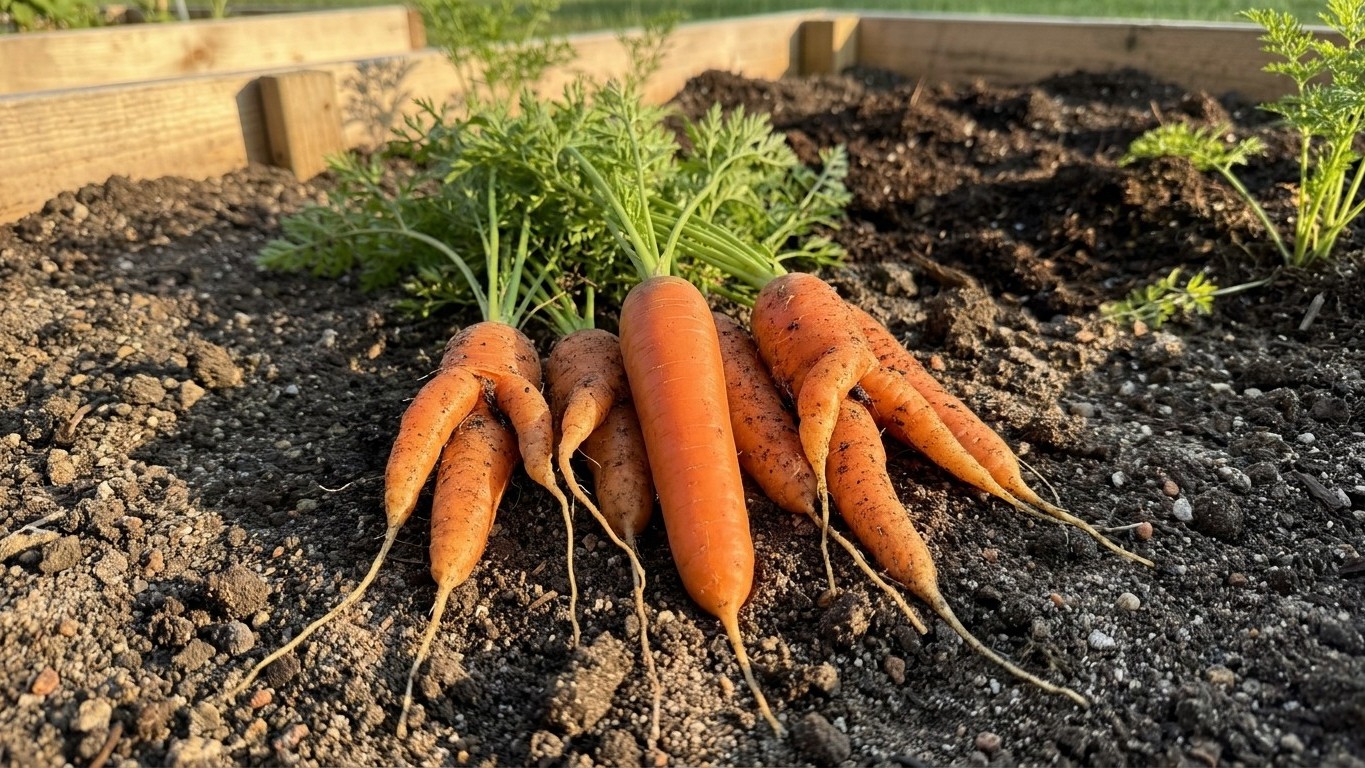

In Washington, carrot trouble arrives in three waves, and each wave eats a different part of the plant. Seedlings get nibbled or cut in the first weeks after seeding. Foliage gets chewed while the tops fill in. Root-feeding larvae do their damage underground as roots swell toward harvest, about 65 to 75 days after planting by Clemson Extension’s guideline. Which species is behind it varies by county and by bed, so the symptom tells you more than the insect’s name does.
Which pests attack carrot in Washington
Washington State University Extension and its county offices identify and track garden insects across the state, and they are the right place to get a species name for your area. A statewide pest list runs long, because Washington grows tree fruit, grain, hops and much else. Most of what is on such a list has no business in a carrot row. What stays is a short set of pests that feed on carrots and their relatives, such as parsley, parsnip, celery and dill.
Rather than guess at names, sort the problem by what is being eaten. Three groups cover nearly everything a home gardener sees:
- Seedling feeders that clip or chew young plants at or just above the soil line, leaving gaps in the row.
- Foliage feeders that chew the feathery tops, from ragged edges to stripped stems.
- Root feeders whose larvae tunnel through or scar the root while the top still looks fine.
The fix differs for each group. A barrier that stops an egg-laying adult will not help against something already living in the soil.
Carrots are sown in place and never transplanted, so every stage runs on the clock from seeding. The 70 to 100 days printed on seed packets count from the day the seed goes in, which gives pests a long season to find the row. A bed seeded at the wrong moment can run into the peak activity of a pest that a better-timed bed would have missed. The article on When to Sow Carrots in Washington: Counting Back From the Last Frost covers how to place that date, and the main guide to Growing Carrots in Washington covers the rest of the season.
When you bring a sample to the county extension office, say which part of the plant is hurt and at what stage. That narrows the answer faster than a photo of the insect alone.
When each one shows up, and what it does first
Timing runs from seeding, because that is the one date every gardener has. Local weather shifts the calendar, so treat the stages below as an order of events and not as dates.
The first weeks after seeding
Seedling feeders go first. The first sign is a gap: a row that was filling in has missing plants, or a seedling lies on its side with the stem cut near the soil. Carrot seedlings are thread-thin, so a short stretch of feeding can wipe out a whole section. Check at dusk or early morning, when many soil-surface feeders are active, and look under clods and mulch at the edge of the row.
While the tops fill in
Foliage feeders show up once the tops are bushy. The first thing you see is ragged leaf edges, notched leaflets, or tops that look thinner than the plants beside them. A few chewed leaves cost the plant little, but the tops feed the root, so a heavily stripped plant puts on a smaller root. Count the damage by plant, not by leaf. Damage on one or two plants is a different situation from damage across the whole row.
As roots swell toward harvest
Root feeders are the hardest to catch, because the top gives little warning. Larvae hatch from eggs laid near the base of the plant and work down into the root. Above ground, the earliest hint may be tops that wilt on a warm afternoon even though the soil is moist, or a plant that stalls while its neighbors grow. The proof comes when you pull one. Look for brown tunnels, scarred skin, or rough channels near the surface.
Pull a test carrot from the row at about 65 days after seeding, the early end of Clemson Extension’s 65-to-75-day harvest window. If roots look clean, you can leave the rest in the ground. If you find tunnels, harvesting promptly limits how long larvae keep feeding.
Telling the damage apart from everything else
Many carrot problems that look like insect damage are caused by soil, water or disease, and the wrong response does nothing for the real cause. The most common mix-up is forking. Utah State University Extension says heavy or rocky soil makes the root fork. Forks are a growth habit. Tunnels and chewed scars are feeding damage.
| What you see | Likely causes to rule in or out | What settles it |
|---|---|---|
| Roots split into two or more legs, or look stubby and twisted | Heavy or rocky soil, compaction, or a clod hit during growth | Smooth skin with no tunnels points to soil. Dig the bed down a full spade depth and look for stones and a hard layer. |
| Tops droop in afternoon heat | Dry soil or root damage | If tops perk up by morning and the soil is dry at finger depth, check watering. If they stay limp on moist soil, pull a plant and examine the root. |
| Ragged, notched leaves | Chewing insects, or hail and wind tearing | Insects leave a clean bite pattern and often frass. Tearing is torn and uneven. Look at dusk with a flashlight. |
| Gaps in the row, seedlings missing | Seedling feeders, crusted soil, or dry spells during sprouting | Cut stems at the soil line suggest feeding. Seed that never sprouted suggests crusting or drought. Dig a spoonful where the gap is. |
| Brown channels or scarring inside the root | Root-feeding larvae or soil disease | Larvae or fresh frass in the channel point to insects. Soft, wet, foul-smelling rot points to disease. Take a sample to the extension office. |
USDA NRCS lists the Tokul series, a volcanic-ash Andisol, as the representative soil of Washington. Its surface layer is light and porous, about 45 percent sand, 10 percent clay and 45 percent silt, moderately well drained, with a surface pH of about 4.5 and very high organic matter. That loose, low-clay texture is closer to what carrots want than a heavy clay, but it describes a mapped natural surface, and a cultivated bed will not match it. Washington spans hundreds of soil series, and river bottoms, hill country and ground scraped or filled by a builder can differ completely.
These signs separate the causes, but they do not name what is living in your bed. **Take a damaged plant, roots and all, to your county extension office** and let them identify it. For the soil side of forking, see Will Carrots Fork in Washington Soil?
What actually works here, and what is a waste of time
A physical barrier placed at the right moment beats nearly any treatment. A lightweight floating row cover laid over the bed at seeding keeps egg-laying adults off the plants, and that means no larvae in the root later. The key is **putting the cover on the day you sow and sealing every edge to the soil**. A cover added after the first signs of damage only traps what is already inside. Lift it for weeding and replace it right away, and keep it on until the tops are crowded and the roots near harvest size.
Timing does the next most work. A sowing date that lets the vulnerable seedling stage pass before peak pest activity can matter more than any product. Rotating the bed so carrots or their relatives do not follow each other in the same spot cuts off pests that overwinter in the soil. Clearing old tops and roots at the end of the season removes places for them to shelter. Thinning on a cool day and carrying the trimmings out of the garden helps too, since bruised tops give off a scent that can draw insects to the row.
Several common habits waste effort. Spraying the tops does little for root feeders, which are underground, and spraying after you spot tunnels comes too late for those roots. Spraying “just in case” can kill the beetles and other insects that eat pests. Folk remedies and companion plantings have no reliable record of protecting a carrot row. Heavy nitrogen feeding pushes leafy growth and can encourage hairy, forked roots. If you decide a treatment is needed, ask the extension office which products are registered for home gardens in Washington, since that list is set by the state and changes.
Where to check this for your own county
Pest presence varies inside a state. Western Washington’s damp, mild conditions and the dry country east of the Cascades support different insects, and even neighboring gardens in one county can differ because of what was grown there last year. A statewide list tells you what is possible somewhere in Washington, not what is in your bed.
The place to ask is your county extension office, part of Washington State University Extension. Staff and trained volunteers there can identify a specimen, tell you which pests are active in your area right now, and say what is registered for home use in the state. Bring a whole plant if you can, with soil still on the roots, plus a note of the seeding date, the stage when you first saw damage, and whether you used a cover. A sealed bag with a few of the insects helps too.
Common questions
What eats carrot leaves in Washington?
Chewing insects are the usual cause of ragged or notched tops, but hail, wind and heat scorch can look similar. Clean bite edges and droppings on the leaves point to insects. Check at dusk with a flashlight, and take a sample to your county extension office for a name.
Why are my carrots tunneled inside?
Brown channels or scarring in the root usually mean larvae that fed there while the top looked normal. Soil rot can also cause damage inside the root, but it is soft, wet and foul-smelling. The extension office can tell the two apart from a sample.
Are forked carrots caused by insects?
Usually not. Utah State University Extension says heavy or rocky soil makes the root fork. Smooth skin with no tunnels points to soil. Digging the bed deeply or using a raised bed addresses it.
How long do carrots keep after harvest?
Clemson Extension says bunched carrots, with the tops on, keep about 10 to 14 days. Cut the tops first, because leaves pull moisture from the root. Store the roots at 33 °F and high humidity to prevent wilting. A cellar at 50 °F will cost you the roots to sprouting and softening much faster.