
Colorado’s frost dates put the safe window for melons between roughly May 11 and September 30, though many growers push transplants out as early as May 1 if they’re watching the forecast. That’s a season of about 142 to 164 days, and inside it, everything depends on the variety, the heat, and how much water you’re willing to run.
The short answer for Colorado
Melons go into Colorado ground after the last spring frost, which NOAA’s 1991-2020 normals put between May 1 and May 11 at the Denver reference station (probabilities in the 30-70% band). That’s not a single date, it’s a spread, meaning frost risk is still real even into that second week of May, just less likely than earlier. On the other end, the first fall frost arrives between September 30 and October 12. Counting from the later, safer edges of both windows (May 11 to September 30) gives a working season of about 142 days. Counting from the more optimistic edges (May 1 to October 12) stretches that to 164 days.
That range matters because melon varieties don’t all need the same amount of time. A fast cantaloupe can mature in 70 to 75 days from transplant. A mid-season watermelon needs 80 to 90. A big, slow-ripening heirloom watermelon can push past 100. Here’s how that lines up against Colorado’s frost-bound season:
| Melon type | Typical days to maturity | Fits Colorado’s 142-day safe window? |
|---|---|---|
| Fast cantaloupe/muskmelon | 70-75 days | Yes, comfortably |
| Mid-season watermelon | 80-90 days | Yes, with transplants started indoors |
| Large slow watermelon | 95-100+ days | Tight; needs the optimistic 164-day window and no late frost |
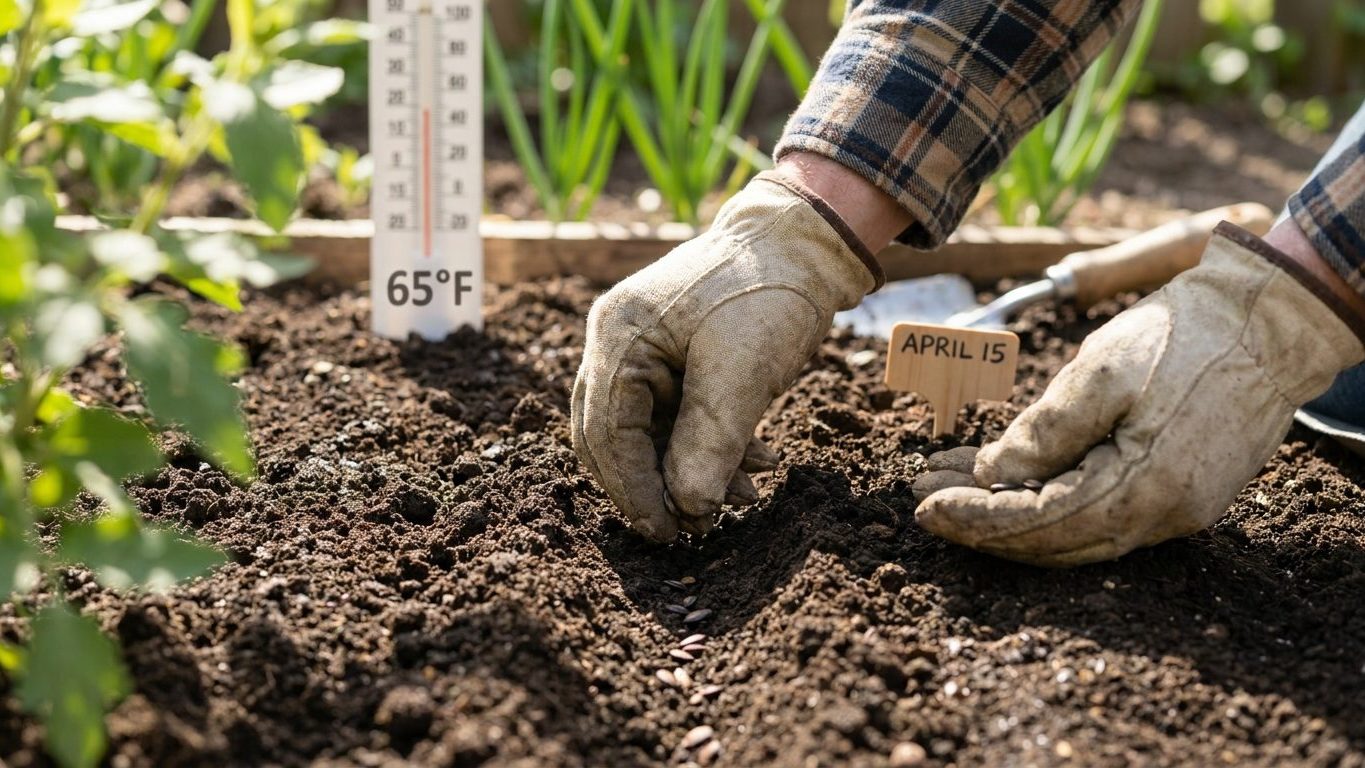
Practically, that means starting seeds indoors three to four weeks before the last-frost window opens, so transplants (not direct-seeded starts) go into warm soil right around May 1 to May 11. Direct seeding outdoors works too, but it eats into the calendar since melon seed germinates slowly until soil hits about 65 degrees, which in Denver’s climate often isn’t until mid-May regardless of what the frost date says.
What will not work here
Long-season watermelon varieties planted on the late edge of that window are the most common failure. If a gardener waits until after Memorial Day to set out a 100-day watermelon, the math doesn’t work: even the optimistic 164-day window leaves no room for a slow start, a cool spell, or an early fall frost. The plant either doesn’t finish, or it finishes with fruit that never sweetens because the last two or three weeks of ripening happen in the shortening light and cooling nights of late September.
The other failure mode is drought stress from underestimating the heat. Denver averages 39.6 days a year at 90 degrees or hotter, and summer rainfall totals only about 5.7 inches across June, July and August, with August the driest month at 1.58 inches. Melons are shallow-rooted, heavy drinkers during fruit set, and a garden that gets watered once a week on the assumption that “it rained some” will produce cracked, small, or bitter fruit. The rain that does fall often comes as a single thunderstorm that runs off a hard, sun-baked bed rather than soaking in, so the actual moisture reaching roots can be far less than the monthly total suggests.
What that means in practice: relying on rainfall alone is not a strategy here, and neither is relying on the fall frost date to bail out a slow start. A watermelon that’s still setting fruit in early September, banking on the October 12 edge of the frost window, is betting against odds that are only 30 to 70% in its favor to begin with. And a garden bed on sandy soil, in a summer averaging under six inches of rain, needs a watering rhythm closer to every two or three days during the hottest stretch, not once a week.
What changes across Colorado
Colorado’s hardiness zone spans 3b to 7b under the USDA system, a range built entirely on average annual extreme minimum temperature. That’s one of the widest spreads a single state can have, and it means there is no single planting date that works from the eastern plains to a mountain valley. The frost dates above are anchored to the Denver reference station on the plains at 5,280 feet. Mountain towns at higher elevation run noticeably shorter seasons and can see frost even in July, which effectively closes the door on melons outdoors without season-extension tricks like row cover or plastic mulch. The western slope, with its own weather patterns separate from the Front Range, differs again.
What that means for a reader: someone gardening on the plains near Denver can plan around the frost window given here with reasonable confidence. Someone gardening at higher elevation, or well into the mountains, should treat that window as too generous and expect both a later safe start and an earlier fall cutoff. Someone on the western slope should expect a different pattern altogether and not assume the eastern plains numbers apply.
This page can’t tell an individual reader which zone applies to their yard. What it can say is that the spread itself, running from 3b to 7b, is the reason a “Colorado” planting date is really a starting point, not a guarantee. Checking the current USDA Plant Hardiness Zone Map for the specific address is the way to narrow that down before committing to a variety or a planting date.
Where to check this for your own county
The state’s land-grant extension service is Colorado State University Extension, at extension.colostate.edu. That’s the source to check for anything more specific than what’s on this page, because a county-level recommendation beats a state-level one every time, and this page is deliberately the state-level one.
Two things are worth looking for once there. First, a local planting calendar for the specific county, since frost dates on the Front Range plains near Denver don’t match a mountain county or the western slope, and the extension office covering that county will have adjusted dates. Second, a list of melon varieties actually trialed in that county or region. Colorado’s growing conditions vary enough that a variety performing well in one part of the state can struggle in another, and county-level trial data reflects real local results rather than a statewide average.
This isn’t a minor distinction. A gardener in a mountain county relying on the Denver-area frost dates in this article could easily lose a planting to a July cold snap that the state-level numbers never predicted. The county extension office is the resource built specifically to catch that gap.
Checking this against your own garden
None of the dates above outrank what’s actually happening in the dirt. Three things to watch, using nothing more than hands and eyes:
- Soil warmth by feel. Melon roots stall in cold soil regardless of the calendar date. If a handful of soil at planting depth still feels cool and damp rather than warm, the ground hasn’t caught up to the air temperature yet, and seeds or transplants will sit rather than grow.
- The first flush of male flowers. Melons produce male blooms before female ones, often by a week or two. Seeing that first wave confirms the plant has moved into reproductive growth and is tracking on schedule for the local conditions, not just growing leaves.
- The first true leaves. The seed leaves that emerge first aren’t the plant’s real foliage. The first set of true leaves, with the characteristic melon-leaf shape, signals the seedling has established enough root and leaf tissue to handle transplant shock or a cool night.
A garden that’s slower to hit these markers than the frost-date math suggests is sitting in a cooler microclimate, maybe a low spot where cold air pools, or a spot shaded longer into spring than the rest of the yard. That’s information no regional frost date can give, and it’s worth adjusting future planting dates around once it’s been observed for a season.