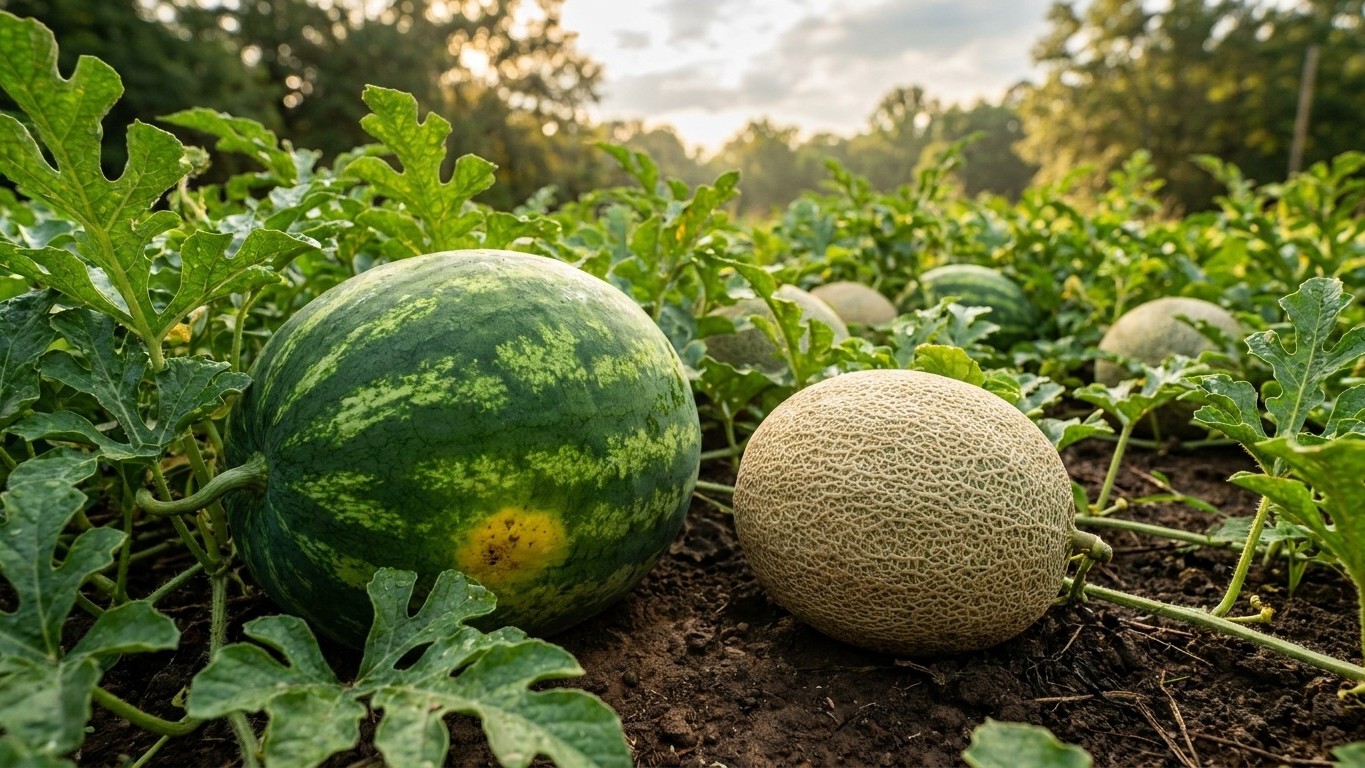

Cantaloupe and other muskmelons are the safest bet across most of Hawaii, watermelon works nearly everywhere with enough space, and honeydew needs the driest leeward pockets to avoid rot. The deciding factor isn’t season length, since Hawaii has none in the frost sense, but how much rain and humidity a given spot carries through the growing months.
The short answer for Hawaii
Hawaii doesn’t have a planting season the way the mainland does. There’s no frost-free window to calculate because there’s essentially no frost at all in inhabited areas: NOAA’s 1991-2020 climate normals for the reference station (USW00022521) flag every freeze percentile as not-computable, with zero days per year at or below 32°F. That single fact reshapes the whole question. Melon variety choice here isn’t about racing a short summer. It’s about matching a type to how much heat and moisture a specific piece of ground carries.
Start with heat load. The reference station averages 18.7 days a year at or above 90°F, which is a moderate but real stress number, enough to push water demand up steadily through summer without cooking plants outright the way inland desert heat does. That favors melons bred for sustained warmth rather than a short hot burst, which is most standard cantaloupe and watermelon lines.
Rainfall is the second lever, and it cuts the other way from what a mainland gardener expects. Summer at the reference station is actually the drier season, averaging about 1.9 inches across June, July and August combined, with June the driest month at just 0.5 inches. That’s a dry-summer profile, similar in spirit to parts of coastal California, not the humid Southeast pattern many melon-growing guides assume.
Matching type to conditions
| Melon type | Best fit in Hawaii | Main risk |
|---|---|---|
| Cantaloupe / muskmelon | Leeward, drier sites with irrigation | Needs supplemental water during dry summer months |
| Watermelon | Most sites with room to sprawl | Vine length demands space, not climate |
| Honeydew | Driest leeward pockets only | Thin-skinned fruit splits and rots in damp spells |
Watermelon tolerates the widest range of conditions here because its vigor outpaces most fungal pressure as long as it gets room to run. Cantaloupe does well almost everywhere but needs a grower willing to irrigate through the low-rainfall summer stretch. Honeydew is the pickiest of the three, since any lingering moisture around the fruit late in ripening tends to cause splitting or rot before the sugar fully develops.
What will not work here
The first failure mode is treating Hawaii’s summer rain numbers as if they applied everywhere on the islands. The 1.9 inches of summer rain and 16.4 inches annually come from a leeward-side reference station, Honolulu sits in one of the driest microclimates in the state. Windward slopes on the same island, and much of the Hilo side of the Big Island, run far wetter through those same months. A gardener on a wet windward slope who plants a melon variety chosen for dry-summer conditions, then waters it on top of natural rainfall, is setting up exactly the damp, still air that fungal disease needs.
That leads to the second failure: dense spacing in humid pockets. Melons planted close together on a windward hillside, where rain and mist keep foliage wet longer, lose airflow between plants. Powdery and downy mildew move fast under those conditions regardless of variety, and once mildew takes hold on a melon planting, fruit sizing and sweetness both drop even if the vine survives.
Third, and easy to miss: watering on a weekly schedule in a dry leeward garden during the 18.7-day heat stretch. Melon vines with fruit sizing up need steady soil moisture, not a big soak followed by five or six dry days. In a summer where the driest month averages half an inch of rain total, a weekly watering habit leaves the root zone swinging between soaked and parched, which is a documented cause of blossom drop and misshapen fruit in cucurbits generally.
Fourth, avoid varieties bred and marketed purely for short-season Northern climates without regard to heat tolerance. They aren’t wrong for Hawaii because of season length, since that isn’t the constraint here, but many of those compact, fast-maturing lines were selected for cool-night ripening and can push out flavor unevenly when nights stay warm through the fruiting period. That’s a secondary consideration behind moisture management, but it compounds the problem on already-stressed vines.
What changes across Hawaii
Hawaii’s USDA hardiness zone range runs from 9a all the way to 13a, per the 2023 USDA Plant Hardiness Zone Map built on 1991-2020 normals. That’s an enormous spread for one state, wider than most entire regions on the mainland, and it exists because elevation does the work that latitude does elsewhere. A coastal garden near sea level and a plot partway up a volcanic slope a few thousand feet higher can sit in genuinely different growing worlds, even a short drive apart.
The hardiness zone number itself is built on one variable only, the average annual extreme minimum temperature, so it doesn’t capture rainfall or humidity directly. But it’s a useful marker for where night temperatures start dropping enough to slow melon ripening and flavor development. Gardeners working at higher elevation, where the zone number drops toward the 9a-10a end of Hawaii’s range, should expect slower fruit maturation and may need to lean on the more vigorous, heat-loving watermelon and cantaloupe lines rather than delicate honeydew types that want consistent warmth to finish sweetening.
Windward versus leeward exposure matters just as much as elevation, more for melon growing specifically. A windward garden gets substantially more rain than the leeward reference station figures suggest, and that rain arrives more often as sustained drizzle than as the brief, hard thunderstorms leeward areas see. Since this page can’t tell an individual reader which zone or exposure their own plot falls into, the practical step is checking the current USDA hardiness zone map by address before picking a variety, then weighing that against whether the garden sits on the wet or dry side of the nearest ridge.
Where to check this for your own county
This page describes Hawaii as a whole, and Hawaii as a whole spans a 9a-13a range with dramatically different rainfall on opposite sides of the same island. That’s too wide a spread for one set of variety recommendations to serve every garden well. A county-level or even district-level recommendation from a local extension office will always beat a statewide one, because it accounts for the specific elevation, exposure and soil type a reader is actually working with.
The University of Hawaii’s College of Tropical Agriculture and Human Resources runs the state’s official cooperative extension service, reachable at ctahr.hawaii.edu/site/extension.aspx. That’s the source to check before finalizing a variety list for a specific garden.
Two things are worth looking for there. First, any local planting calendar or crop guide specific to the island or district, since CTAHR extension agents publish guidance tailored to conditions on Oahu, Maui, Kauai and the Big Island separately rather than lumping the whole state together. Second, look for variety trial results or recommended cultivar lists tested in that county’s actual growing conditions, humid windward test plots will have surfaced different disease-resistant winners than dry leeward ones. A statewide overview like this page can point to the pattern (dry-summer heat load, wide elevation range, sharp windward-leeward rainfall split) but only a local trial can say which specific melon variety held up best in that reader’s actual district.
Checking this against your own garden
None of the numbers above beat what’s happening in the soil a reader can actually reach with a hand. Climate normals describe an average year at one reference station; a real garden runs on its own microclimate, and three simple observations settle more than any calendar.
Soil warmth by feel is the first check. Melon seed wants soil that feels warm and slightly dry to the touch, not the cool dampness of early spring soil on the mainland, though in Hawaii’s case this is more about checking after a rainy stretch than after a cold one. If the soil still feels cool and wet a day after watering or rain, it’s draining slowly, a sign of denser soil that will need raised mounds or added organic matter before melon roots will thrive in it.
The first flush of male flowers is the second signal. Melon vines put out male blossoms well before the female flowers that actually set fruit, and a heavy early flush of males with no females yet is normal, not a failure. It tells the grower the vine has enough energy reserves and is on schedule; a vine that skips straight to sparse flowering of either kind usually points to a nitrogen imbalance or root stress from waterlogged soil.
Third, watch the first true leaves after the seedling’s initial round leaves. If they emerge pale or yellow-edged rather than deep green, that’s often a nutrient or drainage issue specific to that bed, not a variety problem, and it’s worth correcting before investing in the rest of the season’s care.