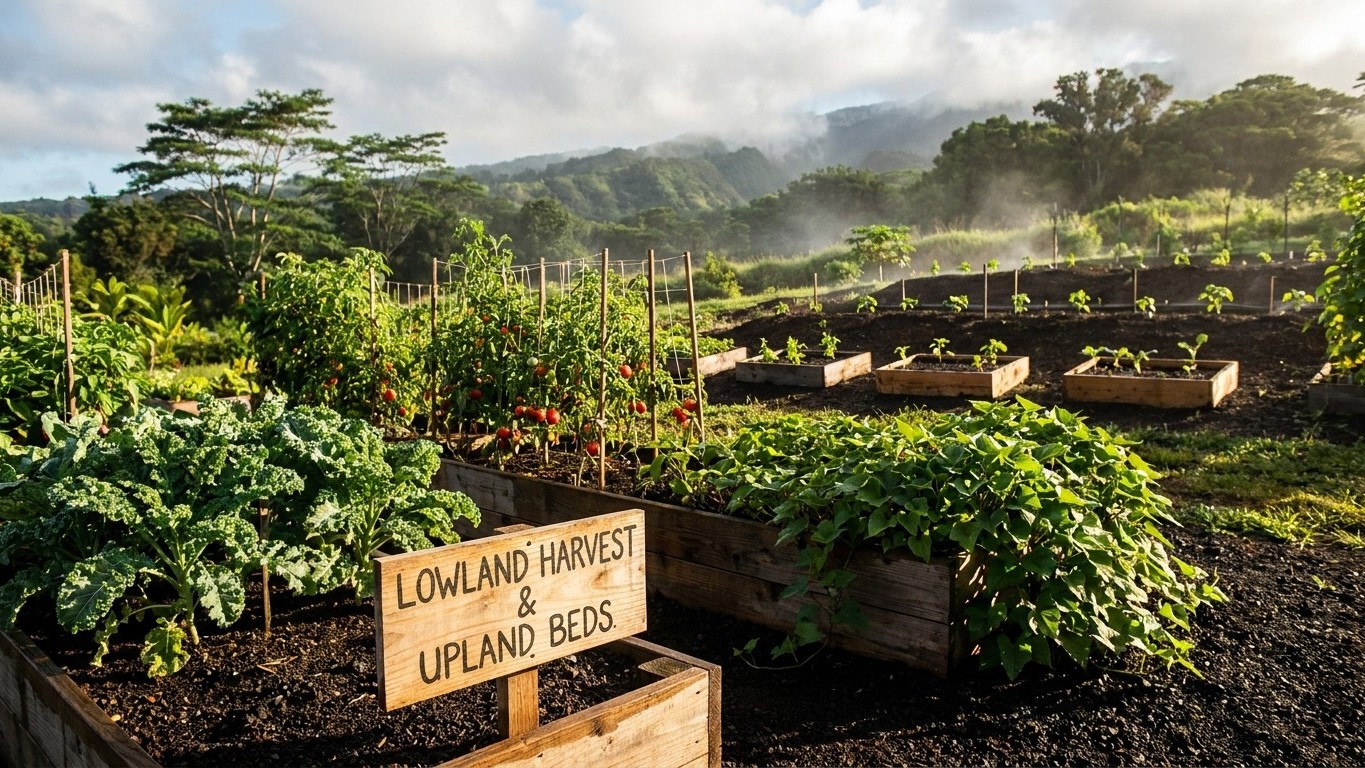

There’s no last-frost date to check before planting in Hawaii in October, because frost never touches the islands’ gardens. What decides the month instead is the shift from the dry season (kau) toward the wet season (hoʻoilo): rising rainfall, cooler nights at elevation, and which side of an island a garden sits on. Direct-sow warm-season vegetables in the lowlands, start cool-season greens for upland plots, and get drainage sorted before the rains thicken.
What goes in the ground in October

Skip the frost math entirely. Hawaii’s growing calendar runs on rainfall and elevation, not on a freeze line moving south across a map. NOAA’s climate normals for the islands show why: every freeze percentile at 32°F and 36°F comes back as not-computable, and the recorded average is zero days per year at or below freezing. That’s not a mild frost season, it’s the absence of one. The only place actual frost forms is above the treeline on Mauna Kea, Mauna Loa, and Haleakala, thousands of feet above any garden bed.
Why frost never enters the picture
What replaces it as the deciding factor is a mix of three things: how much rain a spot gets, how high above sea level it sits, and whether it faces windward (wetter) or leeward (drier). The USDA Plant Hardiness Zone Map places the state anywhere from zone 9a to 13a, which is a territory-wide range built on one measurement, average annual extreme minimum temperature. A lowland reference point like Honolulu sits at the warm end of that range; an upcountry garden in a place like Kula on Maui or Waimea on the Big Island sits noticeably cooler, simply from gaining elevation.
What actually goes in this month
In warm, lower-elevation gardens, October is a fine window to direct-sow sweet potato slips, taro huli, pole and bush beans, corn, squash, and cucumber, since soil temperatures rarely drop low enough to slow germination. Upland gardens with cooler nights can put in lettuce, kale, cabbage, and broccoli transplants now, crops that would bolt or struggle in the hot lowland sun. Cover crops like sunn hemp or cowpea are worth direct-sowing on any empty bed ahead of the wet season, both to hold soil and to add nitrogen back before heavier rains arrive.
What to start under cover
Without a frost date to count backward from, Hawaii gardeners anchor seed-starting to a different marker: the thickening of the wet season and the shortening daylight that comes with it. The arithmetic is simple even without a fixed calendar date. Count the weeks a given crop needs to go from seed to a sturdy transplant, then start it early enough that it’s ready to go into the ground before rains turn beds soggy and hard to work.
Counting backward from the rain, not the frost
Brassicas, lettuce, and other greens destined for upland beds are good candidates to start in trays or flats now, since they need several weeks of steady growth before they can handle transplant shock outdoors. Tomatoes and peppers for lowland gardens also do well started under partial shade cover, where humidity is easier to manage than in open sun.
The two ways starts go wrong
Start too early in Hawaii’s heat and humidity, and seedlings stretch into leggy, weak stems or succumb to damping-off in overly wet trays. Start too late, and the wet season arrives before transplants are ready, leaving them to fight saturated soil and fungal pressure right when they’re most vulnerable. Neither mistake is fatal on its own, but both cost weeks of recovery time a short growing window can’t always spare.
What is ready to pick
Harvests don’t stop in October, they shift. Lowland gardens keep producing through the season, and upland orchards and coffee lands are hitting a key stretch of their own calendar.
What’s coming out of lowland gardens
Papaya, banana, and sweet potato continue year-round in most warm gardens, and October is often when earlier plantings of beans, cucumber, and summer squash are still bearing steadily. Taro corms planted months earlier may be reaching harvest size, checked by gently probing the soil at the base of the plant rather than pulling blind.
Upland and orchard crops
Coffee cherries in growing regions like Kona are typically well into their ripening stretch by October, turning from green to red as they mature, and macadamia trees are dropping nuts that need collecting off the ground before rodents or rot get to them. Citrus at higher, cooler elevations ripens on its own schedule depending on variety and site, so checking fruit for color and slight give rather than going by date is the more reliable method.
The jobs that matter this month
October’s real value is in the setup work, not just the planting. What gets done now, before the wet season fully arrives, determines how much of that rain helps the garden instead of damaging it.
Get ahead of the rain
Check that beds, swales, and gutters actually move water away from root zones instead of pooling it, because standing water after a heavy tropical downpour rots roots fast in Hawaii’s warm soil. Stake tomatoes, beans, and anything top-heavy before wind-driven rain flattens them. Mulch bare soil now to slow erosion once rains intensify, and refresh mulch around perennials that have been baking through the dry season.
Longer-term jobs worth doing now
Turn compost piles while there’s still enough dry weather to manage the moisture balance by hand. Test soil pH and nutrient levels before the next planting push, since amendments need time to work into the root zone. Prune fruit trees to open up airflow through the canopy, which matters more here than in drier climates because dense, wet foliage is exactly what fungal disease needs. Order seed for upland cool-season crops early, since the varieties suited to Hawaii’s specific microclimates sell out faster than generic mainland stock.
What not to do in October
Two mistakes show up every year in Hawaii gardens around this transition, and both come from applying mainland habits to a tropical calendar.
The moisture mistake
Planting into soil that’s already saturated from the season’s first heavy rains sets seedlings up for root rot before they’ve established. If a bed is holding water rather than draining through it within a reasonable time, wait, or raise the planting area instead of forcing seed into mud. The flip side matters too: once the wet season is genuinely underway, keep irrigating on the old dry-season schedule and roots drown just as fast.
The elevation mistake
Assuming a warm afternoon at sea level means the same conditions apply at 3,000 feet is a common and costly error. Upcountry gardens run cooler and wetter on a different timeline than coastal ones, so a planting move that’s perfect in Honolulu can be weeks too early or too late in Kula or Volcano. Heavy nitrogen applications timed right before the wet season are also worth avoiding, since the coming rain washes unused nitrogen straight through the soil and off the property, which is both wasted fertilizer and unnecessary runoff.
Checking this against your own county
A statewide October calendar is a starting point, not an instruction. Elevation, windward versus leeward exposure, and even which valley a garden sits in can shift these windows by weeks, sometimes more than a mainland frost date ever would. A garden on Oahu’s windward coast, one in dry Kona, and one at 4,000 feet on Maui are effectively gardening in three different climates during the same month. The University of Hawaii’s CTAHR extension service is the reliable next stop for site-specific guidance tuned to a particular island and elevation.
Common questions
Does Hawaii ever get frost that affects gardening?
No. NOAA’s climate normals for the islands show zero recorded freeze days per year at low elevation, with every freeze percentile marked not-computable. Frost only occurs on the high volcanic summits, well above where anyone gardens.
What USDA hardiness zone is Hawaii in?
The USDA Plant Hardiness Zone Map places the islands across a wide range, 9a to 13a, reflecting how much elevation and location change the average extreme minimum temperature from one spot to another.
When does Hawaii’s wet season start?
The wet season, known as hoʻoilo, typically follows the drier kau season, with October marking the transition period as rainfall begins increasing, though the exact pace varies by island and elevation.
Should I plant the same crops in upland and lowland Hawaii gardens?
No. Lowland gardens favor warm-season crops like sweet potato, taro, beans, and squash, while cooler upland sites can support lettuce, brassicas, and other crops that struggle in lowland heat and humidity.
Gardeners who plant by the Moon can check the October 2026 moon planting calendar, a tradition rather than a proven method.
Related guides
Elsewhere? See what to plant in October in every state and province.