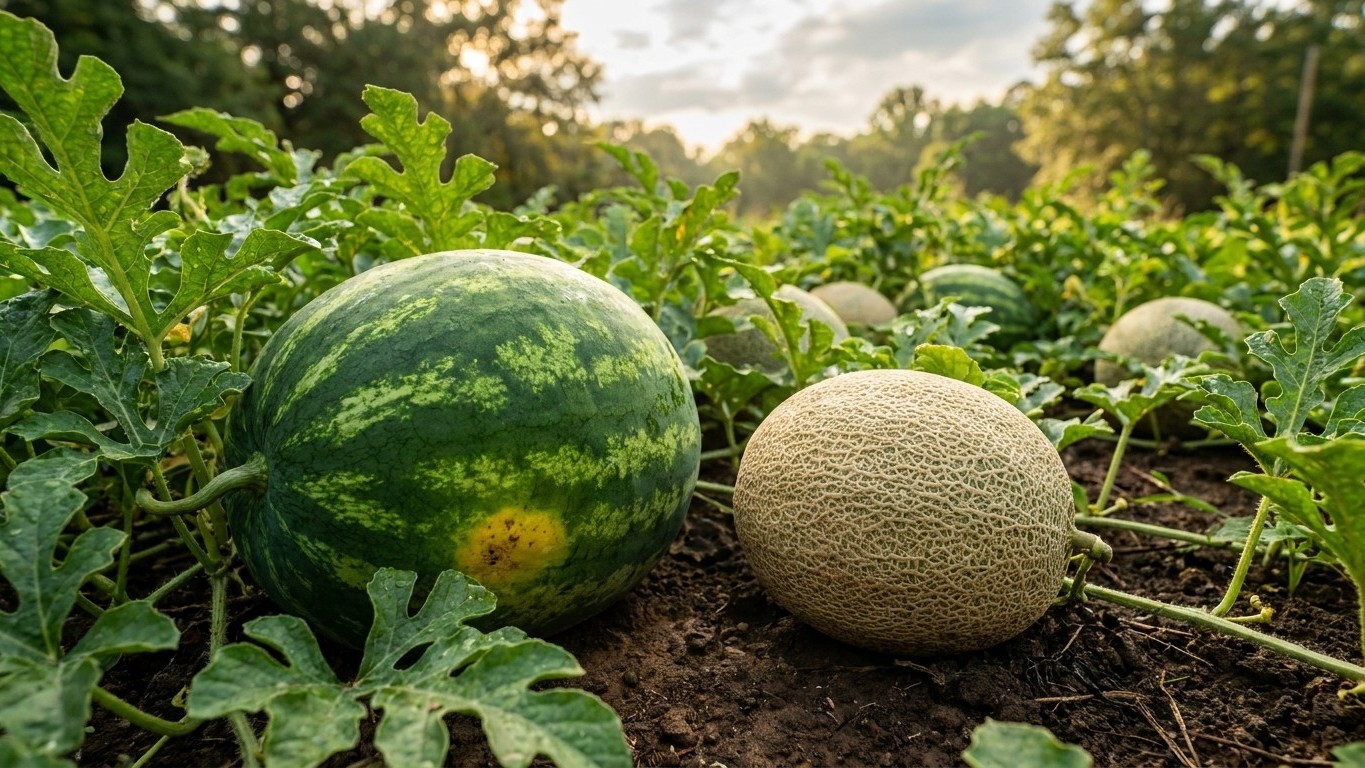

West Virginia’s mix of short summers and modest heat favors melons that finish fast: short-season cantaloupes and muskmelons maturing in 70 to 85 days, along with compact icebox watermelons in that same window. Large, heat-hungry watermelon varieties built for 90-plus days of sustained warmth are the riskier bet here, especially away from the state’s warmer river valleys.
The short answer for West Virginia
The choice comes down to two numbers: how long the frost-free season runs, and how much real heat the summer delivers. At the Charleston reference station, the last spring frost falls between April 9 and April 23, and the first fall frost arrives between October 18 and November 1. Stack those windows against each other and the growing season runs somewhere between 178 and 206 days, depending on the year and exactly where those frost dates land. That’s a workable season, but it’s not a long one, and it shrinks fast once you leave the river valley.
Heat is the bigger limiter. Charleston averages just 16.0 days a year at 90F or above. Melons don’t just need warmth to survive, they need accumulated heat to build sugar and finish ripening on schedule. A muskmelon bred in Georgia or a watermelon bred for the Mississippi Delta expects far more 90-degree days than West Virginia typically hands out. Varieties selected for shorter maturity windows and cooler-summer performance close that gap; varieties selected for maximum size or maximum sweetness in blast-furnace heat generally don’t.
That’s why the practical answer sorts by type rather than by a single “best” pick:
| Melon type | Typical days to maturity | Fit for West Virginia |
|---|---|---|
| Short-season cantaloupe/muskmelon | 70-85 days | Best overall fit for the season length and heat load |
| Icebox/compact watermelon | 75-85 days | Solid second choice, especially in warmer valleys |
| Large, long-season watermelon | 90-100+ days | Marginal outside the warmest, lowest-elevation gardens |
Nothing here is a variety-by-brand recommendation. It’s a matter of matching a plant’s maturity window and heat requirement to what this state’s climate actually offers, and West Virginia offers a shorter, cooler window than most of the country’s melon-growing regions.
What will not work here

Start with the obvious failure: watermelon varieties that need 95 to 100 days of consistent warmth to size up and sweeten. Even using the more generous frost window (April 9 to November 1), that’s 206 days of frost-free ground, but only 16 of those days actually reach 90F. A fruit that needs sustained heat to convert starches to sugar can sit on the vine looking full-sized and still taste flat, because the heat units that finish the job simply aren’t there most summers. Push a 100-day watermelon into a shorter local season, and the math gets worse fast.
Tight spacing is the second trap, and it’s a humidity problem, not a frost problem. Summer rainfall averages about 13.8 inches across June, July and August, broken down as 4.72 inches in June, 5.38 in July, and 3.75 in August. That’s enough moisture, combined with the state’s valley humidity, to keep foliage damp for long stretches after a storm. Powdery mildew, downy mildew and gummy stem blight all move faster where air can’t circulate between plants. Vines planted the way a seed packet suggests for a drier climate, spaced too close for West Virginia’s air, invite exactly that kind of disease pressure.
The third failure point is timing water around August, the driest of the three summer months at 3.75 inches. Melons sizing fruit late in the season, right as that dry stretch sets in, can stall or crack if a gardener assumes the season’s average rainfall means steady moisture all summer. It doesn’t. A garden on sandy soil feels that August dip within days; one on heavy clay holds moisture longer but risks the opposite problem earlier in the summer, when June and July rain sits around roots too long for a plant that hates wet feet.
None of this means melons don’t belong in a West Virginia garden. It means the varieties and habits that work in the Carolinas or the Deep South, planted the same way, run into a shorter season, a cooler heat budget and a wetter, more humid air mass than they were bred for.
What changes across West Virginia
West Virginia spans hardiness zones 5a through 7a under the USDA system, and that system is built on one measurement: the average annual extreme minimum temperature. It doesn’t describe summer heat or season length directly, but it’s a useful marker for how much the state varies within its own borders. A spread from 5a to 7a is wide for a single state, and it lines up with the difference between the high mountain counties and the lower river valleys where Charleston sits.
That spread matters for melons because both frost dates shift with elevation. The Charleston-based frost window (April 9 to October 18-November 1, depending on the year) reflects a river valley. Higher ground across the state freezes noticeably earlier in fall and often later in spring, which trims real growing days off the season on both ends. A garden at higher elevation isn’t just a little cooler day-to-day; it’s working with a meaningfully shorter frost-free window than the valley numbers suggest, and less accumulated heat on top of that.
There’s no single planting date or single “safe” variety list that covers a 5a-to-7a range. A reader gardening at elevation should lean toward the shortest-maturing varieties available, start transplants indoors rather than direct-seeding, and treat the valley’s frost dates as optimistic. A reader in a milder, lower river valley has more room to work with slightly longer-season varieties and to direct-seed later in the window. Figuring out which end of that range applies to a specific garden isn’t something a statewide page can answer. That’s what the hardiness zone map is for, and it’s worth checking directly rather than guessing from a county’s general reputation for being “up in the mountains” or “down in the valley.”
Where to check this for your own county
West Virginia University runs the state’s land-grant extension service, and it’s the right next stop for anyone deciding what to plant this year. County offices under that system publish planting calendars built around local frost data rather than a single statewide reference station, and they track which melon varieties have actually performed well in trials and demonstration plots in that specific area.
Look for two things once there. First, the county’s own planting calendar, which will translate the general frost-date ranges into something closer to a local recommendation, accounting for the elevation and microclimate quirks a state-level page can’t capture. Second, any list of varieties the extension office has trialed locally, since those results reflect actual performance against that county’s disease pressure, rainfall pattern and season length rather than a seed catalog’s national averages.
A single reference station and a statewide zone range make a starting point, not a final answer. A county extension agent’s recommendation, built from years of local trial data and direct knowledge of frost pockets and soil conditions in that specific area, will beat a state-level estimate every time. That’s not a knock on the numbers here; it’s just what a state page is for, and what it isn’t.
Checking this against your own garden
Every date and figure describes an average. A gardener’s own observations describe the one plot that actually matters, and they outrank any calendar. Three things are worth watching before trusting a planting date over what the garden is actually telling you.
Soil warmth by feel comes first. Melon seed germinates poorly in cold soil, and a hand pressed a couple inches into the bed will tell a gardener more than a frost-date range does. Soil that still feels cool and damp in mid-May, even after the average last frost has passed, is a sign the local microclimate is running behind the reference station’s numbers.
The first flush of male flowers is the second signal. Melon vines produce male flowers before female flowers, often by a couple of weeks, and their appearance marks the plant shifting into its reproductive stage. Watching for that first flush gives a rough sense of how far behind or ahead of a typical season the plants are running this particular year.
The first true leaves, the ones that emerge after the seed’s initial pair, mark the point where a seedling has moved past its most frost-vulnerable stage. Their timing, faster or slower than expected, is a direct read on how warm and how favorable that specific bed has actually been, regardless of what the regional averages say it should be.