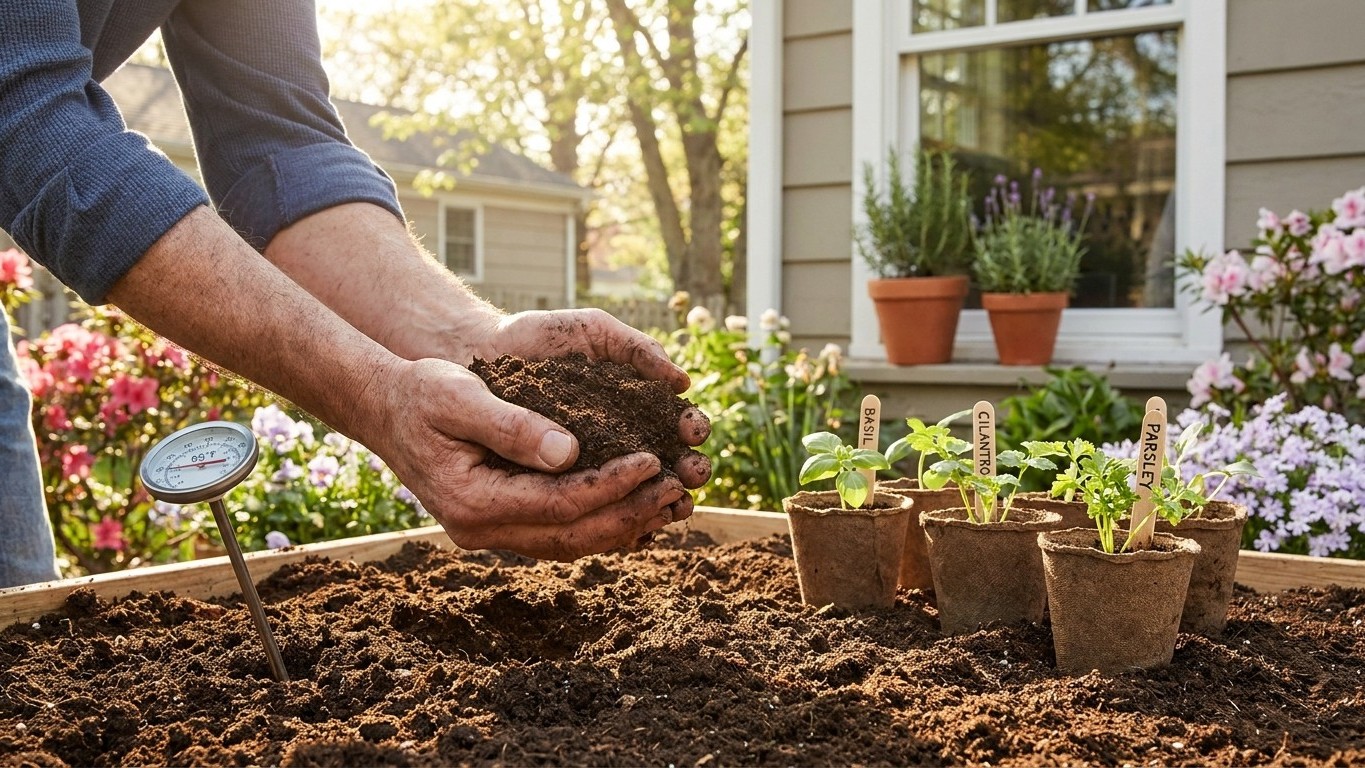

Nevada doesn’t have one planting date, it has dozens, because the state stretches from low desert basins to high mountain valleys with entirely different frost patterns. The honest answer is: check your soil temperature and your local county extension office before you check a calendar, since elevation changes everything here more than almost any other state.
When the soil is warm enough in Nevada

The question everyone asks first is when to plant, and the only hard number available comes from the Las Vegas airport station: a last spring frost window of January 7 to February 1, and a first fall frost between December 8 and December 23, both drawn from NOAA’s 1991-2020 Climate Normals for station USW00023169.
Those dates look almost absurdly mild, and that’s because they are. Las Vegas sits in a desert urban-heat-island extreme, one of the warmest, driest low-elevation pockets in the country. It is not a stand-in for Nevada as a whole. Reno, Carson City, and pretty much anywhere with real elevation freeze months earlier in the fall and thaw months later in the spring than what that station records. A gardener in the Truckee Meadows working off Las Vegas dates would be planting basil into snowmelt.
This is exactly why frost dates are best treated as a proxy, not a rulebook. Herbs don’t actually care about the calendar date of the last freeze. They care about soil temperature, and soil warms up after the air stops freezing, sometimes a couple of weeks later, sometimes longer at higher elevation where the ground holds cold. A frost-free morning doesn’t mean the top few inches of dirt have shaken off winter. Pushing seed or transplants into cold, wet soil usually just means rot and a slow, sulky start, even if the air temperature looks fine.
It’s also worth saying plainly: any frost date, even a well-measured one, is a probability, not a promise. The January 7 to February 1 window for Las Vegas reflects a statistical band, not a guarantee that nothing colder will happen after it. Given how much this state’s terrain varies, from Mojave desert floor to Sierra Nevada foothills to high desert basins in the north and east, the only reliable local answer comes from a county extension office that tracks your specific valley or benchtop, not a statewide average.
How long the season lasts here
Using the Las Vegas figures directly, since both the spring and fall frost dates come from the same station, the frost-free window there runs from early February through early-to-mid December, a stretch of roughly ten months. That’s an unusually long growing season by any national standard, and it’s a direct product of that station’s desert heat-island effect rather than something typical of Nevada.
For the rest of the state, no equivalent pair of dates exists in the data available here, and estimating one would be guesswork dressed up as fact. What can be said honestly is that higher-elevation Nevada works on a much tighter clock. Mountain and high-desert valleys routinely see growing windows compressed into a handful of frost-free months rather than ten, and that compression changes practical decisions on the ground.
A long window, like the one Las Vegas enjoys, allows something a short one doesn’t: room for a second sowing after the first flush of an herb bolts or gets tired in midsummer heat. Gardeners there can treat an early planting as the opener, not the whole show, restarting fast-growing types later in the season for a fall harvest. That’s a genuine planning tool, and it’s covered in more depth in this site’s succession sowing guide, which walks through how to time a second round once the first one is in the ground.
Where the season is short, the first sowing often has to be the only one, which changes other decisions too. It raises the stakes on starting with transplants rather than direct seed, since a transplant gives a herb a head start the calendar won’t otherwise allow. It also means checking root systems before setting plants out matters more: a pot-bound or circling root ball wastes precious weeks straightening itself out, weeks a short-season garden in the Nevada high country simply doesn’t have to spare.
Heat and water in Nevada

Nevada’s reputation is built on aridity, and that reputation is earned almost everywhere in the state, not just in the Las Vegas valley. But the figures available here don’t include a station-specific count of days above 90°F or a summer rainfall total, and rather than estimate those, it’s more useful to point at the number that actually reorganizes an herb bed in this state: winter.
The mean daily minimum temperature for the coldest month at the Las Vegas reference station is 39.6°F, a figure that describes typical overnight lows in winter there, not a record cold snap. That’s mild enough to keep a number of woody, drought-tolerant herbs alive outdoors year-round in the low desert. But Nevada’s USDA Hardiness Zone range spans an enormous 4a to 10a, and that spread is the real story. A zone 10a reading, like Las Vegas, tolerates herbs as permanent landscape plants that a zone 4a reading, found in the state’s colder high-elevation pockets, would kill outright most winters.
That zone spread is what should organize planning here, more than any heat count. In the warm end of the range, the practical question is which herbs can stay in the ground through winter without protection. In the cold end, the same herbs, especially the woody Mediterranean types, generally need to live in containers that come indoors or into an unheated garage before the first hard freeze, then go back out once the ground warms. That single decision, permanent bed or seasonal pot, reshapes the whole layout of a Nevada herb garden far more than any heatwave does.
Because the state doesn’t behave as one climate, the safest move is checking the hardiness zone for your specific address rather than assuming the statewide range applies to your yard, and pairing that with a look at how the coldest month typically behaves where you actually garden.
Which herbs suit Nevada
Reasoning by type rather than by variety name works best in a state this divided. In the milder, low-elevation zones where winters barely dip below the high 30s, woody Mediterranean herbs, the group that includes rosemary, thyme, oregano, and sage, tend to do well as permanent plantings, since they evolved for exactly this kind of dry heat and lean soil. Given decent airflow and a spot where roots aren’t sitting in standing water, they generally shrug off summer’s intensity better than leafier, moisture-hungry herbs do.
In the colder, higher-elevation parts of the state, that same group of woody herbs usually needs to live as container plants that move indoors for winter, since the ground itself gets too cold for their roots to survive. Where the frost-free window runs short, faster annual types, the tender, leafy kinds that complete their life cycle quickly, make more sense as ground plantings, since they can produce a full harvest before the first freeze without needing to survive winter at all.
Because Nevada runs dry almost everywhere, disease pressure from humidity isn’t the state’s main herb problem the way it is in wetter climates. Drought stress and heat scorch are the more common issues in the low desert, which is another reason airflow, mulch, and afternoon shade at the root zone matter more here than fungicide schedules do.
One thing this page deliberately won’t do is name specific cultivars. The varieties that actually perform well in a Reno backyard and the ones that thrive in a Las Vegas planter box can be genuinely different plants trialed under different conditions, and a generic recommendation from an article like this one is worth less than what your local team has already tested. The University of Nevada Cooperative Extension tracks exactly that kind of regionally tested performance data, and it’s the right next stop for anyone deciding what to actually put in the ground this season.