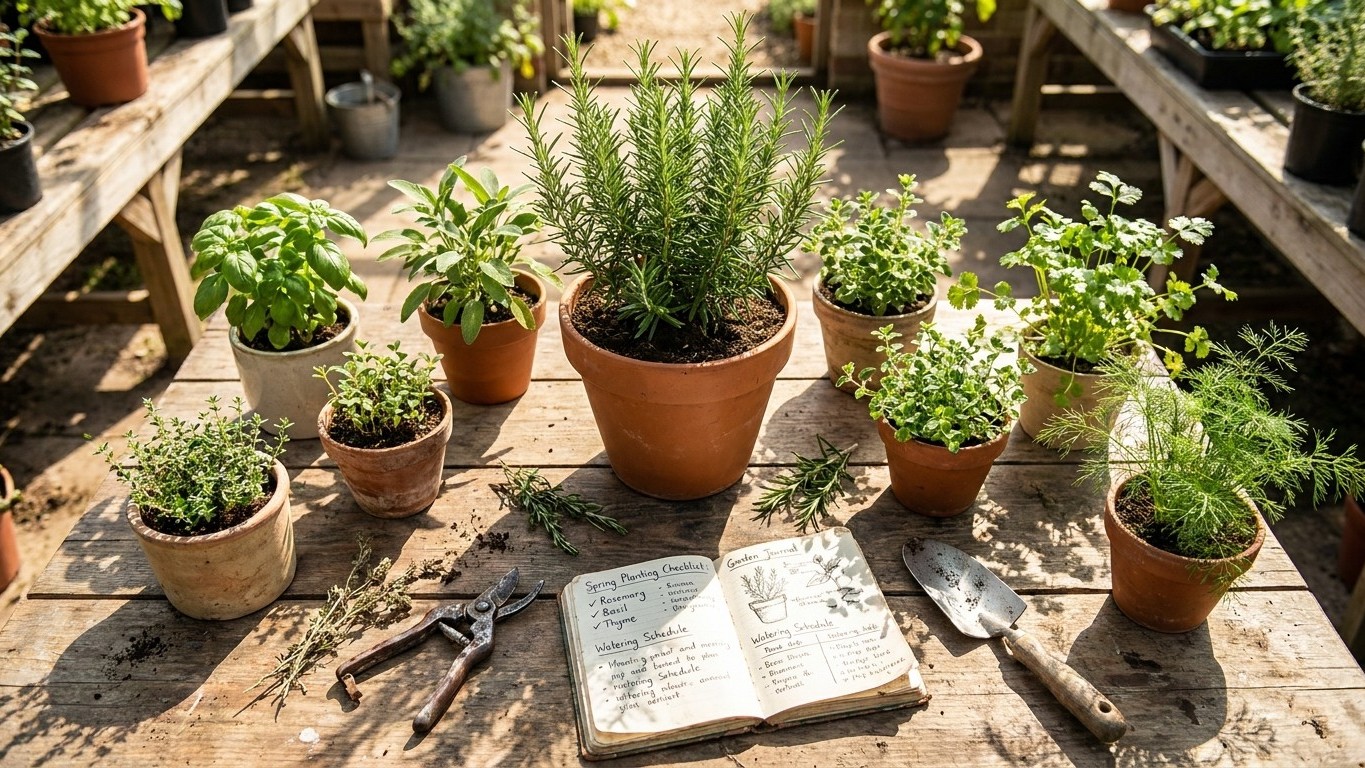

The short answer: it depends entirely on your winter, not on the herb’s reputation. Woody types like rosemary, sage, thyme, and oregano can live for years as shrubs where winters stay mild, but freeze to the ground everywhere else. Basil, cilantro, and dill die on schedule every year no matter where you live. The rest fall somewhere in between, and the line between “perennial” and “annual” moves with your ZIP code.
The only division that matters
Seed catalogs and plant tags sort herbs into “annual” and “perennial” as if the label were fixed. It isn’t. A perennial designation on a plant tag almost always comes with an unstated asterisk: Perennial in the climate where that plant evolved, or in a hardiness zone that may not be yours. Rosemary is the clearest example. In coastal California or the Gulf Coast, a rosemary plant can turn into a woody shrub three feet across and live for a decade. In Minnesota, that same plant is dead by January unless it spends winter indoors. Neither gardener did anything wrong. They’re just gardening in different climates, and the plant tag never said which one it was written for.
This is why so many gardeners plant rosemary, sage, or French tarragon expecting them to return, then feel like they’ve failed when the bed is empty in April. The plant didn’t fail. The assumption did. The table below separates true annuals (herbs that complete their life cycle and die in one growing season everywhere) from herbs that are perennial only under specific winter conditions.
| Herb | Life cycle | Perennial where |
|---|---|---|
| Rosemary | Perennial shrub | Mild-winter zones only; grown as an annual or brought indoors elsewhere |
| Sage (common) | Perennial | Colder-winter zones with reliable snow cover or mulch protection |
| Thyme | Perennial | Most temperate zones; struggles in wet winters more than cold ones |
| Oregano | Perennial | Wide range of temperate zones; spreads as a low mat |
| Chives | Perennial | Nearly all zones; dies back and returns from the bulb each spring |
| Mint | Perennial | Nearly all zones; often too perennial (see below) |
| French tarragon | Perennial | Cold-winter zones with good drainage; struggles in hot, humid summers |
| Lavender | Perennial shrub | Dry, well-drained, moderate-winter zones; resents wet cold |
| Bay laurel | Perennial tree/shrub | Mild-winter zones only; a container plant everywhere else |
| Basil | Annual | Never overwinters outdoors; killed by the first light frost |
| Cilantro | Annual | Never perennial; also bolts fast in heat regardless of zone |
| Dill | Annual | Never perennial |
| Parsley | Biennial, grown as annual | Technically overwinters in mild zones but is usually replanted yearly |
Reading that table honestly means accepting a piece of homework: figure out which zone you actually garden in, then check each herb against it before deciding whether to treat it as a permanent bed resident or a pot you’ll refill next spring. That answer is specific enough to your climate that it belongs on your own state’s growing guide, not a national one.
Why kitchen herbs die of kindness
Most of the herbs people cook with, rosemary, thyme, sage, oregano, lavender, evolved on rocky Mediterranean hillsides with thin, fast-draining soil and long dry stretches between rains. That origin story explains almost every problem gardeners have with them, and almost none of those problems come from neglect. They come from care.
Give a rosemary plant rich, dark, well-amended garden soil and water it on the same schedule as your tomatoes, and you’re doing to it roughly what happens to a person who’s never run more than a mile suddenly training for a marathon in humid heat. The roots evolved to pull moisture from dry, mineral soil in short bursts, not to sit in constantly moist, nutrient-heavy ground. When they do, the fine root hairs that take up water and oxygen start to suffocate and rot. The plant doesn’t wilt from dryness. It wilts because the roots that are supposed to supply water have already died from too much of it. By the time the leaves go yellow and drop, the damage below ground is usually done.
Rich soil creates a second, quieter problem even when it doesn’t kill the plant. Herbs grown in overly fertile beds put out fast, soft, sappy growth, big leaves, weak stems, and a diluted concentration of the aromatic oils that give them flavor. A sage plant pushed hard with nitrogen grows bushier but tastes flatter. Gardeners who compare a homegrown herb unfavorably to a store-bought one grown in commercial poor-soil conditions are often tasting exactly this difference.
The herbs that want the opposite
Basil, parsley, chives, and mint break this rule entirely, and treating them like their Mediterranean cousins is its own mistake. These herbs come from wetter, richer native ground and want consistent moisture and fertile soil to produce the soft, leafy growth you actually want to eat. Basil in lean, dry soil bolts to flower early and tastes bitter. Parsley in the same conditions stays stunted. The practical result: a single herb pot with rosemary on one side and basil on the other is set up to fail one of them, because they need opposite watering schedules to thrive.
The twelve worth the space
Not every herb earns a permanent spot in a small garden or a windowsill row of pots. The twelve below cover the range most home cooks reach for, along with the one thing that trips gardeners up on each.
| Herb | Kitchen use | Life cycle | Space needed | One difficulty |
|---|---|---|---|---|
| Basil | Fresh leaf, sauces, pesto-style dishes | Annual | Small pot or 12-inch row spacing | Dies at the first cold snap; bolts fast in heat |
| Parsley | Fresh garnish, base flavor herb | Biennial (grown as annual) | Small pot or tight row spacing | Slow to germinate; often replanted yearly anyway |
| Cilantro | Fresh leaf and seed (coriander) | Annual | Small pot, succession-sown | Bolts to seed within weeks of warm weather |
| Dill | Fresh and dried leaf, seed head | Annual | Needs height room, 2 to 3 feet | Tall and floppy; needs wind shelter or staking |
| Chives | Fresh garnish, mild onion flavor | Perennial | Small clump, expands slowly | Dies back completely in winter, looks abandoned |
| Mint | Fresh leaf, drinks and garnish | Perennial | Container only, or it takes the whole bed | Spreads aggressively by underground runners |
| Rosemary | Roasts, breads, woody-stem flavor | Perennial where mild; annual/potted elsewhere | Large shrub over time | Root rot in wet or heavy soil |
| Thyme | Slow-cooked dishes, general seasoning | Perennial | Low, spreading groundcover | Rots in soggy, poorly drained soil |
| Sage | Rich, fatty dishes, stuffing-style flavor | Perennial | Medium shrub, 18 to 24 inches | Woody and leggy after a few seasons without pruning |
| Oregano | Tomato-based and grilled dishes | Perennial | Low, spreading groundcover | Can become invasive in the bed if not contained |
| French tarragon | Sauces, egg and chicken dishes | Perennial | Small clump | Struggles or dies out in hot, humid summers |
| Bay laurel | Whole leaf in slow-cooked dishes | Perennial where mild; potted elsewhere | Large shrub or small tree over years | Cannot tolerate hard freezes without protection |
Mint deserves its own line of warning beyond the table. It doesn’t just grow, it colonizes, sending horizontal runners under the soil that pop up a foot or more from the original plant within a single season. A mint plant set directly into a garden bed can take over a four-foot radius in two years and outcompete everything nearby for water and light. Nearly every experienced gardener who was told “just plant it in the ground” has a mint story that ends in a container transplant, done in frustration, a season or two later. Growing mint in a pot, even one sunk into the ground with its bottom cut out, contains the runners without giving up the plant.
Why the answer changes with where you garden
Nothing in this family shifts more with geography than the annual-versus-perennial question. A herb garden in Charleston, South Carolina, and one in Burlington, Vermont, can use an identical plant list and get completely different results after the first winter. The rosemary that becomes a hedge in South Carolina is a compost pile candidate in Vermont unless it comes indoors by October. Lavender that returns reliably in a dry inland climate can rot out over a single wet winter in a humid coastal one, even at a similar average temperature, because moisture matters as much as cold.
The USDA Plant Hardiness Zone Map is the starting reference for this question, since it’s built from average annual minimum winter temperatures recorded across the country and updated periodically to reflect current climate data. Knowing your zone number is useful, but it’s a blunt instrument. Two gardens in the same zone can behave completely differently based on wind exposure, soil drainage, snow cover, and how close the garden sits to a large body of water that moderates temperature swings. That’s the level of detail a national article can’t give you and a state-specific growing guide can.
Your local cooperative extension service, run through your state’s land-grant university, is the other resource worth using before you commit a rosemary plant to the ground versus a pot. Extension offices track which herbs reliably overwinter in your specific region, including the local exceptions the zone map misses, and many publish free regional planting guides. Between your zone number, your state’s herb growing guide, and a call to your extension office, you can answer the annual-or-perennial question for your own yard with a confidence that no general herb article, including this one, can responsibly give you.