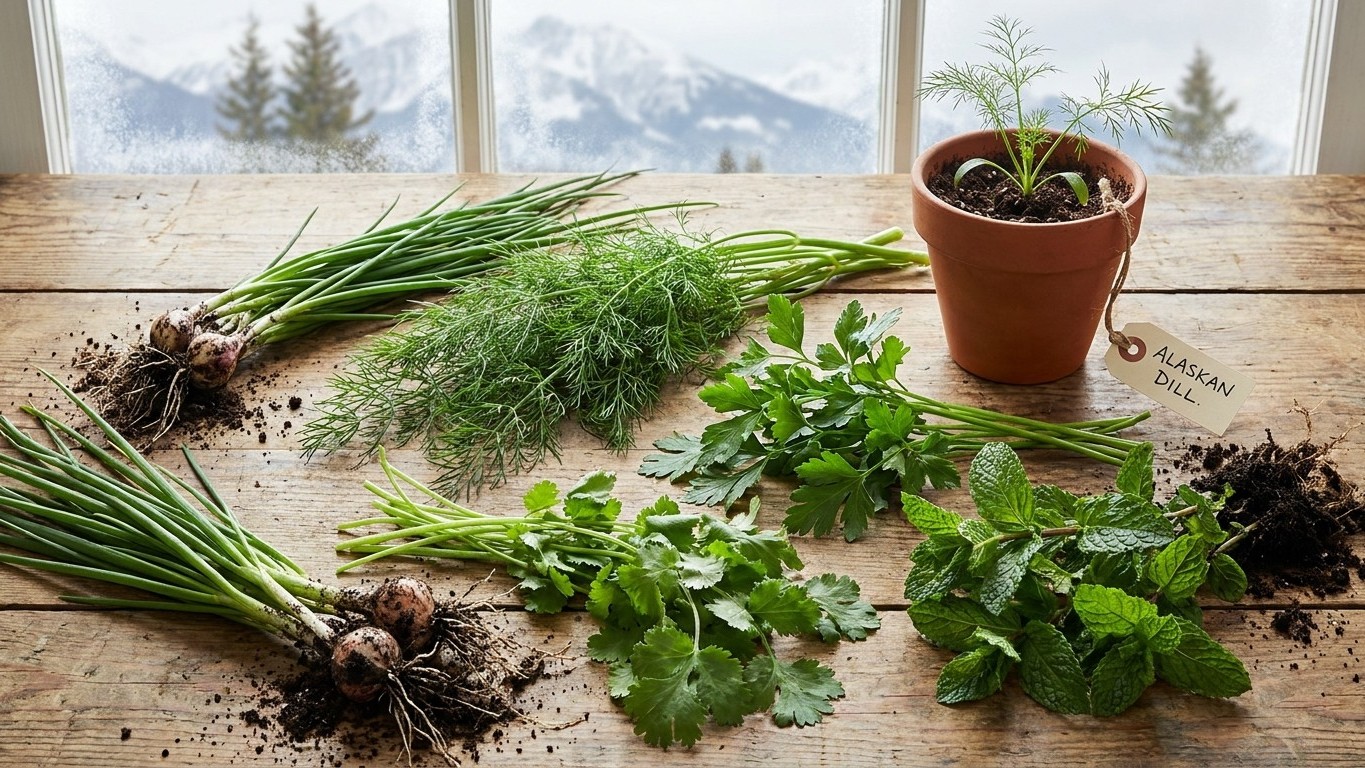

Arizona’s herb garden splits into two very different playbooks. In the low desert (Phoenix, Tucson, Yuma), heat-loving Mediterranean herbs like rosemary, thyme, oregano and sage grow almost year-round because frost is nearly a non-event. Annuals like basil and cilantro need careful season timing instead, since summer heat, not cold, is what shuts them down. At elevation, the rules flip toward frost-hardy short-season varieties.
The short answer for Arizona
Start with what actually limits growth here, because it isn’t what most gardeners assume. NOAA’s frost-free season data for the Phoenix reference station shows no reliable spring or fall freeze at all in most years, a rare cold snap can bring 32°F sometime between late December and mid-January, and it only happened in 6 of the last 30 springs. NOAA effectively lists the frost-free season as 365 days for that station. So for low-desert Arizona, forget frost dates. The thing that stops herbs cold, so to speak, is summer heat, which halts growth and fruit set for months at a stretch.
That reframes the decision by herb type rather than by calendar date. Woody Mediterranean perennials, rosemary, thyme, oregano, sage, lavender, are the safest bet across the low desert. The coldest month’s mean daily minimum runs 45.3°F at the Phoenix reference station, which is mild enough that these herbs rarely face a winter hardiness problem at all. Once established, their drought tolerance and heat tolerance line up with the local climate instead of fighting it.
Soft-leaved annuals are the opposite story. Basil, cilantro, dill and parsley are not blocked by frost, since there basically isn’t any, they’re blocked by heat. These need to be grown in the cooler half of the year, roughly fall through spring, and treated as done for the season once real summer heat arrives. Timing them like a Midwest garden, planting in spring and expecting summer harvests, is the single most common way gardeners here waste a season.
Mint sits in a middle category: it can survive the heat but only with steady moisture and some shade, which makes it more of a container or partial-shade herb in the low desert than a full-sun bed plant.
None of this applies uniformly statewide, though. The USDA Plant Hardiness Zone Map puts Arizona across a stunning 4b to 10b range, built on average annual extreme minimum temperature. A zone spread that wide means the state doesn’t have one herb answer, it has at least two, and the high country needs its own frost-based approach entirely (more on that below).
What will not work here

Weekly watering is the fastest way to lose a low-desert herb bed. In a climate where the coldest month still averages a 45.3°F daily minimum, and summer easily pushes well past what any of these herbs evolved for, soil dries out far faster than a once-a-week schedule can replace. Herbs that tolerate infrequent watering in a temperate climate, like parsley or chives, will scorch and collapse on the same schedule here. The fix isn’t a hardier variety, it’s more frequent, shallower watering matched to actual soil dryness rather than a fixed calendar habit brought over from a wetter state.
Full, unshaded summer sun is another trap. Because there’s effectively no frost-free season limit here, gardeners assume more sun always equals more growing time. It doesn’t. Basil and cilantro planted in a spot with no afternoon shade will bolt or simply stall out once daytime highs climb into the range that stops their growth, regardless of how much water they get. Afternoon shade cloth or an east-facing bed, positions that would be considered wasteful shade in a cooler state, are often what keeps these herbs alive through the shoulder months here.
Cool-season timing mistakes are the other big failure point. Planting basil or cilantro on a spring calendar borrowed from a frost-driven state wastes the one window that actually works, which is fall through early spring. By the time a transplanted spring-planting habit would normally pay off elsewhere, Arizona’s heat has already ended the annual herb season here.
Finally, expecting frost to define planting dates at all is a mistake specific to this state’s data. With reliable freezes essentially absent in the low desert, any calendar built around “last frost” and “first frost” dates simply has no anchor point to use, and following one anyway means planting and pulling herbs at the wrong times all year.
What changes across Arizona
A hardiness range of 4b to 10b is not a rounding error, it’s close to the entire cold-hardiness spectrum used in the continental United States. The low desert, where the Phoenix reference station sits, behaves like the 9b-10b end of that range: mild winters, a 45.3°F coldest-month minimum, and frost so rare it barely shows up in three decades of records. Move toward the high country, Flagstaff and similar elevations, and you’re closer to the 4b-6 end, where hard freezes are routine and the growing season is genuinely short.
That difference changes which herb type wins. In the low desert, the constraint is summer heat and the answer favors Mediterranean perennials and carefully timed cool-season annuals, as covered above. At altitude, the constraint flips back to a short frost-free window, closer to how a Midwest or mountain-state garden is planned, where the surviving herbs are the ones that can complete growth, or at least establish roots, before a real freeze shuts things down.
Elevation inside Arizona does more work here than latitude does. Two towns at similar latitude but different elevation can sit in entirely different hardiness zones, which means a “statewide” recommendation is really a description of whichever reference point it’s built on.
Rather than guessing which end of that 4b-10b range applies to a given yard, the practical move is checking the actual zone at that location on the USDA Plant Hardiness Zone Map before choosing between the low-desert approach above and a shorter-season, frost-anchored one.
Where to check this for your own county
A county recommendation will always beat a state one, because it accounts for the specific elevation, microclimate and frost pattern of that spot rather than a statewide average pulled from a single weather station.
The University of Arizona Cooperative Extension, at extension.arizona.edu, is the right next stop. Look specifically for two things once there: a local planting calendar for the county in question, and any list of herb or vegetable varieties that have actually been trialled by extension staff or master gardener programs in that area. County-level extension offices, run through the same Cooperative Extension system, often publish guidance tuned to their exact elevation band, which matters enormously given how much the state’s hardiness zones vary between 4b and 10b.
This matters more in Arizona than in most states precisely because of that zone spread. A statewide planting calendar for Ohio or Georgia might only be off by a couple of weeks from county to county. A statewide calendar for Arizona could be off by an entire season, or built around a frost date that simply doesn’t apply where a specific reader lives. Extension offices in higher counties will have frost-based guidance closer to a traditional planting calendar; offices in the low desert will emphasize heat management and summer dormancy for annual herbs instead.
Start with the orientation of low desert versus high country, perennial versus annual, and let the county extension office supply the specific dates and variety names for the exact spot in question.
Checking this against your own garden
No planting calendar, state or county, beats what’s actually happening in the ground. Three signs are worth checking by hand before trusting any planting date.
Soil warmth is the first. Push a finger a couple of inches into the bed in early morning. Cold, damp soil that hasn’t warmed by mid-morning even in late spring is a sign that a particular yard runs cooler than the state’s low-desert average, often a clue that it sits at higher elevation or in a shaded microclimate than the Phoenix reference data assumes.
Bolting is the second, and it’s the clearest heat signal an annual herb can send. Cilantro or basil that suddenly sends up a flower stalk and turns bitter is telling you, directly, that the plant has hit its heat ceiling, regardless of what the calendar says. Once bolting starts consistently, that’s the season’s real end date for that herb in that spot, not whatever date a generic guide suggested.
New leaf growth is the third. Rosemary, thyme, and sage putting out visible fresh green growth at the stem tips means the plant has settled into the current conditions and is actively growing rather than just surviving. Stalled growth with no new tips, even with regular watering, usually means the plant is either too stressed by heat or hasn’t yet adjusted to a recent transplant, and it’s worth waiting rather than assuming a fixed timeline will fix it.