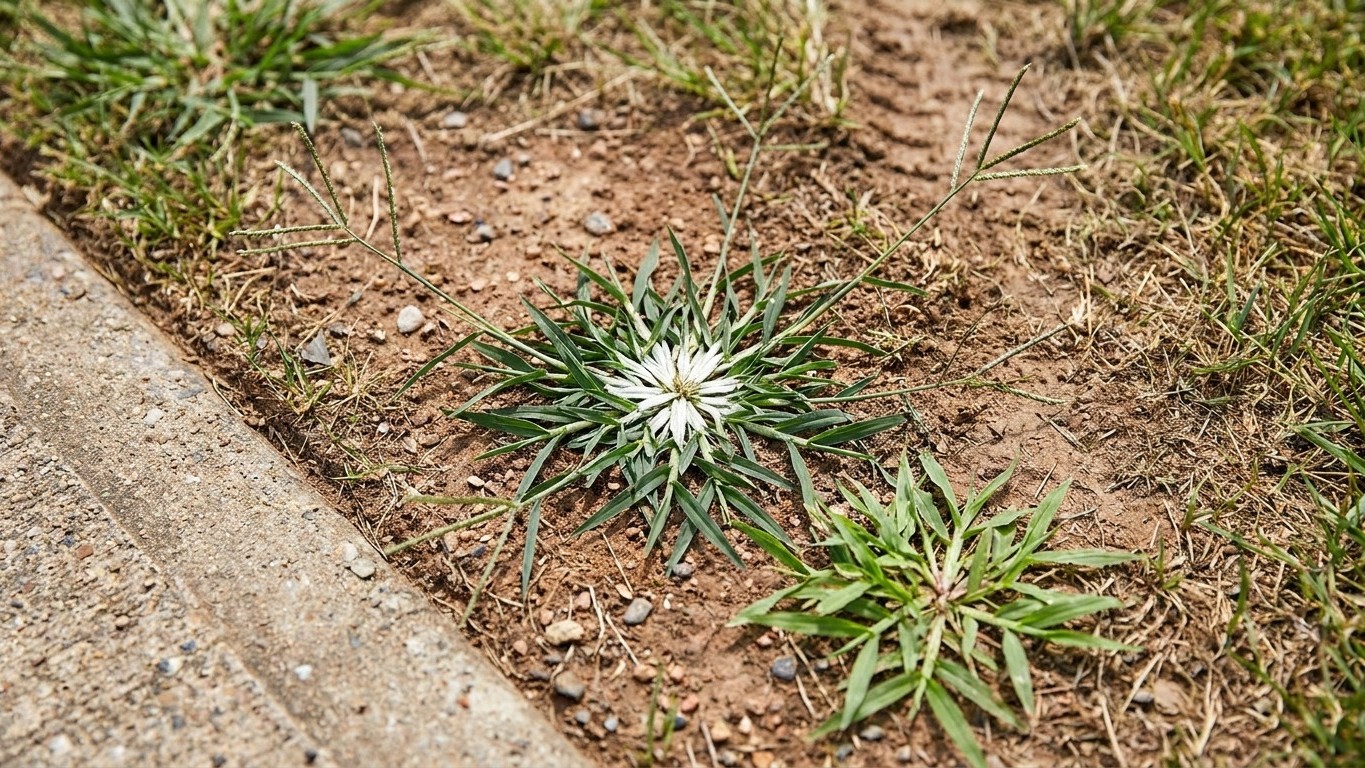

Overseed cool-season grass in New Mexico from early September through early October, and overseed warm-season grass in late spring once nights stay warm. Which window applies depends on the grass already growing in your yard, because New Mexico sits in the turf transition zone: no single grass, and no single calendar date, works for the whole state.
The overseeding window in New Mexico
The reason there’s no one answer comes down to which family of grass you’re feeding. Tall Fescue, Kentucky Bluegrass, and Perennial Ryegrass are cool-season grasses. They root and green up fastest when air is mild and soil is still warm from summer, which in New Mexico means early September into early October. Zoysiagrass and Bermudagrass are warm-season grasses. They need real heat to germinate, so their overseeding window is late spring, roughly May into June, once the risk of a cold snap has passed.
New Mexico’s climate doesn’t fully favor either group, which is why turf extension guidance classifies the state as a transition zone. A cool-season lawn here struggles through July heat, going patchy and thin when temperatures push into the 90s for weeks at a stretch. A warm-season lawn, meanwhile, goes dormant and brown from October through April, leaving a tan yard for half the year. Neither trade-off is wrong. It’s a choice between winter color and summer stamina, and it’s worth making on purpose rather than by accident.
For fall overseeding of cool-season grass, the calendar math starts at the back end: the first fall frost. At the Albuquerque airport weather station, NOAA’s 1991-2020 climate normals put the 30 to 70 percent probability of a 32°F freeze between October 29 and November 9. Turfgrass guidance from Clemson and Penn State Extension calls for roughly 45 days of growing weather before that freeze to get new seedlings established. Counting back from early November lands the safe sowing deadline around mid-September for many New Mexico yards, not the first day of fall on the calendar.
That airport figure is a reference point, not a guarantee for your address. Suburban lots and rural properties tend to see their first freeze arrive earlier than an airport station, sometimes by one to two weeks, and elevation pushes that further still. A yard in the foothills above Santa Fe or up toward Taos will likely see frost well before a low-elevation lot near Las Cruces or Carlsbad. Check your own county’s typical first freeze, and treat mid-September as a starting guideline you adjust earlier if you’re at higher ground, not a hard rule for the whole state.
New Mexico State University’s Extension network, at aces.nmsu.edu, breaks recommendations down by county office, which is the better source for a date specific to your elevation and soil.
The soil temperature that actually decides it
A calendar date is a proxy. What seed actually responds to is soil temperature, measured a few inches down, not the air temperature on the forecast. Cool-season seed, the fescue, bluegrass, and ryegrass mentioned above, germinates best once soil sits between 50 and 65°F. Warm-season seed, Zoysiagrass and Bermudagrass, needs soil in the 65 to 70°F range to break dormancy and root.
Soil holds onto both summer heat and winter cold longer than the air does, so it lags the thermometer by days or weeks depending on the season. In early fall, that lag works in your favor: air cools first, but soil stays in the 50 to 65°F sweet spot for cool-season seed for several more weeks, which is exactly why the September window exists in the first place. In late spring, the same lag works against gardeners who jump the gun on warm-season grass. Air can feel plenty warm in April while soil several inches down is still recovering from winter and sits below the 65°F floor Zoysia and Bermuda need.
A basic soil thermometer, pushed four inches into the lawn on a few mornings in a row, tells you more than any date on a bag of seed. If readings sit in the target band for your grass family and hold there, you’re in the window. If they’re climbing toward it but not there yet, wait rather than sow early into cold soil, where seed can sit dormant, rot, or germinate weakly before dying back.
This is also where the transition-zone trade-off shows up again. A New Mexico yard trying to overseed cool-season grass in early fall is racing a soil temperature that’s already cooling and a freeze date that’s already approaching, which is the real argument for sowing by mid-September rather than waiting for the first crisp weekend in October.
How much seed, and what it costs to guess
Seeding rates are a fixed constant for each species, not a local measurement, so they’re the same in New Mexico as anywhere else. For a brand-new lawn started from bare soil, Clemson and Penn State Extension guidance gives these rates per 1,000 square feet:
| Grass | New lawn seeding rate |
|---|---|
| Tall Fescue | 6 to 8 lb |
| Kentucky Bluegrass | 1.5 to 2 lb |
| Perennial Ryegrass | 6 to 8 lb |
| Zoysiagrass | 1 to 2 lb |
| Bermudagrass | 1 to 2 lb |
Overseeding an already-established lawn is a different job than starting from dirt, and it uses half those rates. Existing grass is already holding the soil and competing for light and water, so a full new-lawn rate on top of it doesn’t fill in bare spots faster. It crowds seedlings against each other and against mature turf, and the extra seed thins out rather than filling in.
The real cost of guessing in New Mexico isn’t usually the seed bag price, it’s picking the wrong species for the zone you’re actually in. Sowing cool-season fescue on a lawn that bakes all July, or sowing Bermuda expecting green color through a Taos winter, means buying seed twice: once for the mismatch, once for the redo. Getting the species right for your microclimate, elevation, and how much you care about winter color versus summer heat tolerance matters more than fine-tuning the pound count by half a pound.
Because the state spans low desert valleys and high mountain towns, the same seeding rate table applies everywhere, but the smarter species choice doesn’t. A county-level check with your local NMSU Extension office before buying is worth more than any rate chart.
The three weeks after you sow
Seed down is the easy part. The three weeks after sowing decide whether it becomes lawn or washes into the gutter. New seed needs the top half-inch of soil kept consistently damp, which in New Mexico’s dry fall air often means light watering once or twice a day rather than one deep soak. Let that top layer dry out completely even once during the first week and germination stalls.
Foot traffic is the next threat. Keep pets, kids, and foot paths off newly seeded ground until grass has been mowed at least twice, since young roots pull out of loose soil far more easily than established turf. Skip any weed killer during this window too. Most pre-emergent and broadleaf herbicides don’t distinguish between a weed seedling and a grass seedling, and applying one on schedule with an old lawn-care routine can wipe out the overseeding along with the weeds.
Timing against the first fall freeze matters here as much as it did when picking the sowing date. Seed sown too close to that October 29 to November 9 window at the reference station, or its earlier equivalent at higher elevation, may germinate and then die back over winter before it’s built enough root to survive cold. If a cold snap arrives sooner than expected on newly germinated grass, a light layer of straw mulch over the seeded area buys a little insulation, though it’s not a substitute for sowing early enough in the first place.
By three weeks in, cool-season seedlings sown in the mid-September window should show a first flush of green blades thick enough to mow. That first mow, done with a sharp blade set high rather than scalped low, is the real sign the lawn made it through establishment rather than just germination.
Common questions
Can I overseed a New Mexico lawn in spring instead of fall?
Spring works for warm-season grass like Zoysiagrass or Bermudagrass, once soil holds steady in the 65 to 70°F range. It’s not the better window for cool-season fescue, bluegrass, or ryegrass, which establish more reliably in early fall soil.
What happens if I overseed too close to the first frost?
Seedlings that germinate too close to the first fall freeze often haven’t built enough root mass to survive winter cold, and die back before spring even if they green up briefly in fall.
Do I need less seed if I’m overseeding instead of starting a new lawn?
Yes. Overseeding an existing lawn calls for half the seeding rate used for a brand-new lawn, since established grass is already covering and competing for the same soil.
Is one grass type simply better for all of New Mexico?
No single grass wins statewide. Cool-season grasses hold color through winter but thin out in July heat; warm-season grasses handle summer heat but sit brown from roughly October through April. The right pick depends on elevation, local climate, and how much winter dormancy you’re willing to accept.