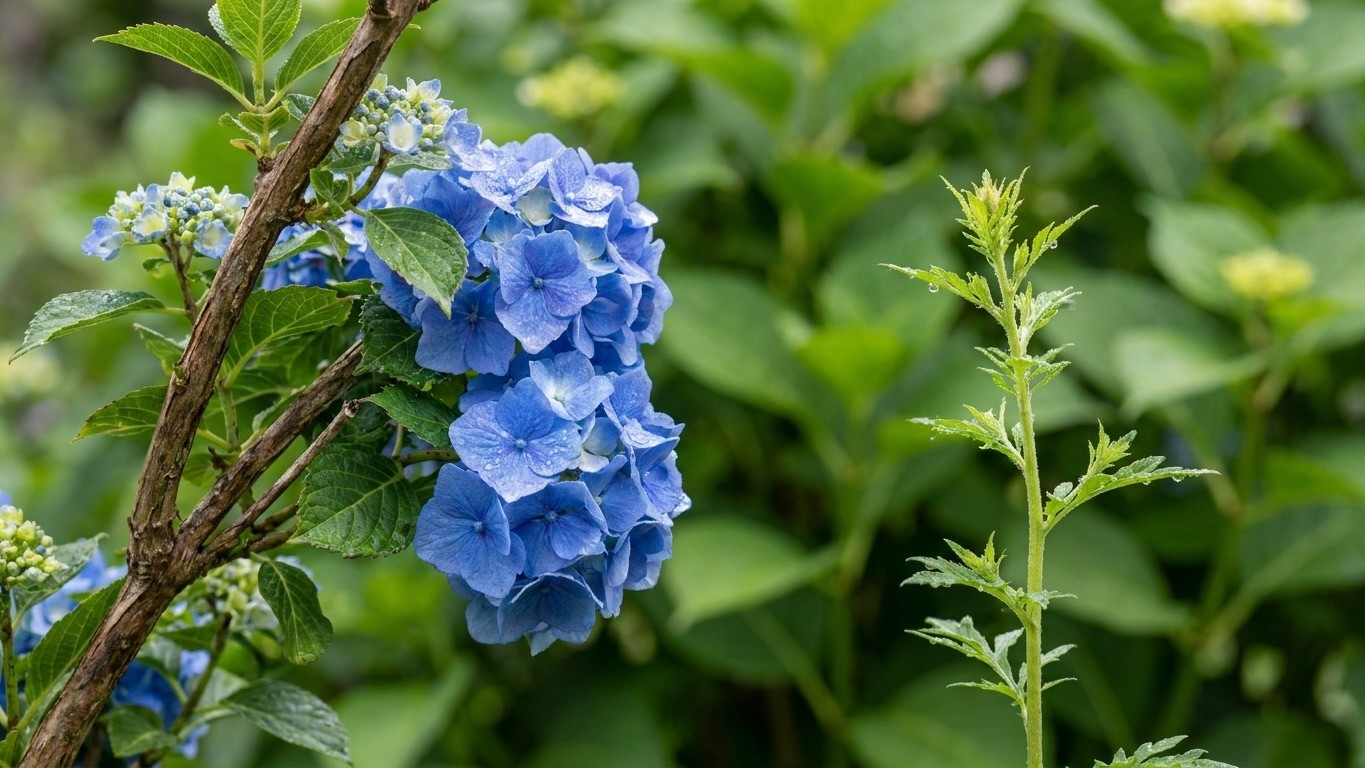

Hydrangeas that bloom on new wood, the smooth types such as ‘Annabelle’ and the panicle types such as ‘Limelight’, usually get through even the coldest New Mexico winter, because they regrow from the base each spring. Bigleaf and oakleaf hydrangeas are the gamble. Their flower buds ride out the cold on last year’s stems, so one hard freeze, a drying wind, or a warm spell followed by a cold snap can wipe out a whole season of bloom. Your elevation decides how big that gamble is.
What this comes down to in New Mexico

At the Albuquerque reference station, the last spring frost falls between March 31 and April 12, and the first fall frost between October 29 and November 9 (NOAA NCEI U.S. Climate Normals, 32°F freeze probabilities, 30-70% band). A shrub that blooms on new wood fits comfortably inside that window and shrugs off winter, while one that blooms on old wood has to bring its buds through the cold months intact.
The USDA Plant Hardiness Zone Map rates the state across a wide range of zones, from roughly zone 5 in the northern mountains to zone 8 in the southern lowlands, using one variable, the average annual extreme minimum temperature. That is a wide spread. The reference city sits well inside it, and suburban or rural gardens can see the last spring frost a week or two later and the first fall frost a week or two earlier, with a bigger gap at elevation. The cultivars below run roughly from the shortest season needed to the most winter-sensitive, so you can see where your own garden falls.
Quick Fire
A panicle hydrangea (Hydrangea paniculata). Its white flowers age to pink and then deep red, and it blooms on new wood. It opens early, which makes it a safe pick for short-season mountain gardens, and check your own county for the local cold limits.
Annabelle
A smooth hydrangea (Hydrangea arborescens) with big white round heads on new wood. In a hard winter it may die to the ground and still flower the same summer. The heads can flop in rain or wind, but the plant itself is very dependable in cold country.
Incrediball
Another smooth hydrangea with white flowers on new wood like ‘Annabelle’. Its stems are stiffer, so the blooms stay upright. It has the same hardiness and the same short-season fit, which makes it a good swap where windy afternoons are common.
Limelight
A panicle type with lime-green flowers that fade to pink and bloom on new wood. It opens in midsummer and carries color well into fall, so it wants a bit more of the season than ‘Quick Fire’. It suits most elevations except the shortest-season mountain sites.
Endless Summer
A bigleaf hydrangea (Hydrangea macrophylla) blooming on both old and new wood. Flowers run blue in acidic soil and pink in alkaline soil, and much of the state’s ground leans alkaline, which pushes toward pink. Because it can bloom on new growth, a bud-killing winter need not leave it flowerless, but the late flowers need a long season. It does best in lower, sheltered gardens.
Snow Queen
An oakleaf hydrangea (Hydrangea quercifolia) with white cones that age to pink on old wood. It needs both buds and stems to survive winter, and the coldest parts of the state fall below its range. It is a fit for the warmer valleys and the south, ideally with shelter from wind.
Working it out for your own garden
A frost range is a starting point you can adjust. The method is the same whether you garden in a river valley or a mountain town, and it holds up in a cold year.
How do you know a hydrangea will bloom before the first fall frost?
Start with the planting window. At the reference station the last frost range ends April 12. Add the week or two that some suburban and rural gardens lose, and safe planting runs from late April into early May.
Next, take the catalogue bloom time. ‘Quick Fire’ opens in early summer, so call it June into July. Counting from a late April to early May planting, watch for the first flower buds to open. The reference station’s first fall frost range begins October 29, and even a two-week early frost leaves months of bloom, so the plant finishes with room to spare.
Now run a later cultivar. ‘Tardiva’, a panicle hydrangea, opens in late summer, roughly August into September. Planted in early May, it takes many weeks to reach first flowers. At the reference city that still works. In a mountain garden where fall frost arrives weeks ahead of that range, the display shrinks to a few days or disappears. The line falls where the weeks left after first flowers run out.
How can you tell winter damage from other problems?
Wait until the plant has had time to leaf out, since hydrangeas wake up late. Then scratch a stem with a thumbnail. Green, moist tissue underneath means the stem is alive, while brown and dry means it is dead.
Buds that swelled during a warm spell and turned black after a freeze point to frost damage. Dead upper stems with healthy shoots rising from the base point to winter dieback, which new-wood types recover from the same year. Old-wood types lose that year’s flowers. Brown, crisp leaf edges in midsummer, by contrast, usually mean dry wind or sun, not winter at all.
What changes across the state
New Mexico does not behave like one climate. Elevation does a lot of the work. A hydrangea in a high mountain town faces a shorter season, colder nights, and thinner air that makes spring sun harsh. The same plant in a low desert valley in the south has a long season and mild winters. The reference city’s frost window falls somewhere between those extremes, so shift it later in spring and earlier in fall the higher you go.
North and south matter too. Northern mountain communities sit near the cold end of the state’s zone range, where old-wood hydrangeas rarely hold their buds. The southern lowlands sit near the warm end, where oakleaf and bigleaf types have a fair shot. The eastern plains add wind and sharp swings between warm days and cold nights, and cold air drains into low spots along river valleys, so a garden at the bottom of a slope can freeze while one on higher ground a few streets away does not.
Dry air is the constant everywhere. Winters are often dry, and frozen or wind-stripped stems lose moisture they cannot replace, which hurts old-wood buds more than new-wood stems. A site tucked against an east or north wall, away from the strongest wind, can shift a borderline plant toward survival.
The mistakes this state punishes

The first is planting into cold soil after a warm spell. A string of warm March days can tempt gardeners to plant, and the last frost range runs into mid-April at the reference station, later in suburban and rural gardens. A freeze after planting hits a shrub with tender new growth and no established roots. Wait until the frost range has passed and the soil has warmed.
The second is choosing a long-season variety where the season is short. A late bloomer like ‘Tardiva’ can look great in a catalogue and then freeze in bud at elevation. Match the cultivar to your own first-frost date, and favor earlier new-wood types like ‘Quick Fire’ if you are unsure.
The third is pruning old-wood hydrangeas at the wrong time. Cutting ‘Endless Summer’ or ‘Snow Queen’ in fall or late winter removes buds that were already set. The right timing depends on the type, and the guide to When to Prune Hydrangeas in New Mexico covers it.
The fourth is letting a young shrub go into winter dry. Planting too late in fall leaves roots too shallow to hold water, and dry winters pull moisture out of stems. Plant early enough for roots to settle, then water deeply during dry spells whenever the ground is not frozen. A few inches of mulch over the root zone slows both drying and temperature swings.
Checking this against your county
The frost dates here come from one airport station, so treat them as a reference point and not a promise for your yard. Your county’s last and first frost can differ by weeks, especially if you live above the valley floor. Call your county office at New Mexico State University Extension and ask for the local frost range and which hydrangeas do well nearby. For the broader picture of planting and care, see the guide to growing hydrangeas in New Mexico.
Common questions
Do hydrangeas die back in a New Mexico winter?
Smooth and panicle types often lose some or all of their top growth in a cold winter, then regrow from the base and bloom on the new stems. Bigleaf and oakleaf types lose flowers if their stems die back, because they set buds the year before.
Can bigleaf hydrangeas live in colder parts of the state?
They can survive in sheltered spots, but flowers are unreliable where winters are hard. A reblooming type like ‘Endless Summer’ gives the best odds because it can flower on new growth, though the late season may still cut the show short.
Should I cover my hydrangeas for winter?
For new-wood types, covers are unnecessary. For old-wood types in a borderline spot, a layer of mulch over the roots and a wind barrier help more than wrapping the stems, since drying wind causes much of the damage.
When can I tell if a hydrangea is dead?
Wait until late spring, after other shrubs have leafed out. Scratch a stem: green underneath means alive. If the stems are brown all the way down and nothing shoots from the base after several more weeks, the plant has not survived.