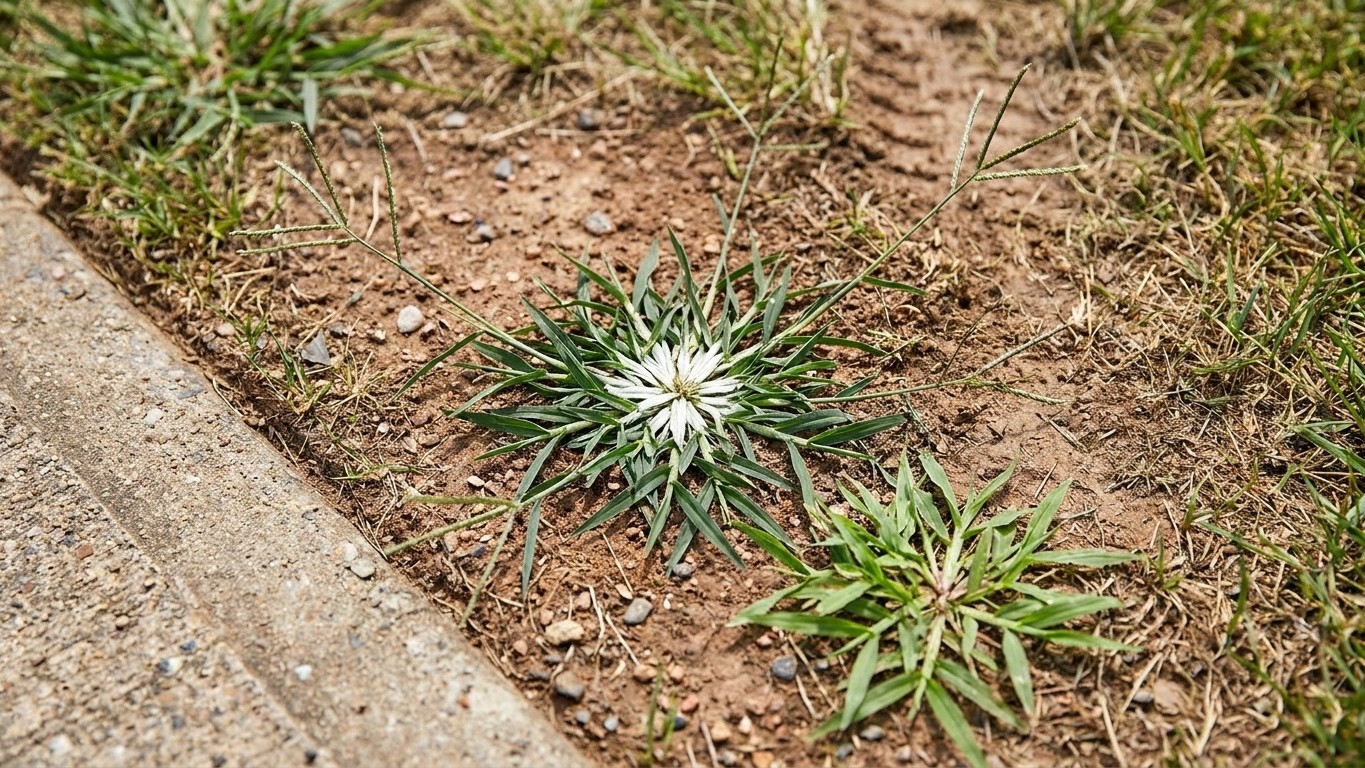

The overseeding window for most cool-season lawns in North Carolina‘s Piedmont runs from mid-September through the third week of that month, timed by counting backward 45 days from the first fall freeze. Warm-season lawns like zoysia and bermuda don’t follow that fall calendar at all. They’re thickened in late spring instead. Where you fall on the state’s map (mountains, Piedmont, coastal plain) shifts that window in either direction.
The overseeding window in North Carolina
The date that actually anchors this whole calculation isn’t a seed bag label. It’s the first fall freeze. For Charlotte, in the Piedmont, NOAA’s climate normals put the first fall freeze between October 30 and November 8, based on 32°F freeze probabilities from the 1991-2020 normals period. That’s the number everything else works backward from.
Cool-season grass seed, tall fescue especially, needs roughly 45 days of active growing weather to establish before a hard freeze locks things down. Subtract 45 days from Charlotte’s frost window and you land somewhere between September 15 and September 24. Sow later than that and the seedlings may germinate just fine, then die over winter because they never built enough root mass to survive it. That’s the trap: germination looks like success, but establishment is the actual finish line, and it takes weeks longer than most people assume.
So the practical window for the Piedmont sits in a tight band: not too early, because soil is still holding summer heat (more on that below), and not later than the third week of September if you want the seed to have a real shot before frost arrives. That’s a narrower window than the “September through October” advice you’ll see floated generically for cool-season overseeding across the country.
Why the state isn’t one zone
Charlotte’s numbers describe the Piedmont, not North Carolina as a whole. The Blue Ridge mountains to the west run on a different clock: elevation cools things down earlier in fall, which likely pulls the frost date (and the overseeding deadline) earlier than the Piedmont’s. The coastal plain works the opposite direction: the moderating effect of nearby water tends to push the first freeze later, stretching the safe sowing window further into fall. Neither region has published frost data in the figures used for this piece, so treat those as directional adjustments, not calendar dates, and check conditions locally before committing to a sowing date.
The soil temperature that actually decides it
Calendar dates are a proxy. Soil temperature is the real trigger, and it’s split by grass family. Cool-season seed (tall fescue, Kentucky bluegrass, perennial ryegrass) germinates best when soil sits between 50°F and 65°F. Warm-season seed (zoysiagrass, bermudagrass) wants soil closer to 65°F to 70°F, which is a different season entirely.
That gap explains why fall overseeding in North Carolina is almost always a cool-season project. Piedmont soil holds onto summer heat well into early September, often running warmer than the 65°F ceiling for fescue and bluegrass. As nights cool through mid-September, soil temperature finally drops into that 50-65°F band, which is exactly why the sowing window opens when it does rather than a few weeks earlier.
A basic soil thermometer, pushed a few inches into the lawn rather than resting on the surface, tells you more than a look at the forecast. Air temperature swings by 20 degrees in an afternoon; soil temperature moves slowly and reflects what the roots are actually experiencing.
Warm-season lawns hit their 65-70°F soil window in spring, not fall, usually as April moves into May. That’s the season zoysia and bermuda are established, sprigged, plugged, or thickened, not overseeded in September. If your lawn is one of those warm-season types, the fall calendar in this article doesn’t apply to it at all. Wait for spring soil to warm instead.
How much seed, and what it costs to guess
North Carolina’s Piedmont sits in what turf extension literature calls the transition zone: too far south for cool-season grass to thrive year-round, too far north for warm-season grass to stay green. Neither family excels here. A fescue lawn struggles through July heat and humidity, sometimes going semi-dormant when it’s stressed. A zoysia or bermuda lawn goes brown and stays brown from October through April. There’s no single “best grass” answer for this region, only a trade-off between a green winter lawn that suffers in summer, or a green summer lawn that’s dormant through the coldest half of the year.
Seeding rates are fixed by species, not by location, and they matter more than most homeowners assume. Overseeding an established lawn uses half the rate used to build a brand-new one from bare dirt.
| Grass | New lawn rate (per 1,000 sq ft) | Overseeding rate (half) |
|---|---|---|
| Tall Fescue | 6 to 8 lb | 3 to 4 lb |
| Kentucky Bluegrass | 1.5 to 2 lb | 0.75 to 1 lb |
| Perennial Ryegrass | 6 to 8 lb | 3 to 4 lb |
| Zoysiagrass | 1 to 2 lb | 0.5 to 1 lb |
| Bermudagrass | 1 to 2 lb | 0.5 to 1 lb |
Guessing high isn’t a safety margin, it’s a cost. More seed than the rate calls for means seedlings crowding each other for light and water, competing instead of establishing, and thinning out over winter regardless of how much went down in September. Guessing low leaves bare patches that weeds fill first. Weighing seed on a kitchen scale for a known square footage of lawn takes five minutes and removes the guesswork entirely.
The three weeks after you sow
Germination is the easy part. Fescue and ryegrass typically break the surface within one to two weeks under the right soil temperature, and that first flush of green tends to make people relax right when the lawn needs the most attention. The real work happens in the three weeks that follow.
New seedlings have shallow, thread-thin roots that dry out fast. Light, frequent watering, enough to keep the top inch of soil damp without pooling, matters more here than a single deep soak once a week. Skipping a day or two during that first three-week stretch can undo germination that already happened.
Mowing too early is the other common misstep. Seedlings need to reach a height where they can tolerate a blade pass without being uprooted, and cutting too soon stresses a root system that hasn’t anchored yet. Holding off, even when the new growth looks ready, protects the investment made in September.
Remember the 45-day establishment clock from the first section: three weeks in, roughly two-thirds of that growing window is already gone. Whatever root development hasn’t happened by then has to happen fast, before the Piedmont’s typical late-October to early-November frost arrives and growth stops for the season. That’s the real argument for sowing on the early side of the window rather than the late side, since a seedling with three extra weeks of root growth survives winter in a way a seedling with three fewer weeks often doesn’t.
Common questions
Can I overseed a North Carolina lawn in spring instead of fall?
For cool-season grasses like fescue, fall is the stronger window because seedlings avoid competing with summer heat and existing weed pressure. Spring seeding is possible but riskier in the Piedmont, since young seedlings face summer stress before they’ve had a full season to root.
Should I overseed my zoysia or bermuda lawn in September?
No. Those warm-season grasses need soil between 65°F and 70°F to establish, a range that shows up in spring, not fall. Overseeding them in September puts seed into cooling soil that won’t support germination before winter.
What happens if I miss the mid-to-late September window?
Seed sown too close to the first frost may still germinate, but the seedlings often lack the root development to survive winter dormancy. It’s generally better to wait for the following fall than to push seed down in October in the Piedmont.
Does the overseeding window change for coastal or mountain parts of North Carolina?
Yes, though specific frost dates for those regions aren’t part of the figures used here. The coastal plain tends to see a later first freeze than the Piedmont, which likely opens a longer fall window; the mountains tend to cool sooner, which likely shortens it. Checking regional conditions before committing to a date is worth the extra step.