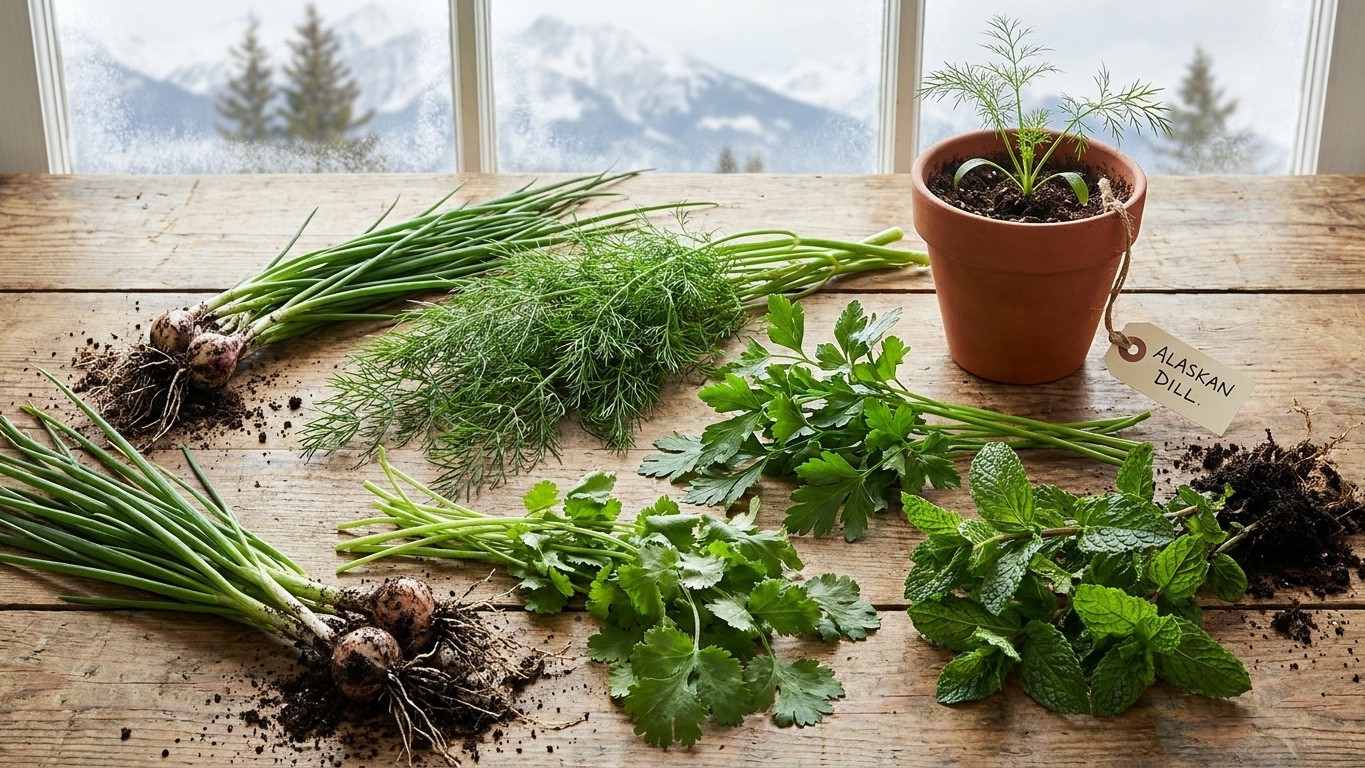

Basil, dill, cilantro, and chives handle North Carolina’s long growing season without complaint, sown after the last spring frost and harvested well past Labor Day. Rosemary, sage, and lavender work too, but only where winters stay mild enough for them to survive outdoors, and that’s not a given in every corner of this state.
The short answer for North Carolina
Start with the season length, because that’s what decides everything else. At the Charlotte reference station, the last spring frost falls between March 23 and April 5, and the first fall frost doesn’t show up until October 30 to November 8. That’s roughly seven months of frost-free growing, which is generous by national standards and plenty of runway for annual herbs that need heat and time: basil, dill, cilantro, summer savory. None of these need babying here. Sow basil after the frost window closes, and you’ll be pinching leaves by June.
Perennial herbs are a different calculation entirely. The mean daily minimum in the coldest month at the reference station is 31.8°F, just below freezing on an average night. That’s mild enough for rosemary, thyme, and sage to overwinter outdoors in much of the Piedmont without extra protection. But that 31.8°F figure describes one station, not the whole state, and the USDA hardiness zone map for North Carolina spans 5b to 8b. A gap that wide means the answer changes depending on where in the state you’re standing, which the next section covers in more detail.
Here’s the practical breakdown by herb type:
| Herb type | Best fit for NC | Why |
|---|---|---|
| Tender annuals (basil, dill, cilantro) | Statewide, reliable | Long frost-free window covers full maturity |
| Hardy perennials (chives, thyme, oregano) | Statewide, generally reliable | Tolerate cold minimums even near 31.8°F winters |
| Woody Mediterranean perennials (rosemary, lavender) | Piedmont and coastal, uncertain at elevation | Need mild winters; mountain cold snaps can kill them outright |
| Tropical/tender perennials (lemongrass, bay laurel) | Container only, statewide | Cannot survive any NC winter outdoors without protection |
For a first-year gardener anywhere in the state, annuals are the safe bet. Perennials, especially the woody Mediterranean ones, are a bet on your specific location.
What will not work here
Cilantro bolts fast once summer heat sets in, and North Carolina’s Piedmont and coastal summers arrive with both heat and humidity stacked together. A cilantro crop sown in May will likely flower and go to seed within weeks once temperatures climb, not because the plant is weak but because heat is exactly what triggers bolting. The workaround isn’t a different variety, it’s timing: sow cilantro in early spring and again in early fall, and skip the mid-summer slot entirely.
Basil and mint planted at Mediterranean-garden-book spacing will struggle in NC’s humidity. Tight spacing works fine in a dry climate where air moves freely between plants. Here, close spacing traps moisture at the leaf level, and that’s the setup for powdery mildew and botrytis, especially through the humid stretch from June into September. Give basil more room than the seed packet suggests, particularly if your garden sits in the Piedmont or the coastal plain rather than the drier mountain valleys.
Winter is the bigger filter
A mean coldest-month minimum of 31.8°F at the Charlotte reference station tells you nights routinely dip into the low 30s and upper 20s each winter. Lemongrass, bay laurel, and other tender tropical herbs simply do not survive that outdoors anywhere in the state’s lowlands, let alone in the colder pockets. Grow them in containers and bring them in, or treat them as annuals and start fresh each spring.
Rosemary and lavender face a more location-dependent version of the same problem. In the Piedmont, where the 31.8°F figure roughly applies, established rosemary often makes it through winter outdoors. But North Carolina’s hardiness zone range runs all the way down to 5b, and a 5b winter minimum is dramatically colder than what Charlotte sees in an average year. Plant rosemary in the ground at higher elevation expecting Piedmont results, and a hard winter can kill it outright, roots and all.
What changes across North Carolina
A hardiness zone spread of 5b to 8b is not a small range. It’s the difference between a garden that can carry woody Mediterranean perennials through winter without a second thought, and one where those same plants need to come indoors or get replaced every spring. There is no single answer for “will rosemary survive the winter in North Carolina” that applies to the whole state, only an answer that depends heavily on where you garden within it.
The frost date figures reinforce this. The Charlotte station sits in the Piedmont, and its March 23 to April 5 last-frost window and October 30 to November 8 first-frost window describe that region specifically. The Blue Ridge Mountains to the west run several weeks later in spring and correspondingly earlier in fall, which shortens the usable growing season for anything that needs a long run to mature, think rosemary grown from seed, or lavender trying to establish enough root mass before its first winter. The coastal plain runs the opposite direction, with frosts arriving later in fall and retreating earlier in spring, stretching the window further than the Piedmont figures suggest.
What this means practically: a reader gardening at higher elevation in the mountains should plan on a shorter effective season than the Charlotte dates indicate, lean harder on fast-maturing annual herbs, and treat woody perennials as container plants unless they’re willing to risk winter losses. A reader on the coastal plain has more room to experiment with in-ground Mediterranean perennials and can push sowing dates slightly earlier than the Piedmont calendar suggests. Neither of these adjustments requires knowing your exact zone number, just recognizing which end of the state’s range you’re closer to. The USDA Plant Hardiness Zone Map is the tool for pinning that down precisely.
Where to check this for your own county
This page describes North Carolina in general terms, built from one reference station’s frost data and a statewide hardiness zone range. Your county has its own numbers, and they can differ from Charlotte’s in ways that matter for herb timing, especially if you’re in the mountains or right on the coast.
NC State Extension is the source built for that level of detail. Once there, look specifically for two things: the planting calendar for your county or region, and any variety trial results for herbs grown in your area. County extension offices often publish planting windows calibrated to local frost data rather than a single statewide station, which matters most if you’re gardening in the mountains or along the coast, where conditions diverge most from the Piedmont figures used here.
A county-level recommendation will beat a state-level one every time, because it accounts for local elevation, microclimate, and soil conditions that a statewide page like this one can’t capture. Think of this article as the broad map and the county extension office as the detailed trail guide. If the two disagree on a specific date or variety, trust the county source, not this page.
Checking this against your own garden
Calendar dates are averages built from decades of weather records, which makes them useful for planning but not infallible for any single spring. Your own garden will tell you things no regional average can, and three signals are worth tracking with nothing more than your hands and eyes.
- Soil warmth by feel: Push a finger a couple inches into the bed. If it feels cold and damp rather than cool and workable, tender herbs like basil will sit and sulk even if the calendar says it’s safe to plant. Wait for the soil to feel closer to room temperature before transplanting.
- First true leaves on direct-sown herbs: Dill and cilantro sown from seed will show a first set of true leaves, distinct from the initial seed leaves, within one to two weeks in warm soil. If that takes noticeably longer in your garden than a neighbor’s, your spot likely runs cooler than the regional average, maybe from shade, elevation, or heavier soil that holds cold.
- First flowering on basil or cilantro: Early bolting signals that summer heat arrived sooner in your particular garden than the regional pattern suggests, often because of a south-facing wall, reflected heat off pavement, or thin soil that heats up fast. That’s useful information for next year’s sowing schedule, more useful than any date printed here.
None of these observations require a thermometer or a gauge, just attention paid over a season or two. Once you’ve watched your own garden through a full year, you’ll have a better calendar than any regional average can offer, tuned specifically to the patch of ground you’re actually working.