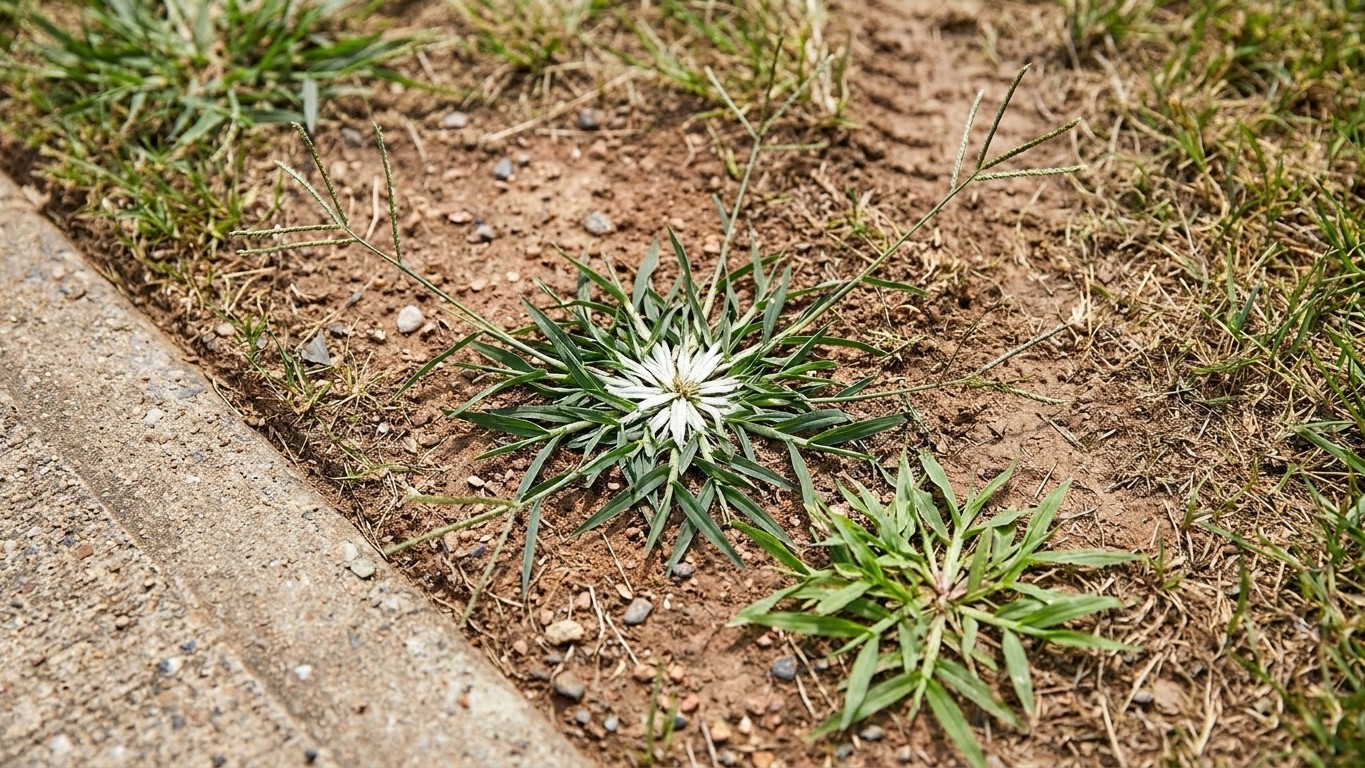

Overseed a Tennessee lawn once soil temperatures fall into the right range for your grass type, working backward from the first fall freeze so seedlings have roughly 45 days to root before winter. For most of Middle Tennessee, that means starting in mid to late September. Wait too long and the seed germinates just in time to die.
The overseeding window in Tennessee
The date that actually matters isn’t a calendar square, it’s the first fall freeze, and in Middle Tennessee that lands somewhere between October 28 and November 8, based on NOAA’s 1991-2020 Climate Normals for station USW00013897. That’s a real spread, not a rounding error, and it exists because freeze timing varies year to year even at a single weather station. Homeowners in East Tennessee and on the Cumberland Plateau should treat that window as an early estimate, not their own date. Higher elevations there cool off sooner, so a lawn at 2,000 feet can see frost weeks before a lawn in a Nashville subdivision.
Work backward from whichever freeze date applies to your area. Turfgrass extension guidance from Clemson and Penn State puts new-seed establishment at about 45 days of active growing weather before that first hard freeze. Count 45 days back from late October and you land in mid-September. Count from early November and you get a few extra days of room, but not many. This is why “overseed in fall” is technically true and practically useless. The useful version is a countdown, not a season.
Why the math is tighter than it looks
Forty-five days sounds generous until you remember that germination itself eats into it. Cool-season grass seed can take one to three weeks just to sprout, depending on soil moisture and temperature, before it even starts building the root mass that gets it through winter. Sow in the first half of that window and the grass has time to establish a real root system. Sow in the back half and you’re gambling on a mild November, because Tennessee’s early frosts don’t wait for a lawn to catch up. A patchy stand that goes into winter thin usually comes out of it thinner, since exposed soil between seedlings erodes and crusts over the cold months.
None of this changes for warm-season lawns, but the calendar does. Bermudagrass and zoysiagrass are dormant by the time cool-season overseeding season opens, and sowing warm-season seed in September is close to pointless. Their overseeding window sits in late spring, not fall, a distinction covered more directly on the University of Tennessee Extension‘s turfgrass pages, which is the right first call for county-specific mowing and seeding guidance.
The soil temperature that actually decides it
Calendar dates are a proxy. Soil temperature is the real trigger, and it’s worth checking with an actual soil thermometer pushed a few inches into the ground rather than trusting the air temperature on your phone. Cool-season seed, meaning Tall Fescue, Kentucky Bluegrass, and Perennial Ryegrass, germinates reliably once soil sits between 50 and 65 degrees Fahrenheit. Warm-season seed, meaning Zoysiagrass and Bermudagrass, wants soil between 65 and 70 degrees. Those ranges don’t overlap by much, and that gap is the whole reason fall and spring are different seeding seasons rather than one long window.
In practice, Tennessee soil cools into the cool-season range through September as air temperatures drop and daylight shortens, which is exactly when the fall overseeding push happens. Soil doesn’t cool at the same rate everywhere, though. A shaded, moist yard drops into range earlier than a south-facing slope baking in afternoon sun, sometimes by a full week or two. That’s a reason to check your own dirt rather than assume the neighbor’s overseeding schedule fits your yard.
What this means for a transition-zone lawn
Tennessee sits in what turf specialists call the transition zone, a band of the country where neither cool-season nor warm-season grass is fully at home. This isn’t a bureaucratic label, it’s a real trade-off homeowners live with every year. A cool-season lawn, built on Tall Fescue or Kentucky Bluegrass, stays green through winter but can struggle and thin out in a hot, humid Tennessee July. A warm-season lawn, built on Bermudagrass or Zoysiagrass, shrugs off summer heat but goes brown and dormant from roughly October through April. There is no single best grass for the state, only a choice about which season you’re willing to have an ugly lawn.
That trade-off is exactly why the soil-temperature target matters more than a generic “fall is overseeding season” rule. If you’ve got a cool-season lawn, you’re chasing that 50 to 65 degree window this month. If you’ve gone warm-season, September soil temperature is close to irrelevant to your seeding plans, because your window opens again in spring.
How much seed, and what it costs to guess
Seed rates aren’t guesswork, they’re published per-species numbers built around how many seedlings can share a square foot of soil without choking each other out. For a brand-new lawn, per 1,000 square feet, Clemson and Penn State extension guidance puts Tall Fescue and Perennial Ryegrass at 6 to 8 pounds, Kentucky Bluegrass at 1.5 to 2 pounds, and both Zoysiagrass and Bermudagrass at 1 to 2 pounds.
| Grass | New lawn rate (per 1,000 sq ft) | Season |
|---|---|---|
| Tall Fescue | 6 to 8 lb | Cool |
| Perennial Ryegrass | 6 to 8 lb | Cool |
| Kentucky Bluegrass | 1.5 to 2 lb | Cool |
| Zoysiagrass | 1 to 2 lb | Warm |
| Bermudagrass | 1 to 2 lb | Warm |
Those are new-lawn numbers, and that distinction matters. Overseeding an existing, established lawn calls for roughly half those rates, since the goal is filling gaps and thickening a stand that already has living turf holding the soil, not starting from bare dirt. Sow at full new-lawn rates onto an existing fescue lawn and you’re not adding insurance, you’re adding competition. Seedlings packed too tight fight each other for light, water, and root space, and the stand often ends up thinner than if you’d used half the seed to begin with.
Guessing high costs money for no benefit and can actually weaken the lawn it’s meant to thicken. Guessing low just means a second light pass the following year. Between those two mistakes, the second one is cheaper and easier to fix. Measure the actual square footage of the area you’re overseeding before buying seed, since eyeballing a lawn tends to run high and leaves bags of unused seed sitting in the garage.
The three weeks after you sow
Seed down is the easy part. The three weeks after are where a fall overseeding project succeeds or fails, and most of that comes down to keeping the top half-inch of soil consistently damp, not soaked, while seedlings push roots down. Cool-season grass seed can take one to three weeks to germinate depending on soil temperature and moisture, and a single dry afternoon during that window can kill a seedling that had already sprouted. That usually means light watering once or twice a day rather than one deep soak every few days, at least until the new grass is tall enough for its first mow.
Foot traffic is the second threat. New seedlings have no root depth to speak of for the first couple of weeks, so keeping dogs, kids, and mowers off the area matters more than most homeowners expect. Set the mower higher than usual for the first few cuts once the new grass reaches mowing height, since scalping a young stand stresses it right when it needs to be building roots, not recovering from a blade.
Given the 45-day establishment window discussed earlier, every week lost to a late start or a skipped watering session is a week that comes straight out of root development time before frost. A lawn sown on schedule and watered consistently enters winter with a real root system. A lawn sown two weeks late, or left to dry out mid-germination, enters winter as a scattering of shallow seedlings, and Tennessee’s first hard freeze is not a gentle test for those.
Common questions
Can I overseed a Tennessee lawn in spring instead of fall?
Spring works for warm-season grasses like Bermudagrass and Zoysiagrass, since their germination range of 65 to 70 degree soil arrives well after winter. For cool-season lawns, fall remains the better window because spring-sown seedlings face summer heat stress almost immediately, right as Tennessee’s transition-zone climate turns hardest on cool-season turf.
What happens if I overseed too late in the fall?
Seed sown too close to the first fall freeze may germinate but won’t have time to build the root depth needed to survive winter dormancy. The result is often a lawn that looks fine in October and shows bare, dead patches the following spring, exactly where the late seed went down.
Does East Tennessee follow the same overseeding schedule as Nashville?
Not exactly. The October 28 to November 8 freeze window cited here comes from a Middle Tennessee station, and East Tennessee along with the Cumberland Plateau tends to run cooler and see frost earlier due to elevation. Homeowners in those areas should shift their overseeding start earlier rather than using a Nashville-area date as their own deadline.
Is more seed ever a safe bet if I’m unsure of the rate?
No. Overseeding rates for existing lawns run at half the new-lawn rate for a reason, seedlings that are too dense compete for light and water and often produce a thinner stand than a lighter, correctly measured application. When unsure, err toward less seed and plan a second light overseeding the following fall if gaps remain.