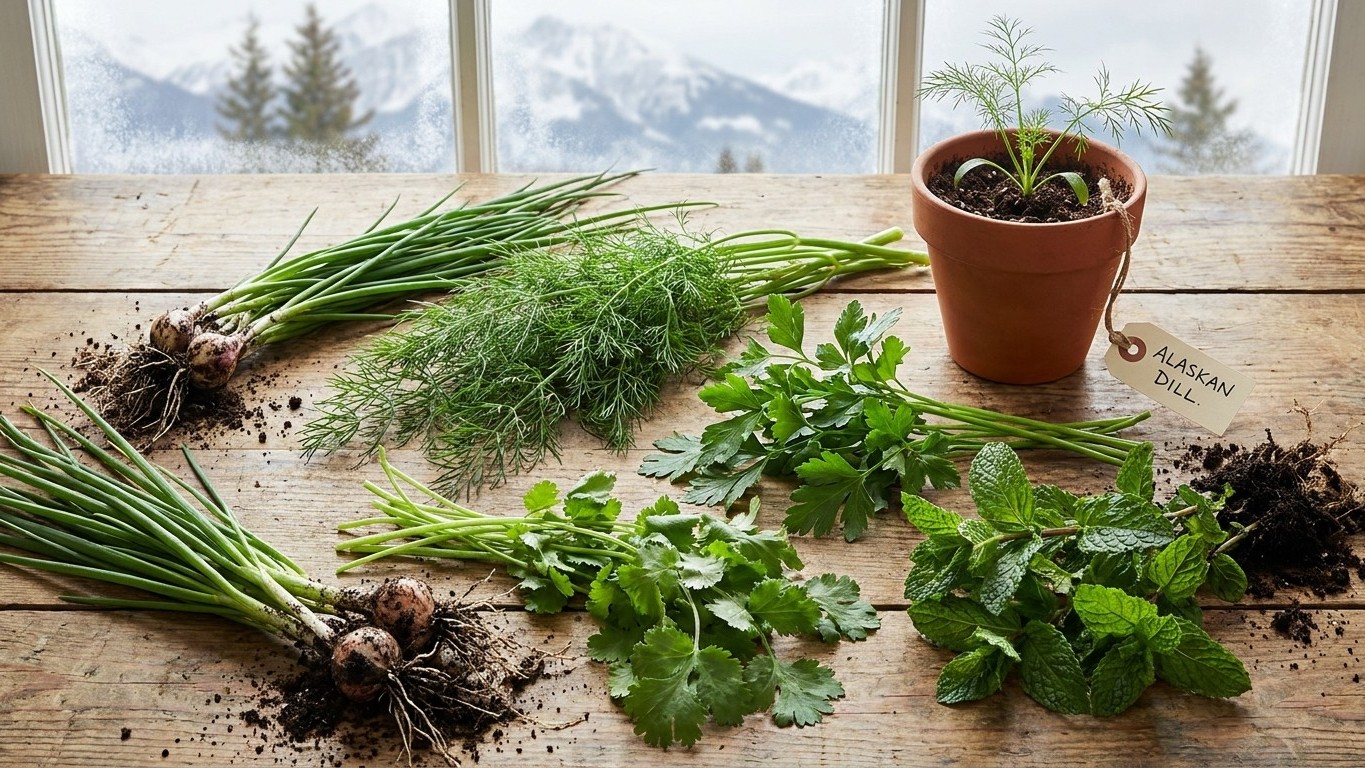

Rosemary, thyme, oregano, sage, and chives handle Oklahoma’s swing between cold snaps and blistering summers better than almost anything else you can plant. Basil and dill do well too, but only if you treat them as warm-season annuals, not perennials. Cilantro and French tarragon are the ones to skip or baby along.
The short answer for Oklahoma
Oklahoma’s growing season runs long by most standards. Working from the reference-city frost dates (last spring frost March 28 to April 10, first fall frost October 29 to November 8), the frost-free window stretches somewhere between roughly 202 and 225 days depending on where in that probability band your particular spring and fall land. That’s enough time to run two full cycles of a fast annual herb like cilantro, or to let a slower perennial like rosemary put down real roots before its first winter test.
The harder question isn’t season length. It’s the coldest month minimum, which averages 27F at the Oklahoma City reference station. That number, not the record low, is what decides whether a woody Mediterranean herb survives outdoors year after year or gets killed back to the ground every few winters. Sage, thyme, oregano, and chives shrug off a 27F average low without much trouble. Rosemary is the borderline case: several cultivars tolerate that kind of cold, but a harder snap below it (which happens most winters somewhere in the state) can still take out an unprotected plant.
Sorting by type, not by name
Because Oklahoma’s hardiness range spans 6a to 8a, the smarter way to plan is by category rather than by picking individual herb names off a seed rack.
| Herb type | Examples | How it fares here |
|---|---|---|
| Cold-hardy perennial | Thyme, oregano, sage, chives | Reliable across the whole zone range, comes back every spring |
| Marginal perennial | Rosemary, bay laurel | Survives in warmer pockets; risky further north without protection |
| Warm-season annual | Basil, dill | Loves the long hot stretch; plant after the last frost date passes |
| Cool-season annual | Cilantro, parsley | Best in spring and fall; struggles once summer heat sets in |
For most home gardens, that means anchoring the bed with thyme, oregano, sage, and chives as the dependable core, treating basil and dill as summer fillers, and either giving rosemary a container so it can come indoors, or accepting that an outdoor planting is a gamble worth only a few dollars in seed.
What will not work here
Cilantro is the herb most gardeners in Oklahoma give up on, and the reason is straightforward: it’s a cool-season plant asked to survive a hot-season climate. Oklahoma summers regularly push into the 90s and beyond for weeks at a stretch, and cilantro responds to that kind of heat by bolting, running straight to seed within days of a hot spell rather than producing the leafy growth people actually want. The fix isn’t a better variety. It’s timing: sow it in early spring before the heat arrives, then again in early fall once temperatures ease back down, and skip trying to keep it going through July and August.
French tarragon runs into a different problem. It’s winter-hardy enough for this hardiness range on paper, but it’s a plant bred for cooler, more evenly humid summers than Oklahoma delivers. The combination of high heat and the swings between dry spells and sudden humidity here tends to weaken the roots over a season or two, and plants that would live for a decade in a milder climate often decline within a few years in Oklahoma soil.
Watering habits sink more herb gardens here than any single species choice. An herb bed watered once a week works fine in a mild coastal climate. It does not work through an Oklahoma stretch of 100-degree days, when shallow-rooted herbs like basil and cilantro can wilt past the point of recovery between one weekly watering and the next. Herbs in containers are especially exposed, since a pot dries out far faster than a garden bed under the same sun.
Close spacing causes trouble in the other direction, particularly in the more humid eastern half of the state. Basil planted shoulder to shoulder, the way seed packets often suggest for cooler, drier climates, traps moisture around the leaves after Oklahoma’s frequent summer thunderstorms and invites fungal problems like powdery mildew. Giving each plant more room to breathe than the packet recommends is a small adjustment that heads off a common and avoidable failure.
What changes across Oklahoma
Oklahoma is not one climate. Its official hardiness range runs from 6a up through 8a, which is a wide spread for a single state, and it means the herb that thrives without a second thought in one county can require real babying two hundred miles away.
The coldest month minimum of 27F cited above comes from the Oklahoma City reference station, sitting roughly in the middle of that range. A garden in the colder end of the state, toward the panhandle or the higher northern counties, will see winter lows meaningfully below that figure most years. A rosemary plant that survives outdoors in a warm southeastern county without any fuss may need to come inside for the winter, or be grown strictly as a container plant, a hundred miles north or west.
The reverse holds for the warmer end of the range. Gardeners in the southern and southeastern parts of the state, sitting closer to 8a, can often leave rosemary, and even some marginal bay laurel, outdoors year-round with only a bit of winter mulch, something that would be a losing bet farther north. That same warmer zone also tends to stretch the growing season a little longer on both ends, giving an extra window for a second round of basil or a fall planting of cilantro before the first hard freeze.
None of this means guessing at your own zone from a state-level range is a good idea. The right move is checking the USDA Plant Hardiness Zone Map directly for your address, since two towns forty minutes apart can land in different zones once elevation and local terrain enter the picture. Treat the 6a-8a figure as proof that Oklahoma needs more than one answer, not as a number to plug into your own planting plan.
Where to check this for your own county
Everything above describes Oklahoma as a whole, built from a single reference station’s frost data and a statewide hardiness range. That’s useful for a starting plan, but it’s not a substitute for what your own county’s extension office already has on file.
Oklahoma State University Extension is the place to go next. Look specifically for two things once you’re there: a local planting calendar built around your county’s actual frost dates rather than the statewide range, and any variety trial results for herbs grown in your part of the state. County extension offices frequently test which rosemary cultivars, which basil types, or which regional strains hold up best under local soil and weather conditions, and that kind of trial data beats a general statewide recommendation every time.
A county-level recommendation will always outrank a state-level one, for the simple reason that it’s built on data closer to your actual backyard. Your county extension agent, or the calendar published for your specific area, has narrowed all of that down using local weather records and years of local trial gardens. Where the two disagree, follow the county source.
Checking this against your own garden
Every date and figure here is a probability built from decades of regional weather averages, not a promise about this particular spring in your particular yard. Your own garden will tell you more than any calendar once you know what to watch for.
Feel the soil itself before trusting the calendar. Push a finger a few inches into the bed where you plan to sow. If it feels cold and damp rather than merely cool, the ground hasn’t warmed enough yet for heat-loving annuals like basil, no matter what the frost-date average says for your area.
Watch your established perennial herbs for their first flush of new growth each spring. When thyme, sage, and oregano start pushing out fresh green shoots at the base, that’s a strong sign the soil around them has warmed past the point of real risk, and it’s a more honest read of your specific microclimate than any regional average.
Keep an eye out for volunteer seedlings too, the self-sown dill or cilantro that sprouts on its own from last season’s dropped seed. Once those volunteers show their first set of true leaves rather than just the initial seed leaves, it’s a reliable local signal that the coldest nights are behind you, at least in that particular corner of your yard.