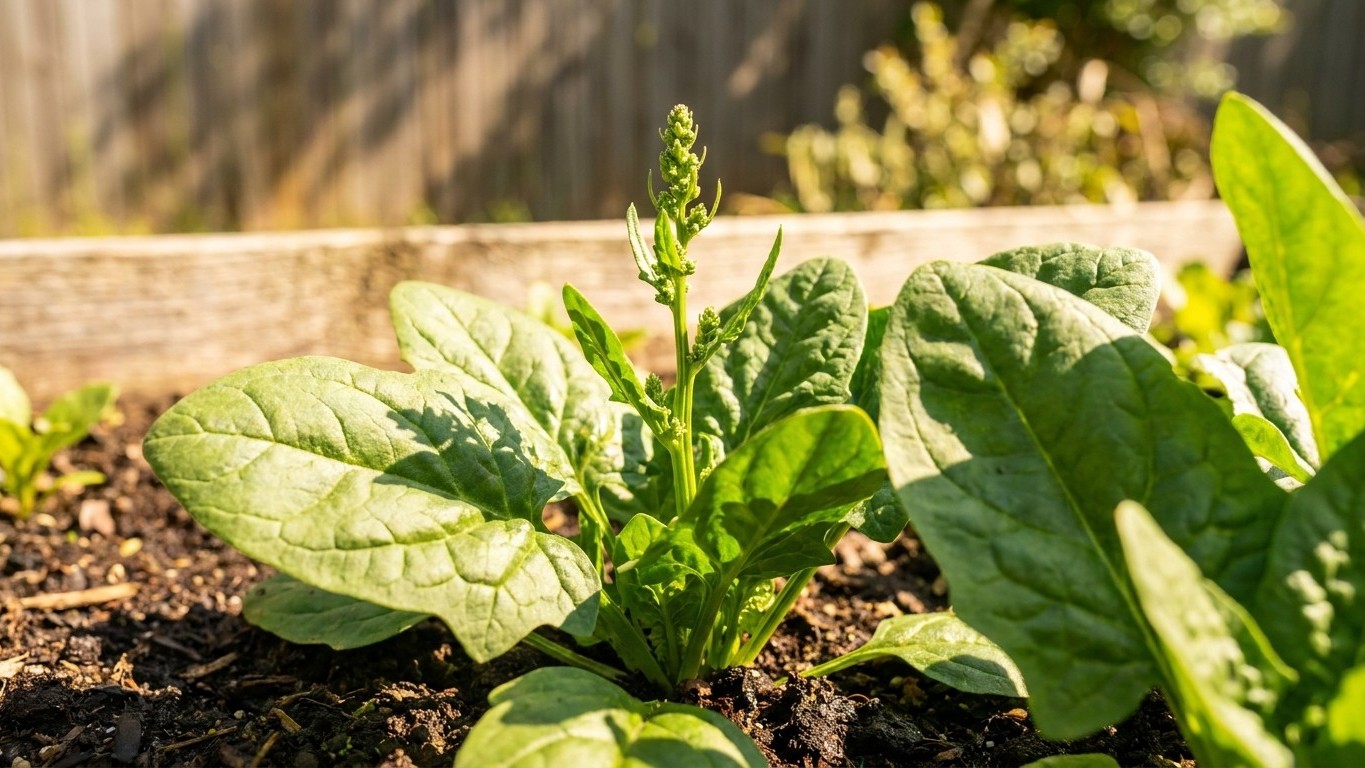

Two names from Louisiana’s documented pest list actually bite into spinach: the vegetable weevil, a Cool-Season foliage feeder, and the fall armyworm, a generalist caterpillar that shows up when temperatures climb. Everything else on that same list belongs to tomatoes, peppers, squash, cowpeas, or an ornamental tree, not to a leafy green growing in a raised bed or a row along the fence.
Which pests attack spinach in Louisiana
The LSU AgCenter documents ten pests for this territory: Cowpea curculio, Crape myrtle bark scale (Acanthococcus lagerstroemiae), Fall armyworm, Leaf-footed bug, Pepper weevil, Pickleworm, Squash bug, Squash vine borer, Tomato pinworm, and Vegetable weevil. That’s the full list, and it stays that short here because the AgCenter’s documented species skew heavily toward fruiting vegetables and cucurbits, not toward leafy greens.
Sorting it out crop by crop matters more than reading it as a menu of threats. Cowpea curculio drills into the pods of southern peas and has no reason to touch a spinach leaf. Crape myrtle bark scale isn’t a vegetable garden pest at all, it feeds on the bark of an ornamental tree, and its presence in a yard says nothing about a nearby vegetable bed. Pepper weevil stays on peppers, pickleworm and squash vine borer both need a cucurbit vine to develop, squash bug feeds the same way, and tomato pinworm is locked onto tomato foliage and fruit. Leaf-footed bug is a piercing-sucking insect that goes after developing seeds and fruit, mainly on beans, cowpeas, tomatoes, and peppers, which puts it in the wrong feeding category for a leaf crop like spinach.
That leaves two. The vegetable weevil has a genuinely broad host range among cool-season vegetables, including spinach, and it feeds on foliage as well as roots, which is unusual among this list. The fall armyworm is a true generalist caterpillar, and generalists don’t check the label on a plant before eating it. Both are worth watching. The rest of the list isn’t a false alarm exactly, it’s just a warning for a different bed in the same yard.
The decisive move here is refusing to pad the list. A gardener who assumes squash vine borer or tomato pinworm might be behind a hole in a spinach leaf is chasing the wrong insect, and every minute spent on that is a minute not spent checking the two pests that actually apply.
When each one shows up, and what it does first
Louisiana’s frost record shapes this timeline more than any month name would. The first fall frost falls between December 17 and January 8, and the last spring frost falls between January 18 and February 8, and a 32F freeze only happens in 86.8 percent of years at the reference station, meaning roughly one year in seven sees no freeze at all. That’s not a normal planting calendar built around cold. It’s a calendar built around heat, since the region averages 70.7 days a year at 90F or hotter.
Spinach seed itself sets the opening date: germination drops once soil runs above 80F, so the sowing window doesn’t open on a fixed date, it opens whenever the soil finally cools past that mark late in the year. Once spinach is up and growing through that long, barely-freezing stretch, the vegetable weevil has essentially the whole cool season to work with. Its first sign isn’t a chewed edge so much as ragged, notched foliage and, underground, feeding on the root system that a gardener won’t see until the plant looks weaker than it should for how it’s been watered.
The fall armyworm’s window sits at the opposite end of the temperature scale. It’s a warm-season insect, and a generalist caterpillar rather than a specialist, so it turns up whenever a leafy planting is still in the ground as temperatures climb, particularly stray plantings that were pushed later than the 50-to-75-day-before-harvest planning window that fall crops need. Its first sign is small, ragged holes in young leaves that expand quickly, sometimes down to skeletonized veins, because the larvae feed in groups when populations are heavy.
Spinach’s own biology narrows this window from the other direction. Bolting is triggered by long days and by warmth together, and at the summer solstice the reference city gets 13 hours and 56 minutes of daylight, which is well past the point that pushes flowering in a leaf crop. A cool summer doesn’t buy extra time here, because day length keeps climbing regardless of temperature. That means the whole productive stretch, and the whole exposure window for either pest, is compressed into the cool season on both ends, not spread across a long summer.
Telling the damage apart from everything else
Spinach leaves show trouble easily, and not all of it is a pest. The same 75F mark that caps healthy growth is also the point past which leaves start turning bitter, so a plant that tastes off in late spring may simply be reacting to heat, not to an insect. Confusing the two leads to spraying a plant that only needed to be pulled and replaced with a fall sowing.
| Symptom | Possible cause | What tells them apart |
|---|---|---|
| Ragged holes, notched leaf edges | Vegetable weevil feeding | Check the crown and upper roots for larvae; damage often starts low on the plant |
| Rapid, expanding holes across many leaves | Fall armyworm | Larvae are visible and often feed in clusters; damage spreads fast over days, not weeks |
| Pale, yellowing leaves without holes | Nutrient deficiency or waterlogged soil | No chewing marks and no insects present on close inspection |
| Wilting despite moist soil | Root disease | Roots look discolored or mushy rather than notched or hollowed |
| Bitter taste, upward stem stretching | Heat and long-day bolting | Happens as temperatures push past 75F and days lengthen, with no leaf damage at all |
| Torn or shredded leaves in one spot | Mechanical or weather damage | Edges look torn rather than chewed, and it doesn’t spread over time |
None of this replaces an actual look at the plant. A gardener who isn’t sure what’s chewing on a bed of spinach is better off sending a photo or a sample to a local extension office than guessing from a symptom list, because some of these causes look nearly identical from across the yard.
What actually works here, and what is a waste of time
Timing beats almost everything else in a growing season this short. A floating row cover set down at sowing, before either pest has a chance to find the bed, blocks fall armyworm moths from laying eggs and keeps the vegetable weevil’s adults from walking in from nearby cool-season plantings. Put it on late, after damage has already started, and it stops doing much of anything except trapping the pest already inside.
Rotating spinach away from beds that hosted other cool-season greens the previous season helps with the vegetable weevil specifically, since it favors a wider group of cool-weather vegetables and can build up where those crops repeat in the same soil year after year. Hand-picking is realistic here too, since a home garden bed of spinach is small enough to check leaf by leaf, and the fall armyworm’s clustering habit means removing one group of larvae can stop a lot of the damage before it spreads.
What doesn’t help is chasing the calendar the way a colder state might. There’s no fixed spray date or trap-out window worth following here, because the frost-free stretch runs almost the entire year and the real constraint is soil temperature, not a hard freeze. Extension resources for the state list four spinach varieties for home gardeners, Bloomsdale, Melody, Teton, and Olympia, though no data on how any of them holds up against these two pests is published, so variety choice isn’t a pest-management shortcut here. Naming a product or an active ingredient isn’t something this page does either, since what’s labeled for use on spinach changes and only the LSU AgCenter can confirm what’s currently approved for a home garden in this state.
Where to check this for your own county
Louisiana runs its extension service by parish rather than by county, and that distinction matters when searching for local help. The starting point is the LSU AgCenter’s parish office, which tracks pest pressure at a finer scale than anything published statewide, and which can confirm whether either the vegetable weevil or the fall armyworm has been active in that specific area this season.
A statewide list like the one this page draws from tells a gardener what’s been documented across the whole territory, not what’s currently in one particular yard. Pest pressure shifts across a state this size, and a parish near the coast deals with a different heat and moisture pattern than one well up in the northern part of the state, even though both fall under the same statewide pest list.
The next step for anyone seeing damage that doesn’t match the table above is a call or a sample drop-off at the parish office, not a guess based on a photo search. That’s where a diagnosis actually gets confirmed, and where the timing advice gets adjusted for what’s happening in that specific parish this season, rather than what the statewide averages suggest.
Common questions
Does spinach in Louisiana have a long list of pests to worry about?
No. The LSU AgCenter’s documented list for this territory includes ten pests total, and only two, the vegetable weevil and the fall armyworm, feed on spinach. The rest target other crops entirely.
Why doesn’t the frost date matter much for spinach pests here?
Because a 32F freeze only occurs in 86.8 percent of years at the reference station, meaning the region goes without a hard freeze roughly one year in seven. Heat, not cold, sets the real boundaries of the spinach season and the pest window inside it.
Can spinach be planted through the summer to avoid these pests?
No. Soil above 80F reduces germination, and spinach itself grows best under 75F, so summer sowing runs into the plant’s own limits before pests become the main issue.
Is a fall armyworm sighting on squash a warning sign for a nearby spinach bed?
It can be, since the fall armyworm is a generalist that isn’t restricted to one crop. A population active on one planting is worth checking against nearby beds, including spinach.