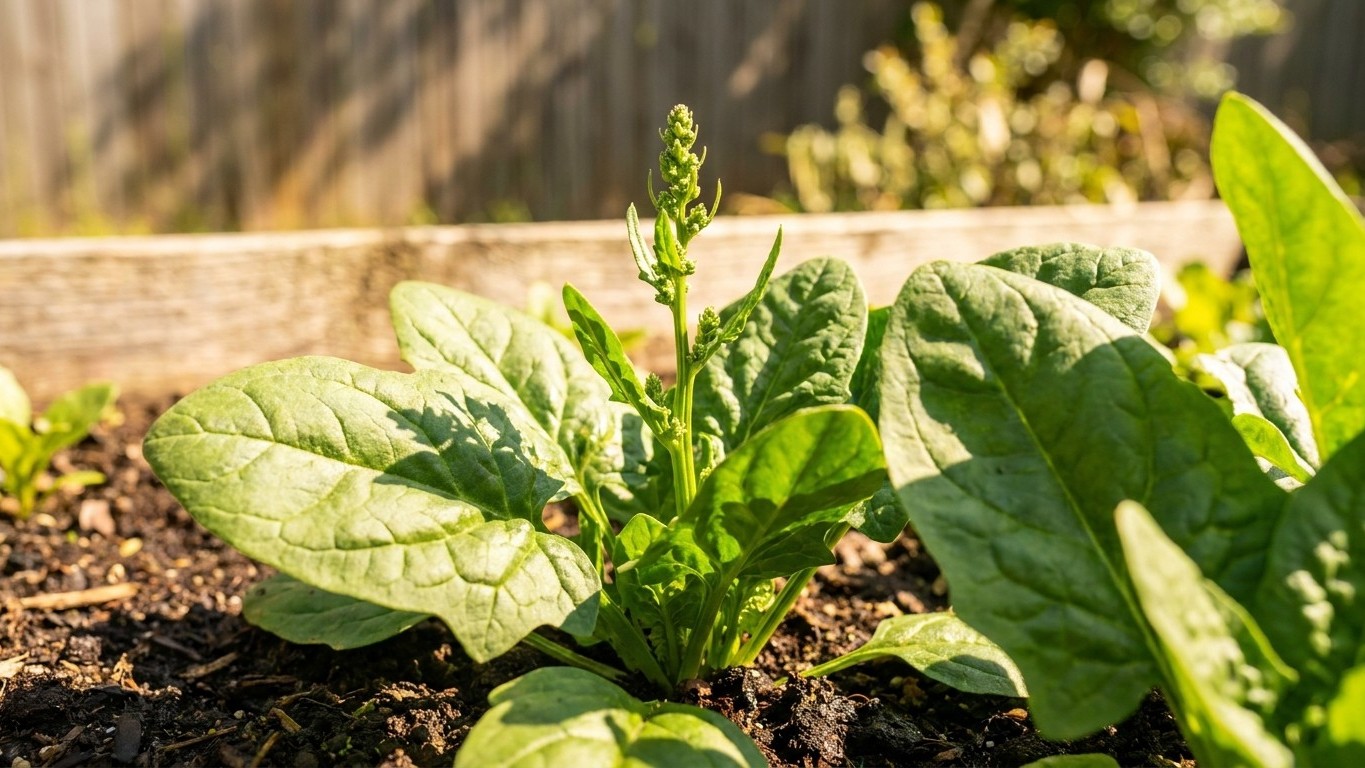

Of the fifteen insects that NDSU Extension and University of Minnesota Extension document for this Manitoba-bordering region, only one has a wide enough diet to show up on spinach at all: Japanese beetle. It tends to arrive during the hottest stretch of summer, which is usually a stretch when Manitoba spinach has already bolted or hasn’t been sown yet. Everything else on the documented list belongs to a different crop entirely.
Which pests attack spinach in Manitoba
NDSU Extension and University of Minnesota Extension, the two services whose pest records cover this border region, document fifteen insects for garden and orchard crops here: Apple maggot, Boxelder bug, Cabbage maggot (Delia radicum), Colorado potato beetle, Corn earworm, Emerald ash borer, Japanese beetle (Popillia japonica), Onion maggot (Delia antiqua), Spotted wing drosophila (Drosophila suzukii), Squash bug, Squash vine borer, Striped cucumber beetle, Swede midge, Three-lined potato beetle, and Yellowheaded spruce sawfly.
Run that list against a bed of spinach and most of it falls away immediately:
- Apple maggot: attacks apple fruit, has no reason to visit a leaf crop
- Boxelder bug: feeds on boxelder seeds and is mostly a household nuisance, not a plant-damaging feeder
- Cabbage maggot: targets brassica roots, and spinach isn’t a brassica
- Colorado potato beetle and Three-lined potato beetle: both tied to the nightshade family, potatoes, tomatoes, eggplant
- Corn earworm: goes after corn ears and tomato fruit
- Emerald ash borer and Yellowheaded spruce sawfly: tree pests, no connection to a vegetable garden
- Onion maggot: specific to onions and their relatives
- Spotted wing drosophila: goes after soft, thin-skinned fruit like raspberries and cherries
- Squash bug, Squash vine borer, Striped cucumber beetle: all three live and die by cucurbits, squash, cucumber, melon
- Swede midge: another brassica specialist
That leaves Japanese beetle standing alone, and even that one is an opportunist rather than a spinach specialist. Adults are true generalists that will chew foliage on hundreds of plant species when their preferred hosts (roses, grapes, linden, beans) aren’t available, and a spinach bed sitting nearby can take some of that overflow feeding. The honest read of the documented list is that Manitoba spinach has almost no dedicated insect pressure recorded by these two extension services — the crop simply isn’t a target the way it would be for aphids or leafminers elsewhere, and this territory’s own records don’t carry those species.
When each one shows up, and what it does first
Timing here has to run off the frost window rather than a calendar month, because the window itself is what decides whether spinach and Japanese beetle activity ever overlap. The mean last spring frost at Winnipeg Richardson Int’l A falls around May 23, and that date is a midpoint, not a guarantee, frost arrives later than that in one year out of two. The mean first fall frost lands around September 22.
Spring-sown spinach goes in as soon as soil can be worked after that last frost, and it has a short runway before trouble starts from the other direction entirely. On the year’s longest day this station gets 16 hours and 8 minutes of daylight, and long days trigger spinach to bolt regardless of how cool the air feels. Add the fact that spinach performs best below 75°F and starts turning bitter once it crosses that line, and the spring window closes from two directions at once: rising day length and rising heat, both working against the crop before Japanese beetle season has even started.
Japanese beetle adults feed during the warmest run of the summer, roughly the same stretch when this station logs its handful of days above 32°C, a mean of 4.54 such days a year, or the more typical 13.3 days a year above 30°C. That’s well past the point where a spring spinach planting has already bolted or been pulled. The practical overlap, if there is one, comes with a second sowing held too long into summer, or with an early fall planting that goes in while beetles are still active. What shows up first isn’t holes so much as a lace-like skeletonized patch on a leaf’s upper surface, tissue chewed away between the veins while the veins themselves stay intact, usually starting on the outer, older leaves and spreading inward if beetles linger.
Telling the damage apart from everything else
Most of what looks like pest damage on Manitoba spinach isn’t a pest at all. Spinach here fights heat and day length more than it fights insects, and both produce symptoms that get misread as feeding damage.
| Symptom | Likely cause | What distinguishes it |
|---|---|---|
| Lace-like, skeletonized patches on leaf tops | Japanese beetle feeding | Veins left intact, tissue between them chewed away, beetles often visible on the leaf |
| Tall central stalk, small tough leaves, bitter taste | Bolting from long days and heat above 75°F | No chewing marks anywhere; the plant is flowering, not being eaten |
| Uniform yellowing between veins on older leaves | Nutrient deficiency | Spreads evenly across the leaf rather than in chewed patches |
| Wilting despite moist soil | Root stress or heat stress | Leaves droop but show no torn or missing tissue |
| Ragged, torn edges after wind or hail | Mechanical damage | Tears run in one direction, following the weather event, not scattered like feeding |
The single detail worth checking before assuming a pest is at fault: is any tissue actually missing, or is the plant just bolting? A spinach plant that’s sending up a flower stalk with pale, tough leaves hasn’t been eaten by anything. It’s reacting to day length and warmth exactly the way this crop is built to. Anyone still unsure after checking for chewed tissue versus flowering should bring a sample, ideally with a few affected leaves and the stem, to a local extension or crop diagnostic office rather than guessing from a symptom list alone.
What actually works here, and what is a waste of time
Given how short the useful spinach window already is in Manitoba, timing does more work than any product ever will. Utah State University Extension names four spinach varieties, Bloomsdale, Melody, Teton, and Olympia, without publishing performance data for any of them here, so pick by seed availability rather than by promised yield claims. For a fall crop, the same source gives one planting rule and nothing more specific: sow 50 to 75 days before the date you want to harvest, counting backward from the first fall frost rather than from a fixed date on the calendar.
A floating row cover laid down at sowing, in the spring window right after the frost-free period opens, keeps beetles off young seedlings without any product decision at all, and it does double duty by holding a little extra soil moisture and warmth for germination. Because the autumn sowing is blocked by warm soil, not by cold, that cover also helps by keeping soil from crusting and overheating while germination is trying to happen, since anything above 80°F soil temperature cuts germination sharply.
What tends to waste effort: pheromone-baited Japanese beetle traps, which many extension programs caution can pull in more beetles from the surrounding area than they ever catch, turning a small local problem into a bigger one. Waiting until leaves are already skeletonized before doing anything is another dead end, since the feeding damage doesn’t reverse itself once it’s there. And treating a short-season leaf crop with any insecticide without checking label restrictions first is a decision that belongs with an extension office, not with a garden blog, since harvest intervals and provincial registration status aren’t something this page can responsibly guess at.
Where to check this for your own county
Everything above comes from NDSU Extension and University of Minnesota Extension, the two services whose pest documentation covers this border region, and from Utah State University Extension for the spinach growing details. None of those three organizations runs a Manitoba county office, because Manitoba doesn’t have counties, it has rural municipalities, so the equivalent local step here is a call to Manitoba Agriculture’s crop diagnostic services or a regional extension office rather than a US county desk.
A pest documented at the provincial or state level is not the same as a pest confirmed in one particular garden. Japanese beetle populations are patchy even within a single city; a yard three streets over can have heavy pressure while another sees none in a given summer. The frost dates used throughout this page, May 23 for last spring frost and September 22 for first fall frost, are averages from a single station, Winnipeg Richardson Int’l A, and any garden sitting in a low spot, near open water, or well outside Winnipeg proper should expect those dates to shift.
The next useful step isn’t reading further, it’s bringing a leaf sample, chewed tissue and all, to a local diagnostic service and asking what’s actually present in that specific yard this season.
Common questions
Do aphids or leafminers attack spinach in Manitoba?
Neither appears on the documented list from NDSU Extension or University of Minnesota Extension for this territory, so this page can’t confirm them here. A local extension office is the right place to ask about pests outside this documented set.
Is Japanese beetle likely to destroy a home spinach crop?
Unlikely on its own. It’s a generalist that feeds opportunistically rather than a specialist that targets spinach, and its peak activity in the hottest weeks of summer often misses the plant’s short spring and fall growing windows entirely.
Why does spinach bolt even in a cool Manitoba summer?
Bolting is triggered by day length as much as by heat. At 16 hours and 8 minutes of daylight on the longest day, this region gets more than enough summer daylight to push spinach toward flowering regardless of how mild the temperature stays.
When is the safest window to sow spring spinach here?
Right after the frost-free period opens, keeping in mind the May 23 last-frost date is a mean, not a guarantee, since frost falls later than that in half of all years at this station.