
Winter squash can be grown successfully in Alberta, but the growing window is short and cool, so the real decision isn’t whether to plant, it’s which type matures fast enough and tolerates a damp summer before the first fall frost arrives.
When the soil is warm enough in Alberta
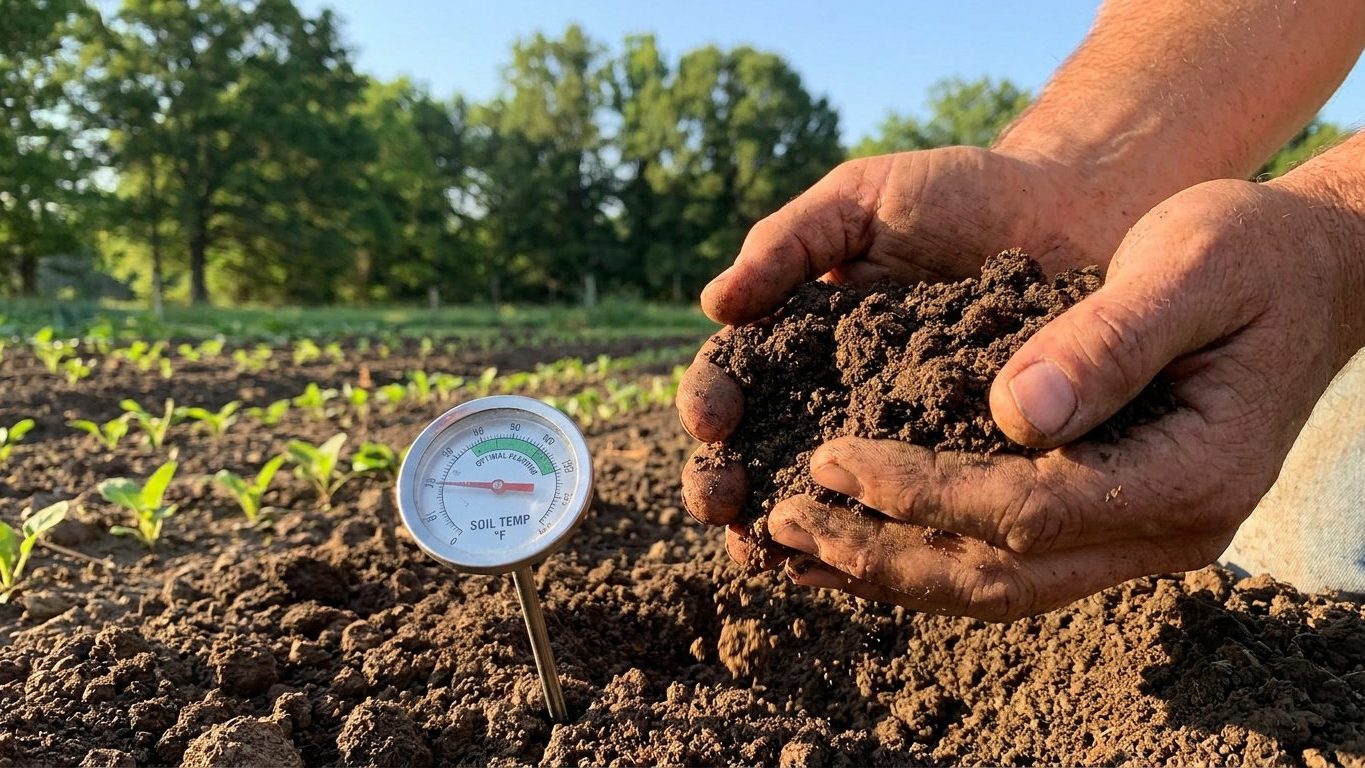
The average last spring frost at Calgary Int’l A runs May 21, according to Environment and Climate Change Canada’s Canadian Climate Normals for 1981-2010. That date gets treated as a starting gun by a lot of gardeners, but it’s the wrong signal for winter squash. Squash seed doesn’t care about frost risk directly; it cares about soil temperature, and soil takes time to catch up once the air stops freezing at night. Cold, wet soil in late May will rot squash seed before it germinates, so the practical planting window opens somewhat after that average date, once the ground itself has had a stretch of warm days to shed its spring chill.
That May 21 figure also needs a caveat most calendars leave off: it’s a mean, not a guarantee. In roughly half of all years on record, frost has landed later than May 21 at that station. Treat it as the midpoint of a range, not a safe date to mark on the wall. And Calgary Int’l A is one station; a province this size is not one climate. Gardens north of Edmonton, or up in foothill and upland districts, routinely run weeks behind what Calgary reports, so local knowledge matters more than the provincial average.
The Canadian plant hardiness zone for the reference city is 4a, based on Natural Resources Canada’s normals for 1991-2020. That number is worth naming carefully, because it doesn’t translate directly to the USDA zone system used elsewhere on this site. The Canadian model is built from seven climate variables, the USDA model from one, and Natural Resources Canada itself notes that a single Canadian zone like 4a can overlap nine different USDA zones, anywhere from 3a to 7a. So 4a describes Calgary’s own conditions, not a shortcut for comparing Alberta to a garden in Ohio or Georgia.
For gardeners deciding when to sow, the safest approach is to wait until night temperatures have settled and the soil feels workable and warm to the hand, rather than counting days from a fixed calendar date. If timing still feels uncertain, Alberta’s provincial agriculture and irrigation service tracks local planting guidance by region, which accounts for the elevation and latitude differences a single climate normal can’t capture.
How long the season lasts here
Subtracting the two frost dates from Calgary Int’l A gives a frost-free window of about 118 days, running from May 21 through September 16. That’s roughly four months, and for winter squash it sits on the tight side. Winter squash needs its fruit to mature and start curing on the vine before frost cuts the season short; an immature squash pulled early won’t finish ripening in storage and won’t keep the way a fully matured one does. A 118-day window doesn’t leave much slack once you account for the week or two after the average frost date when soil is still catching up.
That length changes two practical decisions. First, it usually rules out a second sowing of squash in the same season. In territories with a longer frost-free stretch, gardeners can succession-sow a spring crop and a second one a month later as insurance against a poor start; here, the first sowing effectively has to be the only one, because a second attempt wouldn’t have enough season left to mature fruit before the mean September 16 frost. Anyone weighing whether succession sowing makes sense for a given garden should check the succession sowing guide on this site, since the math changes considerably with a longer window elsewhere.
Second, a short window is exactly the situation where transplanting earns its keep, even though winter squash resents having its roots disturbed. Starting seed indoors a few weeks ahead and setting out young plants once the soil has warmed effectively borrows time the outdoor calendar doesn’t offer. The tradeoff is real: squash roots are sensitive, and a rough transplant can stall a plant for a week it doesn’t have to spare. Using biodegradable pots or trays that let the root ball go into the ground undisturbed is the practical way to capture the head start without paying for it in setback.
Both frost dates carry the same caution as before: they’re means from a single station, not promises, and a garden even a short drive from Calgary, especially at higher elevation, may run on a noticeably shorter effective season.
Heat and water in Alberta
Calgary Int’l A records 0.0 days a year averaging 90°F or above, per the 1981-2010 Canadian Climate Normals. That figure deserves to be read plainly: there is essentially no heat load to plan around in this territory. Winter squash grown in hot, dry regions often needs shade at the root zone and steady irrigation just to keep filling fruit through the hottest weeks of summer. None of that applies here. Heat stress isn’t the risk in Alberta gardens; the opposite is closer to the truth.
A cool summer with limited heat accumulation slows the whole ripening process down. Squash fruit sizes up and cures based partly on accumulated warmth, and a season that never reaches 90°F is a season where fruit takes longer to reach full maturity than it would in a hotter province. Combined with a frost-free window already on the short side, that’s the real risk profile for this territory: not scorched vines, but fruit that’s still filling out when the average September 16 frost arrives.
Rainfall works the same way. Summer precipitation across June, July and August averages about 8.5 inches at the reference station, with June the wettest month at 3.7 inches, July at 2.58, and August, typically the month when squash fruit is sizing up fastest, the driest of the three at 2.24 inches. Over the full year the station averages 16.5 inches, so summer carries roughly half the annual total. That’s a reasonably damp growing season by prairie standards, and it brings its own problem: powdery mildew and other foliar diseases thrive in cool, humid conditions, more so than in a hot, dry climate where fungal pressure tends to be lower. Squash foliage that stays wet overnight, whether from rain or heavy dew, is exactly the setup mildew favors.
The practical response isn’t more water, it’s airflow and timing. Spacing plants so leaves dry quickly after rain, watering at soil level rather than overhead, and watering in the morning rather than evening all reduce the hours foliage stays wet. Because August is the driest of the summer months and often the period when fruit is filling, a dry stretch late in the season can still leave plants short of water even in a generally damp province, so checking soil moisture directly, rather than assuming the season’s rain totals cover it, is worth doing by hand.
Which winter squash suit Alberta
Given a roughly 118-day frost-free window, no meaningful heat load, and a summer damp enough to favor mildew, the type of squash matters more here than in almost any other territory this site covers. The priority is straightforward: choose among the earliest-maturing types available, since a slow-maturing type simply won’t finish before the average mid-September frost, and favor types known locally for tolerating cooler, damper conditions without succumbing to foliar disease.
Broadly, that points toward smaller-fruited types, acorn and delicata types among them, which tend to mature faster than large, dense-fleshed types like hubbard or the biggest butternut selections. Smaller fruit simply needs less accumulated warmth and time to finish curing. Types bred or selected for disease tolerance also carry a real advantage in a summer this humid, since vine health late in the season is often what determines whether fruit gets the last few weeks of ripening it needs.
This page won’t name specific varieties, and that’s a deliberate choice rather than an oversight. A cultivar that performs well in a trial garden in one province can behave completely differently a few hundred miles north or at a different elevation, and recommending one by name here would mean guessing at conditions this page has no way to verify. The varieties actually trialled and recommended for Alberta conditions are tracked by the province’s own service, and that’s the resource worth checking before buying seed. Alberta’s agriculture and irrigation service maintains guidance based on regional trials, which accounts for the elevation and frost-timing differences a single climate station can’t capture.
The broader principle holds regardless of type chosen: in a territory this short on season and this generous with summer rain, airflow, disease tolerance and early maturity outrank fruit size or flavor as selection criteria, at least for a first attempt at figuring out what actually finishes before frost in a given garden.