
New Hampshire gardeners get one shot at this crop most years: winter squash needs the full length of the growing season to mature and cure before the vines die back. Plant too early and seeds rot in cold soil; wait too long and fruit never fills out. The window that matters runs from soil warm-up in late spring to the first hard frost, and in this state that window is shorter than in most of New England.
When the soil is warm enough in New Hampshire

The question gardeners actually ask is “when do I plant,” but the honest answer starts somewhere else: with the soil, not the calendar. Frost date is a proxy, a stand-in for something else that matters more, which is how deep and how consistently the ground has warmed.
NOAA’s Climate Normals for 1991-2020 put the last spring frost at this reference station in a band running from April 16 to April 27, based on the 30 to 70 percent probability range for a 32°F freeze. That’s a probability window, not a promise, and it comes from one airport weather station. Suburban yards and rural gardens across the state often see frost linger a week or two past that, more at elevation or in a low frost pocket, so treat this as the reference figure for this location, not a guarantee for a particular county.
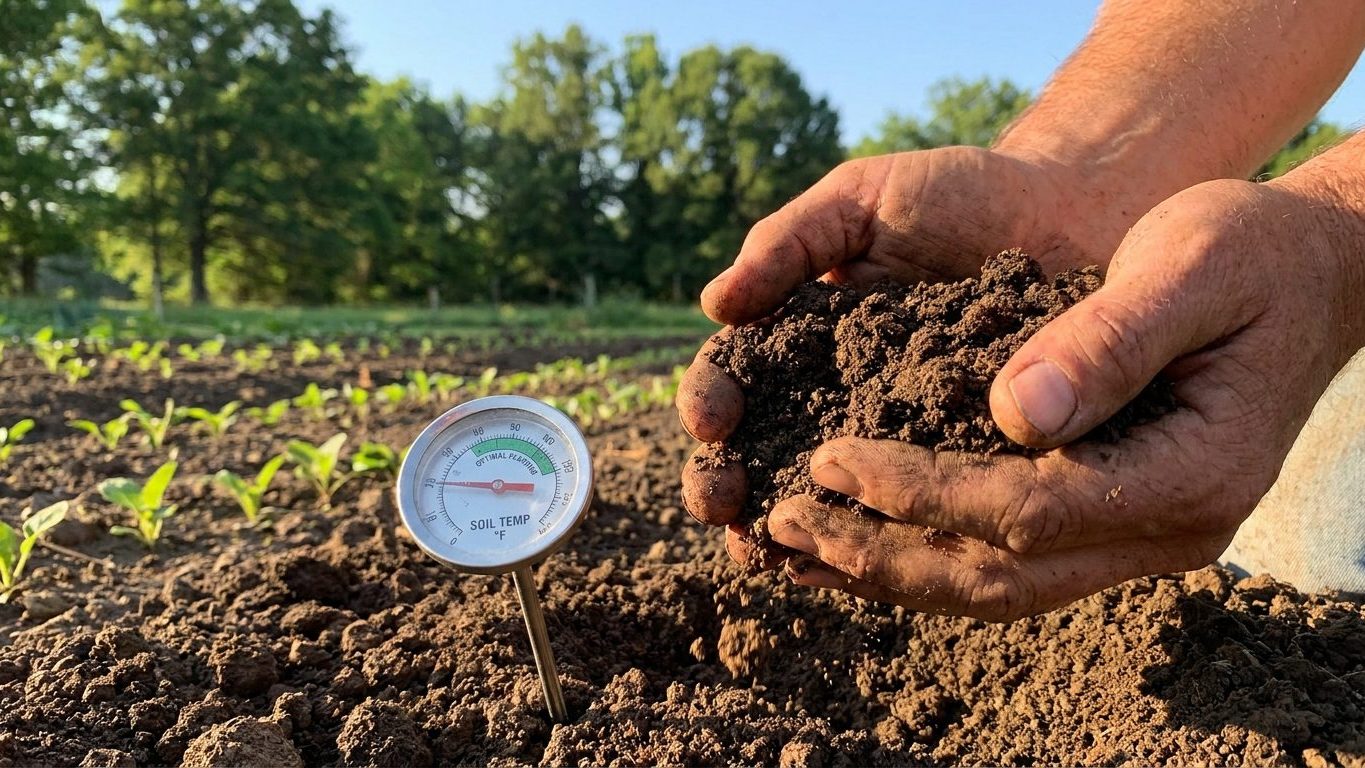
Winter squash seed germinates poorly below roughly 65°F, and the soil doesn’t reach that mark the moment frost risk ends. Bare ground in a New Hampshire spring typically needs another two to three weeks of sun after the last frost date before it’s reliably warm at seed depth. A soil thermometer pushed a couple inches down is a cheap, useful check, and it settles the argument far better than counting days on a calendar.
Why the state’s hardiness range matters here
New Hampshire spans USDA Hardiness Zones 3b to 6a, a wide range built on one variable, the average annual extreme minimum temperature. A garden near this reference station sits toward the milder end of that range; a garden in the northern counties or at higher elevation can sit two zones colder, with a spring that lags weeks behind. That gap changes the whole planting calendar, so checking a local zone rather than relying on a statewide figure is worth the five minutes it takes.
Many gardeners in this climate start winter squash indoors under cover three to four weeks before the expected soil warm-up, then transplant once nighttime lows hold reliably above 50°F. That technique buys time without gambling on an early direct sowing into cold ground, which tends to sit and sulk rather than grow.
How long the season lasts here
Subtract the two frost windows and the length of the frost-free season at this reference station runs from about 169 days, using the earliest fall frost and the latest spring frost, up to roughly 193 days, using the latest fall frost and the earliest spring frost. Call it a working range of 170 to 195 frost-free days in a typical year, depending on how the season actually unfolds and where in the state the garden sits.
That range decides more than most gardeners expect. On the long end, close to 195 days, there’s enough room to direct-sow winter squash outright and still give the fruit time to mature and start curing on the vine before a fall frost forces harvest. On the short end, closer to 169 days, the margin gets tight, especially for the slower-maturing types, and losing two or three weeks to a cold, wet spring can mean pulling immature fruit off the vine in October.
A short window is exactly where transplanting earns its keep. Starting seedlings indoors and setting them out once the soil has warmed effectively adds those two to three weeks back into the calendar, without asking the seed to sit in cold ground doing nothing. The tradeoff is real, though: squash resent root disturbance, so transplanting means starting in larger cells or biodegradable pots and moving plants before roots circle, rather than treating it as a simple swap for direct seeding.
Where the season stretches toward the long end, gardeners sometimes use the extra weeks for a second sowing of a quicker crop before squash goes in, or hold squash starts back a little to dodge a late cold snap without losing the harvest. Anyone weighing that timing more closely should see this site’s guide to succession sowing, which covers how to stagger plantings against a given frost window rather than a fixed date.
Heat and water in New Hampshire

Winter squash is the crop where the season’s length decides everything else. The fruit has to mature fully on the vine, rind hardened and sugars developed, before a killing frost; pull it early and it neither cures properly nor stores through winter. That single fact makes New Hampshire’s climate numbers worth reading closely, because they point toward a different set of risks than a warmer, drier state would.
The reference station at Manchester averages just 10.9 days a year at or above 90°F. That’s a light heat load. It means New Hampshire summers run cool by national standards, with limited heat stress on squash plants and comparatively little risk of blossom drop or scorched leaves from extreme heat. This is not the climate where irrigation has to carry fruit through weeks of dry, scorching weather, and writing that story for this state would be dishonest. The real risk here runs the other way.
Summer rainfall averages about 10.7 inches across June, July and August, with July the driest month at 3.3 inches, June at 4.04 inches and August at 3.35 inches. That’s a moderate, fairly reliable supply on paper, but it rarely arrives as a gentle, even soak. A good share of it comes as thunderstorm downpours that run off rather than sink in, particularly on compacted or clay soil, leaving the root zone drier than the monthly total suggests. On sandy soil the same rain drains through within a day, so a summer with decent totals can still leave squash roots short of water between storms.
Cooler, damper summer conditions bring their own pressure: powdery mildew on the leaves, slower ripening in a cloudy stretch, and fungal issues that thrive where foliage stays wet. That’s the real climate risk profile for Winter Squash in New Hampshire, airflow and disease pressure rather than heat and drought, and it should shape spacing, watering technique (soaking the soil rather than the leaves, and doing it in the morning) and the type of squash chosen.
Which winter squash suit New Hampshire
Given a season that runs 170 to 195 frost-free days and a climate that’s cool and occasionally damp rather than hot, the type of squash matters more here than any particular growing trick. Three traits decide the shortlist: how many days a type typically needs to mature, how open and airy its foliage grows, and how it tolerates a cool, humid stretch of weather.
| Type | Typical season need | Fits NH’s short end? | Disease pressure notes |
|---|---|---|---|
| Acorn | Shorter | Yes | Compact vines, decent airflow |
| Delicata | Shorter | Yes | Bush-type habit helps airflow |
| Buttercup / Kabocha | Moderate | Only on the long end | Dense foliage, watch for mildew |
| Butternut | Longer | Risky on a short year | Vigorous vines need spacing |
| Hubbard | Longer | Risky on a short year | Sprawling vines, benefits from open rows |
On the shorter end of New Hampshire’s range, the earliest-maturing types carry the least risk of an unfinished harvest. On the long end, and especially in a garden that sits in the milder part of the state’s hardiness range, there’s more room for the longer-season types, provided they get generous spacing and full sun to keep foliage dry and airflow moving. In every case here, disease resistance and an open growth habit matter more than heat tolerance, because heat simply isn’t the state’s limiting factor.
The types trialled and recommended locally change from year to year and differ by county, and a name picked without that local data is a guess dressed up as advice. The University of New Hampshire Cooperative Extension, at extension.unh.edu, publishes the variety trials and planting guidance suited to specific counties and season lengths, and that’s the source worth checking before buying seed.