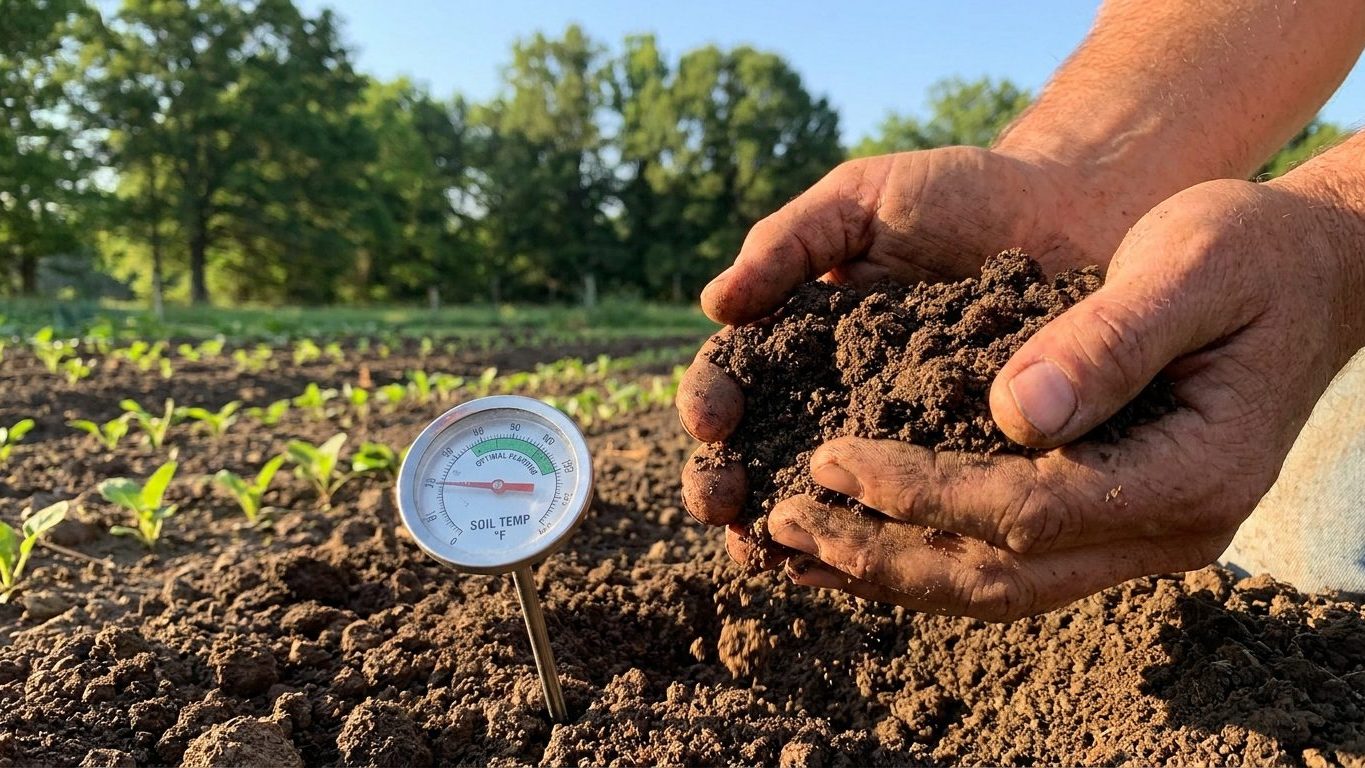

Winter squash goes in the ground in Nevada once the soil itself has warmed, not simply once the calendar says frost has passed. In the low desert around Las Vegas that point can arrive as early as February; in the high valleys around Reno or Carson City, it waits until spring is well underway. The gap between those two Nevadas is the whole story here, and no single date covers both.
When the soil is warm enough in Nevada

The question every squash grower asks first is “when do I plant,” and the honest answer starts with a caution: Nevada does not have one frost date, it has a range that spans thousands of feet of elevation. At the reference weather station used for the state’s official climate normals, Harry Reid International Airport in Las Vegas (NOAA station USW00023169), the National Weather Service’s 1991-2020 data puts the last spring freeze at a 30 to 70 percent probability window running from January 7 to February 1. That is an extraordinarily early figure, and it needs a warning attached to it: Las Vegas sits in a desert basin with a strong urban heat-island effect, and it freezes far less, and far earlier in the season, than almost anywhere else in the state. Reno, Carson City, and any garden at real elevation see their last frost months later in spring and their first frost months earlier in fall. Treating the Las Vegas figure as a statewide planting guide would be a mistake.
What matters more than the frost date itself is the mechanism behind it. Winter squash seed rots in cold, wet soil before it ever germinates, and even transplants sulk and stall if the root zone stays below the mid-60s Fahrenheit. Frost dates are a rough proxy for that soil temperature threshold, not a stand-in for it: a patch of ground can sit well below squash-friendly temperatures for weeks after the air itself stops freezing, especially at altitude or in soil that stays shaded and heavy through spring. A frost date, in any case, is a probability drawn from thirty years of history, not a guarantee for this particular year.
Rather than pin a date to “Nevada” as a whole, the useful move is to find out where your own garden sits on that elevation gradient and confirm the local window with your county’s Cooperative Extension office. The University of Nevada Reno Extension tracks planting guidance by county precisely because a low desert lot near Las Vegas and a mountain valley near Elko are, for gardening purposes, close to different climates entirely.
How long the season lasts here
At that same Las Vegas reference station, the first fall freeze arrives in a 30 to 70 percent probability window running from December 8 to December 23. Paired with the January 7 to February 1 spring window, that frames a frost-free season stretching roughly ten months at this one desert station, an unusually long run by national standards. But that figure belongs to the urban heat-island extreme of the Las Vegas valley floor, and it should not be read as a Nevada-wide number. Move up in elevation toward Reno, Carson City, or the rural Great Basin, and the frost-free window compresses substantially, since freezes there start earlier in fall and let go later in spring. Exactly how much shorter depends on the site, which is again a question for the county extension office rather than a statewide estimate.
The length of that window is what decides how a grower plans the season, not just when they start it. Where the frost-free run is genuinely long, as it can be in the low desert basins, there’s room to sow a second round of squash in early summer behind an earlier crop, giving the vines a fresh start away from any pest or disease pressure that built up on the first planting. Where the season is short, as it tends to be at elevation, the first sowing is the only sowing, and every decision shifts toward protecting it: starting seed indoors, transplanting with care not to disturb the taproot, and choosing types that mature fastest rather than largest. That single difference, whether a second sowing is even on the table, is worth working out before seed goes in the ground, and the site’s succession sowing guide walks through how to time a second round where the calendar allows it.
Heat and water in Nevada

Heat load is the other half of the Nevada equation, and at the Las Vegas reference station it is severe: NOAA’s 1991-2020 normals record an average of 131.3 days a year reaching 90°F or higher. That is a count at one specific station, not a description of the whole state, but it signals the kind of stress winter squash faces across most of Nevada’s lower elevations: high evaporative demand, fast-drying soil, and real risk of blossom drop or scorched fruit on vines left to dry out even briefly during fruit set.
Rainfall does nothing to offset that heat. Summer precipitation at the same station averages about 0.7 inches across June, July, and August combined, out of roughly 4.2 inches for the entire year. June is the driest month of the growing season by a wide margin.
| Month | Average rainfall |
|---|---|
| June | 0.04 inches |
| July | 0.38 inches |
| August | 0.32 inches |
Winter squash is a crop that lives or dies on whether the fruit finishes ripening on the vine before frost ends the season, since an immature squash neither cures properly nor stores well no matter how it’s handled afterward. That makes the combination of heat and near-absent summer rain a two-part problem in Nevada. The dryness means irrigation, not rainfall, has to carry the fruit through its filling stage, delivered deeply and consistently enough that the root zone never dries out during the weeks the fruit is sizing up. The heat means mulch and, where feasible, some afternoon shade at the root zone become worth the effort, since the plant’s real limiting factor most summers is water loss, not lack of sunlight. None of this describes a cool, damp climate risk like mildew or slow ripening from excess humidity, because Nevada’s numbers point the opposite direction: this is arid-climate management, built around irrigation discipline rather than disease watch.
Which winter squash suit Nevada
None of this points to a specific variety, and it shouldn’t. The honest answer to “which winter squash grows best in Nevada” is to choose by type based on where you sit on the state’s elevation and season gradient, then confirm the specific cultivars with your local extension office, because the varieties actually trialled for your county are the only recommendation that carries real weight.
That said, the reasoning from this page’s own facts points in a clear direction. In the shorter, cooler seasons found at elevation, where the frost-free window is tighter, the earliest-maturing types within any squash category are the safer bet, since there’s no room to gamble on a slow finisher against an early fall freeze. In the hot, dry lower elevations, where 131 days a year top 90°F and summer rain is nearly absent, the priority shifts toward types that tolerate heat stress at flowering and that benefit from airflow around the vine and consistent moisture at the root, since sunburn and blossom drop are the more common failures there than any fungal disease. Nevada’s arid climate, unlike a humid Southern state, does not make disease resistance the first filter for choosing a type; heat tolerance and season length do that work here instead.
The USDA Plant Hardiness Zone Map places Nevada across an unusually wide band, from zone 4a in the coldest mountain valleys to zone 10a in the low desert around Las Vegas, a spread built on average annual extreme minimum winter temperatures rather than growing-season length. That range alone confirms there’s no single “Nevada answer”: a grower should treat their nearest reference city’s zone as a starting point, not the six-zone spread as a whole, and then let University of Nevada Reno Extension settle which specific squash types have actually performed well in trials for their county. Refusing to name a variety on a page covering a state this varied isn’t a gap, it’s the correct answer.