
Growing Winter Squash in Nunavut means working inside one of the shortest, coolest growing seasons on this entire site’s map: soil rarely warms enough for squash before late June, and the frost-free stretch that follows typically closes by mid-September, per Environment and Climate Change Canada’s Rankin Inlet A station. That leaves something close to 86 days clear of frost, a season on the thin edge of what winter squash needs to mature and cure fully on the vine. Outdoor growing is possible here, but it is marginal, and it depends on choosing the earliest types and using every one of those days well.
When the soil is warm enough in Nunavut

The question every gardener asks first: when is it actually safe to put seed or transplant into the ground? At Rankin Inlet A, the reference station Environment and Climate Change Canada uses for this territory, the average last spring frost falls on June 19, based on the 1981-2010 Canadian Climate Normals. That date is not a guarantee. It’s a mean, which means in one year out of two, frost arrives later than June 19, sometimes well into the following week. Treat it as the midpoint of a window, never as a safe date to plant by.
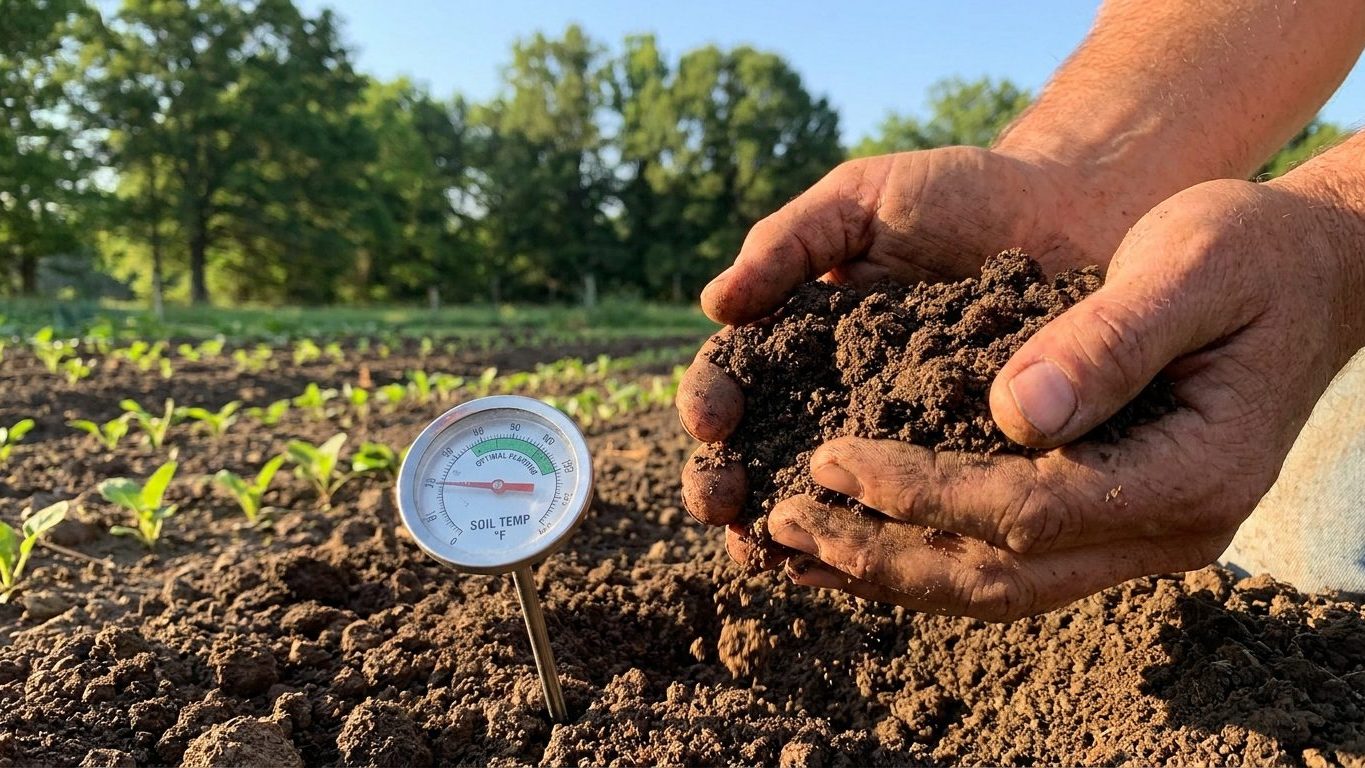
A frost date matters, but it’s really a stand-in for something else: soil temperature. Winter squash seed germinates poorly, and young roots stall, in cold ground, so the plant is waiting for soil to warm through, not for the calendar to clear the last frost. In most of the Lower 48, soil catches up to frost-free conditions within a week or two of the last frost date. In Nunavut, at Canadian hardiness zone 0a (a measure built on seven climate variables, not a USDA zone and not convertible to one, and specific to the reference city this figure is drawn from) that lag runs longer. Ground frozen solid months earlier does not release its cold quickly, even once the risk of a night frost has passed. A gardener planting strictly by the June 19 average, without checking soil temperature directly with a probe thermometer, risks putting seed into ground still too cold to do anything but sit.
This is why raised beds and dark mulch carry more weight here than almost anywhere else on this site’s map. Both work by raising soil temperature faster than open ground would on its own, buying back days a short season cannot otherwise offer. Black plastic or landscape fabric laid down two to three weeks ahead of planting, then pulled back or slit for the seedling, is worth adopting rather than skipping given how little margin the season allows.
What this page will not do is name a variety and declare it ready for a June 19 planting date in Rankin Inlet or anywhere else in the territory. Winter squash is sold under dozens of named types, and which of those has actually been trialled in Nunavut’s short, cool season is a question for the people running trial plots there, not for a general guide. Canada’s agriculture department is the starting point for finding what has actually performed under northern conditions; a name invented here would be worse than no answer at all.
How long the season lasts here
Subtract June 19 from September 13, both averages from the same Rankin Inlet A station, and the frost-free window works out to roughly 86 days. That’s the entire span a Nunavut garden can count on for a crop that has to grow a vine, set fruit, and let that fruit mature and cure fully before autumn cold shuts everything down. Winter squash bred for temperate gardens routinely needs longer than that just to reach harvest, before any allowance for a slow, cool spring at the start or an early frost at the end.
A window this short settles what’s realistic, and what isn’t. A long growing season elsewhere on this site’s map might support two sowings of a fast crop, the first pulled early to make room for a second planted right behind it. That math doesn’t work here. There is one sowing, and it has to succeed, because there is no real second attempt once June 19 has passed and the days start counting down toward mid-September. Readers coming from this site’s succession sowing guide, which covers staggering plantings for continuous harvest, should treat that approach as inapplicable to Nunavut winter squash specifically; it’s built for territories with three or four extra months to spend.
The short window also settles a question that matters more here than almost anywhere else: direct-seed or transplant? In a long-season territory, direct seeding saves the plant the shock of root disturbance and is often the simpler, hardier choice. In Nunavut, with roughly 86 days total and soil that warms slowly even after the average frost date passes, a transplant started indoors three to four weeks ahead effectively buys back time the outdoor season can’t provide on its own. The tradeoff is real: squash roots dislike disturbance, and a transplant set out with cramped or circling roots can stall for a week or more, which in a longer season is a shrug and here can be the difference between a fruit that cures fully and one that never gets there. A quick root check before transplanting, looking for roots that spiral rather than run straight, is worth the extra minute it takes.
Because both dates are means, not guarantees, the realistic window in a below-average year is shorter than 86 days, not longer. A late spring frost pushes the safe planting date back; an early fall frost cuts ripening time short from the other end. Growers who plan around the full 86 days, rather than reserving a buffer of a week or so at each end, will find in some years there simply wasn’t the time they assumed.
Heat and water in Nunavut

Winter squash is unusual among garden vegetables in how completely its outcome depends on season length rather than technique. The fruit either matures and cures fully on the vine before frost, or it doesn’t, and an immature squash brought in ahead of a hard freeze neither cures properly in storage nor keeps through winter the way a fully ripened one does. That single fact makes the numbers in this section matter less for comfort and more for risk.
Nunavut’s numbers, from the Rankin Inlet A station, are straightforward: zero days a year reach 90°F, and summer rainfall across June, July and August totals about 5.0 inches, out of 12.2 inches for the full year. There’s no heat load to speak of, and no drought stress to manage the way growers further south plan for it. This is not a territory where a squash grower needs to think about irrigation carrying fruit through a dry spell, because the kind of dry spell that stresses squash simply isn’t part of this climate.
Month by month
| Month | Average rainfall |
|---|---|
| June | 1.05 inches |
| July | 1.65 inches |
| August | 2.26 inches |
What replaces heat and drought as the working risk here is the opposite pair: cool, damp conditions that slow ripening and invite fungal disease. With no days above 90°F to speed evaporation and dry foliage between rain events, leaves stay wet longer after each rainfall, and that dampness is exactly what powdery and downy mildew need to establish on squash leaves. A short, cool season is already asking the fruit to mature on a tight schedule; disease pressure on the foliage that feeds that fruit is a second front working against the same 86-day window, not a side issue.
Spacing plants further apart than a seed packet aimed at a warmer climate might suggest, keeping foliage off wet ground with a trellis or a layer of mulch, and watering at the base rather than overhead are the practical responses, none of which require a product name or an application rate to describe. What they require is treating every rain event as an opportunity for mildew to take hold, rather than assuming a modest 5 inches over the summer is too little to worry about. It’s not the volume of rain that matters most in a climate like this one; it’s how slowly that moisture leaves the leaf surface once the days stop being warm enough to dry it off quickly.
Which winter squash suit Nunavut
Everything in the numbers above points toward the same answer, and it’s an answer about type, not about any single named variety. A frost-free window of roughly 86 days, opening late in June and closing in mid-September, favors the earliest-maturing types of winter squash that exist, the kind bred to set and finish fruit fast rather than the larger, longer-season types that need a full growing season stretching well past 100 days to reach harvest. Types in the acorn and delicata families tend to run earlier than butternut or hubbard types in general breeding trends, though which specific selections have actually been trialled and performed this far north isn’t something this page can answer responsibly.
Disease resistance matters here for a different reason than it does in a hot, humid southern garden. In Nunavut’s cool, damp summer, resistance to powdery and downy mildew is less a bonus trait and more a first filter, because the conditions that trigger those diseases (wet foliage, moderate temperatures, limited drying time between rain events) describe this climate closely. A type bred with some resistance to those specific pressures has a real advantage in a season that can’t afford weeks lost to disease management partway through.
This page won’t name a cultivar, and that refusal is itself part of the answer. Seed catalogs list winter squash under dozens of trade names, updated and replaced across years, and whether any particular one has been grown successfully at this latitude is a question answered by trial plots and extension agents working in the territory, not by a general guide written for a wider audience. Canada’s federal agriculture department is the resource that can point toward what has actually been trialled for northern and short-season conditions, including winter squash specifically selected for that purpose. A name picked here, without that grounding, would be a guess dressed up as a recommendation, and a gardener working with an 86-day window has no room for a guess that fails.
Where a formal trial garden isn’t accessible, informal evidence still counts. Community greenhouses and demonstration plots that exist in some Nunavut communities are often the closest thing to a local trial available, and gardeners who ask what has actually fruited and cured to harvest in a nearby cold frame or greenhouse are getting information no seed packet description can offer. A germination test at home, started a few weeks before the average June 19 planting date, is a small step that shows whether a particular seed lot performs quickly enough for this specific window, regardless of what its catalog description promises.