
Yes, winter squash grows well across much of Oregon, but the answer shifts fast depending on where you garden. West of the Cascades, around Portland, you get a long, mild season with plenty of time for fruit to mature fully. Head into central or eastern Oregon’s high desert and that window shrinks hard. The real question isn’t whether winter squash grows here, it’s when to plant and which type matches your local season and water supply.
When the soil is warm enough in Oregon

Ask five Oregon gardeners When to Plant Winter Squash and you’ll get five different answers, because the calendar isn’t the deciding factor here. Soil temperature is. For the Portland area, NOAA’s 1991-2020 Climate Normals put the last spring frost (32°F) between March 6 and March 21, drawn from station USW00024229. That’s a 30-70% probability band, not a single guaranteed date, which means frost can still show up a bit earlier or later in any given year.
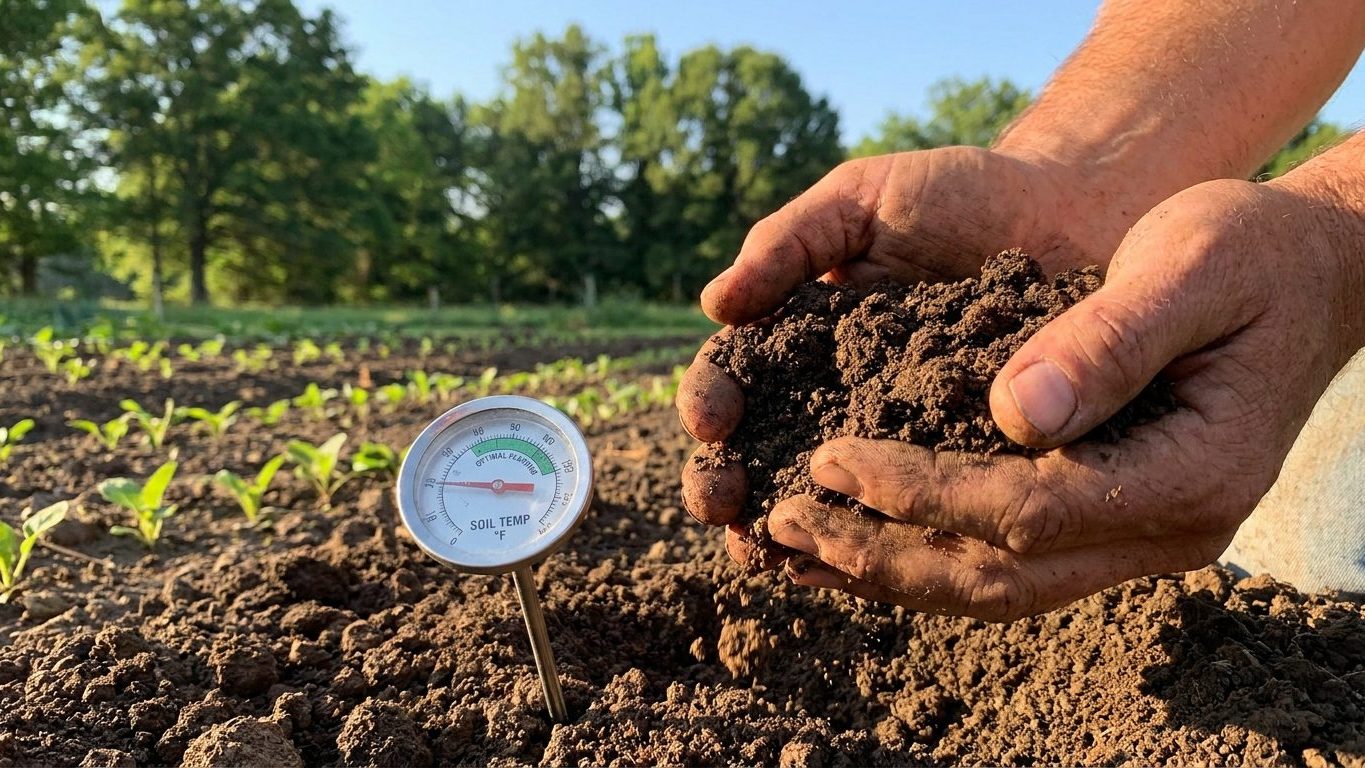
Here’s the part that trips people up: that frost date tells you when the air stops freezing, not when the ground is ready for squash seed. Winter squash germinates poorly in cold soil and sulks if transplanted into it, so gardeners who sow the moment the frost date passes often end up with weak, slow-starting plants. The soil needs to warm up on its own schedule, which in the Willamette Valley usually happens a few weeks after that last frost window closes, once the sun angle climbs and rain lets up. Waiting those extra weeks costs almost nothing against a season that, as the next section shows, runs long here.
That whole March window applies specifically to the Portland reference station, west of the Cascades. Central and eastern Oregon sit in high desert country with a much shorter, colder spring, and gardeners there should not borrow this date. If you’re gardening in Bend, Redmond, or anywhere east of the mountains, your local frost timing runs on a different clock entirely, and the safest move is checking your county’s own extension office rather than assuming the valley numbers apply.
Direct seed or transplant
Winter squash resents root disturbance, so direct seeding once soil has warmed is usually the simpler path in a long-season area like the Willamette Valley. Transplants earn their keep mainly where the season is tight and every week of head start matters, which is more the situation east of the Cascades than west of them. If you do start transplants, keep the root ball intact at planting, since a squash checked hard by transplant shock can take a week or more to resume real growth, a week that matters far more in a short season than a long one.
Whichever route you choose, resist the pull to jump the gun just because the calendar says frost has passed. Cold, wet soil does more damage to a squash seedling than a light frost ever would, and it’s a mistake that shows up weeks later as stunted, yellow plants that never quite catch up.
How long the season lasts here
Pair that spring frost window with the fall one, and the shape of the Willamette Valley season comes into focus. NOAA’s same 1991-2020 Normals for station USW00024229 put the first fall frost between November 11 and November 27. Running the numbers from the more conservative edges of each band (last frost March 21, first frost November 11) gives a frost-free window of roughly 235 days. Push to the earlier spring date and later fall date, and the maximum stretches closer to 266 days. Either way, that’s somewhere between seven and a half and nearly nine months of frost-free growing.
That’s a genuinely long window by winter squash standards, and it changes the decisions worth making. Most winter squash types need a solid stretch of warm weeks to size up and cure properly on the vine, and a season this long gives real margin for error: a cool, slow spring or a late-planted patch still has time to finish. It also opens the door to a second sowing in early summer for gardeners who want an extended harvest window or insurance against a first planting that got eaten, flooded, or simply failed to thrive. For anyone weighing whether that second sowing makes sense on their own timeline, this site’s succession sowing guide walks through how to stagger plantings without running out of season at the other end.
Contrast that with a short-season territory, where the first sowing is effectively the only shot, and every week of delay narrows the margin for the fruit to mature and cure before frost. In the Willamette Valley, that pressure eases considerably. The tradeoff, covered next, is that a long mild season here doesn’t come with much summer heat to speed things along, and it doesn’t come with much summer rain either.
Heat and water in Oregon

Winter squash is unforgiving about one thing: the fruit has to fully mature and cure on the vine before frost, or it won’t keep through winter. That single fact is why season length and summer conditions matter more for this crop than almost any technique a gardener can apply.
Portland’s heat numbers are modest. NOAA’s 1991-2020 Normals show an average of just 11.9 days a year reaching 90°F or higher at the reference station. That’s a low heat load, nowhere close to the interior valleys of California or the high desert east of the Cascades. Squash won’t struggle with heat stress here the way it might in a hotter territory, but that same mild summer means fruit ripens on a slower clock, without the burst of heat units that pushes maturity along in warmer regions. It’s a fair trade against the long frost-free window covered above, but it does mean there’s less room to rescue a late-planted patch by simply waiting out a hot stretch, because that hot stretch mostly doesn’t come.
Rainfall is the other half of the picture, and it runs light in exactly the months squash need water most. Summer rainfall at the same station totals about 2.7 inches across June, July, and August, with July the driest month at just 0.51 inches. June brings 1.63 inches, August 0.54. That’s not a damp summer climate; it’s a dry one layered under a mild one, which means irrigation isn’t optional once fruit set begins. The plants can tolerate the modest heat fine, but they can’t fill fruit on rainfall alone during a Portland-area July.
The one caution worth repeating: those figures describe the reference station’s normals over three decades, not any single garden. A raised bed on fast-draining sand dries out faster than the same rainfall total suggests, and a slope or a city microclimate can shift both the heat count and the rain total in either direction. A rain gauge on the actual plot settles the question no regional average can.
Which winter squash suit Oregon
Given a long, mild, dry-summer season like the Willamette Valley’s, the types that do best here are ones that can use that generous frost-free window without needing much summer heat to push them along. Longer-season types have room to work with in a 235-to-266-day season, while earlier types simply finish with margin to spare and give some slack for a wet spring that delayed planting.
In the valley’s cool, occasionally damp spring conditions, disease pressure on foliage, particularly powdery mildew later in the season, deserves attention regardless of type, since even a dry summer doesn’t erase the risk built up from a wet spring start. Good airflow between plants and watering at the soil rather than overhead does more for that risk than any single variety choice.
East of the Cascades, in the high desert, the math flips: season length is the binding constraint, so earliest-maturing types matter more than anything else, since the region’s frost dates run nothing like Portland’s.
- Long-season, valley conditions west of the Cascades: types with room to size up over a long, mild window
- Short-season, high desert conditions east of the Cascades: earliest-maturing types, chosen with local frost dates in mind
- Anywhere with a wet spring history: types noted for foliage disease tolerance
None of that is a substitute for a specific variety name, and this page won’t invent one. Oregon State University’s Extension Service, at extension.oregonstate.edu, publishes the variety trial results and county-specific recommendations that actually reflect what performs in a given part of the state, from the Willamette Valley to the high desert counties. The USDA Plant Hardiness Zone Map lists Oregon spanning zones 4a to 9b, a range wide enough that a Portland-area gardener and a Bend-area gardener are effectively working two different climates under one state name, which is exactly why a local extension recommendation beats any statewide guess.