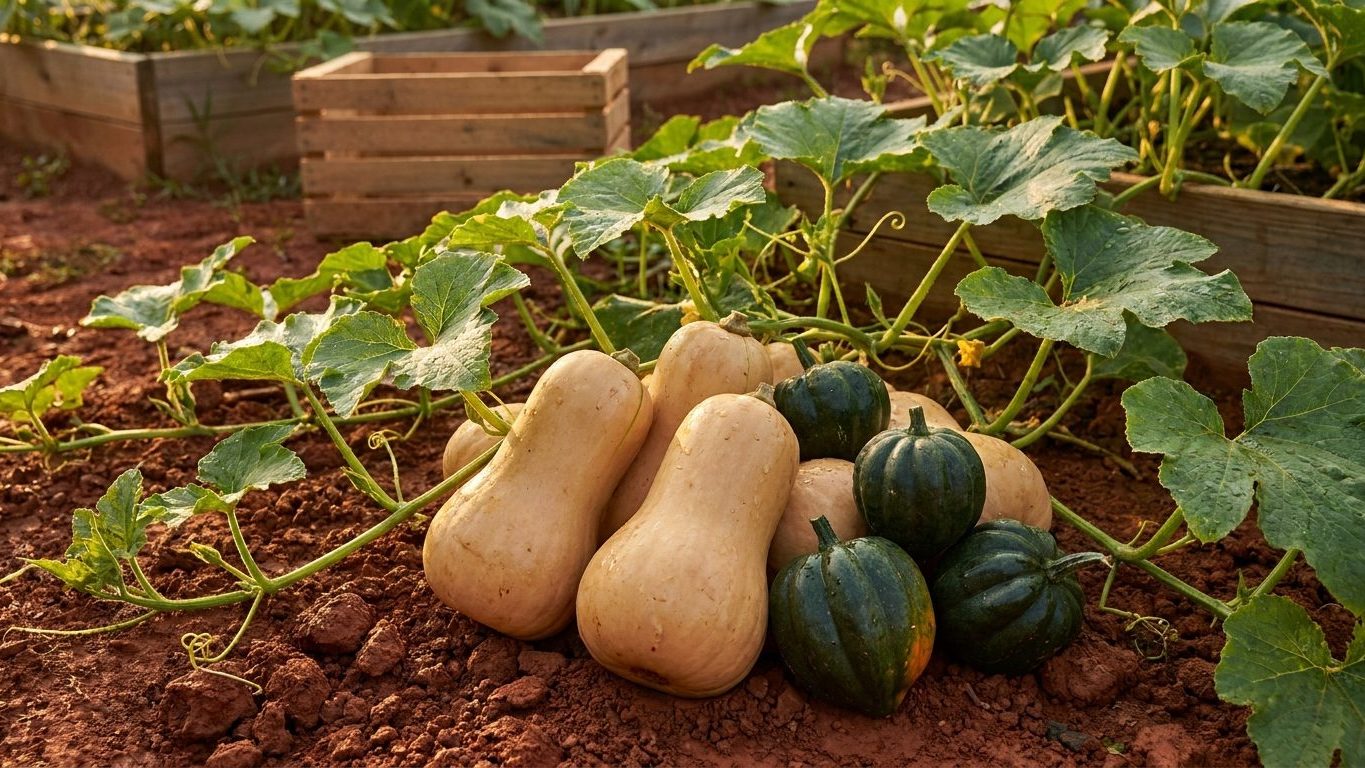

California’s frost-free coastal and southern regions favor drought-tolerant, heat-steady winter squash like butternut, delicata and spaghetti squash, planted from late spring onward. In the Central Valley and Sierra foothills, where real winters exist, the priority shifts to varieties that finish before fall cold arrives. There is no single “best” squash for a state this size.
The short answer for California
Start with what the numbers actually say about this state, because they say two different things depending on where you stand. The reference station used for these normals sits in the Los Angeles basin, and it recorded zero days at or below 32°F across three decades of daily records. NOAA’s normals calculation couldn’t even compute a frost date there, it’s coded as a place where freeze essentially doesn’t happen in an average year. That single fact reorganizes the whole conversation about Winter Squash in coastal and southern California: the limiting factor isn’t the calendar, it’s water and heat load.
With virtually no summer rain to lean on, the type of squash that performs best here is one built to run on stored soil moisture between deep waterings rather than one that sulks the moment the topsoil dries. Butternut, delicata, and spaghetti squash have a reputation among California growers for tolerating exactly that rhythm: deep, infrequent irrigation rather than the shallow weekly habit that works in wetter states. Their vines root deep and their fruit sets don’t collapse the way a thirstier type might when a watering day slips.
Kabocha and other Cucurbita maxima types can also do well along the coast, where the marine layer moderates the afternoon heat, but they generally want more consistent moisture through fruit set than the drought-tougher types. That’s a real trade-off, not a minor detail: a gardener on a water budget in a frost-free zone is usually better served by the leaner varieties.
Inland and in the Central Valley, the frost picture flips. Those areas do experience freezing winters, something the coastal reference station data cannot speak to at all, this page simply doesn’t have a computed frost date for the interior because the normals here are drawn from the coastal station. What that means practically: growers away from the coast need to size their variety choice around a real fall frost, not the frost-free assumption that holds near the ocean. A 100-day butternut has room to mature in most of the state’s warm season; a 120-day-plus Hubbard or a long-vining heirloom needs that season length checked locally before it goes in the ground.
So the short answer splits in two: near the coast and in the south, choose for heat and drought tolerance first, disease resistance second. Inland and at elevation, choose for a season length that clears frost on both ends, and treat drought tolerance as a secondary bonus rather than the deciding factor.
What will not work here

The clearest failure mode in the frost-free parts of California isn’t cold, it’s the assumption that rain will do any of the watering. The summer normals for the reference station show about 0.1 inch of rain total across June, July, and August, with July at 0.04 inches and August landing at exactly 0.0. A squash variety that depends on steady natural rainfall through its fruiting window, the kind of assumption that holds up fine in the Midwest or the Southeast, simply has no water to draw on here unless the gardener supplies every drop of it. Winter squash bred for consistently moist soil, without a deliberate irrigation plan behind it, will stall out or drop blossoms in a California summer regardless of how good the variety is on paper.
Heat load compounds that problem, though the number available here needs a caveat. The reference station averages just 2.4 days a year at or above 90°F, a mild figure typical of the immediate coast. That number describes coastal Los Angeles, not the Central Valley or the desert-adjacent interior, and this page doesn’t have a comparable heat-days figure for those hotter zones. What can be said plainly: anywhere inland running meaningfully hotter than that coastal average will push cool-tolerant squash varieties, the ones that set fruit poorly above roughly 90°F, toward blossom drop and bitter or misshapen fruit. That’s a documented squash physiology issue, not a California quirk, but California’s interior heat makes it a live risk in a way the coastal figure doesn’t capture.
Close, humid-style spacing is a separate trap. Because the summer air here is dry rather than muggy, close-packed plantings don’t fail from the fungal pressure that humid-climate gardeners fight. But that same dryness means overhead watering to compensate for the rainfall deficit can create exactly the leaf-wetness window that invites powdery mildew, especially in coastal fog belts where nights stay damp even without rain. Drip irrigation at the root zone, rather than a sprinkler wetting the whole canopy, sidesteps that.
Finally, in the parts of the state that do freeze, an overly long-season variety chosen because it worked for a friend near the coast is a straightforward mismatch: it’s competing against a real fall cutoff this page’s coastal-station data simply doesn’t track.
What changes across California
USDA’s hardiness map puts California across an unusually wide band, from zone 5a up through zone 11a. That’s not a rounding error or a data quirk, it reflects a state that stacks coastline, valley floor, and mountain elevation within a few hours’ drive of each other. A spread that wide means there is no single planting decision that serves the whole state, and any advice claiming otherwise is skipping over the geography.
Zone 11a describes the mildest frost-free coastal and southern pockets, consistent with the reference station’s inability to compute a frost date at all. Gardeners in that end of the range can lean hardest into the heat-and-drought logic above: long harvest windows, minimal frost risk, water management as the main variable. Zone 5a, by contrast, sits in mountain and high-desert terrain where winter cold is severe and the usable growing season is compressed. A gardener there is working a completely different calculation, one where a squash’s days-to-maturity number matters more than its drought tolerance, because a short window between last and first frost is the hard ceiling on what can be grown at all.
The middle of that range, covering most of the Central Valley and the state’s interior valleys, lands somewhere between those two extremes: real winter cold, but also real summer heat, often more intense than the coastal 2.4-day figure this page cites. That combination rewards varieties with a moderate season length and decent heat tolerance during fruit set, a narrower sweet spot than either end of the zone range faces.
None of this tells an individual reader which zone applies to their own yard, and it shouldn’t try to. The USDA Plant Hardiness Zone Map is built for exactly that lookup, by address or zip code, and it accounts for microclimate factors like elevation and coastal proximity that a state-level summary can’t resolve.
Where to check this for your own county
California’s land-grant extension service is the University of California Agriculture and Natural Resources program, reachable at ucanr.edu. That’s the right next stop for anyone trying to move from this state-level picture to a decision for one specific yard, and it matters more here than almost anywhere else in the country, given how far zone 5a is from zone 11a on the same statewide map.
Two things are worth hunting for once there. First, the local planting calendar for whatever county comes up, since county-level UC ANR offices publish guidance tuned to their own microclimate rather than a state average, the kind of resource that can tell a Central Valley gardener their actual expected frost window instead of relying on the coastal-station figures cited throughout this page. Second, look for variety trial results or Master Gardener recommendations specific to that county. UC ANR’s county offices and their affiliated Master Gardener programs often run or reference squash and cucurbit variety trials suited to local heat and soil conditions, information no statewide summary can replicate.
That distinction matters enough to state plainly: a county-level recommendation from a local extension office will always outrank the guidance on this page. This article works from statewide normals, a single reference station’s frost and heat data, and a hardiness zone range spanning six full zones. A county page works from what actually grows well down the road. When the two disagree, the local one wins, and that’s by design rather than a flaw in either resource.
Anyone gardening near a zone boundary, at elevation, or within a few miles of the coast where fog shifts the local climate, will get more precise mileage out of a direct call or visit to their county office than out of any further reading of statewide figures.
Checking this against your own garden
None of the normals cited above beat what’s happening in the actual soil this season, and three simple observations will tell a gardener more than any date on this page.
Soil warmth by feel comes first. Winter squash seed wants soil that feels warm to bare skin, not just frost-free, before it germinates reliably. Cold, damp soil that merely avoids freezing will still rot seed or stall germination for weeks, so pressing a hand into the planting bed each morning for a few days running is a better gauge than any regional frost statistic.
The first flush of male flowers is the second signal worth tracking. Squash plants typically produce male blossoms well before the females that actually set fruit, and their timing shifts year to year with how warm the spring actually ran on that specific plot, not on the reference station miles away. An early flush suggests the local microclimate is running warmer than the statewide averages would predict; a late one suggests the opposite, and either way it’s information specific to that garden.
Third, watch the first true leaves, the ones that emerge after the initial seed leaves and actually look like squash foliage. Vigorous, deep-green true leaves within the expected window point to soil and heat conditions on track; pale, slow, or stunted true leaves are an early warning that something local, whether it’s soil temperature, water timing, or shade from a nearby structure, is running counter to what the state and county averages would suggest for that spot.