
Winter Squash in Quebec needs soil that’s genuinely warm, not just a calendar date past frost, and a growing window that runs from early May to early October at the reference station near Montreal. That window is short enough that the type of squash chosen matters more than any trick in the garden, and heat is rarely the limiting factor here.
When the soil is warm enough in Quebec

Gardeners always ask for a date, so here it is: the average last spring frost at MONTREAL/ST-HUBERT A, per Environment and Climate Change Canada’s 1981-2010 climate normals, falls on May 6. That’s a mean, not a guarantee. In one year out of two, frost arrives later than May 6, so treat that date as the midpoint of a risk window rather than a green light to plant.
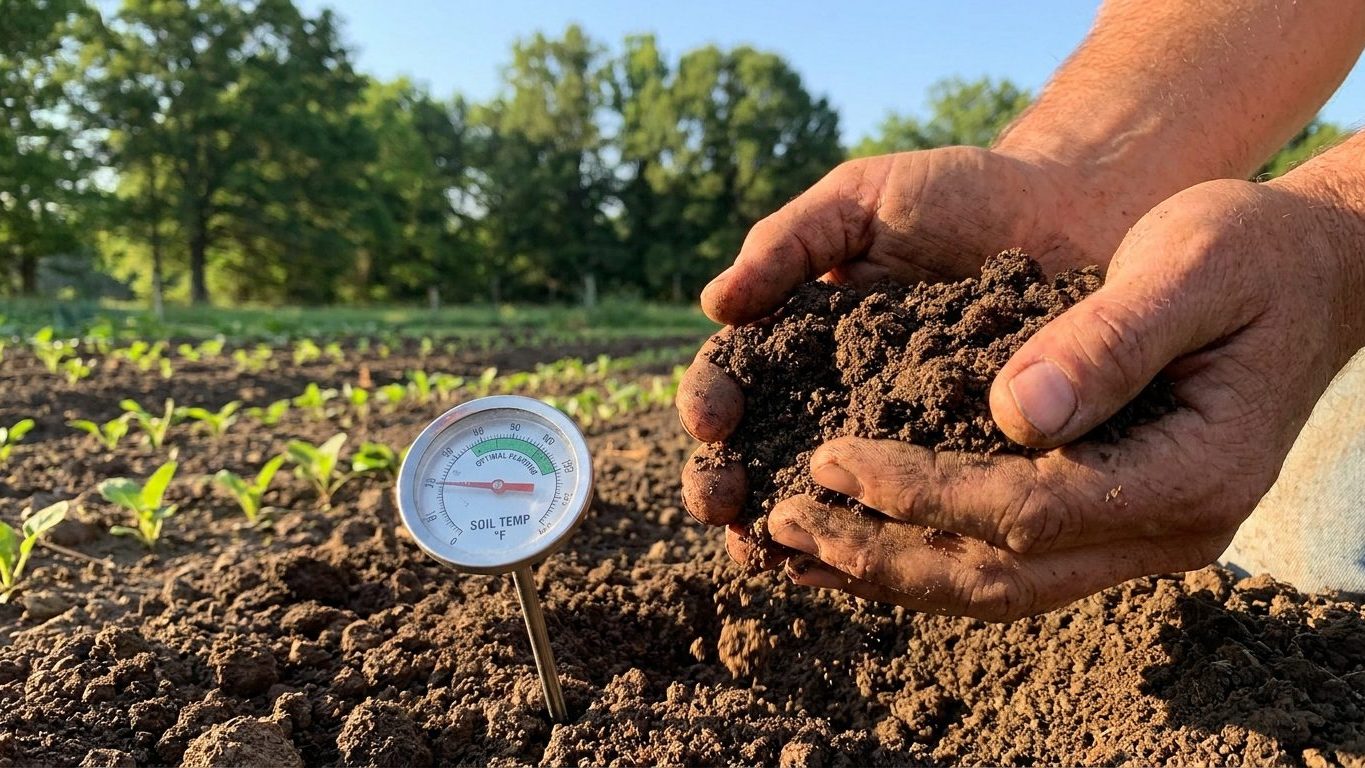
Winter squash doesn’t actually care about the frost date itself. What it cares about is soil temperature, and soil warms on its own schedule, days or sometimes weeks after the air stops freezing at night. Squash seed sown into cold, wet soil tends to rot or sulk rather than germinate, and transplants set out too early simply stall until the ground catches up. The practical move is to wait until the soil has had a real stretch of warm days after the average frost date passes, not to sow the moment the calendar clears May 6.
This matters more in Quebec than in milder US regions, because the province sits in Canadian hardiness zone 5b at the reference city named in these facts, a rating built from Natural Resources Canada’s seven-variable system, not the single-variable USDA scale used elsewhere on this site. The two systems don’t convert cleanly; a Canadian zone can span several USDA zones at once. So local hardiness maps are a starting point, not a precise translation for anyone comparing notes with a gardener in New England.
What actually decides sowing day
Soil warmth, sun exposure of the bed, and whether the season is direct-seeded or started as transplants all move the real sowing date around, sometimes by a week or two either way from the theoretical frost-based estimate. Raised beds and black plastic mulch warm faster than open clay ground, which is common across the St. Lawrence lowlands.
Because a province is not one climate, northern and upland districts run weeks behind the Montreal-area station used here. A gardener in the Laurentides or in the Gaspé should expect the whole calendar to shift later, and should lean on regional advice rather than assume the St-Hubert numbers apply unchanged. For variety-specific timing and locally trialled seed, Quebec’s own agriculture ministry, MAPAQ, is the reference point, since it tracks what performs in the province’s actual growing conditions rather than a generic average.
How long the season lasts here
The two anchor dates from Environment and Climate Change Canada give a clean answer: last spring frost on average May 6, first fall frost on average October 5, both at MONTREAL/ST-HUBERT A. That’s a frost-free window of roughly five months, about 152 days on the calendar between those two averages.
Five months sounds generous, but winter squash is a crop that needs every one of those weeks working in its favor, not just available. The fruit has to size up, mature its rind, and cure enough to store, all before the vine gets hit by fall frost. Because the fall date is also a mean, meaning frost can arrive earlier than October 5 in plenty of years, the safe planning assumption is that the real season is shorter than the raw subtraction suggests, not longer.
That changes two decisions right away. First, whether a second sowing makes sense. In a five-month window, there’s rarely room for a true second full-season winter squash crop once the first has claimed the peak growing months, though gardeners running fast-maturing types sometimes work in a second, later-timed sowing if the first planting gets in early and the type chosen doesn’t need the whole window. The site’s succession sowing guide walks through how to judge that timing without gambling the whole crop on a late frost that never shows up on schedule.
Second, it changes whether transplanting is worth the trouble. Winter squash resents root disturbance, and in a long season, gardeners can afford to direct-seed and simply wait out a slow start. In Quebec’s tighter window, many growers start seed indoors a few weeks ahead and set out transplants once soil has warmed, accepting some root-check risk in exchange for a head start that the short season can’t otherwise buy back. That trade-off is worth weighing deliberately rather than defaulting to whichever method is easiest, because in a five-month window, a lost two or three weeks at the start is a real fraction of the whole crop’s runway.
Heat and water in Quebec

Here’s the number that reframes everything else: at the Montreal reference station, the average count of days reaching 90°F or higher is 0.0 per year, per the 1981-2010 Canadian Climate Normals. Zero. This is not a hot-climate growing region, and no advice written for a sweltering summer applies here.
Summer rainfall, by contrast, is moderate and fairly steady: about 10.6 inches across June, July and August, with June the driest at 3.42 inches, July at 3.52, and August at 3.71, measured at the Montreal/Pierre Elliott Trudeau Intl A station under the same 1981-2010 normals. Spread that evenly and it looks like enough water to carry a squash crop through summer without heavy irrigation in an average year.
But squash doesn’t experience an average; it experiences whatever week it’s actually growing through, and a summer with no 90°F days and modest, evenly spread rain brings a different set of problems than a hot, dry territory would. Cool, damp conditions favor powdery mildew and other foliar disease on squash leaves, slow the ripening of fruit that needs sustained warmth to finish curing its rind, and can leave a late-set fruit stranded, still soft-skinned, when frost arrives in early October. An immature winter squash neither cures properly nor stores well, so in Quebec the risk isn’t drought stress on the vine, it’s a fruit that runs out of season before it finishes.
That reshapes the gardening priorities. Instead of planning irrigation to carry fruit through heat stress, the practical moves are ones that manage humidity and buy ripening time: spacing plants for airflow between leaves, avoiding overhead watering late in the day so foliage dries before evening, and choosing planting sites with full sun exposure to push soil and air temperature up wherever possible. None of that is about pushing more water onto the crop. It’s about working with a cool, rain-fed climate rather than treating it like a desert garden that needs rescuing.
Which winter squash suit Quebec
Given a roughly five-month window, zero days of serious heat, and a cool, humid summer prone to mildew, three priorities should drive the choice of squash type, in this order: earliness first, disease tolerance second, heat is barely a factor at all.
Earliness matters because the whole crop has to mature and start curing on the vine before the average October 5 fall frost, and since that date is a mean rather than a guarantee, gardeners are wise to plan as though frost could land in late September some years. Types bred or selected for faster maturity give more margin for a cool, slow-ripening season to still finish properly. Disease tolerance matters because the moderate, steady rainfall and mild summer temperatures create exactly the humid, mild conditions where powdery mildew and related fungal issues take hold on squash foliage; a type with some resistance built in loses less leaf area right when the plant needs to be filling out fruit.
Heat tolerance, on the other hand, is close to irrelevant here. With an average of zero days above 90°F, there’s essentially no heat stress to breed or select against in a Quebec garden, unlike a hot-summer US territory where shading fruit and managing root-zone temperature would be a real concern.
This page won’t name a specific cultivar, and that’s a deliberate choice, not an oversight. A variety that performs well in a trial plot in Ontario or Vermont isn’t automatically the right pick for a garden near Trois-Rivières or in the Eastern Townships, and naming one here would be a guess dressed up as a recommendation. The trials that actually mean something are the ones run in Quebec’s own conditions, and MAPAQ, the province’s agriculture ministry at mapaq.gouv.qc.ca, is the source built to track exactly that: which squash types and cultivars have performed reliably across the province’s growing seasons, not just on paper. Checking there before buying seed is a five-minute step that does more for a squash harvest than any single gardening trick discussed on this page.