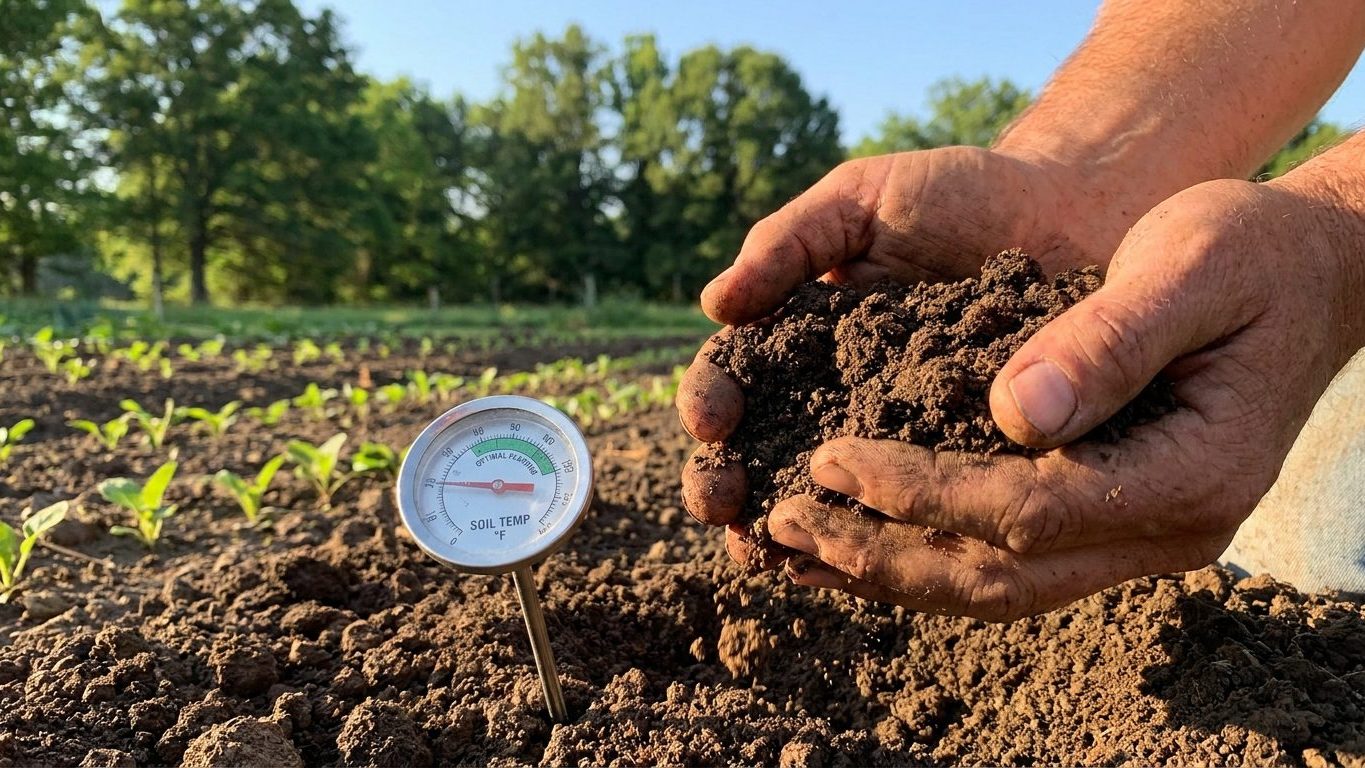

Winter squash needs the soil itself warm, not just frost gone: in Rhode Island that means waiting until early-to-mid May in most gardens, since the last spring frost at the reference station falls between April 7 and April 17. The growing window that follows runs into late October, long enough for the fruit to mature and cure before the cold returns.
When the soil is warm enough in Rhode Island

NOAA’s 1991-2020 Climate Normals put the last spring frost at Providence’s reference station (USW00014765) somewhere between April 7 and April 17, the range covering the 30 to 70 percent freeze-probability band. That’s not a promise. It’s a statistic built from thirty years of data, and any single spring can miss it in either direction. Suburban and rural gardens away from the airport tarmac typically see their own last frost run one to two weeks later, sometimes more at elevation, so a gardener in a low-lying valley or a wooded lot inland should treat the airport date as an early estimate, not a green light.
Frost date matters less than most people think, though, because winter squash doesn’t actually care about frost risk. It cares about soil temperature. The seed needs the ground to sit consistently above roughly 60°F before germination is reliable, and that threshold usually arrives one to three weeks after the last frost risk clears, once the sun has had time to warm several inches of soil rather than just the air above it. Planting into cold, wet soil right after the “safe” frost date is one of the most common mistakes in the region: the seed sits, sometimes rots, and the plants that do come up lag behind a later, warmer-soil planting by more than a week.
Reading the soil instead of the calendar
A soil thermometer pushed four inches down, checked in the morning before the sun heats the surface, tells you more than any date on a seed packet. Waiting for two or three consecutive mornings above that 60°F mark, sometime after the frost-risk window has passed, is the practical version of “when is it warm enough.” Black plastic mulch or a floating row cover laid a week ahead can nudge that date earlier for gardeners eager to get a jump on the season.
None of this changes by variety, since the soil-temperature threshold for winter squash germination is essentially the same across the group. What does change is how much runway a given planting has left to mature, which is a question of the local extension service’s variety trials, not a number this page can responsibly invent. Rhode Island gardeners can check current recommended sowing windows through the University of Rhode Island Cooperative Extension, which tracks local trial results year to year.
How long the season lasts here
Subtract the two frost dates and Rhode Island’s frost-free window comes out to somewhere between 190 and 210 days, depending on which end of each probability band you use. Using the earliest last-spring-frost date (April 7) against the latest first-fall-frost date (November 3) gives the longest possible stretch, about 210 days. Using the latest spring date (April 17) against the earliest fall date (October 24) gives the tighter case, closer to 190 days. Either way, that’s a genuinely long window by Northeast standards, and it changes what’s worth attempting in the garden.
A window in that range is long enough that most winter squash types, sown once soil has warmed in May, will have ample time to flower, set fruit, size up, and then cure on the vine before the first hard frost. It’s also long enough, in many years, to support a second sowing in gardens that lost an early planting to a cutworm or a cold snap, or for growers who want to stagger harvest rather than bring everything in at once. That’s not automatic. Succession sowing works on a tight calendar of its own, and the details, how far apart to space sowings and what to look for before committing to a second one, are covered in this site’s guide to succession sowing for winter squash.
What a short window would have changed
In territories where the frost-free stretch runs closer to 120 or 140 days, the calculus flips: only the earliest-maturing types make sense, a second sowing is rarely worth the risk, and transplanting from indoor-started seedlings becomes standard practice just to buy back a few weeks. Rhode Island’s 190-to-210-day window mostly removes that pressure. Direct sowing in place, once the soil is warm, is a reasonable default for most gardeners here, with transplants reserved for gardeners who specifically want an earlier harvest or who garden in one of the state’s cooler inland pockets.
Heat and water in Rhode Island

Rhode Island’s reference station averages just 9.4 days a year at or above 90°F. That’s a modest heat load, nowhere close to the summers of the mid-Atlantic or the interior South, and it means winter squash here rarely faces the kind of sustained heat stress that stalls fruit set or scorches leaves. The flip side is that a cool summer, especially one running a few degrees below normal, can slow ripening enough that fruit is still hardening its rind as the first fall frost arrives.
Rainfall tells a similar story. Summer totals average about 10.3 inches across June, July, and August, with July, the driest month, still bringing 2.91 inches. That’s a comfortable amount of rain by national standards, and it means Rhode Island gardens generally don’t face the irrigation demands of a hot, dry Plains or Southwest summer. But “comfortable average” hides real variability: rain that arrives as a single thunderstorm mostly runs off rather than soaking into the root zone, and a sandy coastal garden drains that same inch of rain within a day while an inland clay soil holds it for a week. A rain gauge on the actual plot, checked weekly through the growing season, settles the question far better than any regional average can.
What the numbers mean for the crop
Winter squash is unforgiving about one thing above all: the fruit has to mature fully on the vine before frost, because an immature squash won’t cure properly and won’t keep in storage. In a low-heat, moderate-rain territory like Rhode Island, the practical risks are less about drought stress and more about the diseases that thrive in cool, damp, humid air, powdery mildew chief among them, along with the general slow-down that comes from a cloudy, cooler-than-average July or August. That argues for spacing plants for airflow, watering at the soil line rather than overhead, and watching leaves for the first dusty mildew patches rather than worrying about scorched vines. Gardeners further south or inland with more 90-degree days and drier summers face the opposite problem, and irrigation planning matters more there than it does here.
Which winter squash suit Rhode Island
Given a frost-free window running 190 to 210 days, a modest heat load, and rainfall that’s adequate but prone to disease-friendly humidity, three broad types make sense to prioritize here, reasoned by category rather than brand name.
- Earlier-maturing types, which give the widest safety margin against a cooler-than-average summer slowing ripening, and leave room for a second sowing if the first is lost.
- Types bred or selected for disease tolerance, particularly resistance to powdery mildew, since Rhode Island’s humid summer air is the more realistic threat here, not heat.
- Types that tolerate slightly cooler soil at germination, useful for gardeners in the state’s cooler inland valleys where the airport’s frost dates run early compared to their own ground.
This page won’t name specific cultivars, and that’s deliberate rather than an oversight. Variety performance shifts from season to season and even county to county, and a name that performed well in one extension trial three years ago may already be outperformed by something newer, or may simply not suit a particular garden’s soil and microclimate. The only recommendation worth trusting is one built on local trial data, updated regularly, which is exactly what the University of Rhode Island Cooperative Extension maintains for gardeners across the state. Their current variety trial results, along with disease pressure reports specific to a given growing season, are the resource that turns “which type” into “which specific variety,” a step this page can point toward but shouldn’t try to answer on its own.
What Rhode Island’s numbers do settle is the shape of the decision. A season long enough for most types, heat mild enough that shade and airflow matter more than irrigation volume, and rainfall adequate enough that the real risk is fungal rather than drought-driven. That’s the framework; the extension office fills in the name.