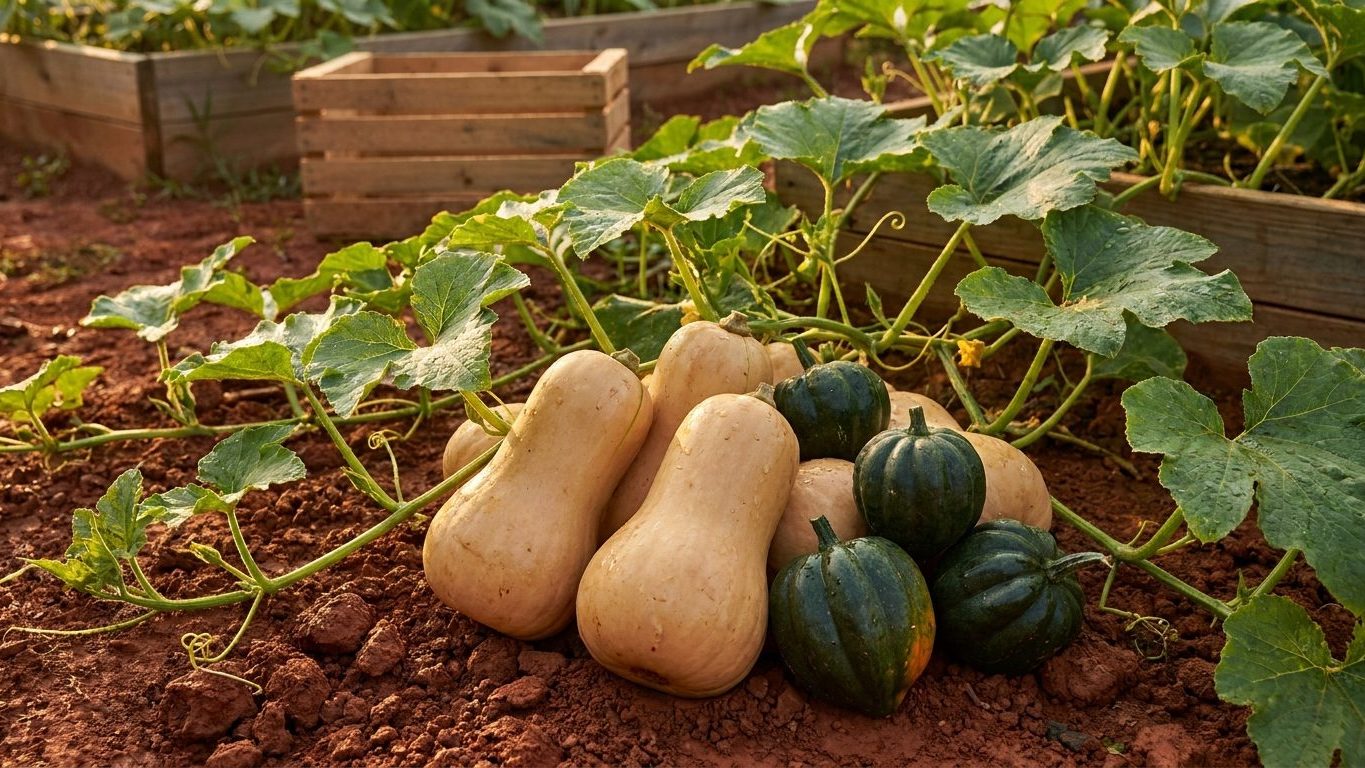

For most of Nevada, stick with fast-maturing bush types like acorn, delicata and sweet dumpling squash. They mature in 80 to 100 days, which matters because much of the state runs a short growing season. Only the low desert around Las Vegas has the heat and season length to reliably finish butternut, hubbard or spaghetti squash without a race against frost.
The short answer for Nevada
Nevada’s growing conditions swing harder than almost any other state, and that swing is exactly what should drive a variety choice. The USDA Plant Hardiness Zone Map puts the state at 4a-10a, a spread that covers everything from high mountain valleys to the low desert floor around Las Vegas. That’s not a footnote. It’s the reason a single “best squash for Nevada” list doesn’t really exist without splitting by season length.
In the shorter-season parts of the state, a squash variety earns its keep by finishing fast. Acorn squash, delicata and sweet dumpling all mature in roughly 80 to 100 days, and their compact, bush-type growth habit means they don’t need a long stretch of warm weather to set and ripen fruit. These are the varieties worth betting on anywhere the frost-free window is tight, which is most of the state outside the low desert valleys.
Where the season runs longer and hotter, that constraint loosens. Las Vegas averages 131.3 days a year at or above 90F, a heat load that gives long-season squash the time and warmth to actually finish. Butternut, hubbard and spaghetti squash typically need 100 to 120 days and steady heat to fill out properly; in a short, cooler season they simply run out of time before the vine dies back.
Here’s how that plays out by type:
| Squash type | Typical days to maturity | Best fit in Nevada |
|---|---|---|
| Acorn, delicata, sweet dumpling | 80-100 days | Short-season, higher-elevation, and northern areas |
| Butternut, spaghetti | 100-110 days | Longer, warmer seasons such as the low desert valleys |
| Hubbard, large banana squash | 110-120+ days | Only where a long, reliably hot season is confirmed locally |
The catch is that this page can’t hand you a firm frost date to plug into that table. The only frost data available for this state comes from the Las Vegas airport reference station, and that station is a documented urban-heat-island extreme, not a stand-in for Reno, Carson City, or anywhere with real elevation. Those places freeze months earlier in fall and thaw months later in spring. So the honest short answer is: pick your squash type by season length, then confirm that season length with your county extension office before you commit a garden bed to a 120-day variety.
What will not work here
The most common mistake in Nevada gardens is planting a long-season squash somewhere the season simply doesn’t support it. A hubbard or a large banana squash needs 110 to 120-plus frost-free days of real warmth to fill out. In the state’s higher-elevation and northern gardens, where cold arrives early and lingers late, that vine is still setting fruit when the first hard freeze hits. The plant doesn’t die from neglect. It dies from a calendar mismatch that was set the day the seed went in the ground.
Watering habits fail almost as often as variety choice. Nevada’s reference station averages only about 0.7 inches of rain across June, July and August combined, with June running as dry as 0.04 inches. Compare that to the 131.3 days a year that reach 90F or hotter, and you have a plant that’s losing moisture through its leaves on a near-daily basis with almost nothing falling from the sky to replace it. A gardener who waters once a week, the way a Midwest or Southeast garden might get by, is setting up a squash plant for stunted vines, blossom drop, and fruit that stalls out half-formed. Winter squash roots run wide and shallow enough that they need frequent, deep watering in Nevada’s dry heat, not a weekly soak.
Dense spacing is another regional mismatch, though for a different reason than in humid states. Nevada’s air is dry enough that fungal disease pressure from humidity isn’t the dominant risk here. But cramming vines close together in low desert heat traps warmth around the plant base and makes hand-watering and mulching harder to do evenly, which matters more here than the mildew risk itself. Squash that’s spaced for a wetter climate’s disease-prevention rules often ends up under-watered at the root zone in a Nevada bed, simply because there’s no room to get a hose or drip line to every plant’s base.
None of this means winter squash is a poor fit for Nevada gardens. It means the variety and the watering plan both need to match the specific stretch of the state a garden sits in, not a generalized idea of “desert gardening” borrowed from somewhere else.
What changes across Nevada
A hardiness range of 4a-10a is not a small spread. It’s close to the full range the USDA system uses across the entire Lower 48, compressed into one state’s borders. That number alone should settle the question of whether there’s a single “Nevada answer” for squash timing: there isn’t. A zone 4a garden at elevation and a zone 10a garden in the low desert are, for growing-season purposes, closer to being in two different states than two ends of the same one.
What that means in practice is that the type of winter squash worth growing shifts with elevation and latitude inside Nevada’s own borders. Gardens at higher elevation and further north should lean hard into the fast-maturing bush types (acorn, delicata, sweet dumpling) and treat any variety needing more than 100 days as a gamble unless a heat-trapping microclimate (a south-facing slope, a warm retaining wall) is already working in the garden’s favor. Gardens in the lower, hotter valleys have more room to try butternut or spaghetti squash, and where the season runs long and hot enough, hubbard or banana squash becomes a realistic option rather than a stretch.
The hardiness zone figure, it’s worth remembering, is built on one variable: the average annual extreme minimum temperature. It doesn’t measure summer heat, rainfall, or how long the frost-free window actually runs, which is why it’s a starting signal and not the whole picture. It tells a gardener how cold the coldest night typically gets, not when to plant or which squash will actually finish.
This page can’t tell an individual reader which of those zones their own garden falls into. That’s a lookup, not a guess, and it belongs on the USDA’s own hardiness zone map, cross-checked against local knowledge of frost timing that a zone number alone won’t capture.
Where to check this for your own county
Nevada’s land-grant extension service, University of Nevada, Reno Extension, publishes the local planting calendars and variety trial results that this state-level page can’t include. Its home address is extension.unr.edu, and it’s the right next stop for anyone trying to turn “grow Winter Squash in Nevada” into an actual planting date for a specific county.
What to look for there is narrower than what’s on this page, and that’s the point. A county-level resource should have a frost-free window calculated for local stations rather than for the Las Vegas airport, which as noted is a documented heat-island outlier unsuited to guiding a Reno or Carson City garden. It should also list which squash varieties have actually been trialled in that county’s soil and climate, which is a more useful filter than a general “acorn squash matures in 80 to 100 days” rule of thumb.
A county recommendation beats a state one every time, for a simple reason: it’s built on conditions closer to the actual garden. This page has done the state-level framing, laying out how season length and heat load split the state’s squash options into short-season and long-season categories. The extension office fills in the actual planting week for a specific address.
It’s worth calling or emailing rather than relying only on what’s posted online, since some county-specific calendars are only available through direct contact with a local extension agent. That conversation is also a chance to ask about local pest pressure and irrigation scheduling, both of which vary more within Nevada than the state-level averages suggest.
Checking this against your own garden
Every date and average on this page is a starting estimate. The garden itself has the final say, and it communicates that through a few signals worth learning to read by hand and by eye.
Soil warmth is the first check. Winter squash seed sits and rots in cold soil rather than germinating, so before sowing, dig down two or three inches and feel the soil at that depth in the morning. If it feels cool to the touch rather than mild, especially in a garden at elevation where the ground holds cold longer than the air does, it’s worth waiting even if a calendar date has arrived.
The first flush of male flowers is the second signal. Squash plants send out male flowers before female ones, and a garden that’s producing male flowers steadily is telling the gardener that the plant considers conditions warm and stable enough to start reproducing. No female flowers with fruit behind them yet is normal at this stage; it’s an early confidence signal, not a problem.
The appearance of true leaves, the ones that follow the rounder seed leaves and actually look like squash foliage, marks the point where a young plant has moved past its most fragile stage. A garden where true leaves show up quickly and evenly across a bed usually has the warmth and moisture balance right for that particular spot; slow, uneven true-leaf growth is often the plant flagging a watering or soil-temperature mismatch specific to that bed, regardless of what the county calendar predicted.
Taken together, these three observations tell a gardener more about their own microclimate, shaped by slope, soil, and shade, than any regional average ever could.