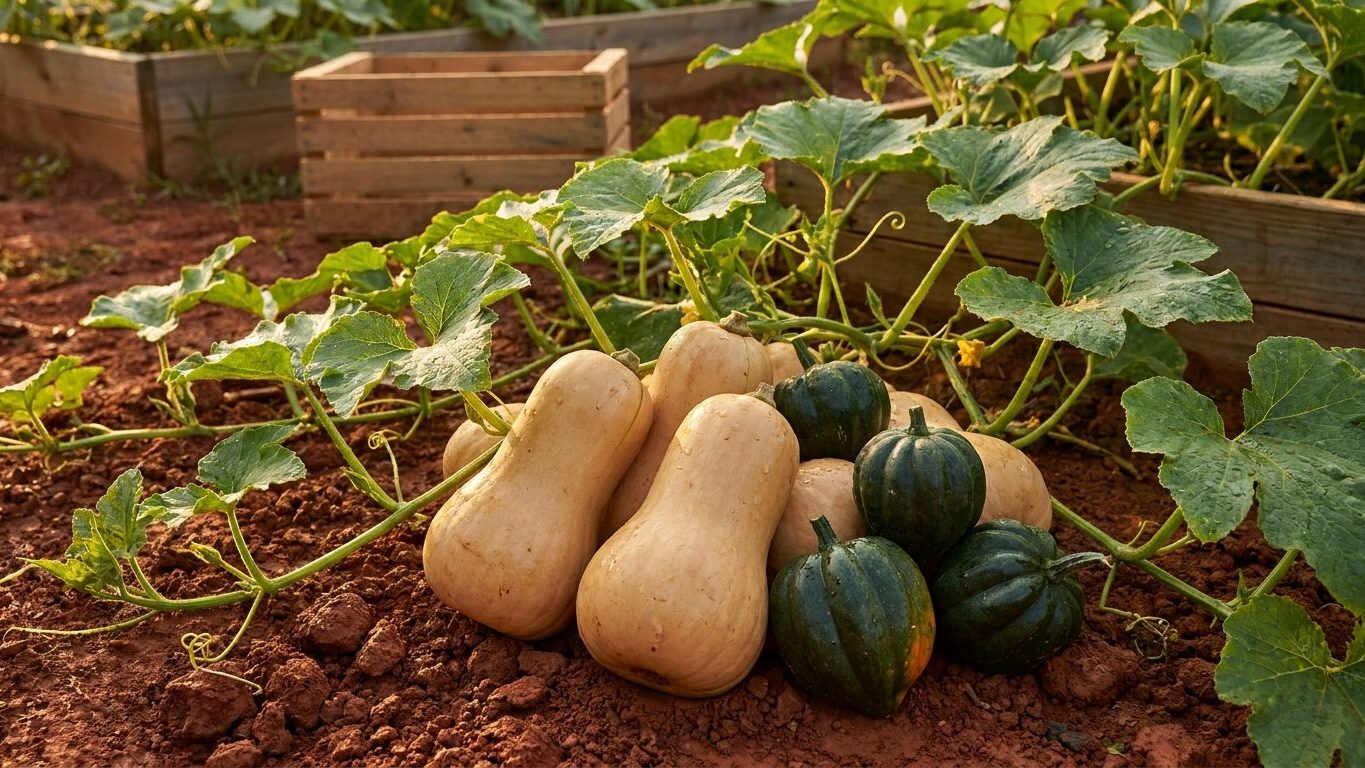

Utah’s answer splits by elevation more than by variety name. Quick-maturing bush types like acorn, delicata and small kabocha succeed almost anywhere in the state, from mountain valleys to the warm south. Long-season vining squash, big hubbards and some heirloom butternuts, only pay off where the frost-free window runs long and the summer heat holds steady, which in this state means the lower valleys, not the benches above them.
The short answer for Utah
Start with the reference numbers, because they set the boundaries every variety has to fit inside. At the Salt Lake City station, the last spring freeze falls somewhere between April 12 and April 29, and the first fall freeze arrives between October 18 and October 29. Stack those windows against each other and the frost-free season at that reference point runs from roughly 172 days in a tight year to about 200 days in a generous one. That is a long growing season by squash standards, long enough to finish nearly any winter squash type sold in a seed catalog, from a fast 80-day acorn to a slow 110-day hubbard.
But that number belongs to one station in one mild valley. Utah’s hardiness zones run from 4a to 9a, according to the USDA Plant Hardiness Zone Map, and that spread is the widest kind of warning a state page can give: a 4a garden at altitude is working with a season that can be 60 to 80 days shorter than the Salt Lake City reference, while a 9a pocket in the south starts weeks earlier and finishes weeks later. The reference station’s 172-to-200-day window describes a mild valley, not the whole state.
Heat load matters just as much as season length. Salt Lake City averages 52.1 days a year at 90°F or above, a heat load that pushes water demand hard through July and August but stops well short of the desert extremes some other states carry. Summer rain is thin everywhere in this climate: about 2.0 inches total across June, July and August, with July the driest month at just 0.49 inches. That combination, long-enough season, real but not brutal heat, and almost no summer rain to lean on, favors squash that tolerate irrigation gaps and dry air over squash bred for humid, rain-fed gardens.
So the practical decision by type: in a mild valley matching the reference station, acorn, delicata, butternut, spaghetti, kabocha and hubbard squash all fit inside the frost-free window. At higher elevation, the safer bet narrows to the shorter-maturing bush types, acorn, delicata, and compact kabocha, because they finish before an early fall freeze becomes likely.
What will not work here
The clearest failure mode in Utah is a long-season squash planted where the season is short. A hubbard or a big storage-type butternut bred to run 100 to 110 days from seed needs nearly the entire frost-free window at the reference station just to ripen, and that window assumes the mild-valley dates. Push the same variety up into a 4a or 5a garden, where the frost-free period can run considerably shorter than Salt Lake City’s 172-to-200-day range, and the fruit is still green on the vine when the first fall freeze hits. The plant itself may look fine all summer; it is the finishing that fails.
The second failure is watering on a weekly schedule and assuming the rain will cover the rest. It won’t. Summer rainfall across the growing months adds up to about 2.0 inches total, and July, peak fruit-fill time for most winter squash, delivers only 0.49 inches on average. Combine that with 52.1 days a year at 90°F or hotter, and a squash bed watered once a week is running on a real deficit for much of the summer. The visible result is blossom drop, small or misshapen fruit, and vines that wilt hard by early afternoon even when the soil looks damp on top.
Neither of these failures is really about the variety being wrong for Utah in some general sense. Both are about matching a variety’s timeline and its water appetite to the specific numbers of the garden it’s planted in. A hubbard is not a bad squash; it is a bad choice for a short-season bench. A weekly watering schedule is not laziness; it is a schedule built for a wetter climate than this one, and the plants show it in the same way every August.
What changes across Utah
A hardiness range of 4a to 9a is not a rounding error, it is close to the full width of zones the USDA map uses for the lower 48. That spread means this page cannot give one planting date or one variety list that fits the whole state, and it shouldn’t try to. What it can do is describe the two directions a reader needs to adjust from the Salt Lake City reference numbers already given.
Moving north or up in elevation from the reference station shortens the frost-free season and lowers the average heat load. A garden in that direction should lean toward the fastest-maturing bush types, start seed indoors or under cover rather than direct-sowing, and treat the reference station’s October frost dates as optimistic, not guaranteed. Moving south or down in elevation, toward the 9a end of the range, stretches the season in both directions: an earlier practical planting date and a later fall freeze, which is exactly the kind of window a slower hubbard or a heavier storage squash needs to finish properly.
The honest position for a state-level page is that there is no single Utah answer here, only a spread, and the reference station’s numbers describe one end of it. A reader who wants to know which end applies to their own yard needs the USDA Plant Hardiness Zone Map and a look at their own elevation, not a guess based on which part of the state feels warmer. This page can name the range and explain why it matters; it can’t tell an individual reader which zone their own square footage sits in.
Where to check this for your own county
Every number on this page comes from one reference station and one statewide zone range, which makes it a starting point, not a finish line. The next step is Utah State University Extension, which publishes county-level guidance built from local trial data rather than a single station’s climate normals.
Two things are worth looking for once there. First, a county-specific planting calendar, which will translate the statewide frost-date range into an actual recommended sowing window for that county’s elevation and microclimate, something this page can’t do because it only has the Salt Lake City station numbers to work from. Second, look for variety trial results or recommended-variety lists specific to that county’s growing conditions; extension offices often test winter squash varieties locally and can say which hubbards, kabochas or butternuts actually finished reliably in that county’s seasons, rather than which ones are simply popular nationally.
A county recommendation will always outrank a state one, for the same reason the zone range in the previous section matters: Utah’s climate varies too much between a river-bottom garden and a mountain-valley bench for one set of numbers to serve both well. This page is the state-level version, useful for understanding the general shape of the decision, long-season squash versus short, dry-climate watering versus rain-fed habits, but the county extension office is where those general shapes turn into a specific planting date and a specific variety list for one particular piece of ground.
Checking this against your own garden
Frost dates and hardiness zones describe averages built from decades of data, and averages miss the specific patch of soil a reader is actually planting in. Three direct observations settle what the numbers can only estimate.
Soil warmth by feel is the first and most reliable check. Winter squash seed wants soil that feels warm to bare skin, not just frost-free air; a hand pressed a few inches into the bed on a sunny afternoon will tell a gardener whether the ground has actually caught up to spring, regardless of what the calendar says the average date should be.
The first flush of male flowers is the second signal. Squash plants typically produce a run of male blossoms before the female flowers, the ones with a small swelling behind the petals that will actually become fruit, show up. Watching for that shift tells a gardener how far along the plant’s internal clock is running compared to the season, useful information heading into a summer with 52.1 average days above 90°F, since heat stress later can delay or drop that female flush.
The appearance of the first true leaves, the second set that emerges after the rounder seed leaves, marks the point where the plant has shifted from surviving on stored seed energy to running on its own root system and the soil around it. A slow, pale set of true leaves in a spot that should be warming up by then is often the clearest sign of a microclimate colder than the county average, worth noting before committing the rest of the bed to a longer-season variety.