
Utah gardeners can grow winter squash successfully in most valley and lowland areas, but the growing window is shorter and the summers drier than gardeners moving from the Midwest or East Coast expect. Timing hinges on local frost dates, and irrigation planning matters as much as variety choice once the heat sets in.
When the soil is warm enough in Utah

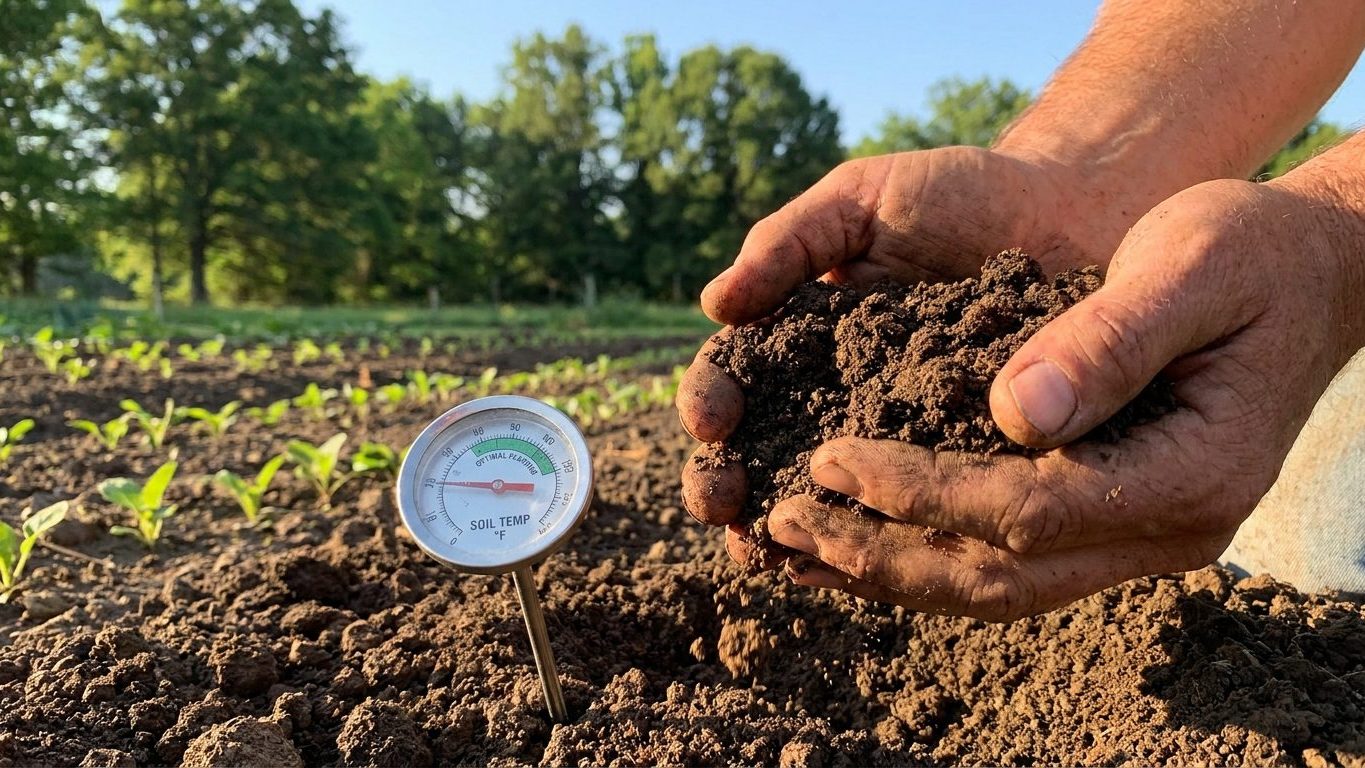
The question every Utah gardener asks in spring is simple: when can I put squash in the ground? The honest answer starts with frost, but frost is only a stand-in for what actually matters, which is soil temperature. Winter squash seeds sit and rot in cold, wet soil rather than germinate, so the frost date is a starting line, not the finish.
For the Salt Lake City area, NOAA’s 1991-2020 Climate Normals (station USW00024127) put the last spring frost, defined by the 30-70% probability band for a 32F freeze, between April 12 and April 29. That’s a two-and-a-half-week spread, not a single day, because frost risk fades gradually rather than switching off. Treat it as a probability window: some years the risk clears by mid-April, other years it lingers into late April, and no calendar date guarantees safety.
Soil needs to be well past that frost risk before winter squash seed goes in directly, or before transplants go out. Squash roots stall in cold ground even when the air feels mild, so gardeners who rush the calendar often end up with seedlings that sit stunted for two or three weeks rather than growing. Waiting an extra week after the frost window closes, until the soil has had time to warm through, generally pays off in faster, more even germination.
The Salt Lake Valley sits in a comparatively mild pocket of the state. NOAA’s data is anchored to that one reference station, and Utah’s geography swings widely around it: benches and mountain valleys above 5,000 feet run colder and see frost linger later into spring, while low-elevation basins in the southern part of the state warm earlier and hold their warmth longer into fall. A gardener in Cedar City or St. George is working with a different clock than one in the Salt Lake Valley, and a gardener in Park City or a high mountain valley is working with a shorter, colder one still. USDA places the state across hardiness zones 4a to 9a, a range wide enough that “Utah” alone doesn’t answer the planting-date question, only the reference city does, so it’s worth checking local frost records for your own elevation before setting a date.
How long the season lasts here
Once the last spring frost date is set, the fall frost date closes the other end of the window. For the same reference station, NOAA’s Normals put the first fall frost between October 18 and October 29. Put both ends together and the frost-free season in the Salt Lake Valley runs somewhere between roughly 172 days, if spring frost lingers to April 29 and fall frost arrives early on October 18, and roughly 200 days, if spring frost clears by April 12 and fall frost holds off until October 29.
That’s a wide enough window to matter. Even at the shorter end, 172 days is a comfortable season for most winter squash types, which generally need less than half of that time to mature fully. What that spread really changes is confidence in planning: a gardener working from the earlier end of the frost bands has room to be patient about soil temperature at planting, while one working from the later end needs to treat the spring window as tight and get seed or transplants in as soon as the soil allows.
A season this long also opens the door to more than one planting strategy. In territories where the frost-free window barely covers one crop cycle, the first sowing is the only sowing, and gardeners lean on transplants with intact root balls to buy back lost days. In the Salt Lake Valley’s longer window, there’s enough slack to stagger sowings a few weeks apart, spreading out harvest and reducing the risk that a single early-season pest or weather setback wipes out the whole crop. For the specifics of staggering sowings and choosing between direct seeding and transplanting within a season this length, the succession sowing guide on this site walks through the timing in more detail.
Higher-elevation parts of Utah won’t have this same luxury. A mountain valley losing three or four weeks off each end of the season compresses that 172-to-200-day window down toward the minimum any winter squash type needs, and in those spots, a single well-timed sowing, not a staggered one, is the safer bet.
Heat and water in Utah

Winter squash lives or dies by whether the fruit finishes ripening on the vine before frost. An immature squash won’t cure properly in storage and won’t keep, so everything upstream, planting date, heat, and water, exists to serve that one finish line. In a territory with a short frost-free window, the type of squash chosen decides the outcome more than any technique does. In the Salt Lake Valley’s longer, hotter window, water management takes over as the deciding factor.
Heat load here is real. The Salt Lake City reference station averages 52.1 days a year at or above 90F, a heat count concentrated almost entirely in the growing season. That’s a meaningful stretch of high-evaporation days, enough to stress shallow-rooted plants and speed up soil drying, especially on the exposed, sun-baked garden beds common in valley subdivisions.
Rainfall doesn’t offset that heat. Summer rain across June, July and August totals only about 2.0 inches at the same station, out of 15.5 inches for the whole year, meaning most of Utah’s precipitation falls outside the growing season as winter snow. July, the hottest month, is also the driest: just 0.49 inches, against 0.95 inches in June and 0.58 in August. That combination, peak heat overlapping with the driest month, means squash vines are drawing hardest on soil moisture exactly when the least rain is arriving to replace it.
What that means for watering
This is a hot, dry territory for squash-growing purposes, not a cool, damp one, so the risks that dominate humid regions, powdery mildew and slow, waterlogged ripening, are less of a concern here. The bigger risk is irrigation falling short during fruit fill, when squash plants need a steady, deep water supply to swell fruit rather than abort it. A single summer thunderstorm mostly runs off a dry, crusted bed rather than soaking down to the root zone, so rainfall totals alone overstate how much water actually reaches the plant. Soil type changes the math further: the same 2.0 inches soaks through sandy soil within a day and needs frequent top-ups, while clay-heavy soil holds it for a week and needs less frequent, deeper watering. A rain gauge on the actual garden bed, not the regional average, is what settles how often to water in any given month.
Which winter squash suit Utah
Reasoning from these facts rather than from a shopping list of names points toward a few clear priorities for Utah gardens, without naming any specific variety here.
- Season length: the Salt Lake Valley’s 172-to-200-day frost-free window comfortably fits most winter squash types, but gardeners at higher elevation, where the season compresses toward the shorter end, should favor the earliest-maturing types within whichever squash category they’re growing.
- Heat and airflow: with 52.1 days a year above 90F, types that tolerate heat stress and that get good airflow around the vines, through spacing rather than crowding, hold fruit quality better through the hottest stretch of summer.
- Disease pressure: because summer rainfall is low and humidity with it, fungal disease pressure runs lower here than in humid eastern states, which means disease resistance matters less as a first filter for Utah than steady water access does.
- Root-zone shade: mulching or interplanting to shade the soil surface reduces moisture loss on the hottest days and takes some pressure off the irrigation schedule described above.
What this page won’t do is hand over a cultivar name, because that recommendation only means something when it’s backed by local trial data, and this page doesn’t have it. Utah State University Extension runs the variety trials that actually test different winter squash types against Utah’s specific heat, elevation and soil conditions, and its recommendations at extension.usu.edu reflect real results from Utah gardens rather than a generic list. A name picked without that context is the one detail an experienced gardener notices immediately, and it’s often the difference between a variety that finishes ripening before the October frost window closes and one that doesn’t.